
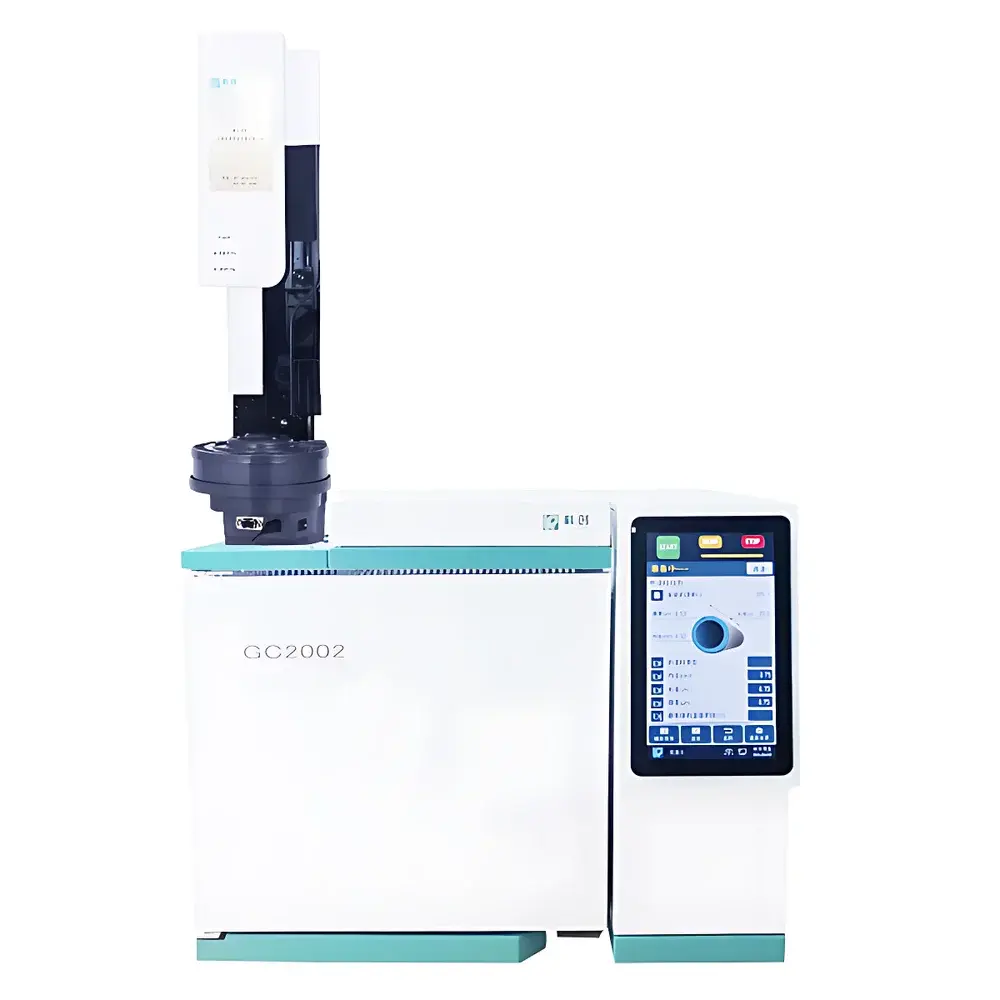
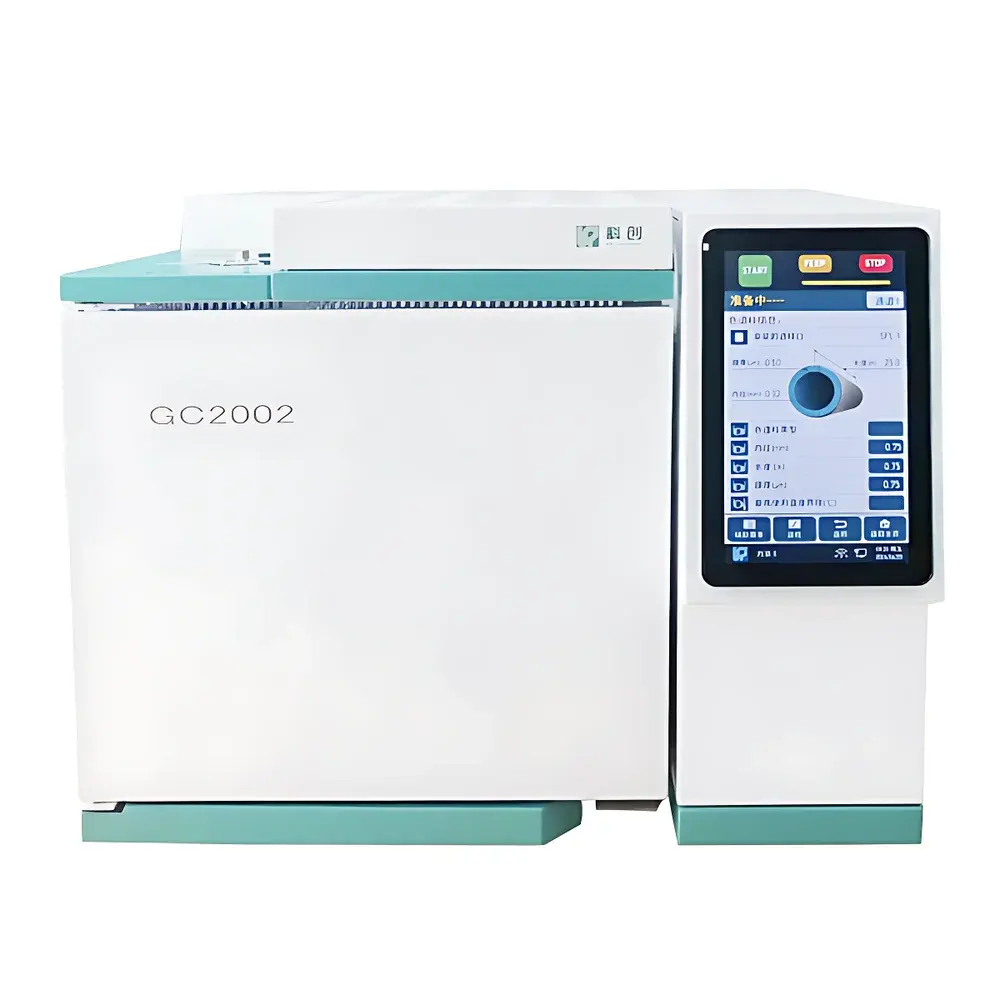
Kechuang GC2002 Advanced Network-Enabled Gas Chromatograph
| Brand | Kechuang |
|---|---|
| Origin | Shanghai, China |
| Manufacturer Type | OEM Manufacturer |
| Product Origin | Domestic (China) |
| Model | GC2002 (New Version) |
| Price | USD 14,000 (approx.) |
Overview
The Kechuang GC2002 Advanced Network-Enabled Gas Chromatograph is a high-performance, microprocessor-controlled analytical instrument engineered for precise separation, identification, and quantification of volatile and semi-volatile organic compounds. Based on the fundamental principle of gas–solid or gas–liquid partition chromatography, the GC2002 utilizes carrier gas (N2, H2, He, or Ar) to transport vaporized samples through temperature-programmable capillary or packed columns. Its architecture integrates modern digital control systems with robust thermal management and real-time signal processing—enabling compliance with routine QC/QA workflows in environmental, pharmaceutical, petrochemical, and food safety laboratories. Designed for operational continuity and regulatory readiness, the system supports GLP/GMP-aligned data integrity practices through hardware-level event logging and software-enforced audit trails.
Key Features
- 10-channel independent temperature control system, including dual programmable column ovens with ±0.01 °C thermal stability and up to 16 ramp segments (extendable to unlimited steps via firmware update)
- RJ45 Ethernet interface enabling native TCP/IP communication; single PC can centrally manage up to 253 GC units for fleet-wide monitoring, remote diagnostics, and hierarchical supervision
- Integrated Electronic Pressure Control (EPC) and Electronic Flow Control (EFC) with 0.001 psi pressure resolution and 0.001 mL/min flow resolution; supports constant-pressure, constant-flow, and multi-step (up to 8-stage) programmed pressure/flow ramps
- 10-inch capacitive touchscreen display with real-time baseline visualization, chromatogram rendering, and direct instrument reverse control via embedded workstation firmware
- Standard MS coupling port compliant with common quadrupole and single-quadrupole mass spectrometers; optional H2 leak detection module and variable-frequency cooling motor for rapid oven cooldown (≤5 min from 350 °C to 50 °C)
- 8-channel external event timer for automated sequence execution; onboard wide-dynamic-range detector amplifier prevents solvent peak saturation and ensures linear response across 104–107 signal magnitudes
- Self-diagnostic firmware with real-time fault localization and automatic overtemperature cutoff—each temperature zone independently monitored and protected
Sample Compatibility & Compliance
The GC2002 accommodates standard 1/16″ stainless steel or fused-silica capillary columns (0.1–0.53 mm ID), supporting split/splitless, on-column, and PTV injection modes. It meets core requirements of ISO 17025-accredited laboratories and aligns with method validation frameworks per USP , ASTM D3606/D5501, and EPA Methods 8021B/8260C. The EPC/EFC subsystem satisfies FDA 21 CFR Part 11 criteria for electronic record integrity when paired with validated chromatography data systems (CDS). Environmental resilience is verified per IEC 61000-4-2 (ESD immunity) and operating specifications: ambient temperature range 5–35 °C, relative humidity ≤85% non-condensing, and power supply 220 V ±10%, 50 Hz ±5%.
Software & Data Management
The embedded reverse-control workstation provides full instrument parameterization—including column oven ramp profiles, detector gain settings, valve timing sequences, and EPC/EFC setpoints—without requiring external PC dependency. Data acquisition supports simultaneous multi-detector signal routing: users may assign any two or more detectors (e.g., FID + ECD) to shared or independent processing channels, with time-programmable signal switching during a single run. Raw data files (.cdf or .dx) include embedded metadata (operator ID, method name, calibration status, hardware configuration hash) and are timestamped with UTC-synchronized clocks. Audit trail functionality records all parameter modifications, sequence starts/stops, and error events with user attribution and immutable timestamps—supporting inspection readiness under MHRA, WHO-GMP, and ISO/IEC 17025 audits.
Applications
The GC2002 delivers validated performance across regulated and research-grade applications: residual solvent analysis in APIs (ICH Q3C), hydrocarbon speciation in fuels (ASTM D6730), pesticide residue screening in produce (EN 15662), VOC profiling in indoor air (ISO 16000-6), and fatty acid methyl ester (FAME) quantification in biodiesel (EN 14103). Its dual-oven configuration enables heart-cutting MDGC configurations for complex matrix separations, while the high-resolution EPC system ensures reproducible retention time alignment (<0.008% RSD) and peak area precision (<1.0% RSD) across multi-day sequences—critical for long-term stability-indicating assays.
FAQ
Does the GC2002 support 21 CFR Part 11-compliant electronic signatures?
Yes—when deployed with validated third-party CDS software (e.g., OpenLab CDS, Chromeleon), the GC2002’s event-logged operation and secure network interface fulfill electronic record and signature requirements.
Can the instrument operate unattended for overnight analysis?
Absolutely—the integrated 8-event timer, auto-shutdown on completion, and continuous self-monitoring enable fully automated batch processing without manual intervention.
Is column oven cooling rate adjustable?
Cooling is managed automatically via variable-frequency motor and motorized rear door actuation; no user-adjustable cooling rate parameter exists, but the system guarantees ≤5 min cooldown from 350 °C to 50 °C under standard lab conditions.
What detector configurations are factory-supported?
TCD, FID, ECD, and FPD modules are available as plug-in detector cards with hot-swappable amplifiers; all share common power, signal, and temperature interfaces on the main chassis.
How is firmware updated?
Updates are delivered via USB flash drive or network push through the embedded web server interface; each update includes SHA-256 checksum verification and rollback capability.
Related Products




