
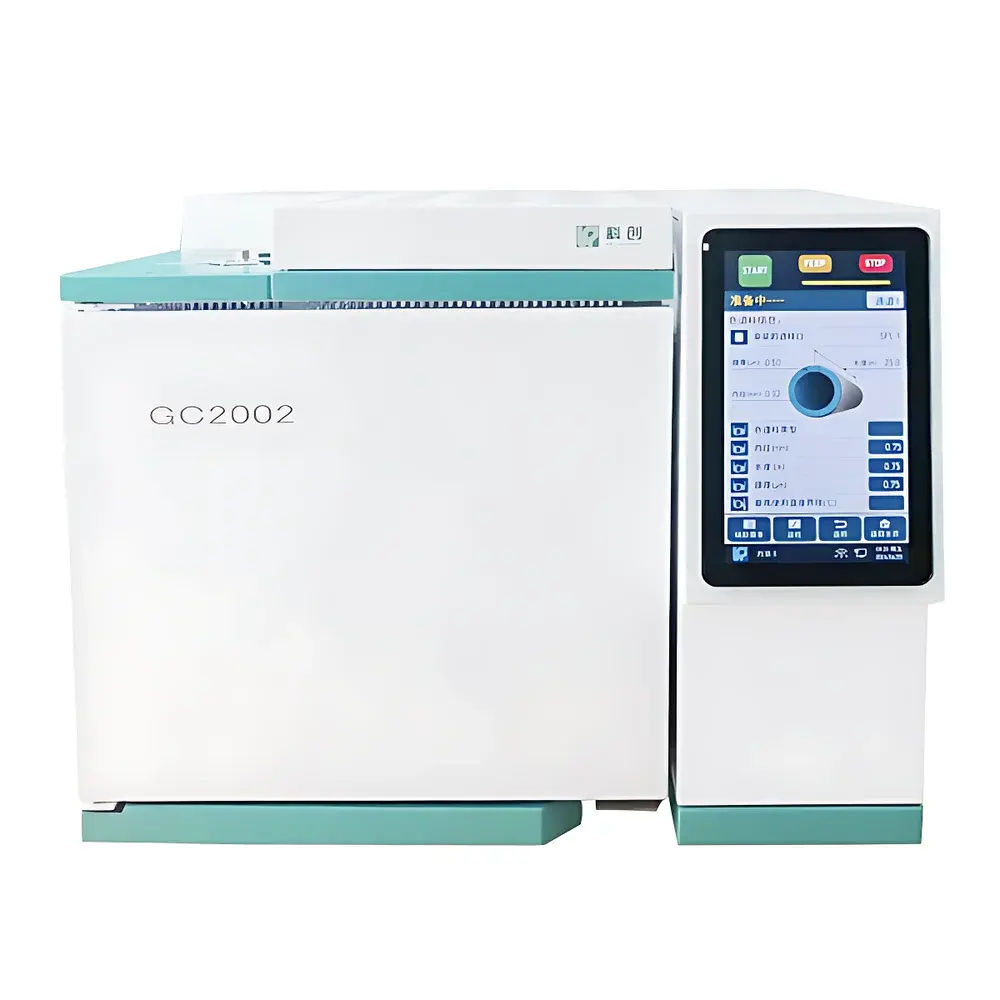
Kechuang GC2002 Dedicated Gas Chromatograph for Blood Ethanol Analysis
| Brand | Kechuang |
|---|---|
| Origin | Shanghai, China |
| Manufacturer Type | Direct Manufacturer |
| Instrument Type | Laboratory Gas Chromatograph |
| Application | Forensic Toxicology & Clinical Blood Alcohol Testing |
| Oven Temperature Range | Ambient + 5 °C to 400 °C |
| Maximum Ramp Rate | 120 °C/min |
| Cool-down Time | ≤4 min (400 °C to 50 °C) |
| Carrier Gas Flow Range | 0–100 mL/min (inlet) |
| Carrier Gas Pressure Range | 0–250 kPa |
| Injector Max Temp | 300 °C |
| Injector Pressure Setpoint Range | 0–250 kPa |
| Inlet Total Flow Setpoint Range | 0–1200 mL/min |
| Detection Method | Headspace GC-FID with Internal Standard (tert-Butanol) |
| Compliant Standards | GA/T 105, GB 19522, SF/Z JD0107001-2016, DB31/205-2007 |
Overview
The Kechuang GC2002 Dedicated Gas Chromatograph is a purpose-built analytical system engineered for precise, reproducible quantification of ethanol in human whole blood—primarily supporting forensic toxicology, traffic law enforcement, and clinical laboratory workflows. It operates on the principle of headspace gas chromatography coupled with flame ionization detection (GC-FID), leveraging the volatility of ethanol under controlled thermal equilibrium conditions. A sealed blood sample is incubated at a defined temperature to establish vapor-phase partitioning; the equilibrated headspace gas is then automatically injected into the GC column. Ethanol is separated from endogenous interferents (e.g., acetone, isopropanol) and co-eluting alcohols (e.g., n-propanol, methanol) using a polar capillary column, and quantified via internal standard calibration (tert-butanol). This methodology meets strict regulatory requirements for evidentiary validity in legal proceedings and aligns with internationally recognized forensic validation frameworks.
Key Features
- 24-stage, 25-platform programmable oven temperature control with 0.1 °C setpoint resolution and rapid thermal response (≤4 min cooldown from 400 °C to 50 °C, enabled by variable-frequency cooling motor)
- Dual independent inlet configuration supporting multiple injection modes: split/splitless capillary, packed-column, programmed-temperature vaporizing (PTV), and volatile compound transfer interface for integration with commercial headspace samplers
- Electronic pressure and flow control (EPFC) across all inlets and detectors, ensuring long-term retention time stability and method robustness under varying ambient conditions
- FID detector with <1.0 pg/s detection limit (n-hexadecane), 107 linear dynamic range, and 100 Hz data acquisition rate—optimized for low-level ethanol quantitation in complex biological matrices
- 10-zone independent heating architecture, including auxiliary zones for valve boxes, transfer lines, and detector housings—critical for minimizing condensation and carryover in headspace applications
- Comprehensive method storage and recall capability; supports up to 999.99 min runtime per analysis sequence with column bleed compensation for extended column lifetime and baseline integrity
Sample Compatibility & Compliance
The GC2002 is validated for direct analysis of anticoagulated whole blood (EDTA or sodium fluoride-preserved) following standardized headspace preparation protocols. It complies with Chinese forensic standards GA/T 105–1997 (qualitative and quantitative analysis of ethanol, methanol, and n-propanol in blood and urine), GB 19522–2004 (blood alcohol concentration thresholds for driving impairment), and SF/Z JD0107001–2016 (headspace GC-FID method for ethanol in blood). The system architecture supports audit-ready operation under GLP and GMP-aligned environments: electronic logs record all method parameters, temperature profiles, pressure/flow settings, and detector responses with user ID and timestamp. While not pre-certified for FDA 21 CFR Part 11, its data acquisition firmware allows integration with validated LIMS platforms that implement required electronic signature and audit trail controls.
Software & Data Management
The instrument is operated via Kechuang’s GC Navigator v3.x software suite, designed for forensic laboratory workflows. It provides intuitive method building for multi-step headspace equilibration, oven ramping, and detector optimization. Chromatograms are processed using calibrated peak area ratio calculations (ethanol/tert-butanol), with automatic integration, baseline correction, and outlier rejection based on relative standard deviation (RSD) thresholds. Raw data files (.raw) are stored in vendor-neutral formats compatible with third-party forensic data review tools. All acquisition and processing events—including manual integrations, baseline edits, and calibration updates—are logged in an immutable audit trail. Software supports batch processing of up to 99 samples per sequence, with automated report generation compliant with ISO/IEC 17025 documentation requirements.
Applications
Primary deployment includes blood ethanol quantification in DUI/DWI investigations, post-mortem toxicology screening (including concurrent n-propanol measurement to differentiate endogenous ketosis from ethanol ingestion), and occupational health monitoring. Secondary applications extend to methanol and isopropanol quantification in poisoning cases, volatile organic compound (VOC) profiling in forensic arson analysis, and residual solvent testing in pharmaceutical manufacturing (when configured with appropriate columns and detectors). The modular inlet design permits future expansion to EPA Method 8260-compliant purge-and-trap analysis or ASTM D3699-grade ethanol purity verification.
FAQ
Is the GC2002 compliant with international forensic accreditation standards?
Yes—the method performance and hardware specifications meet the technical requirements of GA/T 105, GB 19522, and SF/Z JD0107001. For ISO/IEC 17025 accreditation, laboratories must validate the complete workflow (sample prep, injection, separation, detection, calculation) per their internal SOPs.
Can the system analyze other volatiles besides ethanol in blood?
Absolutely. With appropriate column selection (e.g., DB-ALC1 or Stabilwax-DA) and method revalidation, it quantifies methanol, isopropanol, acetone, acetaldehyde, and n-propanol—enabling differential diagnosis of metabolic disorders versus intoxication.
What headspace sampler models are compatible?
The GC2002 accepts standard 1/16″ OD fused silica transfer lines and interfaces seamlessly with major headspace autosamplers (e.g., Teledyne CDS 7000, PerkinElmer TurboMatrix HS, or Shimadzu AOC-6000) via configurable event timing and TTL trigger signals.
Does the system support unattended overnight operation?
Yes. Its robust thermal management, EPFC stability, and 999.99-minute maximum runtime enable fully automated batch runs—including calibration curves, QC checks, and unknown samples—with minimal operator intervention.
Is column bleed compensation available for long-term method stability?
Yes. Dual-channel column bleed subtraction is implemented in real time during data acquisition, preserving baseline flatness and improving low-concentration quantitation accuracy over extended column life.





