
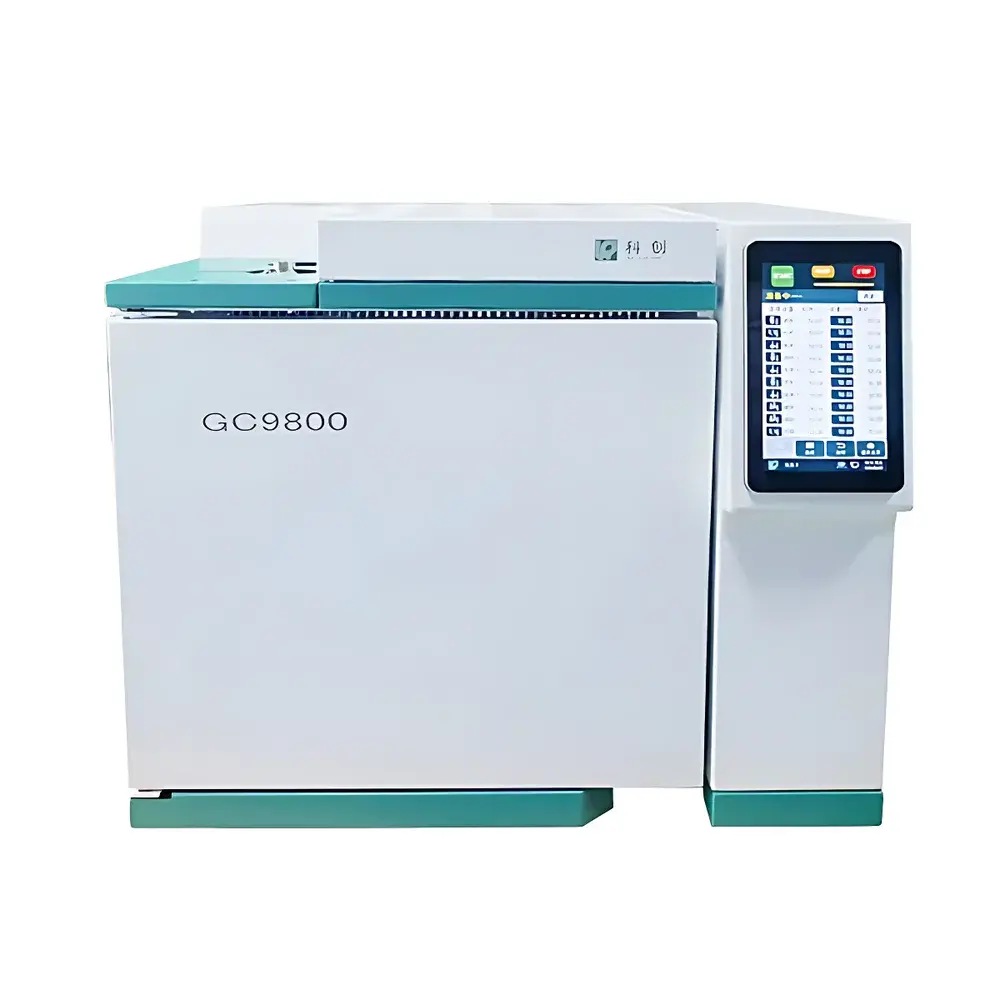
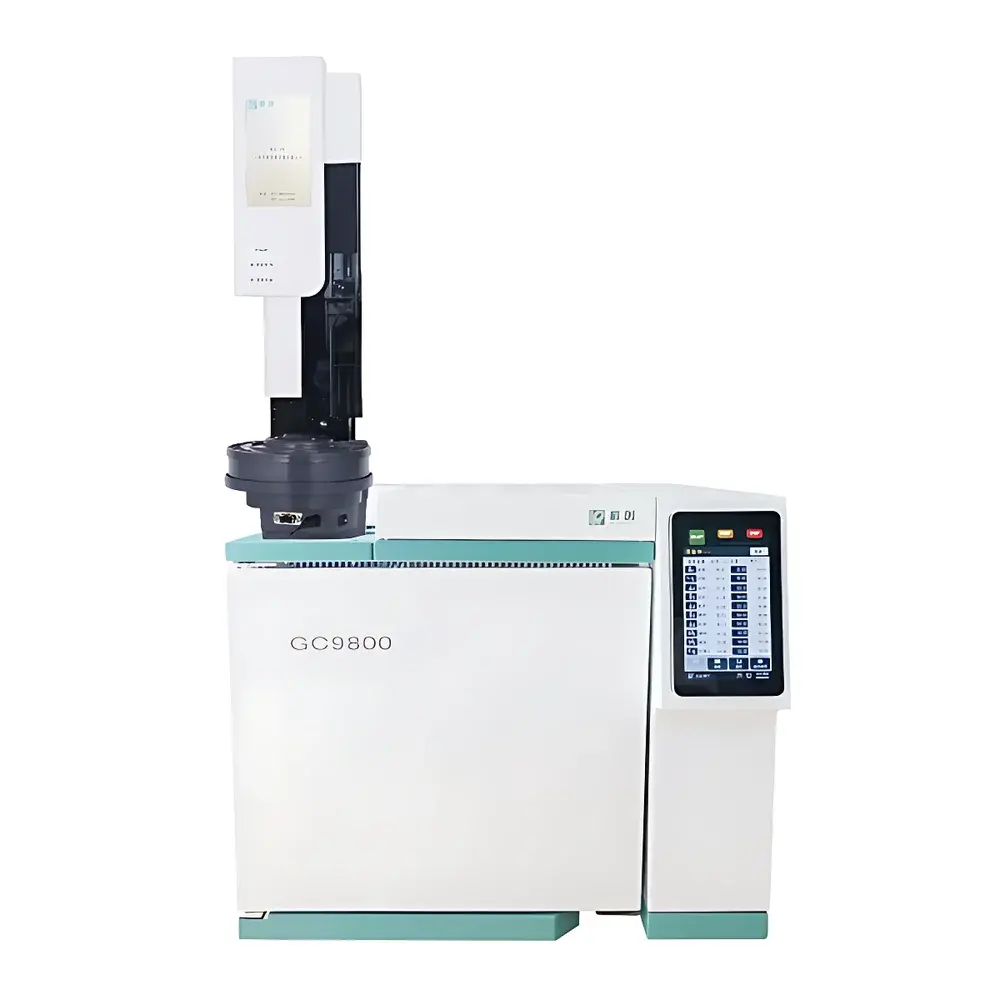
Kechuang GC9800 Advanced Network-Enabled Gas Chromatograph
| Brand | Kechuang |
|---|---|
| Origin | Shanghai, China |
| Manufacturer Type | Direct Manufacturer |
| Product Origin | Domestic (China) |
| Model | GC9800 (New Generation) |
| Price Range | USD 4,200 – 7,000 |
Overview
The Kechuang GC9800 Advanced Network-Enabled Gas Chromatograph is a high-performance, microprocessor-controlled analytical instrument engineered for precision separation, identification, and quantification of volatile and semi-volatile organic compounds. Built upon gas chromatographic principles—where analytes are partitioned between a mobile gaseous phase (carrier gas) and a stationary liquid or polymer phase coated on the inner wall of a fused-silica capillary column—the GC9800 delivers robust thermal stability, digital signal integrity, and scalable network integration. Its architecture supports both research-grade method development and routine QC/QA workflows in pharmaceutical, environmental, petrochemical, and food safety laboratories. Designed to meet fundamental requirements for regulatory compliance—including ISO/IEC 17025 method validation and GLP-aligned operational traceability—the system integrates hardware-level fault diagnostics, redundant thermal protection, and real-time environmental compensation to ensure measurement continuity and data fidelity.
Key Features
- 10-channel independent temperature control with ±0.01 °C setpoint accuracy and <0.1 °C thermal drift over 30 min, enabling precise oven, injector, and detector zone management.
- Integrated RJ45 Ethernet interface supporting TCP/IP-based remote operation; single workstation controls up to 253 units simultaneously, facilitating centralized fleet monitoring and audit-ready data routing to supervisory systems.
- Electronic Pressure Control (EPC) and Electronic Flow Control (EFC) system with 24 independently programmable channels; pressure resolution: 0.001 psi; flow resolution: 0.001 mL/min; repeatability (RSD): ≤0.1% across all modes (constant pressure, constant flow, or multi-step program ramping).
- 7-inch capacitive touchscreen HMI with real-time baseline visualization, interactive chromatogram display, and embedded firmware-level instrument control—eliminating dependency on external PC during basic operation.
- Large-capacity oven with automatic rear-door cooling; 16-stage (expandable) programmable temperature ramping; cooling from 350 °C to 50 °C in ≤5 min using optional variable-frequency drive (VFD) motor.
- Onboard 8-event time-programmable external trigger interface for automated valve switching, fraction collection, or multi-injection sequences—enabling unattended cyclic analysis protocols.
- Wide-dynamic-range detector amplifier modules standard across all detectors, preventing solvent peak saturation and preserving linear response at high-concentration injection levels.
Sample Compatibility & Compliance
The GC9800 accommodates standard 0.1–0.53 mm ID capillary columns and packed columns (up to 4 mm ID), supporting split/splitless, on-column, and PTV injection modes. It is compatible with N2, H2, He, and Ar carrier gases, with EPC/EFC optimized for each gas’s compressibility and viscosity profile. The system meets foundational design criteria aligned with ASTM D3606 (gasoline aromatics), EPA Method 8260 (volatile organics), and ISO 10628 (process analytical technology). Thermal stability and retention time reproducibility (<0.008% RSD) support method transfer per ICH Q2(R2) guidelines. All firmware logs—including temperature events, pressure deviations, and error codes—are timestamped and non-erasable, satisfying essential elements of FDA 21 CFR Part 11 for electronic records and signatures when deployed with validated software configurations.
Software & Data Management
The GC9800 ships with Kechuang ChromaView™ v4.x, a Windows-based chromatography data system (CDS) featuring full bidirectional instrument control, customizable report templates, and multi-detector signal routing. Users may assign any two or more detectors (e.g., FID + ECD) to a shared acquisition channel and dynamically switch active signals during runtime—critical for method optimization and confirmatory analysis. Audit trails record all parameter changes, sequence modifications, and calibration events with user ID and timestamp. Raw data (.chd binary format) and processed results (.csv, .pdf, .dx) are exportable without proprietary codec restrictions. Optional GMP-compliant configuration includes electronic signature enforcement, role-based access control, and 21 CFR Part 11-compliant audit trail archiving.
Applications
- Residual solvent analysis in APIs and excipients (ICH Q3C compliant)
- VOC screening in drinking water and soil extracts (EPA 524.2, 8260D)
- Fatty acid methyl ester (FAME) profiling in biodiesel feedstocks (ASTM D6584)
- Pesticide multiresidue testing in fruits and vegetables (EN 15662)
- Hydrocarbon fingerprinting in petroleum products (ASTM D5186)
- Impurity profiling in synthetic intermediates and final drug substances
FAQ
Does the GC9800 support remote diagnostics and firmware updates over the network?
Yes—via secure HTTP/HTTPS endpoints on the embedded web server, authorized technicians can initiate health checks, retrieve diagnostic logs, and deploy signed firmware patches without physical access.
Can the system be integrated into an existing LIMS environment?
Yes—through ODBC-compliant database export, HL7 message mapping, or RESTful API extensions (available under custom integration license).
Is the EPC/EFC system compatible with hydrogen carrier gas for fast GC applications?
Yes—pressure and flow algorithms are calibrated for H2 compressibility; maximum ramp rate >120 °C/min is achievable with appropriate column and detector selection.
What is the minimum detectable concentration for chlorinated pesticides using the ECD configuration?
At optimal tuning, the ECD achieves ≤10 fg/mL detection limit for γ-HCH (lindane), consistent with EU SANTE/11312/2021 sensitivity requirements.
How does the system handle ambient temperature fluctuations during long-duration runs?
The oven thermal mass and dual-sensor feedback loop maintain column temperature deviation <0.1 °C per 10 °C ambient shift, verified per ISO 17025 clause 5.4.6.
Related Products






