
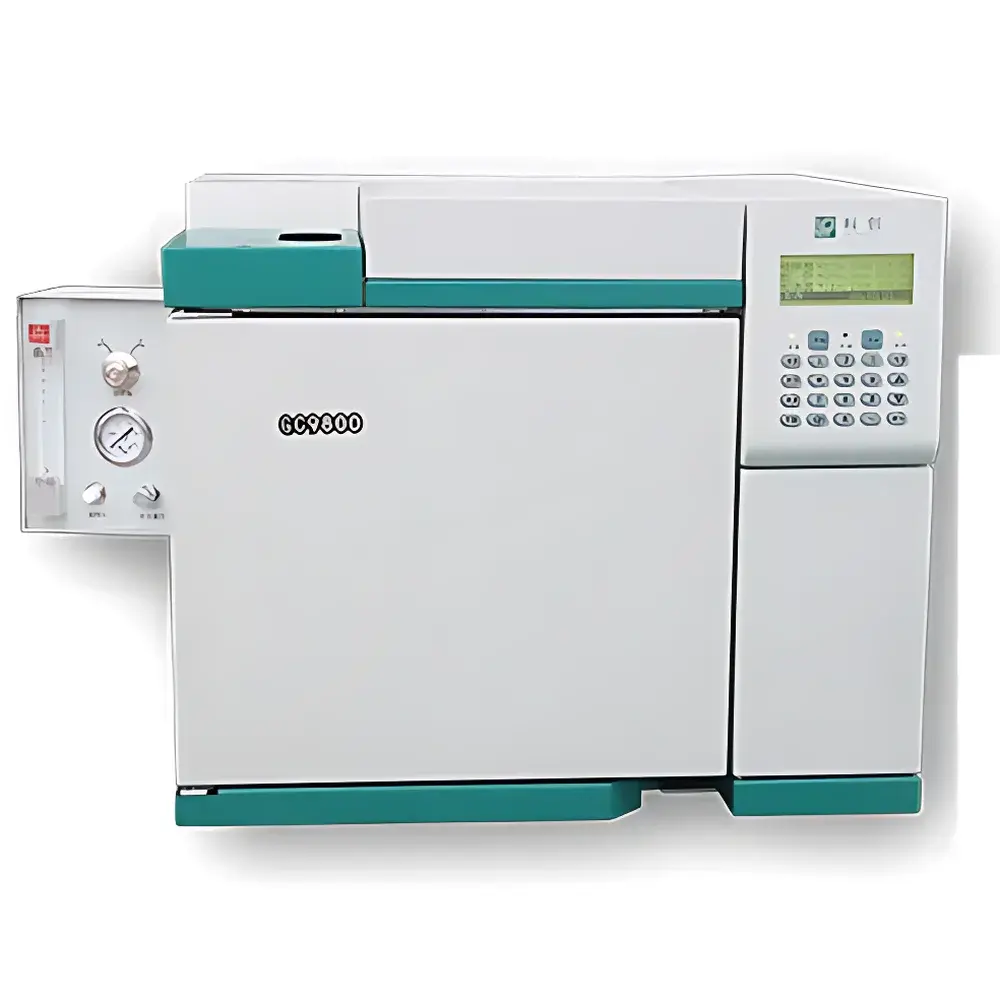
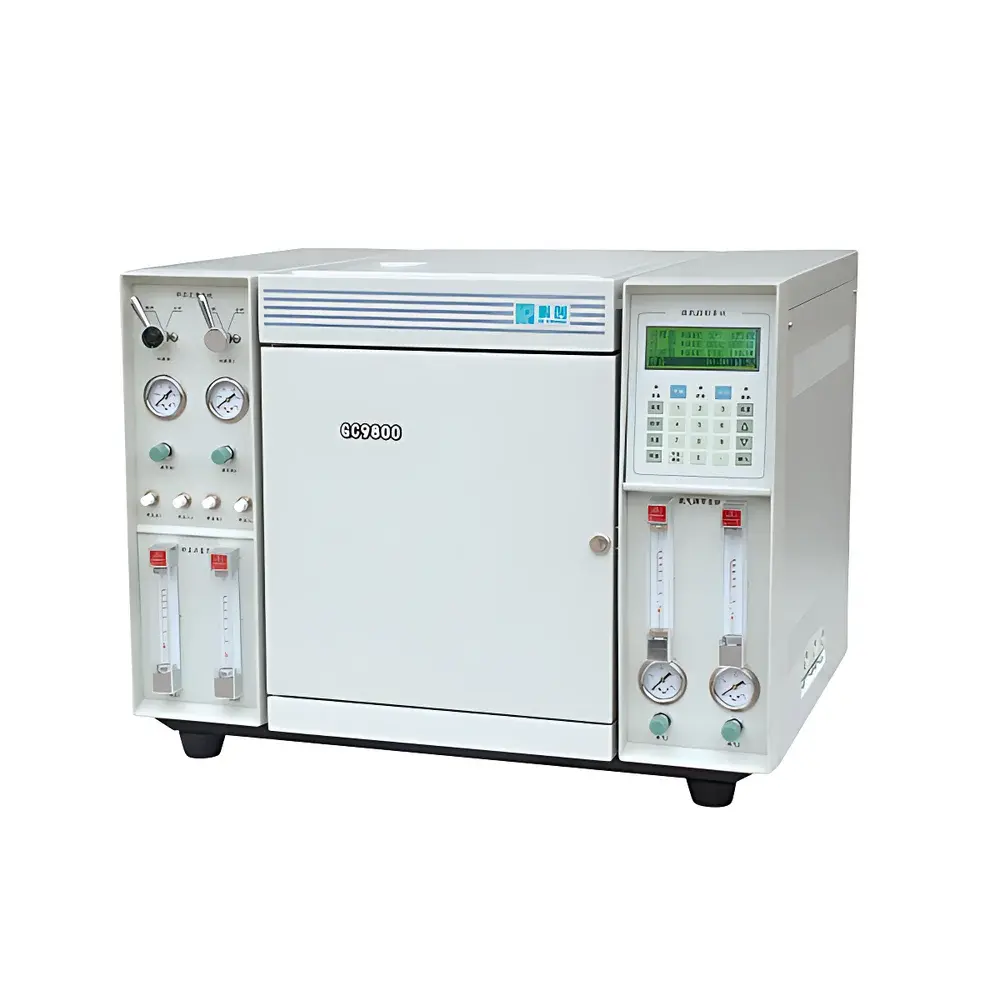
Kechuang GC9800 High-Purity Sulfur Hexafluoride (SF₆) Gas Analysis System with Dual-Channel FPD Detection
| Brand | Kechuang |
|---|---|
| Origin | Shanghai, China |
| Manufacturer Type | Direct Manufacturer |
| Country of Origin | China |
| Model | GC9800 (N/SF₆/FPD) |
| Detection Targets | HCl, SiH₄, CF₄, SO₂F₂, S₂OF₂, S₂OF₁₀ (ppm-level trace impurities in ultra-high-purity SF₆) |
| FPD Sensitivity | ≤5.0×10⁻¹¹ g/s (n-hexadecane) |
| Baseline Noise | ≤0.1 mV |
| Baseline Drift | ≤0.5 mV / 0.5 h |
| Oven Temp Range | 8 °C above ambient to 400 °C |
| Temperature Control Accuracy | ±0.5% |
| Programmable Temperature Steps | 8 |
| Ramp Rate | 0–39 °C/min (0.1 °C/min increment) |
| Retention Time Reproducibility | ≤1% RSD |
Overview
The Kechuang GC9800 High-Purity Sulfur Hexafluoride (SF₆) Gas Analysis System is a purpose-engineered gas chromatograph optimized for trace-level impurity profiling in ultra-high-purity (UHP) SF₆ used in high-voltage insulation, semiconductor etching, and plasma processing environments. It operates on the principle of capillary gas chromatography coupled with dual-channel flame photometric detection (FPD), enabling selective, sensitive, and quantitative analysis of sulfur- and phosphorus-containing compounds—including SO₂F₂, S₂OF₂, S₂OF₁₀—as well as halogenated impurities such as HCl, SiH₄, and CF₄. The system integrates a dedicated SF₆ switching and back-flush configuration to eliminate matrix interference from the dominant SF₆ carrier, thereby extending column life, improving peak resolution for low-abundance analytes, and ensuring robust baseline stability during extended unattended operation.
Key Features
- Integrated SF₆-specific back-flush gas routing module with automated valve sequencing—minimizes SF₆ overload on the analytical column and enables direct injection of undiluted UHP SF₆ samples.
- Dual-channel FPD detector with independent photomultiplier gain control and optical filtering for simultaneous sulfur- and phosphorus-selective detection—critical for distinguishing SO₂F₂ (sulfur response) from SiH₄ (phosphorus response, if derivatized) or CF₄ (non-responsive, confirmed via retention time and co-elution studies).
- Microprocessor-controlled oven with automatic rear-door cooling—supports precise near-ambient temperature operation (≥8 °C above ambient) and up to 8-step programmable temperature gradients, essential for resolving volatile impurities with close boiling points.
- Six independently controlled temperature zones (oven, injector, detector, valve box, transfer lines, auxiliary heater)—ensuring thermal consistency across all critical flow paths and eliminating condensation artifacts.
- Embedded Ethernet interface (10/100 Mbps) compliant with TCP/IP stack—enables remote instrument control, real-time data streaming, and centralized fleet management for laboratories operating multiple GC units.
- Self-diagnostic firmware with fault logging and thermal cut-off protection—triggers immediate heating suspension if any zone exceeds user-defined safety thresholds, preserving column integrity and detector longevity.
Sample Compatibility & Compliance
The GC9800 is validated for use with cylinder-grade SF₆ (≥99.999% purity) and certified reference gas mixtures containing SO₂F₂ (28 ppm), S₂OF₂ (40 ppm), and S₂OF₁₀ (33 ppm) in SF₆ matrix. Its hardware architecture and method protocols align with ASTM D2472 (Standard Specification for Sulfur Hexafluoride), IEC 60376 (Specifications for new SF₆), and ISO 8573-8 (Compressed air — Part 8: Test methods for oil content). Data acquisition and audit trail functions support GLP-compliant workflows; optional software modules provide 21 CFR Part 11–compliant electronic signatures, user access levels, and immutable raw-data archiving.
Software & Data Management
The embedded workstation delivers native chromatographic data acquisition, peak integration (tangent skim, valley-to-valley, exponential skimming), calibration curve generation (linear, quadratic, weighted), and report export in PDF, CSV, and XML formats. All signal outputs are digitized at ≥24-bit resolution and transmitted via standard Ethernet—eliminating analog noise and enabling seamless integration with LIMS platforms (e.g., Thermo Fisher SampleManager, LabVantage). Remote monitoring dashboards allow supervisors to view real-time run status, instrument health metrics, and QC flagging across up to 253 networked GC9800 units from a single client workstation.
Applications
- Quality assurance of SF₆ supplied to GIS (gas-insulated switchgear) manufacturers per IEC 60480 reclamation standards.
- Monitoring decomposition by-products (e.g., SOF₂, SO₂F₂) in energized high-voltage equipment during condition-based maintenance.
- Trace halocarbon screening in semiconductor-grade SF₆ to prevent chamber contamination and wafer yield loss.
- Validation of SF₆ purification systems (e.g., cryogenic traps, catalytic scrubbers) through pre- and post-treatment impurity profiling.
- Environmental compliance testing for SF₆ emissions reporting under EPA GHG Reporting Program (Subpart DD) and EU F-Gas Regulation (EU No 517/2014).
FAQ
Does the GC9800 require external gas purifiers or zero-air generators for FPD operation?
No—the system includes integrated hydrocarbon and moisture traps upstream of the hydrogen/air supply lines; however, laboratory-grade H₂ (99.999%) and compressed air (dew point ≤ −40 °C) are recommended for optimal FPD stability.
Can the SF₆ back-flush configuration be reconfigured for other carrier gases (e.g., N₂ or He)?
Yes—the valve timing and pressure profiles are fully programmable via the workstation; method templates for N₂-based analysis of air contaminants or He-based light-gas separations are available upon request.
Is the 8 °C above ambient minimum oven temperature achievable in uncontrolled laboratory environments?
Yes—the rear-door cooling system actively regulates internal oven airflow; stable operation has been verified at ambient temperatures ranging from 15 °C to 35 °C.
How is detector sensitivity verified during routine maintenance?
A standardized n-hexadecane challenge test is built into the diagnostic suite; results are logged with timestamp, operator ID, and pass/fail criteria aligned with ASTM D5504 Annex A1.
What cybersecurity protocols are implemented for Ethernet-connected operation?
The embedded Linux OS supports configurable firewall rules, SSHv2 encryption for remote CLI access, and TLS 1.2 for web-based GUI sessions—fully auditable within enterprise IT security frameworks.







