
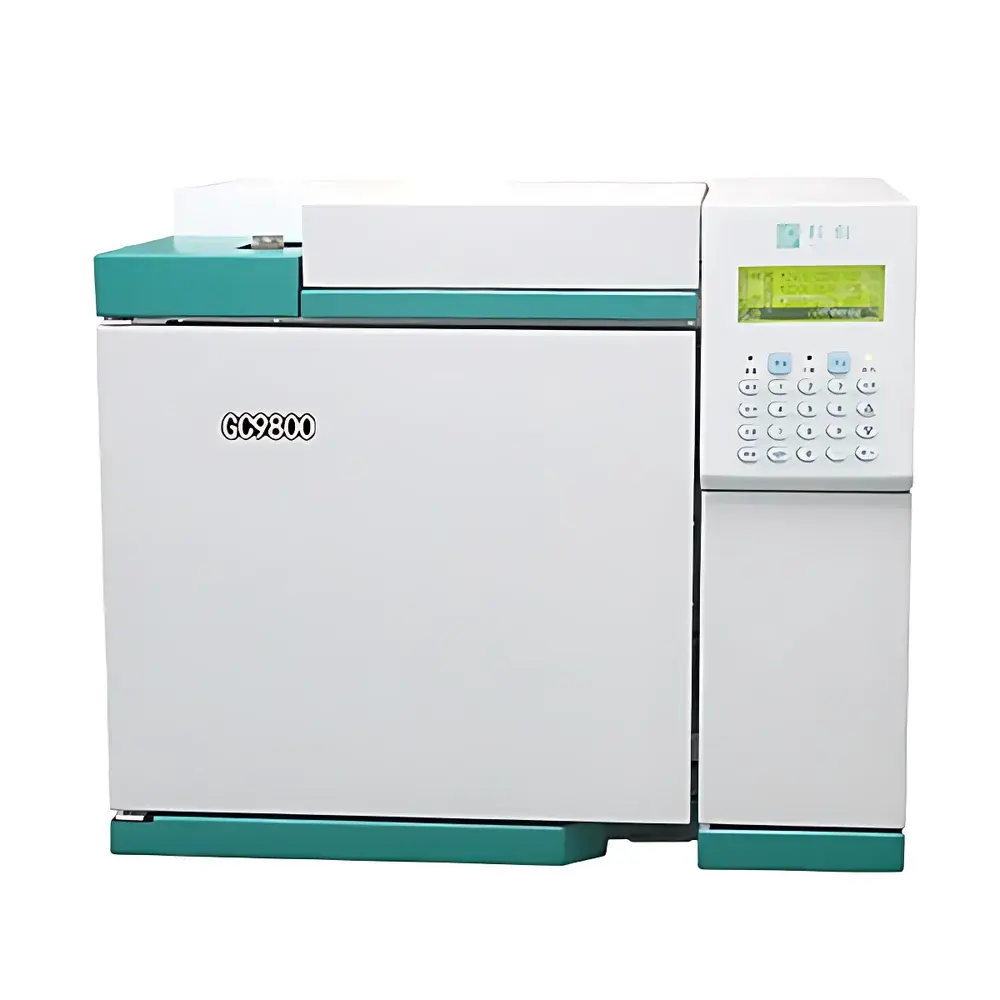
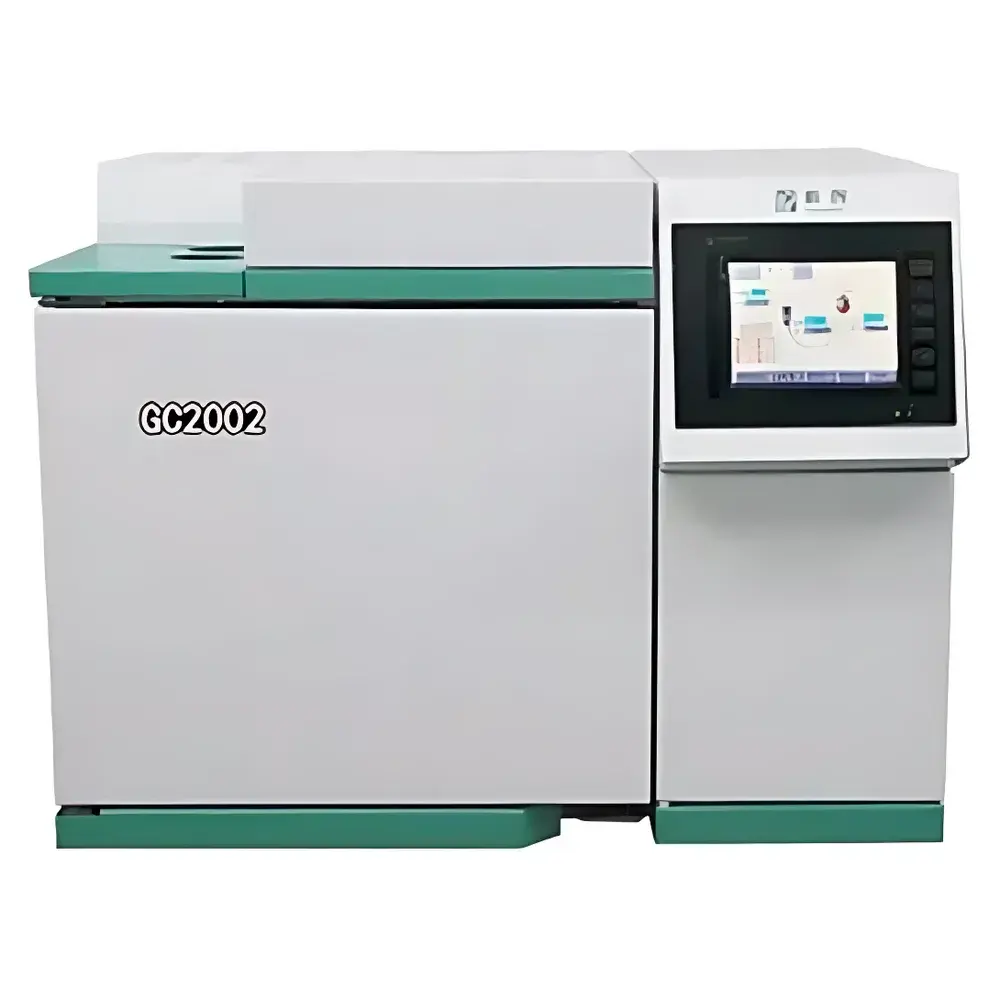
Kechuang HL-800 ppm-Level Sulfide-Specific Gas Chromatograph with Flame Photometric Detection (FPD)
| Brand | Kechuang |
|---|---|
| Origin | Shanghai, China |
| Manufacturer Type | Direct Manufacturer |
| Regional Classification | Domestic (China) |
| Model | HL-800 |
| Instrument Type | Laboratory Benchtop GC System |
| Detection Principle | Gas Chromatography–Flame Photometric Detection (GC-FPD) for Sulfur-Selective Quantification |
| Target Analytes | H₂S, Methanethiol (CH₃SH), Dimethyl Sulfide (DMS), Dimethyl Disulfide (DMDS) |
| Detection Range | 0.1–10 ppm (as sulfur) |
| Column Oven Temperature Program | 100 °C (1 min), then ramp at 5 °C/min to 240 °C |
| Typical Retention Times (H₂S, CH₃SH, DMS, DMDS) | 1.12–1.13 min, 2.72–2.73 min, 6.08–6.10 min, 16.58–16.60 min |
| Detector | Dual-Channel FPD with S-Mode optimization |
| Data Output | Peak Area, Peak Height, Retention Time, Calculated Concentration (ppm) |
| Compliance Framework | Designed for ASTM D5504, ISO 8573-5, and EPA Method 16, supporting GLP-compliant data integrity workflows |
Overview
The Kechuang HL-800 is a dedicated laboratory-grade gas chromatograph engineered for trace-level (ppm-range) quantification of volatile sulfur compounds (VSCs) in aqueous, gaseous, and extractable environmental matrices. It implements a robust GC-FPD (Gas Chromatography–Flame Photometric Detection) architecture optimized specifically for sulfur-selective detection—leveraging the characteristic 394 nm chemiluminescent emission of excited SO species generated during combustion in a hydrogen-rich flame. Unlike general-purpose GC systems, the HL-800 integrates hardware-level sulfur response calibration, retention time stabilization protocols, and column oven thermal profiling validated for reproducible separation of key odorants and toxicity markers: hydrogen sulfide (H₂S), methanethiol (CH₃SH), dimethyl sulfide (DMS), and dimethyl disulfide (DMDS). Its design targets regulatory and methodological requirements in water quality laboratories, wastewater treatment facilities, and ambient air monitoring programs where sub-ppm sulfur speciation is mandated by national and international standards.
Key Features
- Dedicated sulfur-selective FPD detector with dual-channel optical filtering and real-time S-mode gain control for enhanced signal-to-noise ratio and minimized carbon interference
- Programmable column oven with precise ±0.1 °C temperature stability over 30–250 °C range; supports multi-step ramp profiles including isothermal hold and gradient cooling
- Pre-configured analytical method package compliant with ASTM D5504 (Standard Test Method for Determination of Sulfur Compounds in Natural Gas and Gaseous Fuels by Gas Chromatography and Chemiluminescence) and EPA Method 16 (Determination of Volatile Organic Compounds in Water by Purge and Trap Capillary Column Gas Chromatography with Photoionization and Electrolytic Conductivity Detectors)
- Integrated carrier gas flow control with electronic pressure regulation (EPC) for helium or nitrogen; ensures retention time repeatability ≤0.02 min across 24-h continuous operation
- Benchtop footprint (520 × 480 × 280 mm) with front-access service panel and modular detector compartment for rapid maintenance and detector interchangeability
- Factory-calibrated sulfur response factors for four primary VSCs, traceable to NIST-traceable sulfur standards (SRM 2793)
Sample Compatibility & Compliance
The HL-800 accommodates direct injection of gas-phase samples via gas-tight syringe or automated valve loop, as well as liquid-phase analysis following headspace equilibration (HS-GC) or purge-and-trap (P&T) preconcentration—enabling detection limits of 0.1 ppm (as sulfur) in drinking water, surface water, and treated effluent per ISO 10303 and China’s HJ 636-2012 standard. All hardware and firmware components conform to IEC 61000-6-3 (EMC emissions) and IEC 61010-1 (safety for laboratory equipment). Data acquisition and reporting modules support audit trails, user access levels, and electronic signatures aligned with FDA 21 CFR Part 11 requirements when operated with optional LIMS-integrated software. The system meets essential performance criteria for GLP and ISO/IEC 17025-accredited testing laboratories conducting routine sulfur speciation under environmental quality monitoring programs.
Software & Data Management
The HL-800 operates with GC Navigator™ v3.2 — a Windows-based chromatography data system (CDS) featuring method-driven acquisition, automated peak integration using adaptive baseline algorithms, and customizable report templates compliant with ISO/IEC 17025 documentation requirements. Raw data files (.raw) are stored with embedded metadata (operator ID, instrument serial number, method version, calibration date), and all processing steps—including integration events, manual peak edits, and concentration calculations—are logged in an immutable audit trail. Export options include CSV, PDF, and XML formats compatible with enterprise LIMS platforms (e.g., LabWare, STARLIMS). Optional 21 CFR Part 11 module provides role-based authentication, electronic signature enforcement, and secure database encryption (AES-256).
Applications
- Quantitative determination of H₂S and organic sulfides in municipal and industrial wastewater influent/effluent
- Odor source identification and control validation in landfill leachate, biosolids, and anaerobic digesters
- Compliance monitoring of sulfur emissions from pulp and paper mills, petroleum refineries, and chemical manufacturing sites
- Drinking water safety assessment per WHO Guideline Values for sulfur compounds (e.g., 0.002 mg/L H₂S)
- Research on microbial sulfate reduction pathways and VSC generation kinetics in aquatic sediments
- Method development and validation for accredited environmental testing laboratories seeking CNAS or CMA accreditation
FAQ
What sulfur compounds can the HL-800 reliably separate and quantify?
The system is validated for hydrogen sulfide (H₂S), methanethiol (CH₃SH), dimethyl sulfide (DMS), and dimethyl disulfide (DMDS) with baseline resolution (Rs ≥ 1.5) under standard EPA Method 16 conditions.
Is the HL-800 compatible with purge-and-trap sample introduction?
Yes—it supports seamless integration with commercially available P&T concentrators (e.g., Tekmar Atomx, OI 4660) via standard 1/16″ stainless steel transfer lines and TTL-triggered synchronization.
Does the FPD require periodic recalibration for sulfur response?
A full sulfur response calibration is recommended every 72 hours of active use or prior to each analytical batch when operating under GLP conditions; the system stores up to 10 calibration curves with timestamped validity windows.
Can raw chromatograms be reprocessed with updated integration parameters?
Yes—all acquired signals are stored in vendor-neutral format; users may apply revised baselines, peak thresholds, or retention time windows without re-injection.
What consumables are required for routine operation?
Standard consumables include HP-PLOT Q or DB-Sulfur capillary columns (30 m × 0.32 mm × 10 µm), FPD jet assemblies, H₂ and air supply filters, and certified sulfur standard solutions (NIST-traceable, 1–100 ppm in methanol).
Related Products







