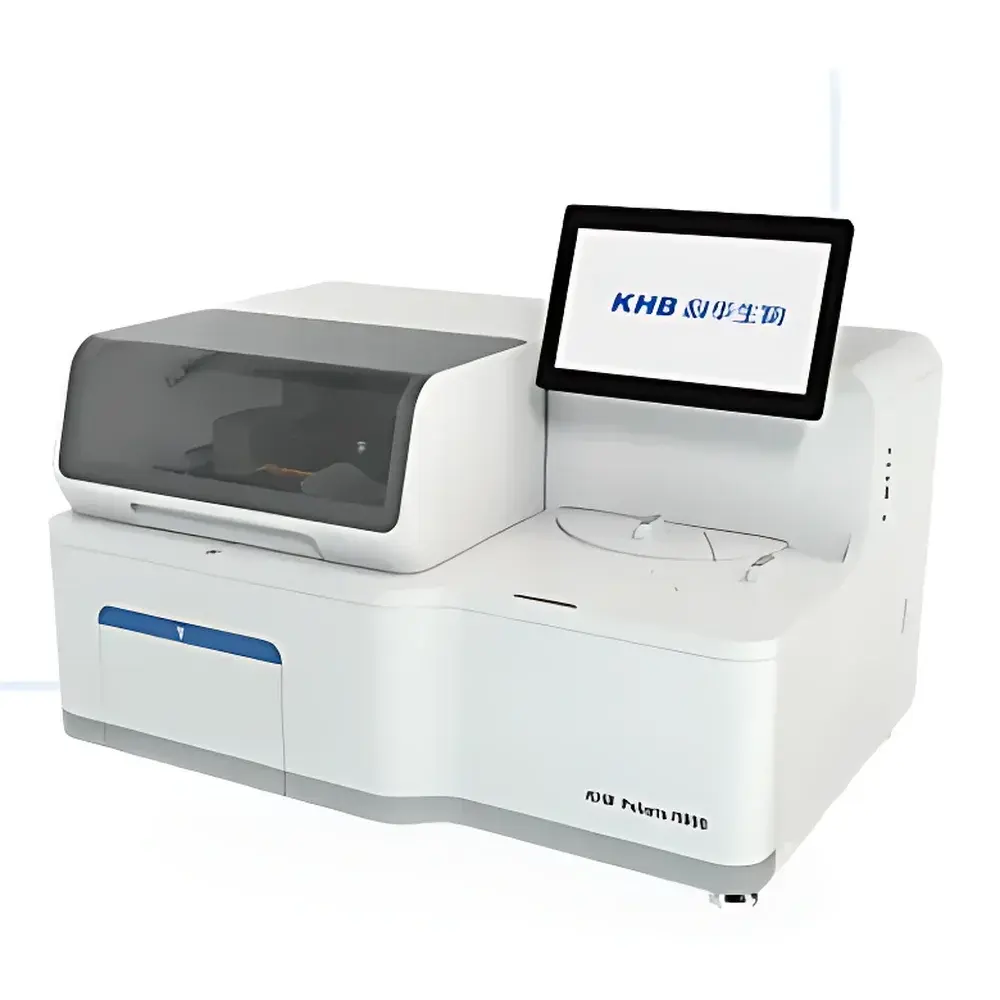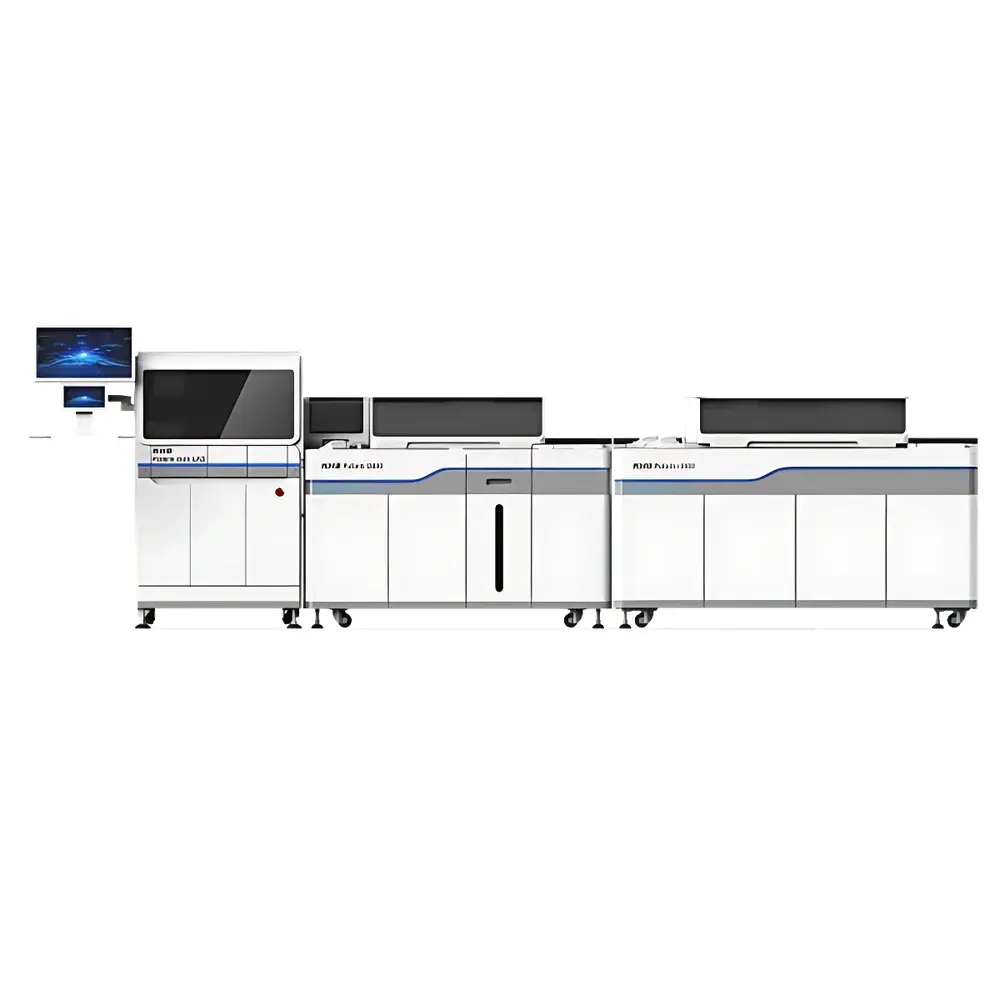
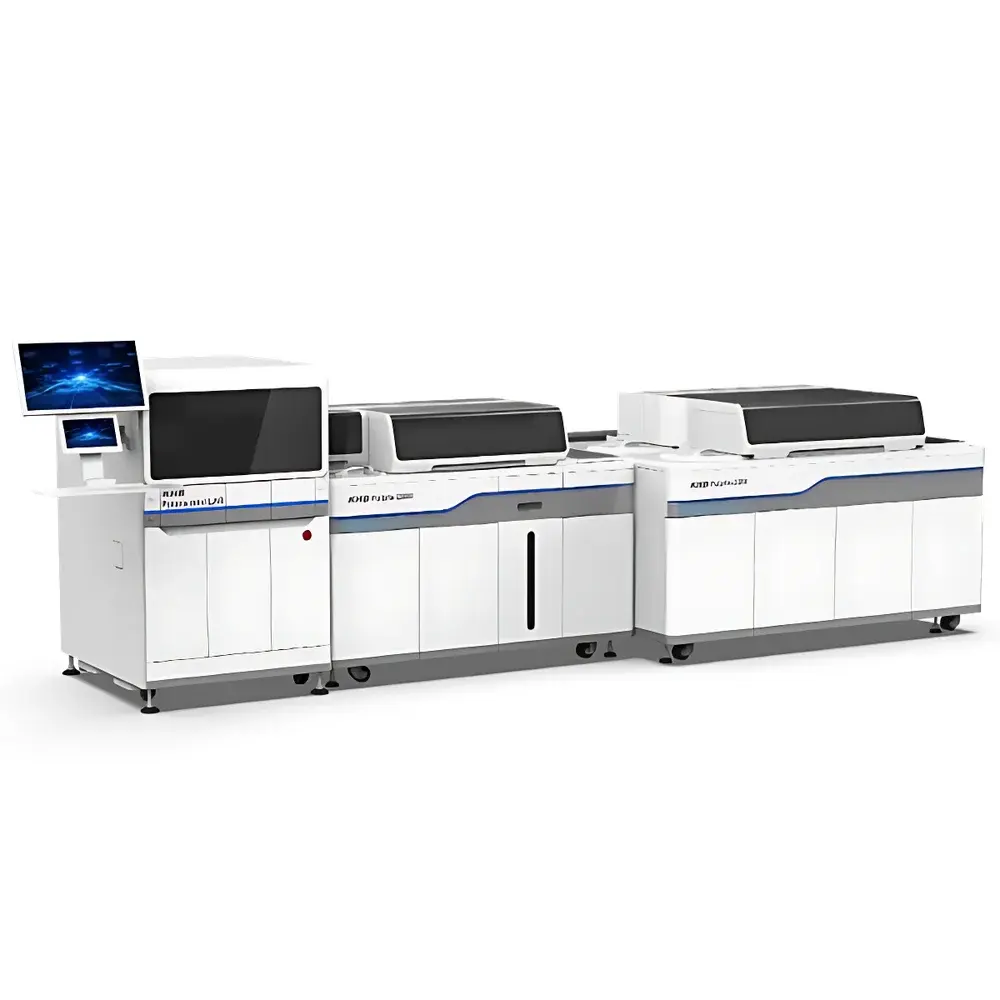
Kehua Bio mini LAS Fully Automated Clinical Chemistry and Immunoassay Integrated Line
| Brand | Kehua Bio (KHB) |
|---|---|
| Origin | Shanghai, China |
| Manufacturer Type | Authorized Distributor |
| Country of Origin | China |
| Model | mini LAS |
| Pricing | Upon Request |
| Footprint | 6 m² |
| Throughput | Up to 2000 tests/h (clinical chemistry), Up to 240 tests/h (immunoassay) |
| Sample Loading Options | Gravitational pouring, Rack-based loading, Pneumatic tube transport |
| Sample Processing | Integrated pre-analytical and post-analytical module with automatic cap piercing and re-capping |
| Quality Control | Scheduled auto-start, remote activation via WeChat mini-program, AI-powered QC flagging logic |
| Sample Integrity | AI vision-based sample inspection (clot detection, hemolysis, lipemia, volume insufficiency) |
| Carryover Prevention | Dual-wash probe system with real-time monitoring, compliant with CLSI EP26-A guidelines |
| Regulatory Compliance | Meets GB/T 26124–2010 (Clinical Chemistry Analyzers), YY/T 1255–2015 (Immunoassay Systems), ISO 15189 pre-analytical requirements |
Overview
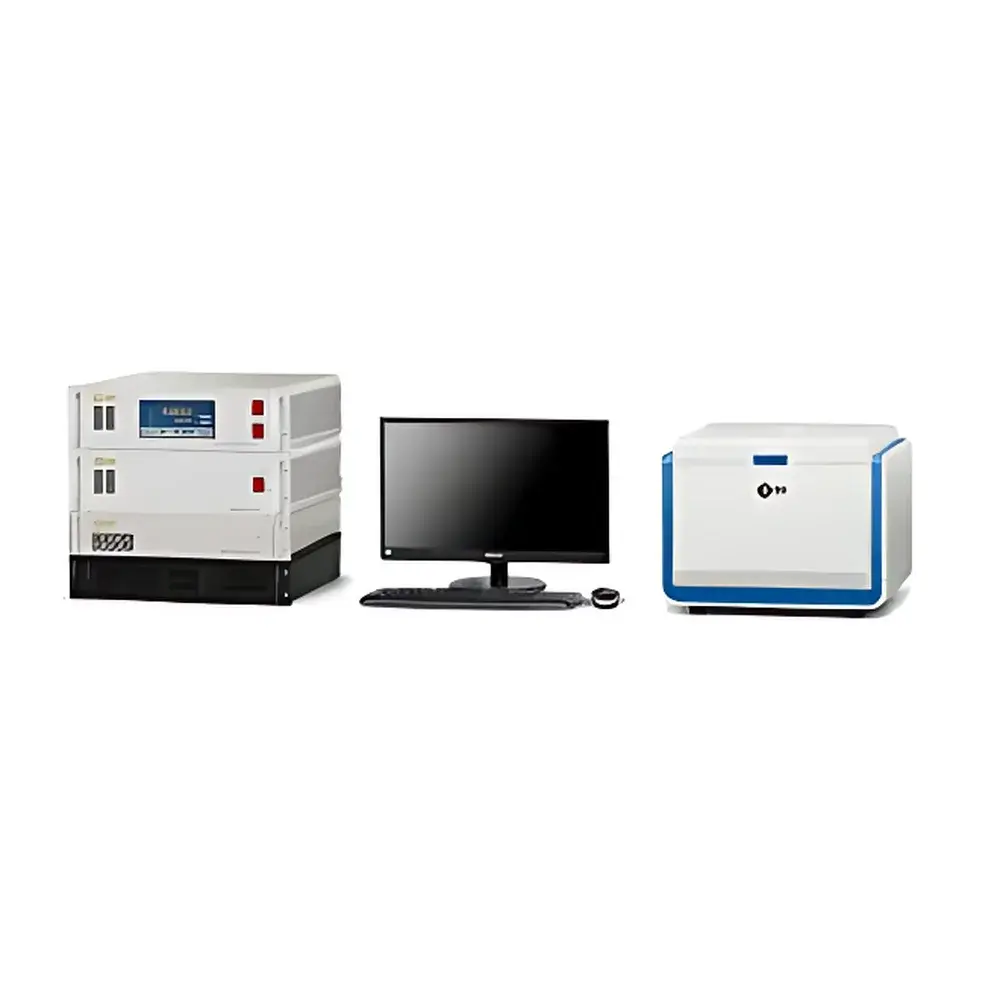
The Kehua Bio mini LAS is a compact, fully integrated clinical laboratory automation system engineered for mid-volume hospital laboratories and core labs requiring high assay flexibility without infrastructure overhaul. Unlike traditional large-scale track-based lines, the mini LAS employs a modular, space-optimized architecture that unifies clinical chemistry and immunoassay workflows within a single footprint of just 6 m² — enabling deployment in existing lab bays without structural modification. Its core measurement technologies adhere to internationally recognized principles: photometric and ion-selective electrode (ISE) methodologies for clinical chemistry (per CLSI C3–E and ISO 15197), and chemiluminescent microparticle immunoassay (CMIA) for immunoanalysis (aligned with CLSI EP12–A2 and ISO 20914). The system is designed for seamless integration into ISO 15189-accredited environments, supporting full traceability from sample receipt to result release.
Key Features
- Integrated pre- and post-analytical automation: Automatic sample identification (2D barcode scanning), centrifugation coordination (via external or embedded centrifuge interface), aliquoting, cap piercing, re-capping, and waste management — eliminating manual film covering and reducing hands-on time by >70%.
- Multi-mode sample introduction: Supports gravitational pouring for urgent STAT samples, standardized rack loading (5–20 tubes/rack), and pneumatic tube transport (PTS) integration with hospital-wide specimen delivery networks (compatible with common PTS protocols including ASTM F2761).
- AI-driven sample integrity assessment: Embedded high-resolution imaging module performs real-time analysis of serum/plasma specimens for clot completeness, hemolysis index (absorbance at 540 nm & 600 nm), lipemia grade (turbidity at 700 nm), and volume adequacy — flagging non-conforming samples prior to assay initiation per CLSI GP44–A4 recommendations.
- Carryover mitigation architecture: Dual-stage probe washing (alkaline + neutral rinse) with pressure-sensor feedback and optical residue detection; validated carryover <0.1 ppm for high-concentration analytes (e.g., creatinine, CRP) per CLSI EP26–A.
- Remote operational control: Web-enabled dashboard and WeChat Mini Program interface support scheduled instrument wake-up, QC run initiation, error log review, and consumables inventory tracking — facilitating GLP-compliant shift handovers and off-hours monitoring.
Sample Compatibility & Compliance
The mini LAS accepts primary tubes (vacutainer types: SST, EDTA-K2/K3, lithium heparin, sodium citrate) and secondary cups (13 × 75 mm, 13 × 100 mm). It complies with national standards GB/T 26124–2010 (performance requirements for clinical chemistry analyzers) and YY/T 1255–2015 (immunoassay system validation), and supports alignment with ISO 15189:2022 clause 5.3 (pre-examination processes) and clause 5.7 (result reporting). All reagent packs include lot-specific calibration curves and QC material assignments traceable to NIM (National Institute of Metrology, China) reference materials. Data audit trails meet FDA 21 CFR Part 11 requirements for electronic records and signatures when deployed with optional secure login and role-based access modules.
Software & Data Management
The KLAS OS v3.2 operating system provides unified workflow orchestration across chemistry and immunoassay modules. It features bidirectional HL7 v2.5.1 and ASTM E1384 interfaces for LIS/EHR integration, configurable rule-based reflex testing (e.g., ALT → AST → GGT cascade), and automated delta-check alerts. Audit logs record user actions, instrument events, and QC results with immutable timestamps. Data export supports CSV, PDF, and XML formats for external QA review. Optional middleware (Kehua LabLink) enables centralized fleet management across multiple mini LAS units in multi-site health systems.
Applications
The mini LAS is routinely deployed in tier-2 hospitals, regional diagnostic centers, and academic medical centers for routine clinical chemistry panels (liver/kidney function, lipid profile, electrolytes), therapeutic drug monitoring (e.g., vancomycin, digoxin), endocrine assays (TSH, cortisol, testosterone), infectious disease serology (HBV, HCV, HIV), and tumor markers (AFP, CEA, CA125). Its throughput scalability supports peak daily volumes of 800–1,200 chemistry tests and 180–220 immunoassays — ideal for labs transitioning from semi-automated benches to consolidated analytics.
FAQ
What is the minimum required ceiling height for installation?
The system operates within standard laboratory ceiling heights (≥2.6 m); no special clearance is needed.
Does the mini LAS support third-party reagents?
It is validated exclusively for Kehua Bio’s CE-IVD and NMPA-approved reagent kits; open-channel operation is not supported to ensure compliance with regulatory traceability requirements.
How is calibration verification performed?
Calibration is verified daily using two-level commercial controls; multi-point calibration curves are updated per manufacturer-defined intervals (typically every 14–30 days depending on assay stability data).
Can the system interface with a central laboratory information system (LIS)?
Yes — HL7 ADT/ORU and ASTM interfaces are standard; configuration support is provided by Kehua Bio’s certified integration specialists.
Is the AI vision module upgradeable for new interference detection algorithms?
Firmware updates for the imaging subsystem are delivered quarterly via secure OTA (over-the-air) channels, incorporating newly validated detection models based on multicenter clinical data.