
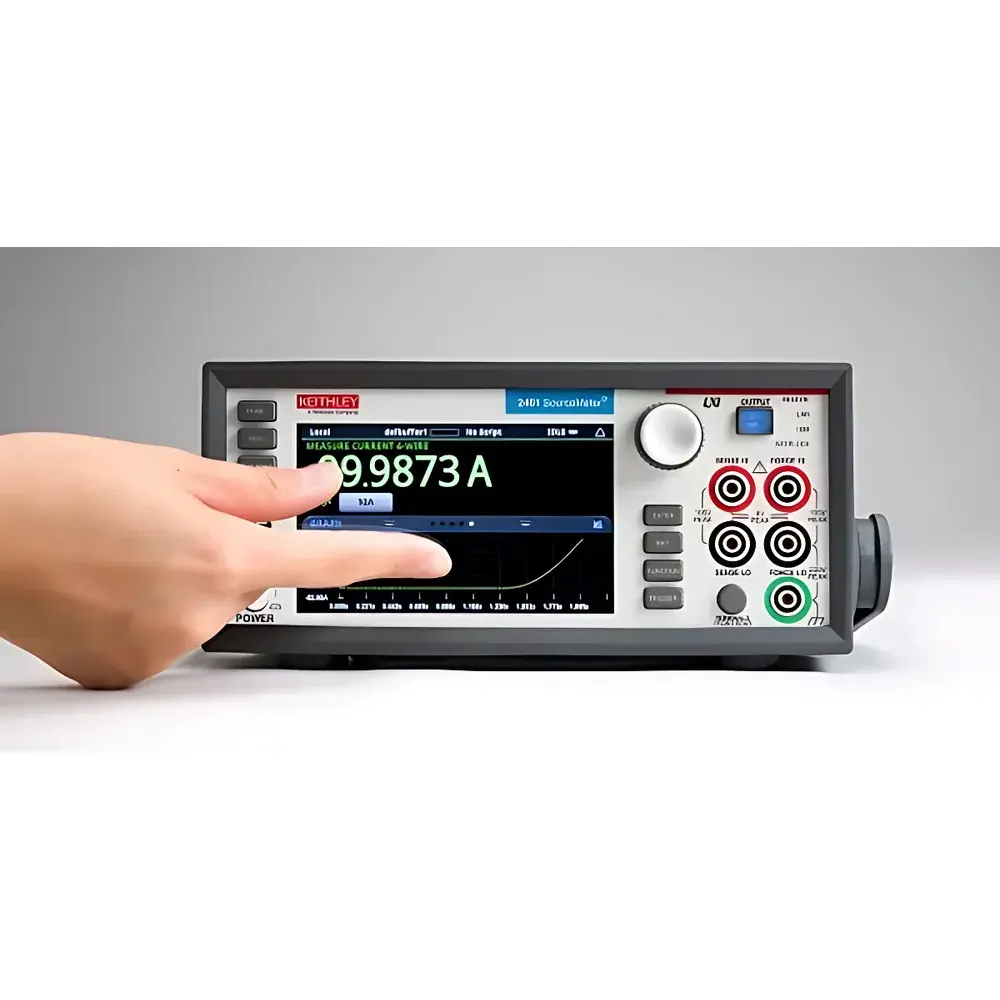
Keithley 2450 Electrochemical & Battery Analysis Software (CEL-KE2450)
| Brand | CEA Lab (Zhongjiao Jinyuan) |
|---|---|
| Origin | Beijing, China |
| Manufacturer Type | OEM Manufacturer |
| Region Classification | Domestic (China) |
| Model | CEL-KE2450 |
| Pricing | Upon Request |
Overview
The Keithley 2450 Electrochemical & Battery Analysis Software (CEL-KE2450) is a dedicated PC-based control and data acquisition platform engineered for seamless integration with the Keithley 2450 SourceMeter® instrument. Designed specifically for electrochemical characterization and battery testing workflows, this software implements standardized source-measure-unit (SMU) protocols to enable precise voltage sourcing, current sourcing, and simultaneous high-resolution measurement of voltage, current, resistance, and power. It operates on a deterministic, step-driven architecture—supporting both single-point and multi-step stimulus-response sequences—making it suitable for laboratory-based R&D, quality control, and pre-compliance validation in energy storage device development. The software adheres to fundamental SMU operational principles: four-quadrant sourcing, programmable compliance limits, and real-time feedback-controlled output stabilization—ensuring traceable, repeatable, and metrologically sound measurements aligned with ASTM F3018 (Standard Guide for Electrical Performance Testing of Lithium-Ion Batteries) and IEC 62660-1 (Secondary lithium-ion cells for propulsion applications).
Key Features
- Native dual-interface support: USB 2.0 (TMC-compliant) and TCP/IP over LAN (VXI-11 & raw socket), enabling flexible lab integration and remote operation.
- NI-VISA dependency management: Automatically detects pre-installed NI-VISA drivers (e.g., from KickStart or LabVIEW runtime); provides clear installation guidance if missing.
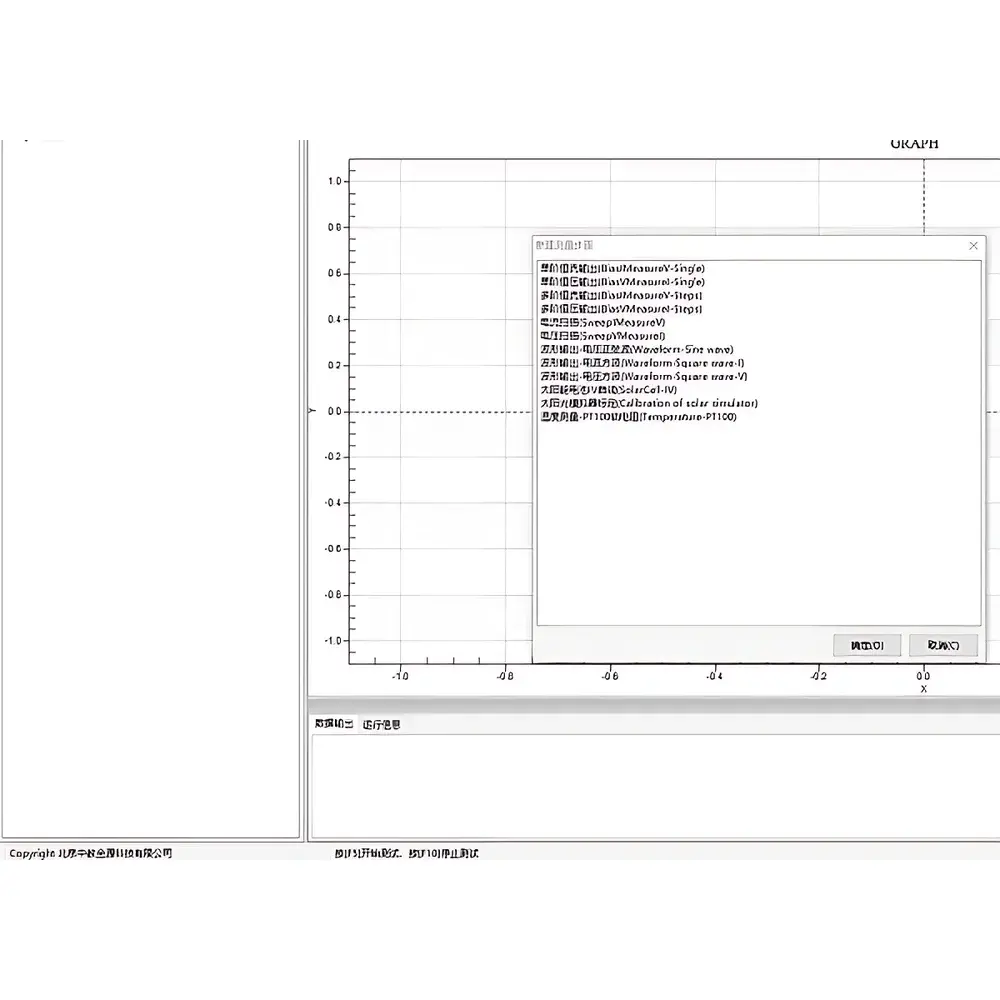
- Modular project architecture: Measurement configurations are stored as hierarchical function modules within .keproj files; supports concurrent setup of Bias-IMeasure-V, Sweep-VMeasure-I, SolarCell-IV, and PT100 temperature calibration routines in one session.
- Deterministic execution order: Modules execute sequentially based on user-defined priority; drag-and-drop reordering and insertion/deletion available via Edit → Module Management.
- Zero-latency data persistence: All numerical results export automatically to UTF-8 encoded CSV files—fully compatible with Excel, OriginPro, Python (pandas), and MATLAB—without proprietary binary dependencies.
- Synchronized visualization: Optional JPG snapshot capture per measurement step (enabled in Tools → System Options), preserving instrument display state for auditability and report generation.
- Comprehensive SMU mode coverage: Includes 2-wire/4-wire configuration selection, auto-zero cycles, programmable digital filtering (moving average, median), and sweep parameterization (start/stop/step, logarithmic/linear spacing).
Sample Compatibility & Compliance
The CEL-KE2450 software supports all standard electrochemical and battery test samples interfaced via the Keithley 2450’s triaxial front panel or rear-panel banana jacks—including coin cells (CR2032, CR2025), pouch cells, half-cells with reference electrodes, and solar cell devices under simulated AM1.5G illumination. It natively accommodates PT100-class platinum resistance thermometers for ambient or fixture-integrated temperature monitoring during thermal-aware cycling. From a regulatory standpoint, the software’s deterministic logging, timestamped CSV output, and absence of opaque data transformation align with GLP (Good Laboratory Practice) documentation requirements. While not certified for FDA 21 CFR Part 11 out-of-the-box, its audit-ready file structure, immutable CSV archives, and manual operator log fields support validation pathways required in GMP-aligned battery qualification labs.
Software & Data Management
Data integrity is enforced through atomic write operations: each measurement step generates one CSV file (with header metadata: timestamp, SMU settings, compliance values, filter status) and—when enabled—one corresponding JPG image. No database abstraction layer is used; all data resides in flat files under user-specified directories. Projects (.keproj) are human-readable XML files containing only configuration parameters—not raw data—enabling version control (e.g., Git) and cross-platform portability. Exported CSVs conform to RFC 4180 specifications, ensuring interoperability with LIMS systems and statistical analysis pipelines. Batch processing is supported via command-line invocation (ke2450_cli.exe –project=xxx.keproj –output-dir=yyy), facilitating automated test sequencing in continuous integration environments.
Applications
- Lithium-ion battery formation cycling and capacity retention profiling
- Electrode material screening (e.g., CV, GCD, EIS surrogate via stepped DC methods)
- Solar cell IV curve acquisition under controlled bias and illumination conditions
- Resistance degradation tracking in solid-state electrolytes and interface layers
- PT100-based thermal derating studies during high-rate charge/discharge pulses
- Calibration verification of SMU instruments against NIST-traceable standards
FAQ
Is NI-VISA mandatory for LAN communication?
Yes—LAN connectivity requires NI-VISA 19.0 or later for VXI-11 protocol handling; USB relies on native Windows WinUSB drivers but still uses NI-VISA for consistency.
Can multiple CEL-KE2450 instances control separate 2450 units simultaneously?
Yes—each instance binds exclusively to one instrument’s IP address or USB serial number; no shared resource contention occurs.
Does the software support scripting or API access?
No built-in Python/LabVIEW API is provided; however, exported CSVs and CLI mode enable external orchestration via shell scripts or third-party automation tools.
Are measurement uncertainties or accuracy specifications included in exported data?
No—the CSV contains raw digitized values only; users must apply the Keithley 2450’s published accuracy specs (per model and range) manually during post-processing.
Is solar simulator synchronization supported?
The software triggers IV sweeps upon receipt of an external TTL signal (via optional DAQ interface), enabling hardware-synced solar simulator pulsing—but does not directly control simulator intensity or spectrum.



