Kejing A-Z Series Nanopowders
| Brand | Kejing |
|---|---|
| Origin | Anhui, China |
| Manufacturer Type | Authorized Distributor |
| Product Origin | Domestic (China) |
| Model | A-Z Series Nanopowders |
| Pricing | Available Upon Request |
Overview
The Kejing A-Z Series Nanopowders are a comprehensive portfolio of high-purity, size-controlled inorganic nanomaterials engineered for research and industrial applications requiring precise compositional and morphological consistency. These nanopowders are synthesized via controlled chemical precipitation, sol-gel, or solid-state reaction methods—followed by rigorous calcination, milling, and classification—to ensure narrow particle size distribution (PSD), minimal agglomeration, and batch-to-batch reproducibility. Each material is characterized using X-ray diffraction (XRD), transmission electron microscopy (TEM), BET surface area analysis, and inductively coupled plasma optical emission spectroscopy (ICP-OES) to verify phase purity, crystallinity, primary particle size, and elemental composition. Designed for integration into advanced functional materials development—including catalysts, battery electrodes, sintering aids, ceramic composites, magnetic devices, and thin-film precursors—the A-Z Series meets the stringent requirements of academic laboratories, R&D centers, and pilot-scale manufacturing facilities operating under GLP or pre-GMP conditions.
Key Features
- Purity grades spanning 99.9% (3N) to 99.999% (5N), certified via ICP-OES and trace metal analysis
- Primary particle sizes ranging from 5 nm (anatase TiO₂) to 8 µm (Er₂O₃), with most materials available at 10–50 nm nominal diameter
- Phase-specific variants (e.g., γ-Al₂O₃ vs. α-Al₂O₃; anatase vs. rutile TiO₂; hexagonal TiO₂) validated by XRD and Raman spectroscopy
- Surface-modified and unmodified options available upon request, including hydrophilic (as-synthesized) and hydrophobic (silane-treated) variants
- Batch documentation includes Certificate of Analysis (CoA) with PSD (D₁₀/D₅₀/D₉₀), specific surface area (BET), O₂/H₂O content (by Karl Fischer), and residual chloride/sulfate levels
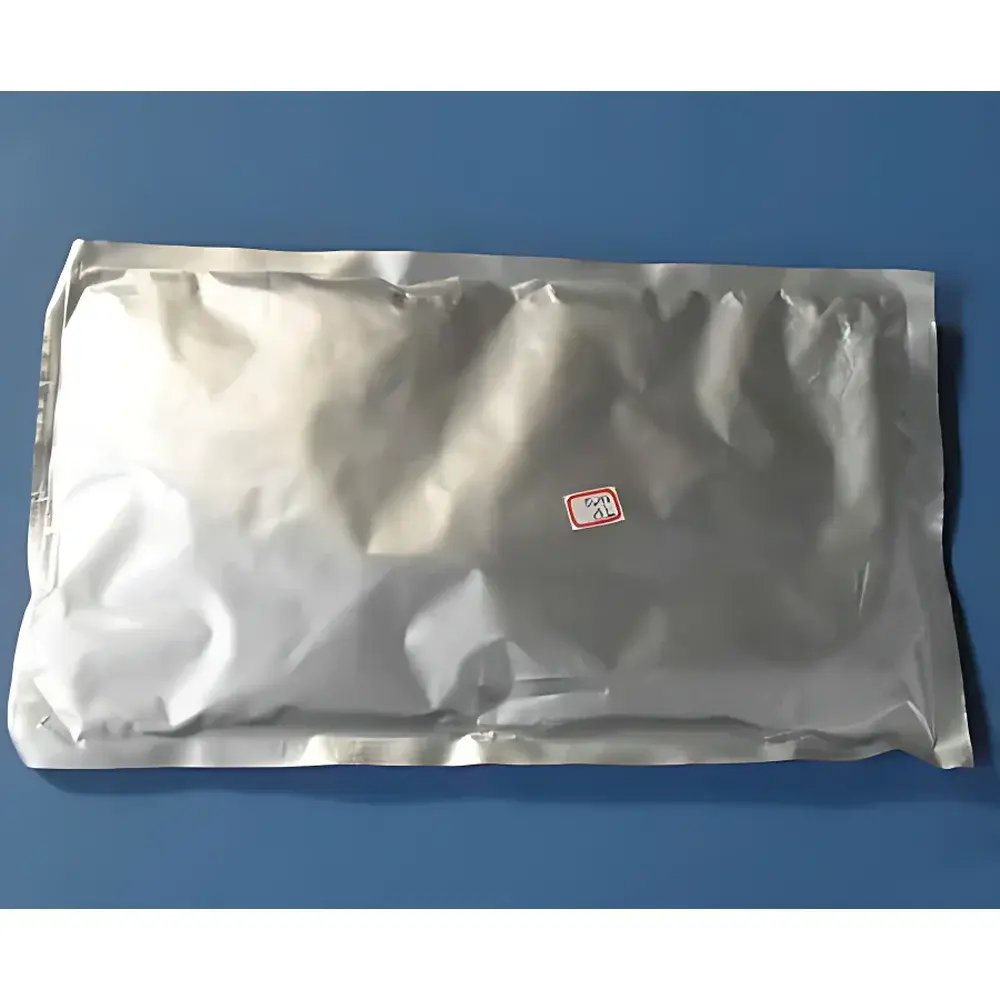
- Shipped in argon-flushed, double-sealed aluminum-laminated pouches or glass vials to prevent oxidation and moisture ingress
Sample Compatibility & Compliance
The A-Z Series nanopowders are compatible with standard powder processing workflows—including slurry formulation, tape casting, spray pyrolysis, spark plasma sintering (SPS), and atomic layer deposition (ALD) precursor synthesis. All materials comply with ISO 13320:2020 (laser diffraction particle sizing) and ASTM C1627-20 (characterization of nanoscale ceramic powders). Trace impurity profiles meet specifications outlined in ASTM E2924-21 for high-purity oxide powders used in electronic ceramics. For regulated applications, CoAs include full traceability to raw material lots and process parameters. While not manufactured under FDA 21 CFR Part 11-certified systems, documentation supports audit readiness for ISO 9001:2015 and ISO/IEC 17025:2017 accredited laboratories.
Software & Data Management
Each CoA is delivered digitally in PDF format with embedded metadata (batch ID, synthesis date, characterization dates, instrument IDs). Raw XRD, TEM, and BET data files (in .xy, .tif, and .csv formats) are available upon formal data request. Kejing maintains a secure LIMS-backed archive for all production batches, enabling full traceability across ≥5 years. Custom reporting—including elemental impurity heatmaps, PSD trend charts, and comparative phase quantification (Rietveld refinement outputs)—can be provided under NDA for qualified R&D partners.
Applications
- Catalysis: CeO₂ (4N, 20–30 nm), Fe₃O₄ (>99.5%, 20 nm), and NiO (30 nm) for CO oxidation, water-gas shift, and photocatalytic H₂ generation
- Energy Storage: SiO₂ (15–20 nm), AlN (40 nm), and ZnFe₂O₄ (30 nm) as thermal interface fillers, solid electrolyte additives, and anode/cathode structural modifiers
- Magnetic Devices: CoFe₂O₄ (40 nm), NiFe₂O₄ (30 nm), and Zn₀.₅Ni₀.₅Fe₂O₄ (30 nm) for high-frequency inductors, magnetostrictive sensors, and MRI contrast agent development
- Advanced Ceramics: α-Al₂O₃ (4N, 40 nm), Si₃N₄ (<30 nm), and ZrC (40 nm) as sintering aids and reinforcement phases in ultrafine-grained structural ceramics
- Optoelectronics: Er₂O₃ (4N, 5–8 µm), Yb₂O₃, and Lu₂O₃ (4N) for upconversion phosphor synthesis and rare-earth-doped fiber preform fabrication
FAQ
Are these nanopowders dispersible in common solvents such as ethanol, isopropanol, or DMF?
Yes—most oxides and nitrides exhibit stable colloidal dispersion in polar aprotic solvents when sonicated for 15–30 min with mild surfactants (e.g., PVP, citric acid). Dispersion stability is confirmed by dynamic light scattering (DLS) and zeta potential measurement (|ζ| > ±30 mV).
Do you offer custom particle size distribution targeting or surface functionalization?
Custom PSD narrowing (e.g., D₉₀ < 1.2 × D₅₀) and silane-based surface modification (e.g., APTES, OTS) are available under minimum order quantities (MOQ ≥ 50 g per variant). Lead time extends by 2–3 weeks.
Is there lot-specific XRD or TEM data available prior to purchase?
Yes—representative XRD patterns and TEM micrographs for each material grade are accessible in our technical library. Full characterization datasets for a specific batch can be shared after NDA execution and quotation acceptance.
What packaging options are available for inert atmosphere-sensitive materials like MgO or Al?
All reactive metals (Al, Zn, Ti, Fe) and low-oxidation-state oxides (e.g., NiO, CoO) are packaged under high-purity argon (O₂ < 1 ppm) in double-walled, vacuum-sealed laminated pouches with oxygen/moisture indicators. Glass vial options with crimp-sealed butyl rubber stoppers are available for small-scale R&D use.