
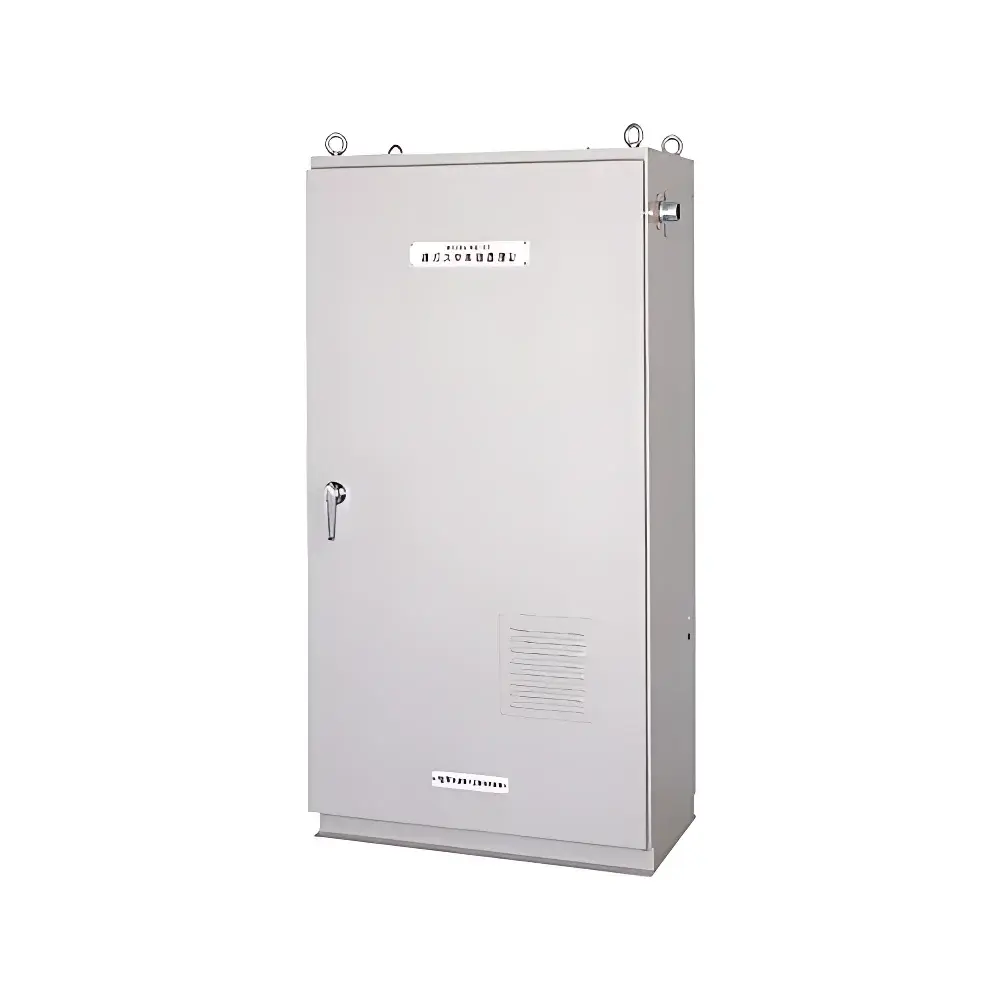
KEM HG-37N Flue Gas Mercury Continuous Emission Monitoring System (CEMS)
| Brand | KEM (Kyoto Electronics Manufacturing) |
|---|---|
| Origin | Japan |
| Manufacturer Type | Original Equipment Manufacturer (OEM) |
| Product Origin | Imported |
| Model | HG-37N |
| Price Range | USD 68,000 – 136,000 (FOB Japan) |
| Measurement Principle | Cold Vapor Atomic Absorption Spectroscopy (CVAAS) with Dry Oxidation-Reduction Conversion |
| Measurement Range | 0–50 µg/m³N or 0–1000 µg/m³N (switchable) |
| Response Time | ≤90 s |
| Repeatability | ±1% of reading |
| Linearity Error | ±2% of full scale |
| Zero Drift | ≤±1% per week |
| Sample Gas Flow Rate | 300 mL/min |
| Calibration Interval | Recommended every 30 days |
| Interference Resistance | Immune to Cl⁻, SO₂, NOₓ, H₂O vapor, and particulate carryover under ISO 15202-compliant sampling conditions |
| Compliance | Designed to meet EPA Method 29, ASTM D6784-22, and EN 14181 QAL1 requirements for mercury CEMS |
Overview
The KEM HG-37N Flue Gas Mercury Continuous Emission Monitoring System is an industrial-grade, fully automated analyzer engineered for real-time quantification of elemental and oxidized mercury species (Hg⁰ and Hg²⁺) in hot, wet, and corrosive flue gas streams from coal-fired power plants, waste incinerators, cement kilns, and metallurgical furnaces. Unlike wet-chemical or gold-amalgamation-based systems, the HG-37N employs a dry oxidation-reduction conversion module coupled with cold vapor atomic absorption spectroscopy (CVAAS) — a reference-grade optical technique standardized in EPA Method 29 and ASTM D6784-22. The system thermally converts all mercury forms into elemental mercury vapor, which is then swept into a quartz absorption cell where UV light at 253.7 nm is attenuated proportionally to Hg concentration. This physics-based measurement ensures trace-level sensitivity (sub-µg/m³N detection capability), high specificity, and minimal cross-sensitivity to common flue gas interferents including SO₂, NOₓ, HCl, and water vapor — critical for long-term stability in demanding stack environments.
Key Features
- Dry, reagent-free oxidation-reduction conversion: Eliminates liquid chemical consumption, pump maintenance, and waste disposal associated with wet scrubber-based Hg analyzers.
- Switchable dual-range optical detection: User-selectable 0–50 µg/m³N (for low-emission compliance monitoring) and 0–1000 µg/m³N (for high-concentration process control), both referenced to dry, standard-corrected conditions (m³N).
- High temporal resolution: Full measurement cycle completed within ≤90 seconds — enabling responsive feedback for sorbent injection control loops and dynamic emission reporting.
- Robust thermal management: Integrated heated sample line (180 °C), condensate trap, and Nafion dryer ensure consistent gas conditioning without condensation-induced signal drift or corrosion.
- Automated zero/span validation: Built-in certified Hg permeation source and zero-air generator support unattended calibration verification per EN 14181 QAL2 protocols.
- Modular architecture: Field-replaceable optical bench, conversion furnace, and flow control unit facilitate rapid maintenance with minimal downtime.
Sample Compatibility & Compliance
The HG-37N is validated for continuous operation on raw or diluted flue gas streams with temperatures up to 200 °C, particulate loadings <10 g/Nm³, and acid gas concentrations compliant with ISO 15202:2021 sampling interface specifications. It meets the performance criteria for Quality Assurance Level 1 (QAL1) under EN 14181 for mercury CEMS, including documented uncertainty budgets for repeatability (≤±1%), linearity (≤±2% FS), and zero drift (≤±1%/week). Data output complies with EPA 40 CFR Part 60 Appendix B PS-12 and EU IED Annex VII reporting formats. The system supports 21 CFR Part 11-compliant audit trails when integrated with KEM’s optional CEMS-Link™ data acquisition software.
Software & Data Management
The embedded Linux-based controller provides local HMI with touchscreen navigation, real-time trend plots, and alarm logging. All measurements are timestamped and stored internally for ≥30 days. Via Ethernet (TCP/IP) or RS-485 Modbus RTU, the HG-37N exports analog (4–20 mA) and digital outputs (including Hg concentration, system status, calibration flags, and diagnostic codes) to DCS/SCADA platforms. Optional CEMS-Link™ software enables remote configuration, automated report generation (daily/monthly compliance summaries), and secure cloud synchronization with encrypted TLS 1.2 transmission — supporting GLP/GMP-aligned data integrity frameworks.
Applications
- Regulatory compliance monitoring for coal- and biomass-fired power stations subject to MATS (US), IED (EU), or China’s GB 13223–2011 standards.
- Process optimization in municipal solid waste (MSW) and hazardous waste incinerators where mercury speciation affects activated carbon injection efficiency.
- Stack testing validation and QA/QC verification against reference manual methods (e.g., Ontario Hydro, EPA Method 29).
- Long-term trend analysis for mercury mass balance studies across air pollution control devices (APCDs) such as FF/ESP + WFGD + ACI configurations.
- Research-grade emission characterization in pilot-scale combustion facilities and catalyst development labs.
FAQ
Does the HG-37N require daily reagent replenishment?
No. Its dry oxidation-reduction method eliminates liquid oxidants, reducing consumables to only certified zero air and calibration gas — lowering total cost of ownership and operational complexity.
Can it distinguish between Hg⁰ and Hg²⁺ species?
Not natively; it reports total gaseous mercury (TGM). For speciation, KEM recommends pairing the HG-37N with an upstream selective adsorption module (e.g., KCl-coated denuder) and differential sampling protocol per ASTM D6784 Annex A4.
What is the minimum detectable limit (MDL) under field conditions?
Based on QAL1 validation data, the MDL is 0.5 µg/m³N at 95% confidence (σ = 0.17 µg/m³N) for the 0–50 µg/m³N range, verified using NIST-traceable Hg permeation sources.
Is the system suitable for high-dust applications without filtration?
It requires upstream particulate removal per ISO 15202:2021 — typically a ceramic filter housed in a heated probe assembly — to prevent optical window fouling and furnace clogging.
How is data integrity ensured during power interruptions?
The controller includes non-volatile memory with battery-backed real-time clock and automatic recovery mode that resumes measurement and logs interruption duration upon power restoration.
Related Products







