
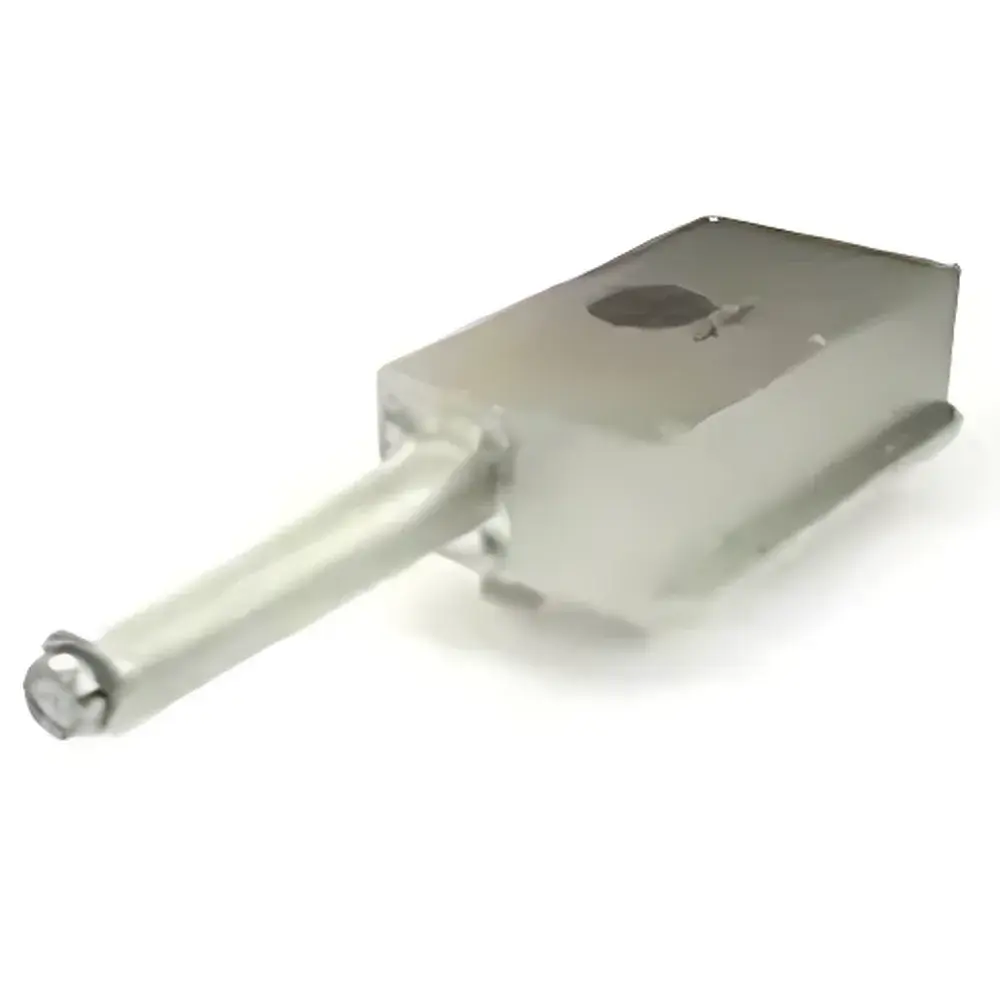
KETEK AXAS-D-SDD Silicon Drift Detector (SDD) System
| Brand | KETEK |
|---|---|
| Origin | Germany |
| Model | AXAS-D |
| Detector Type | Integrated Digital Pulse Processing SDD System |
| Active Area Options | 7–50 mm² |
| Energy Resolution (FWHM @ Mn Kα) | ≤133 eV (Premium Class), ≤139 eV (Standard Class), ≤136/144 eV (H15LE variants) |
| Finger Length Options | 50, 100, 160, 200, 300 mm |
| Upper Energy Limit | 20 keV or 30 keV |
| Cooling | Integrated Thermoelectric Control |
| Signal Processing | Onboard Charge-Sensitive Preamplifier + Digital Pulse Processor (DPP) |
| Compliance | Designed for ASTM E1598, ISO 21397, and IEC 62495-compliant XRF and EPMA systems |
| Software Interface | KETEK DPP Software (shaping time adjustable from 0.5–16 µs) |
Overview
The KETEK AXAS-D-SDD is a high-performance, integrated silicon drift detector (SDD) system engineered for precision energy-dispersive X-ray spectroscopy (EDS/EDX) in laboratory and space-grade analytical platforms. Based on KETEK’s proprietary VITUS SDD sensor architecture, the AXAS-D combines a low-noise charge-sensitive preamplifier with a fully digital pulse processor (DPP) in a single compact module. This architecture enables real-time pulse recovery, high-count-rate operation (>1 Mcps), and exceptional energy resolution—critical for resolving closely spaced X-ray emission lines in complex matrices. The detector operates via thermoelectric cooling (Peltier-based), eliminating the need for liquid nitrogen while maintaining stable operating temperatures (−20 °C to −35 °C typical). Its design supports both benchtop XRF spectrometers and mission-critical instrumentation—including flight-proven deployments aboard NASA Mars rovers—where long-term stability, radiation tolerance, and vacuum compatibility are non-negotiable.
Key Features
- Monolithic integration of VITUS-series SDD sensor, ultra-low-noise preamplifier, and field-programmable gate array (FPGA)-based digital pulse processor
- Selectable active area (7 mm² to 50 mm²) optimized for sensitivity vs. count-rate trade-offs in micro-XRF, SEM-EDS, and portable analyzers
- Premium-class energy resolution: ≤133 eV FWHM at Mn Kα (5.895 keV), verified per ISO 21397 Annex B test protocol
- Configurable finger length (50–300 mm) to accommodate mechanical constraints in spectrometer housing or beamline geometry
- Integrated temperature regulation circuitry with closed-loop feedback, enabling <±0.1 °C thermal stability over 24 h
- Dual upper-energy limit options (20 keV and 30 keV) supporting L-line analysis of heavy elements (e.g., Pb Lα, U Lα) without window-induced absorption
- Low-energy window variants (H7LE, H15LE, H20) certified to IEC 62495 for sub-1 keV detection (e.g., C Kα, N Kα, O Kα)
Sample Compatibility & Compliance
The AXAS-D-SDD is compatible with standard X-ray excitation sources including Rh, Mo, Cr, and W anodes, as well as synchrotron beamlines and microfocus X-ray tubes. Its hermetically sealed, vacuum-compatible package meets MIL-STD-810G for shock/vibration resilience and is rated IP54 for controlled lab environments. From a regulatory standpoint, the system supports GLP/GMP-aligned workflows through audit-trail-enabled DPP firmware and timestamped spectral metadata export. It conforms to ASTM E1598 (standard test method for energy resolution of EDS systems), ISO 21397 (characterization of SDD performance), and USP guidelines for analytical instrument qualification when deployed in regulated pharmaceutical or materials testing labs.
Software & Data Management
KETEK DPP Software provides full control of shaping time (0.5–16 µs), pile-up rejection, baseline restoration, and real-time spectrum accumulation. Raw pulse data can be exported in HDF5 format for offline processing using Python-based libraries (e.g., PyMca, HyperSpy) or MATLAB toolchains. The software supports 21 CFR Part 11-compliant user access levels, electronic signatures, and immutable spectral log files. Integration with third-party platforms—including Thermo Fisher Avio, Bruker ESPRIT, and EDAX TEAM™—is achieved via standardized TCP/IP and RS-232 protocols. Firmware updates are delivered via signed binary packages with SHA-256 verification to ensure traceability and cybersecurity integrity.
Applications
- High-resolution elemental mapping in scanning electron microscopy (SEM-EDS) for semiconductor failure analysis and metallurgical phase identification
- Non-destructive bulk composition analysis in handheld and benchtop XRF for mining, recycling, and RoHS compliance screening
- In situ planetary surface geochemistry, validated by continuous operation on NASA’s Curiosity and Perseverance rovers since 2012
- Trace element quantification in environmental samples (soils, aerosols) down to sub-ppm levels using fundamental parameter (FP) calibration
- Micro-XRF imaging of cultural heritage artifacts, where low-energy response enables pigment layer stratigraphy without vacuum requirements
FAQ
Does the AXAS-D require liquid nitrogen cooling?
No—it uses solid-state thermoelectric cooling with integrated temperature stabilization; no cryogens or external chillers are required.
Can the detector be operated under high vacuum or ultra-high vacuum conditions?
Yes—the hermetic ceramic-metal package is rated for operation down to 10⁻⁷ mbar and has been qualified for use in UHV-compatible SEM columns.
Is firmware update capability available in the field?
Yes—updates are performed via USB-C interface using KETEK-signed binaries; version history and checksums are logged automatically.
What is the typical dead time at 500 kcps input count rate?
Measured dead time is <1.2% at 500 kcps using default 8 µs shaping time, per ASTM E1598 Annex D methodology.
How is energy calibration maintained over extended operation?
The system includes automated gain stabilization using internal reference pulses and periodic Mn Kα checks; drift compensation is applied in real time within the DPP firmware.





