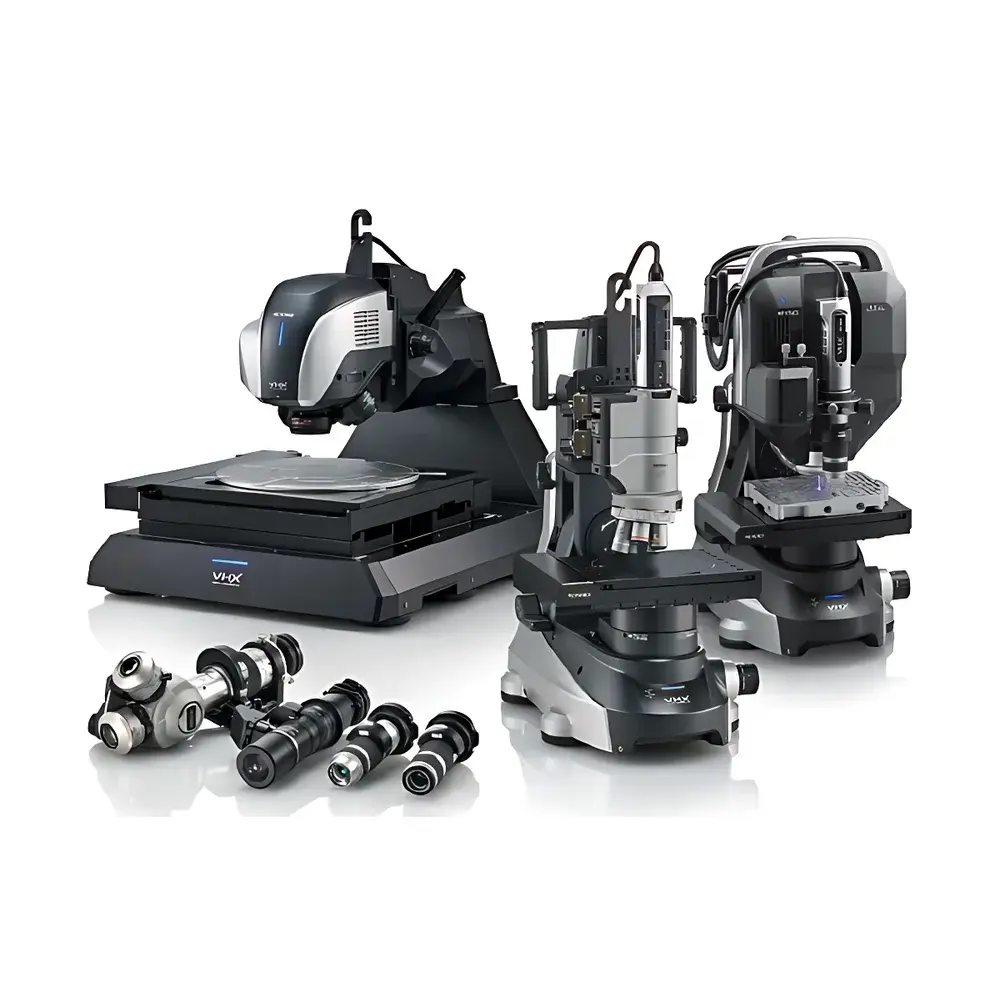
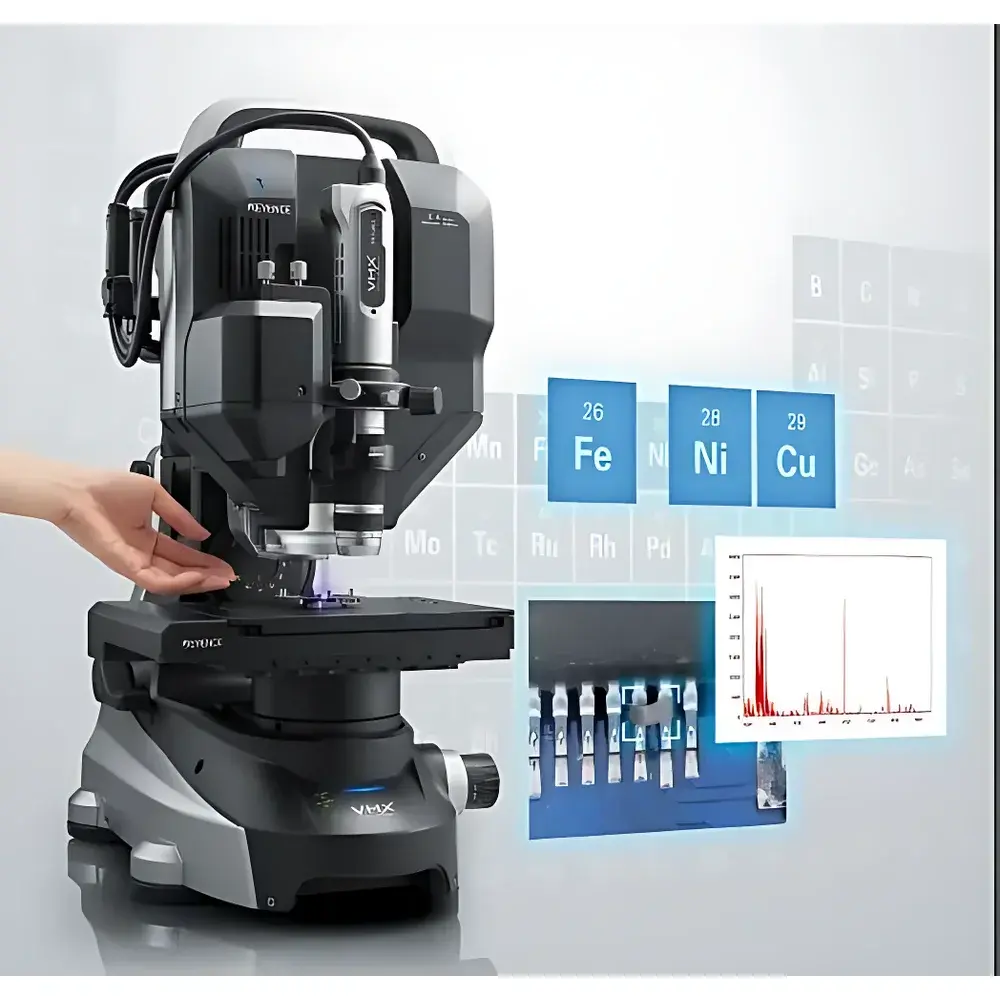
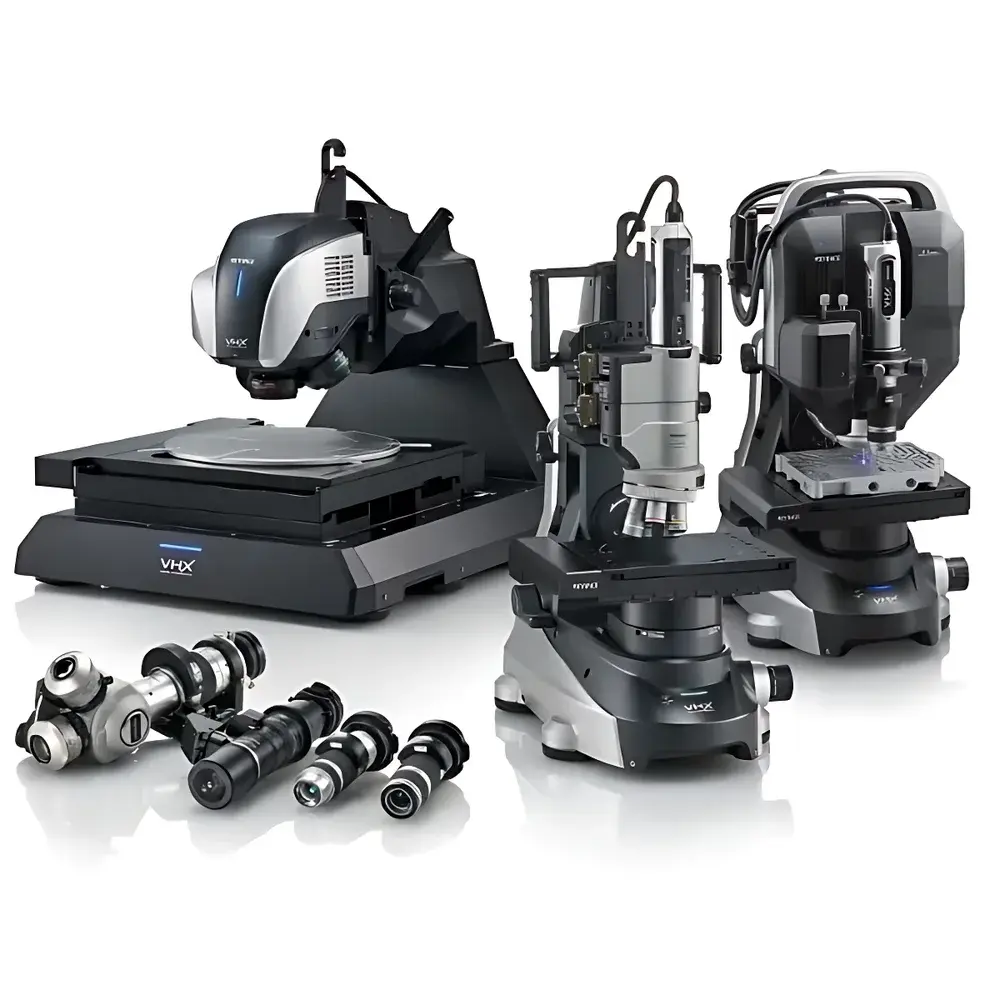
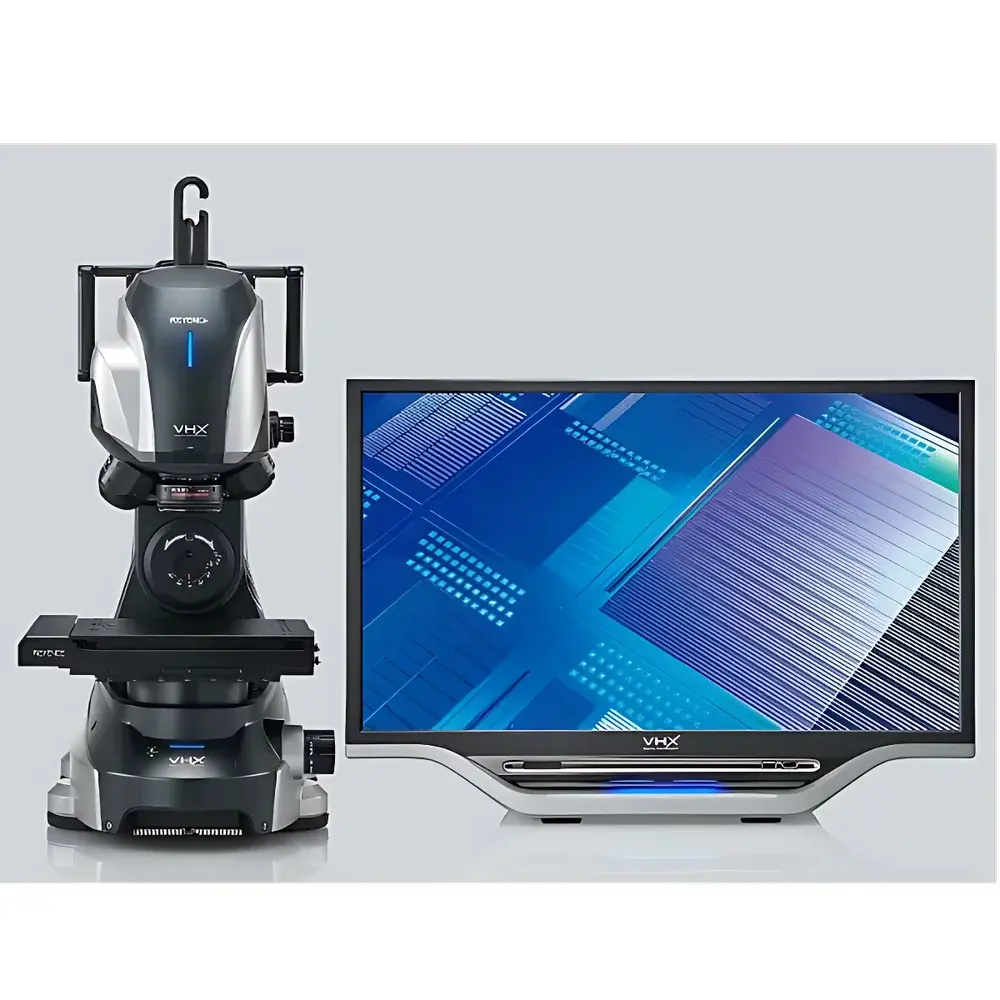
KEYENCE VHX-X1 Series Ultra-Deep-Field 3D Digital Microscope
| Brand | KEYENCE |
|---|---|
| Origin | Japan |
| Manufacturer Type | Original Equipment Manufacturer (OEM) |
| Product Origin | Imported |
| Model | VHX-X1 Series |
| Imaging Sensor | 4K CMOS |
| XY Stage Dimensions | 300 mm × 300 mm |
| Maximum Frame Rate | 30 fps |
| Magnification Range | 5× to 6000× |
Overview
The KEYENCE VHX-X1 Series Ultra-Deep-Field 3D Digital Microscope is an advanced optical metrology and surface characterization system engineered for high-precision, non-contact, real-time 3D imaging of industrial and research specimens. Unlike conventional optical microscopes constrained by shallow depth of field and fixed illumination geometry, the VHX-X1 leverages multi-angle dynamic illumination synthesis, high-resolution 4K CMOS capture, and proprietary computational optics to reconstruct topographically resolved 3D surface models without scanning or mechanical focus stacking. Its core measurement principle integrates axial chromatic aberration-based focus variation with real-time shadow-effect modeling—enabling sub-micrometer vertical resolution and nanoscale surface texture discrimination. Designed for integration into QC laboratories, R&D centers, and failure analysis workflows, the system operates within ISO/IEC 17025-compliant environments and supports traceable calibration protocols per ASTM E2922–22 (Standard Guide for Digital Image Acquisition in Microscopy).
Key Features
- Dynamic Optical Shadow Effect Mode (DOSEM): A patented illumination synthesis algorithm that emulates electron-beam shadow contrast generation in SEMs—enabling instantaneous, angle-tunable surface relief enhancement without vacuum, conductive coating, or beam damage.
- Ultra-Wide XY Stage: 300 mm × 300 mm motorized precision stage with ±0.5 µm positional repeatability, supporting large-area mapping, wafer-level inspection, and multi-site comparative analysis across heterogeneous samples.
- 4K CMOS Imaging Engine: 3840 × 2160 pixel sensor with 12-bit dynamic range and global shutter architecture ensures distortion-free capture at up to 30 fps—critical for live focus navigation and motion artifact suppression.
- Intelligent Anomaly Recognition: Pixel-level luminance and chromaticity deviation detection against reference “OK” images; quantitative difference mapping using CIELAB ΔE*00 color space with false-color overlay and statistical thresholding (p < 0.01).
- Multi-Objective Rotating Lens System: Interchangeable high-NA objective lenses with integrated rotation mechanism for automated oblique-view acquisition—compatible with metallurgical sample preparation standards including ISO 4885 and ASTM E3.
- Real-Time Focus Navigation: Auto-focus algorithm optimized for reflective, translucent, and layered materials—including battery electrode coatings, solder joints, and polymer composites—achieving convergence in ≤120 ms per field of view.
Sample Compatibility & Compliance
The VHX-X1 accommodates specimens ranging from polished metallographic mounts and semiconductor wafers (up to 300 mm diameter) to irregularly shaped automotive components and pharmaceutical tablet surfaces. It complies with IEC 61000-4-2 (ESD immunity), IEC 61000-4-3 (radiated RF immunity), and meets CE marking requirements under the EU Machinery Directive 2006/42/EC. For regulated industries, audit-ready operation is supported via optional GLP/GMP mode—enabling electronic signatures, user access control tiers (ISO/IEC 27001-aligned), and full data integrity logging compliant with FDA 21 CFR Part 11 Annex 11 requirements.
Software & Data Management
VHX-X1 operates on KEYENCE’s proprietary VHX-PC software platform, built on a deterministic real-time OS kernel. All image acquisition, 3D reconstruction, measurement annotation (length, area, roughness parameters Ra/Rz per ISO 4287), and report generation occur within a single unified interface. Raw 4K image stacks and depth maps are stored in vendor-neutral TIFF-6.0 format with embedded EXIF metadata (including lens ID, magnification, illumination profile, and timestamp). Export options include CSV for statistical process control (SPC) integration, PDF/A-2b for archival compliance, and STL mesh files for reverse engineering interoperability with SolidWorks and Metrology Suite platforms.
Applications
- Semiconductor: Bond pad inspection, solder bump coplanarity assessment, die attach void detection, and post-etch residue characterization.
- Battery Manufacturing: Cathode/anode coating uniformity analysis, separator pore structure evaluation, and dendrite morphology quantification.
- Automotive: Brake pad wear profiling, casting porosity mapping, weld seam root penetration validation, and corrosion pit depth measurement.
- Pharmaceuticals: Tablet coating thickness distribution, granule size/shape analysis per USP , and blister pack seal integrity verification.
- Materials Science: Grain boundary delineation in heat-treated alloys, fiber orientation mapping in CFRP, and fatigue crack initiation site localization.
FAQ
Does the VHX-X1 require vacuum or conductive coating for surface analysis?
No—DOSEM achieves SEM-like contrast through optical means; all analyses are performed under ambient atmospheric conditions.
Can the system export measurement data directly to SPC software such as Minitab or JMP?
Yes—CSV exports include column headers aligned with common SPC variable naming conventions and support automated ingestion via ODBC drivers.
Is calibration traceable to national metrology institutes?
Yes—optional NIST-traceable calibration kits (certified step height standards, magnification reference gratings) are available with ISO/IEC 17025-accredited certificates.
What is the maximum working distance achievable at 6000× magnification?
At 6000×, the system maintains a working distance of ≥1.2 mm with the VH-Z100R rotating objective, enabling safe imaging of tall or recessed features.
How does the anomaly recognition function handle variations in ambient lighting during production-line deployment?
The algorithm normalizes illumination gradients using reference frame subtraction and adaptive histogram equalization—validated per ISO 9241-307 for consistent performance under ±15% ambient light fluctuation.