
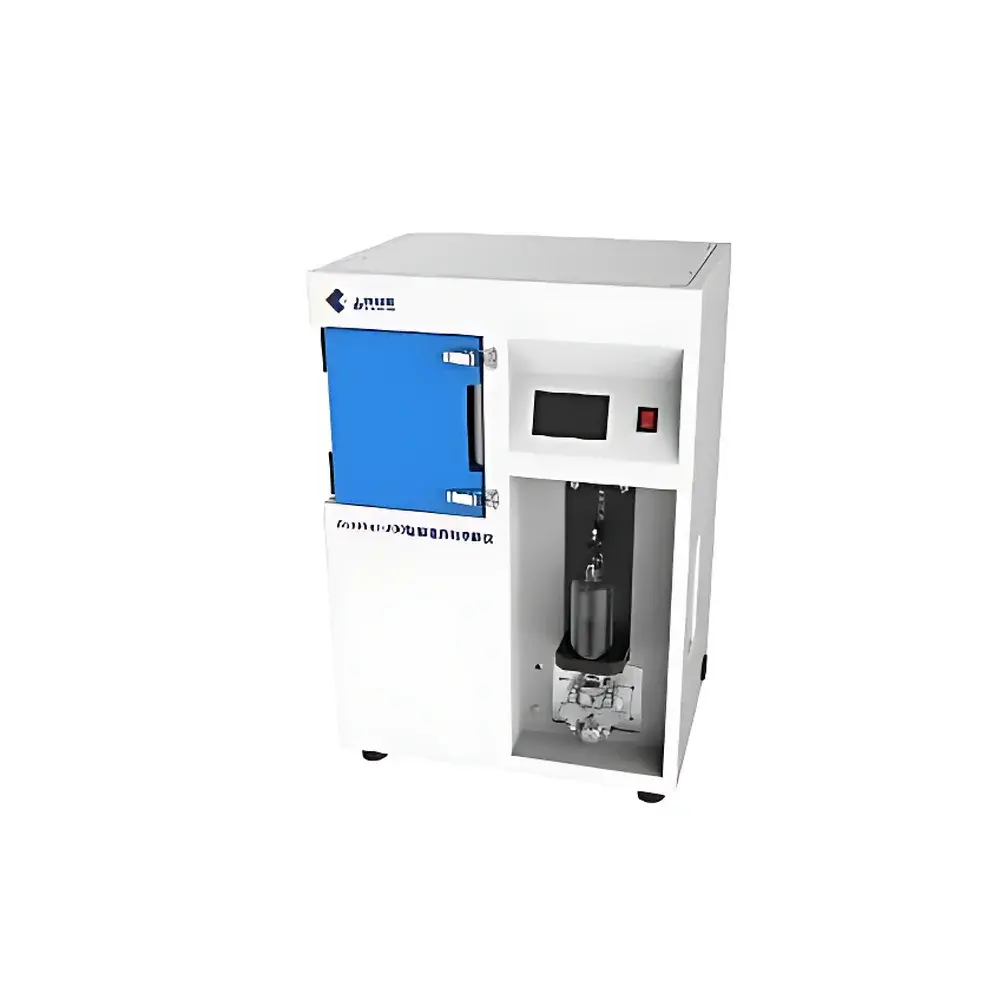
KEZHE Aseeker-200 Accelerated Solvent Extractor
| Brand | KEZHE SHANGHAI |
|---|---|
| Origin | Shanghai, China |
| Manufacturer Type | Direct Manufacturer |
| Region of Origin | Domestic (China) |
| Model | Aseeker-200 |
| Instrument Category | Solid-Liquid Extraction |
| Temperature Range | Ambient to 200 °C (±1 °C) |
| Pressure Range | 0–20 MPa (±0.3 MPa) |
| Extraction Cell Volumes | 10 mL / 34 mL / 66 mL / 100 mL |
| Extraction Time | 20–30 min |
| Solvent Consumption | 10 mL per 10 g sample |
| Pump Flow Rate | 0.1–50 mL/min |
| Collection Vial Capacities | 60 mL / 250 mL |
| Gas Supply Requirement | Nitrogen at 0.9–1.2 MPa |
| Power Input | 100–240 VAC ±10 %, 50–60 Hz |
| Max Power Consumption | 1.2 kW |
| Dimensions (W×D×H) | 508 mm × 485 mm × 745 mm |
| Weight | 40 kg |
| Wetted Materials | PEEK, PTFE, 316L stainless steel, ceramic |
| Safety Features | Mechanical overpressure protection, electronic overtemperature cutoff, leak detection, liquid-level sensing, pressure-deficiency alarm, automatic filtration post-extraction, dual-needle purge system to prevent splashing |
Overview
The KEZHE Aseeker-200 Accelerated Solvent Extractor is an engineered solid-liquid extraction platform designed for rapid, reproducible, and compliant isolation of analytes from complex solid or semi-solid matrices—including soils, sediments, tissues, polymers, and botanical materials. It operates on the principle of pressurized fluid extraction (PFE), leveraging elevated temperature (up to 200 °C) and controlled pressure (up to 20 MPa) to enhance solvent penetration, reduce surface tension, and increase solubility—thereby accelerating mass transfer kinetics without thermal degradation of labile compounds. Unlike conventional Soxhlet or ultrasonic extraction, the Aseeker-200 achieves complete extractions in 20–30 minutes using significantly reduced solvent volumes (as low as 10 mL per 10 g sample), aligning with green chemistry principles and reducing downstream solvent disposal burden. Its single-furnace, sealed-reactor architecture ensures consistent thermal profiles and eliminates atmospheric contamination during operation.
Key Features
- Single-channel modular design optimized for laboratories prioritizing cost-efficiency, footprint minimization (508 mm × 485 mm × 745 mm), and method scalability.
- Contact-heating furnace with ±1 °C temperature accuracy across ambient to 200 °C, enabling precise thermodynamic control critical for method transfer and regulatory validation.
- Four standardized extraction cell options (10 mL, 34 mL, 66 mL, 100 mL) accommodate diverse sample loads—from trace residue analysis to high-mass environmental monitoring workflows.
- Dual-needle purge technology prevents over-pressurization-induced splashing during nitrogen-assisted cell rinsing, ensuring quantitative recovery and operator safety.
- Integrated liquid-level sensor in collection vials (60 mL and 250 mL variants) triggers automatic process suspension upon fill detection, eliminating overflow risk and cross-contamination.
- Multi-layer safety architecture: mechanical pressure relief valve, real-time electronic overtemperature cutoff, continuous leak detection, and nitrogen supply pressure monitoring with audible/visual alert.
- Post-extraction inline filtration using chemically inert media (PEEK, PTFE, 316L SS, ceramic) delivers clarified extracts ready for direct injection into GC, HPLC, or ICP-MS systems.
- High-resolution capacitive touchscreen interface supports intuitive protocol setup, real-time parameter monitoring, and audit-ready event logging.
Sample Compatibility & Compliance
The Aseeker-200 is validated for use with a broad spectrum of solid-phase samples, including but not limited to EPA Method 3545A-compliant soil and sediment matrices, AOAC 999.10-certified foodstuffs, pharmacopeial herbal materials (USP ), and polymer additives per ISO 17225. All wetted components conform to USP Class VI biocompatibility standards and exhibit full resistance to chlorinated solvents, alcohols, esters, and hydrocarbons. The instrument’s deterministic pressure and temperature control, coupled with automated sequence execution, supports GLP- and GMP-aligned workflows. Full audit trail functionality—including user login timestamps, parameter changes, run logs, and fault events—is retained locally and exportable in CSV format for FDA 21 CFR Part 11 compliance when integrated with validated LIMS environments.
Software & Data Management
Control firmware provides embedded method storage (≥100 protocols), password-protected user roles (Administrator, Technician, Viewer), and time-stamped run records with metadata tagging (operator ID, sample ID, cell lot, solvent batch). Exportable logs include temperature/pressure profiles, pump flow history, and safety event flags. No proprietary software installation is required—the interface runs natively on the onboard industrial-grade touchscreen. For enterprise integration, optional RS-232 and Ethernet ports support remote monitoring via SCADA or laboratory informatics platforms. All data files are stored in non-proprietary ASCII formats compatible with third-party statistical analysis tools.
Applications
- Environmental testing: PAHs, PCBs, organochlorine pesticides, and dioxins in soil, sludge, and airborne particulates (per EPA SW-846 Methods 3545A, 3546).
- Food safety: Mycotoxins, veterinary drug residues, plasticizers (e.g., phthalates), and antioxidant extraction from cereals, meat, and packaging materials.
- Pharmaceutical R&D: Active pharmaceutical ingredient (API) recovery from excipient blends, residual solvent analysis in tablets, and botanical marker compound quantification.
- Materials science: Additive leaching studies in polymeric composites, flame retardant extraction from textiles, and catalyst residue profiling in synthetic resins.
- Forensic toxicology: Solid-phase drug screening from hair, tissue, or ashed remains using methanol, acetone, or ethyl acetate gradients.
FAQ
What solvents are compatible with the Aseeker-200?
The system supports common organic solvents including hexane, dichloromethane, acetone, methanol, acetonitrile, ethyl acetate, and toluene—provided they remain stable below 200 °C and within the 20 MPa pressure limit. Chlorinated solvents require verification of material compatibility with PEEK and 316L components.
Can multiple solvents be mixed during a single extraction cycle?
Yes—the integrated four-solvent selection manifold enables sequential or gradient elution protocols without manual intervention, supporting polarity-based fractionation strategies.
Is method validation documentation available?
KEZHE provides a comprehensive Instrument Qualification Package (IQ/OQ) template aligned with ASTM E2500 and ISO/IEC 17025 requirements, including calibration certificates for temperature and pressure sensors, and performance verification procedures.
How is maintenance access structured?
Front-access service panels allow rapid replacement of seals, filters, and pressure transducers without disassembly of the main chassis. Annual preventive maintenance kits and certified technician dispatch services are available globally.
Does the system support unattended overnight operation?
Yes—scheduled start times, auto-shutdown after completion, and continuous safety interlock monitoring enable secure unattended runs, subject to local institutional biosafety and fire code approvals.



