
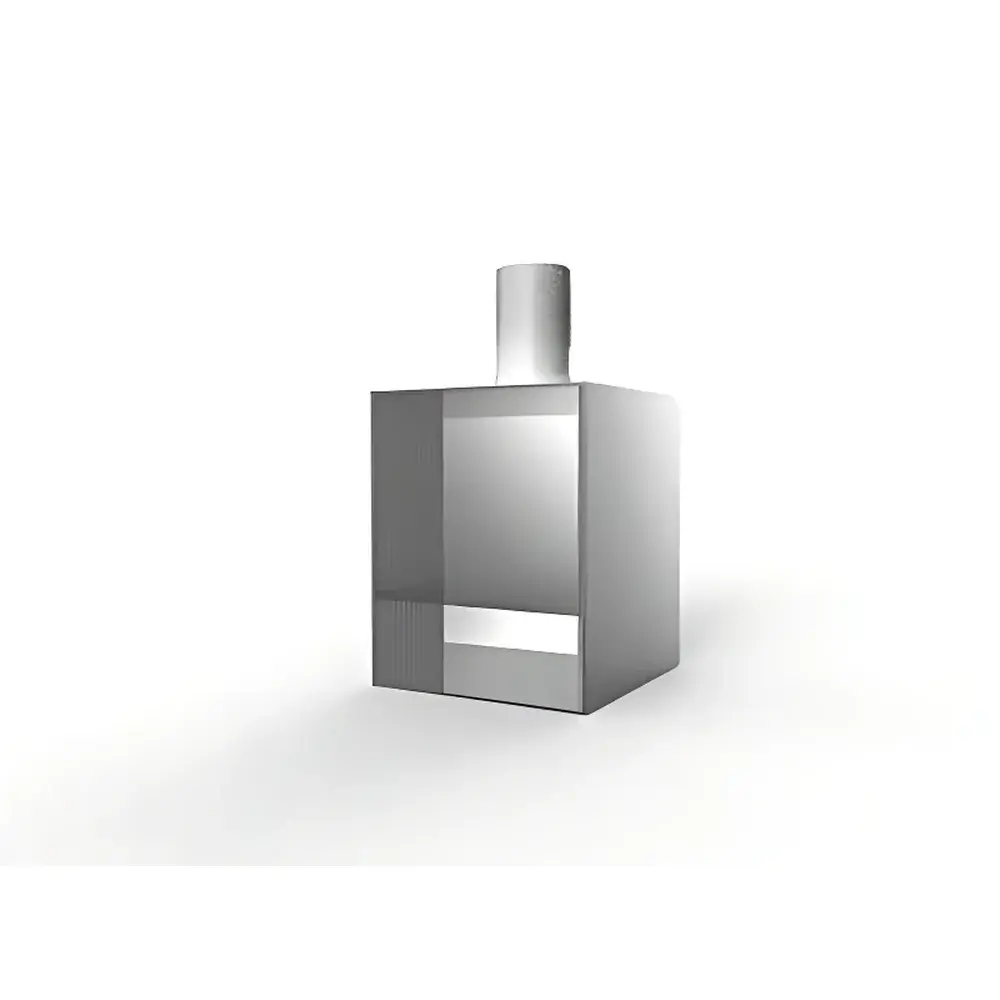
KEZHE SHANGHAI TBOX-I High-Flow Thin-Layer Chromatography Fume Extraction Cabinet
| Brand | KEZHE SHANGHAI |
|---|---|
| Origin | Shanghai, China |
| Manufacturer Type | Original Equipment Manufacturer (OEM) |
| Country of Origin | China |
| Model | TBOX-I |
| Instrument Category | TLC Auxiliary Equipment |
| Sample Plate Size | 200 × 200 mm |
| Airflow Capacity | 4000 L/min |
| Construction Materials | Stainless Steel Enclosure, Corrosion-Resistant Gas Conduit, Integrated Spray Stand |
| Noise Level | Low-Noise Operation |
| Compliance | Designed for ISO/IEC 17025-aligned laboratory safety workflows |
| Software Interface | None (Standalone Mechanical System) |
Overview
The KEZHE SHANGHAI TBOX-I High-Flow Thin-Layer Chromatography Fume Extraction Cabinet is an engineered safety solution designed specifically for laboratories performing derivatization, visualization, or reagent spraying on standard 200 × 200 mm TLC plates. Unlike general-purpose fume hoods, the TBOX-I employs a dedicated high-capacity axial airflow system optimized for rapid capture and removal of volatile organic compounds (VOCs), acidic vapors, and reactive reagents—such as anisaldehyde-sulfuric acid, p-anisaldehyde, iodine vapor, or ninhydrin solutions—commonly used in post-development TLC detection. Its operational principle relies on controlled laminar suction at the plate surface level, minimizing turbulent dispersion and ensuring >95% capture efficiency at the source. The unit operates independently of building HVAC infrastructure and requires no external ducting, making it suitable for modular lab setups, QC labs with space constraints, or mobile analytical units.
Key Features
- High-efficiency extraction with rated airflow of 4000 L/min—validated per ANSI/AIHA Z9.5 laboratory ventilation standards for localized contaminant control
- Stainless steel (304 grade) main enclosure with electropolished interior surfaces for chemical resistance and ease of decontamination
- Integrated corrosion-resistant PTFE-coated gas conduit and quick-connect fittings compatible with common TLC spray reagents including chlorinated solvents, strong acids, and oxidizing agents
- Dedicated spray stand with adjustable height and plate alignment guides to maintain consistent 10–15 mm nozzle-to-plate distance during automated or manual spraying
- Low-noise brushless DC motor (≤52 dB[A] at 1 m) enabling continuous operation during extended analytical sessions without auditory fatigue
- No electrical or data interface required—fully mechanical operation ensures reliability in GMP-regulated environments where electromagnetic interference or software validation are concerns
Sample Compatibility & Compliance
The TBOX-I accommodates all standard silica gel, alumina, cellulose, and reversed-phase TLC plates up to 200 × 200 mm, including pre-coated HPTLC plates (e.g., Merck Silica Gel 60 F254). It supports both hand-held and motorized spray systems—including the recommended TS-II Ultra-Fine Electric Sprayer—ensuring uniform aerosol deposition without overspray drift. From a regulatory standpoint, the cabinet contributes to compliance with OSHA 29 CFR 1910.1200 (Hazard Communication), EU Directive 2004/40/EC (electromagnetic fields), and ISO 15195:2018 (laboratory accreditation requirements for analytical safety infrastructure). While not a certified fume hood per ASHRAE 110, its localized containment performance meets the functional equivalency criteria outlined in CLSI EP26-A for ancillary safety devices in chromatographic workflows.
Software & Data Management
The TBOX-I is a standalone mechanical device with no embedded firmware, display interface, or connectivity options. This architecture eliminates software validation obligations under FDA 21 CFR Part 11 and simplifies audit readiness in GLP and GMP environments. No log files, timestamps, or operational parameters are recorded—consistent with ISO/IEC 17025 Clause 7.2.2 (equipment suitability assessment). Maintenance records (e.g., filter replacement dates, airflow verification) are managed externally via laboratory asset tracking systems.
Applications
- Routine derivatization of amino acids, carbohydrates, alkaloids, and lipids on TLC plates using heat-sensitive or corrosive reagents
- High-throughput screening in pharmaceutical QC labs where multiple analysts perform parallel plate spraying under shared benchspace
- Teaching laboratories requiring robust, low-maintenance safety infrastructure for undergraduate chromatography instruction
- Field-deployable analytical kits where portability and independence from facility exhaust systems are essential
- Complementary use with densitometric scanners (e.g., CAMAG Scanner 4) to prevent reagent residue accumulation on optical pathways
FAQ
Is the TBOX-I suitable for use with iodine chamber visualization?
Yes—the cabinet effectively captures iodine vapor during open-chamber exposure, reducing ambient iodine concentration and preventing lens fogging on adjacent instrumentation.
Does it require ducting to the outside?
No—its design enables recirculation mode with optional activated carbon filter (sold separately), though exhausted configuration into a dedicated vent line is recommended for highly toxic reagents.
Can it be used with HPTLC plates containing fluorescent indicators?
Yes—non-UV-emitting construction and absence of internal lighting prevent unintended excitation or photodegradation during handling.
What maintenance is required?
Quarterly inspection of airflow integrity using a calibrated anemometer; annual replacement of inlet pre-filter if operated in high-particulate environments.
Is calibration traceable to national standards?
Airflow verification may be performed using NIST-traceable hot-wire anemometers; no factory calibration certificate is provided, as the device falls outside metrological instrument classification per JCGM 200:2012.





