KIMA SmartFill Online Mill Load Monitoring System
| Brand | KIMA |
|---|---|
| Origin | Germany |
| Model | SmartFill |
| Product Type | Level Meter |
| Category | Industrial Process Control & Online Analyzer |
Overview
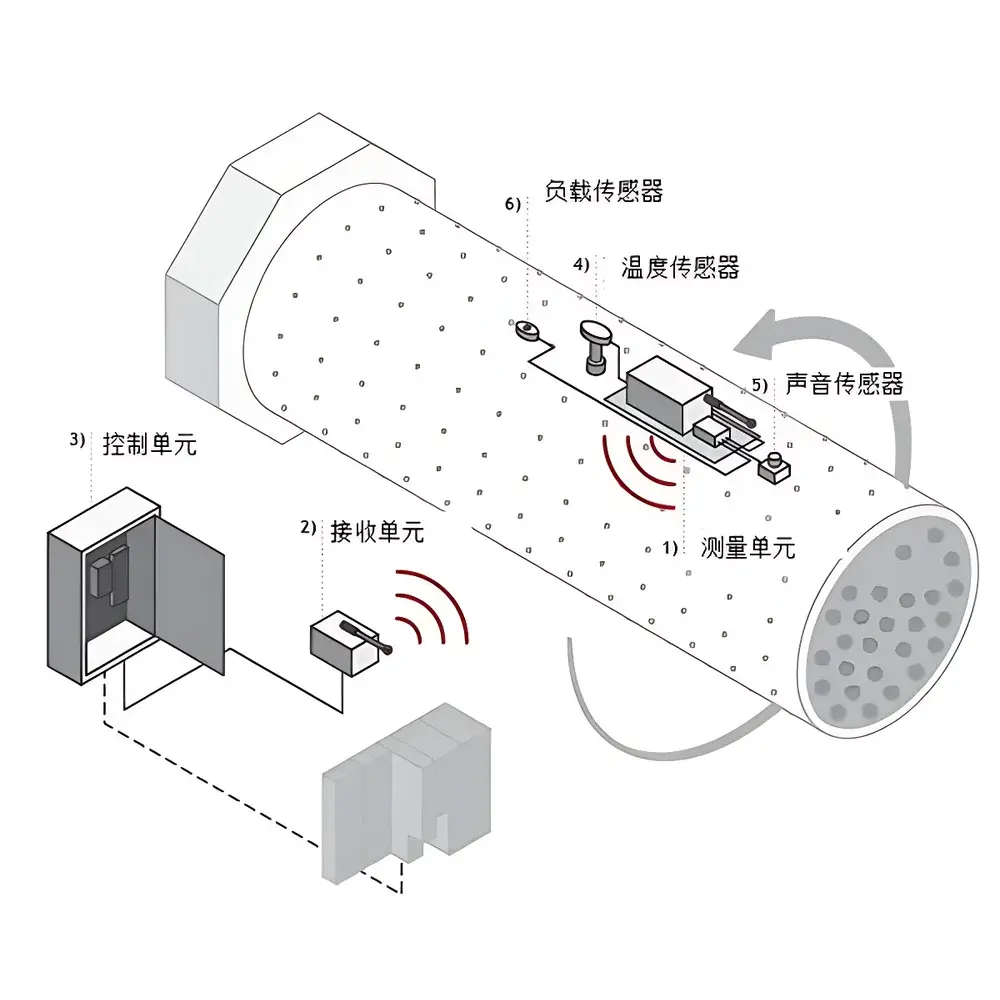
The KIMA SmartFill Online Mill Load Monitoring System is an advanced acoustic-based process instrumentation solution engineered for real-time, non-intrusive monitoring of material fill level inside rotating ball mills, tube mills, and vertical roller mills—primarily deployed in cement, mining, and mineral processing industries. Unlike conventional mill “ear” sensors that rely on broadband acoustic intensity measurements (e.g., RMS sound pressure level), SmartFill employs a proprietary spectral structure analysis algorithm to extract and interpret the characteristic acoustic signature generated by the cascading and tumbling motion of grinding media and feed material within discrete mill compartments. This physics-based approach discriminates between mechanically coupled noise sources—such as gearboxes, drive motors, conveyor chains, or adjacent mills—by isolating frequency-domain features tied directly to internal mill dynamics. As a result, SmartFill delivers stable, drift-free load estimation without requiring monthly recalibration, enabling continuous integration into distributed control systems (DCS) and model predictive control (MPC) architectures.
Key Features
- Acoustic spectral fingerprinting technology—analyzes time-frequency patterns of mill-generated noise rather than aggregate amplitude, ensuring immunity to ambient mechanical interference
- Multi-compartment resolution—capable of distinguishing fill-level trends across individual grinding chambers (e.g., coarse and fine grinding zones in two-compartment cement mills)
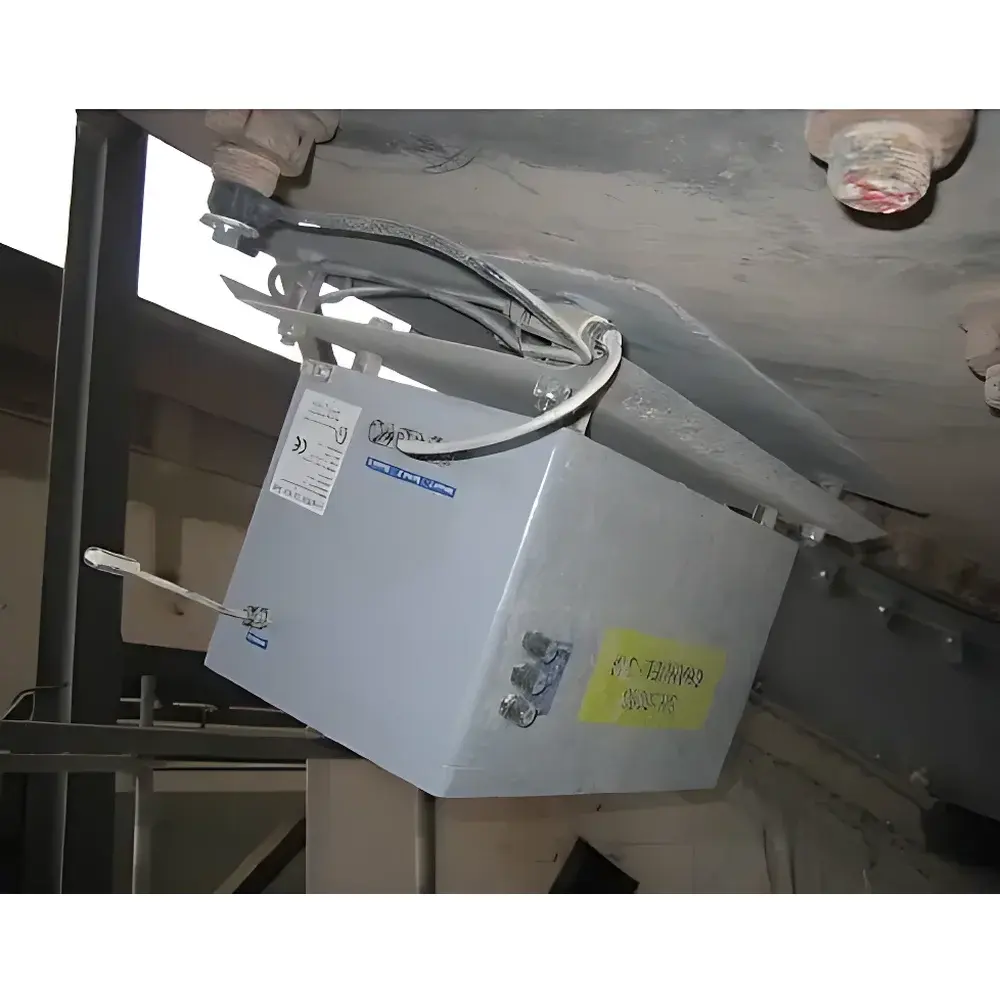
- Non-contact, externally mounted sensor design—no penetration into mill shell; installation requires only secure mounting on the mill’s external shell surface with calibrated coupling gel
- Integrated signal conditioning and edge-processing unit—performs real-time FFT-based feature extraction, eliminating dependency on external PLCs or SCADA servers for core analytics
- IP66-rated industrial enclosure with wide operating temperature range (−20 °C to +60 °C) and EMC-compliant design for harsh plant environments
- 4–20 mA analog output + Modbus RTU (RS-485) digital interface for seamless integration with legacy and modern automation systems
Sample Compatibility & Compliance
SmartFill is validated for use with dry and semi-dry grinding circuits handling limestone, clinker, slag, coal, and ore feedstocks. It operates independently of material density, moisture content (within typical industrial ranges <8 wt%), or particle size distribution—parameters that significantly affect capacitance- or gamma-based level measurement techniques. The system complies with IEC 61000-6-2 (immunity) and IEC 61000-6-4 (emissions) for industrial environments. Its measurement methodology supports traceability under ISO 9001 quality management frameworks and aligns with functional safety considerations outlined in IEC 61511 for basic process control systems (BPCS). While not a safety instrumented system (SIS) device, SmartFill data may be used as input to SIS logic solvers where mill overfill or underfill poses mechanical or thermal risk.
Software & Data Management
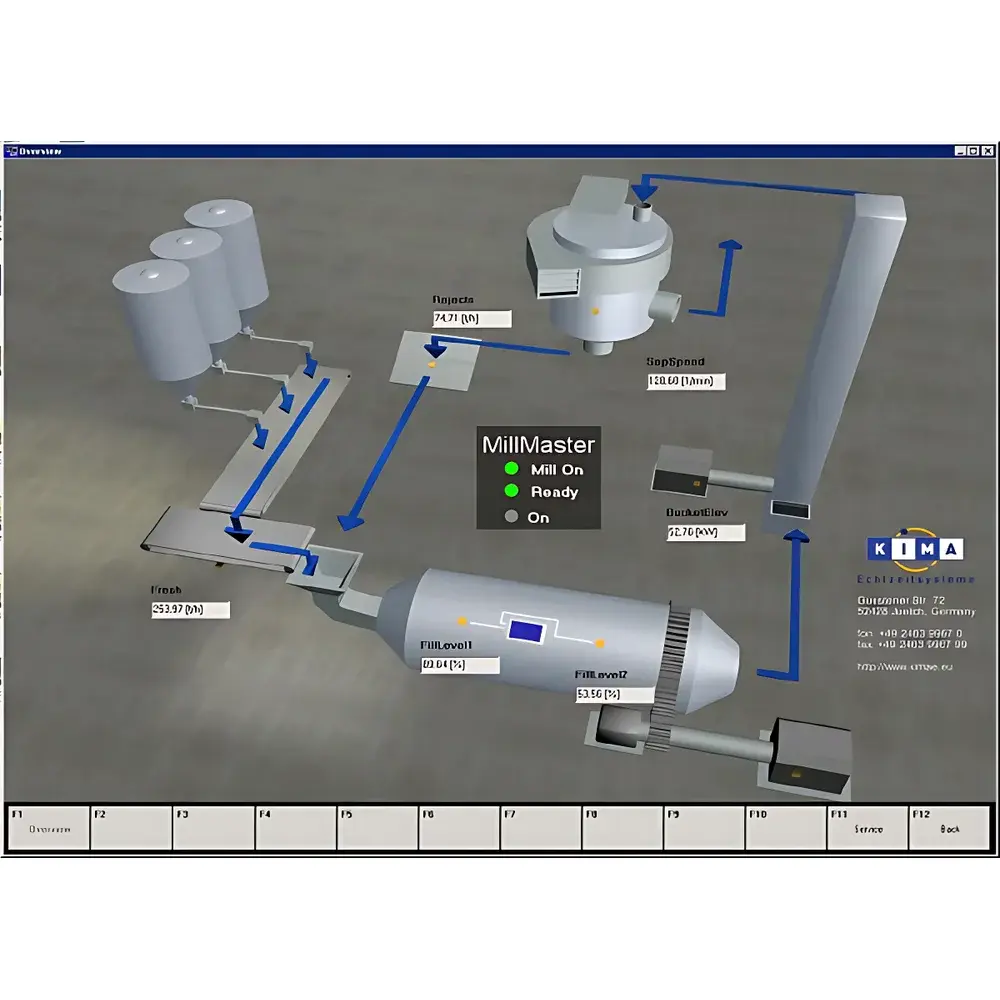
The SmartFill system includes embedded firmware with configurable alarm thresholds (e.g., low-fill warning, critical overfill condition) and trend logging at user-defined intervals (1–60 seconds). Historical data—including raw spectral snapshots, derived fill index values, and diagnostic status flags—is accessible via Modbus register mapping for historian integration (e.g., OSIsoft PI, Emerson DeltaV Datasource). Optional KIMA Engineering Suite software provides offline spectral visualization, commissioning support, and comparative analysis across multiple mills. All configuration changes are logged with timestamp and operator ID, satisfying audit requirements under GLP and GMP-aligned operational procedures. Data export formats include CSV and XML; no cloud connectivity or remote vendor access is enabled by default—ensuring full data sovereignty.
Applications
- Optimization of cement mill throughput and specific energy consumption via closed-loop feed rate adjustment
- Early detection of liner wear or charge degradation through long-term deviation in acoustic signature baseline
- Support for digital twin development—SmartFill outputs serve as ground-truth inputs for dynamic mill simulation models
- Preventive maintenance scheduling based on statistical shifts in compartment-specific fill behavior
- Commissioning validation of new mill liners, grinding media grading, or process modifications
FAQ
Does SmartFill require physical access inside the mill during installation?
No—sensor mounting is fully external; no shutdown or mill entry is needed beyond standard safe isolation procedures.
Can SmartFill distinguish between high-fill and high-moisture conditions?
Yes—the spectral decomposition method differentiates acoustic damping effects (moisture-related) from impact energy distribution (fill-level-related), unlike amplitude-only sensors.
Is calibration required after initial commissioning?
No scheduled recalibration is necessary; the system self-validates using internal reference spectra and maintains stability over >12 months in typical plant conditions.
What communication protocols does SmartFill support?
Standard 4–20 mA analog output and Modbus RTU over RS-485; optional Profibus DP and Ethernet/IP gateways available upon request.
How is measurement uncertainty quantified?
Typical repeatability is ±1.2% full scale under steady-state operation; uncertainty increases marginally during transient feed changes but remains bounded per ISO/IEC 17025 traceable test reports.
Related Products