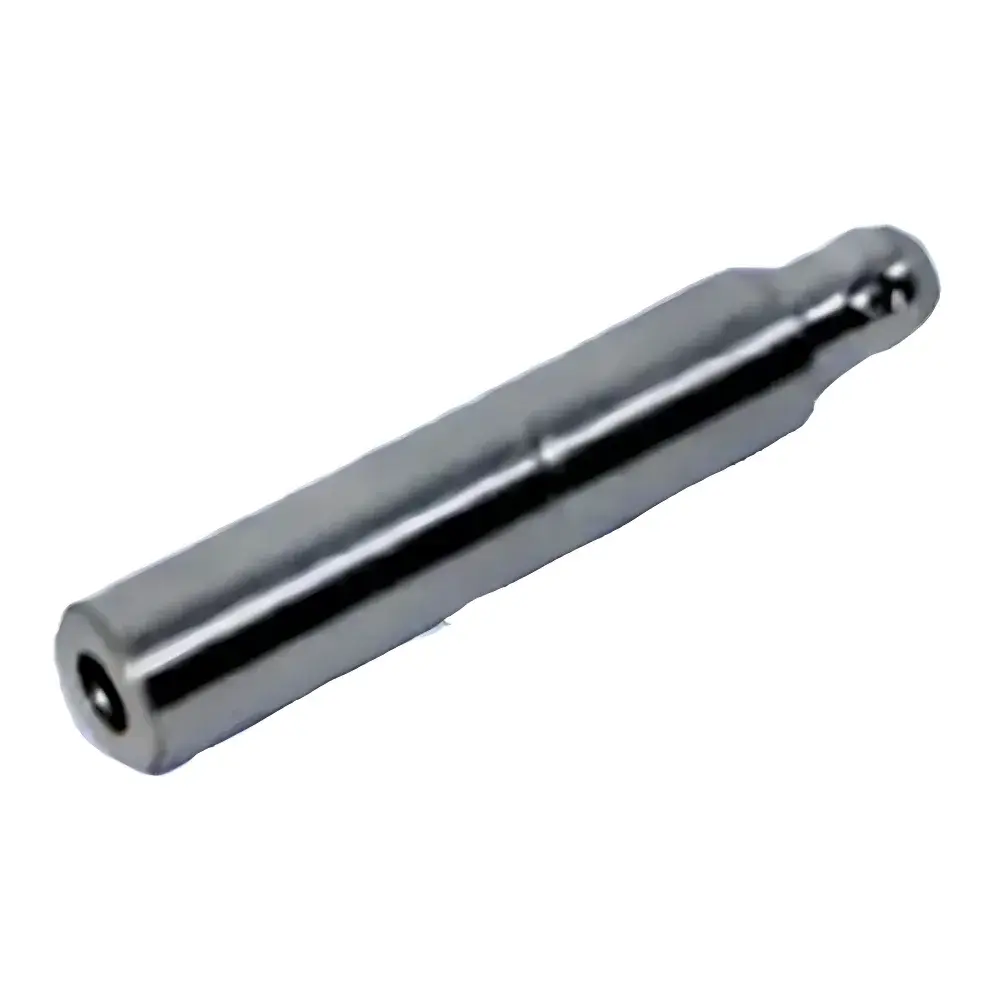
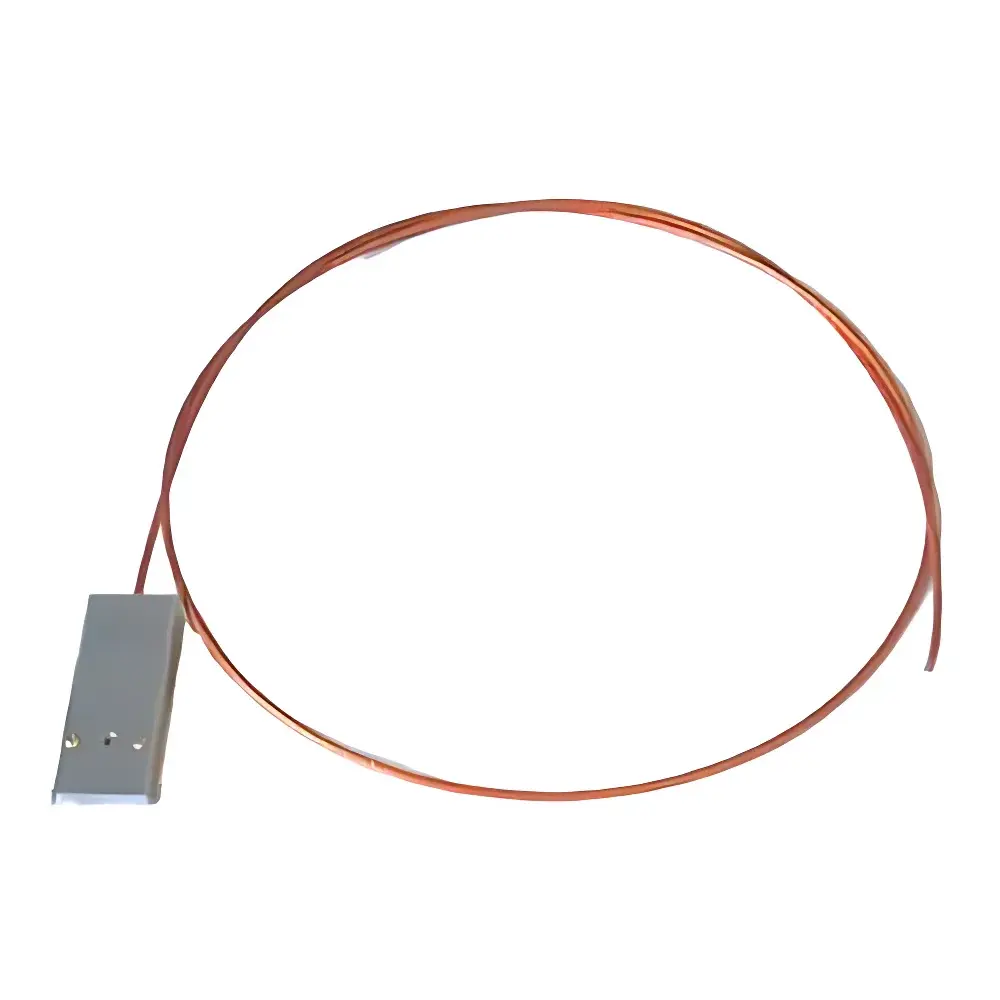
Kimball Physics FC-66 Faraday Cup
| Brand | Kimball Physics, Inc. |
|---|---|
| Origin | USA |
| Model | FC-66 |
| Maximum Continuous Power Input | 4 W |
| Aperture | Customizable |
| Electrical Interface | BNC |
| Shielding | Fully Enclosed Grounded Electrostatic Shield |
| Mounting | Unmounted (Flexible Integration) |
Overview
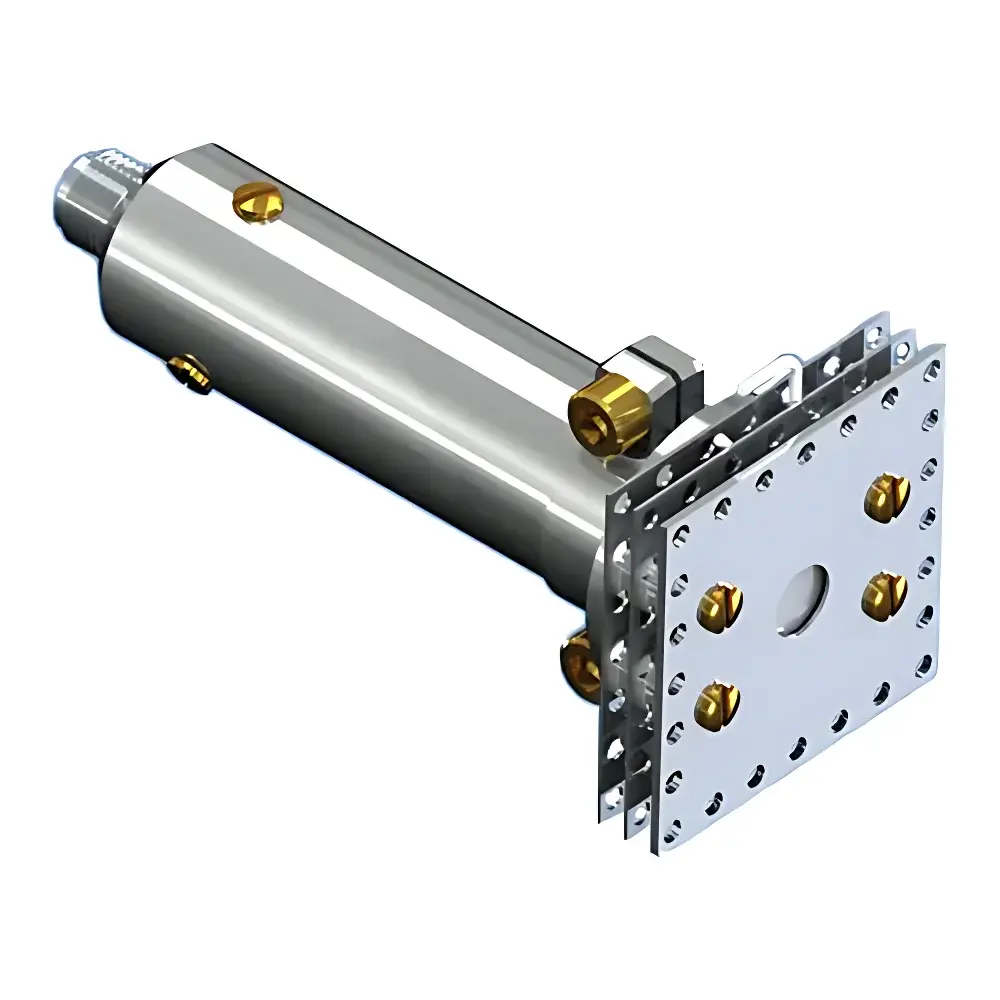
The Kimball Physics FC-66 Faraday Cup is a precision electron and ion current measurement device engineered for high-fidelity beam diagnostics in ultra-high vacuum (UHV) and high-vacuum environments. Operating on the fundamental principle of charge collection via secondary electron suppression and electrostatic shielding, the FC-66 captures incident charged particles—primarily electrons and low-energy ions—and converts their kinetic flux into a measurable DC current signal. Its design adheres to established Faraday cup metrology standards, where incident particles strike a deep, conductive collector recessed within a grounded, electrically isolated shield to minimize secondary electron emission and external field interference. The FC-66 is not intended for direct optical or RF power measurement; rather, it serves as a primary standard for calibrating beamline monitors, validating electron gun output, and quantifying ion source efficiency in research accelerators, surface analysis systems (e.g., AES, XPS), and focused ion beam (FIB) platforms.
Key Features
- Robust UHV-compatible construction using oxygen-free high-conductivity (OFHC) copper collector and stainless steel housing, rated for bake-out temperatures up to 150 °C.
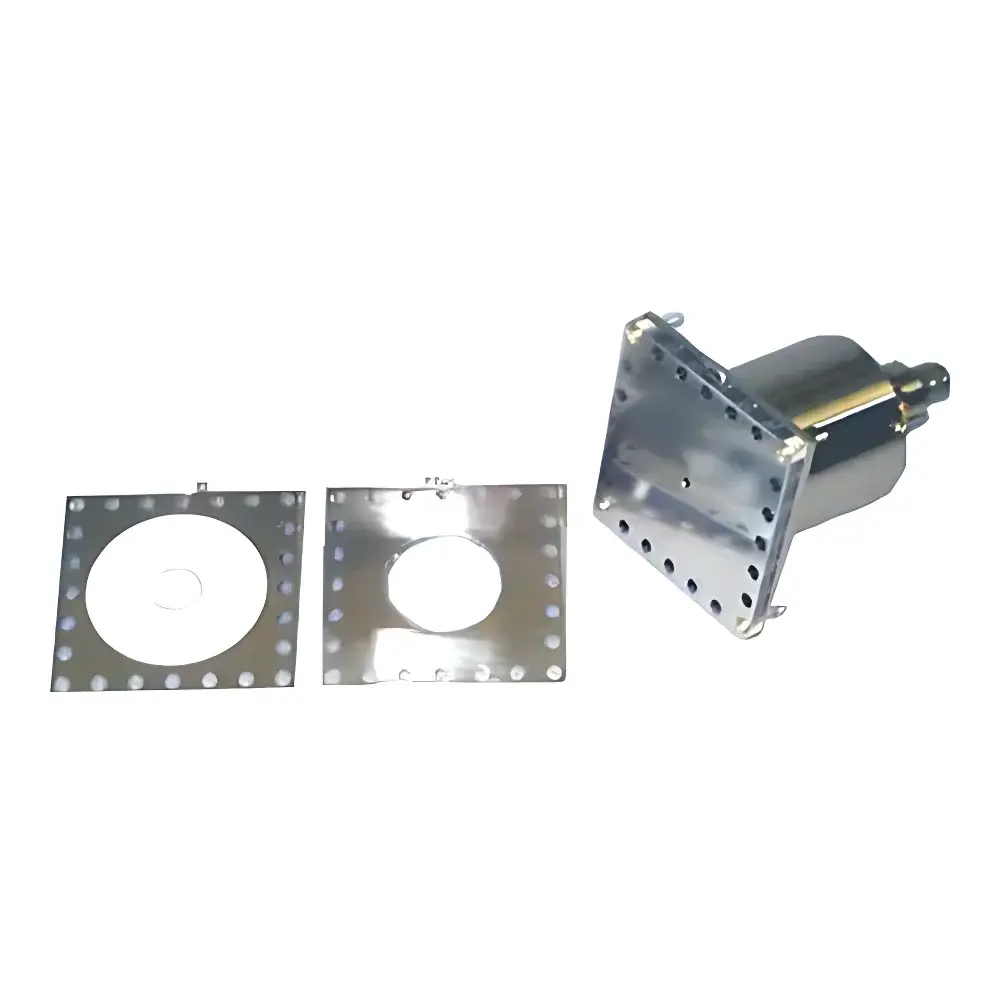
- Custom-aperture geometry support: Standard configurations accommodate apertures from 1 mm to 6 mm diameter; non-standard diameters and aspect ratios can be specified at time of order to match beam envelope requirements.
- Integrated electrostatic suppression: A negatively biased suppressor electrode (−100 V typical) surrounds the collector entrance to repel secondary electrons emitted from the collector surface, ensuring >99.5% collection efficiency per ISO/IEC 17025 traceable validation protocols.
- BNC coaxial interface with 50 Ω impedance matching enables direct connection to calibrated picoammeters (e.g., Keysight B2987A) or lock-in amplifiers without signal degradation.
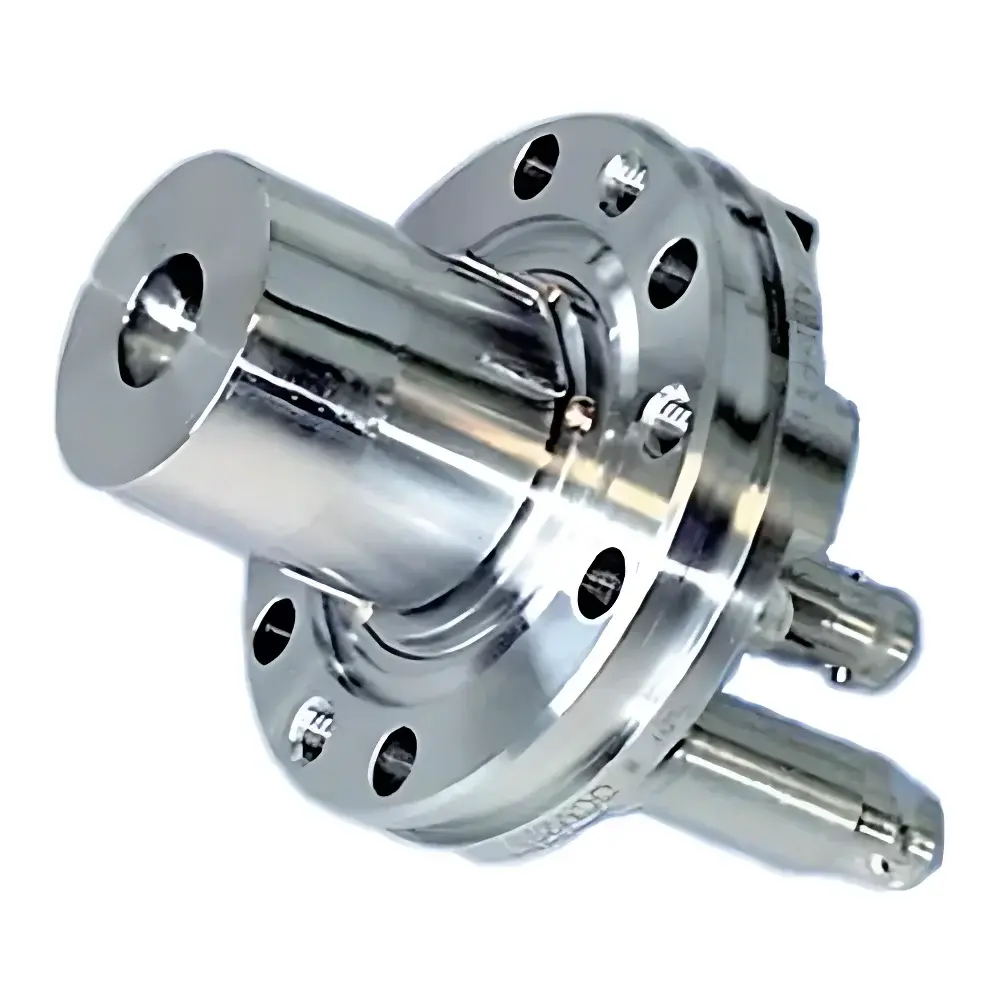
- Unmounted mechanical configuration: No pre-installed flanges or alignment fixtures—provides full freedom for integration into custom feedthroughs, manipulators, or multi-axis stages per user-defined vacuum port geometry (CF, KF, or ISO-FN).
- Grounded, fully enclosed Faraday cage: The entire cup assembly resides within a continuous, electrically bonded shield connected to system ground potential, eliminating capacitive coupling and electromagnetic pickup in sensitive low-current measurements (<100 fA noise floor achievable).
Sample Compatibility & Compliance
The FC-66 is compatible with continuous or pulsed electron beams (0.1 eV–30 keV) and singly charged ion beams (H⁺, He⁺, O⁺, Ar⁺) with kinetic energies up to 5 keV. It is not suitable for neutral particle detection or high-energy proton beams (>10 MeV). The device complies with ASTM E1757–21 “Standard Practice for Calibration of Faraday Cups Used in Charged Particle Beam Measurement” and supports GLP-compliant documentation workflows. All materials meet ASTM F568M Grade 8.8 fastener specifications and outgassing rates conform to ECSS-Q-ST-70-02C for space-qualified vacuum hardware. Traceable calibration certificates (NIST-traceable current measurement chain) are available upon request.
Software & Data Management
As a passive, analog transduction device, the FC-66 requires no embedded firmware or proprietary drivers. Current output is directly interfaced with industry-standard instrumentation: Keithley 6430 Sub-Femtoamp Remote SourceMeter®, Stanford Research Systems SR830 DSP Lock-in Amplifier, or LabVIEW-based DAQ systems using NI PXIe-4081 DMM modules. Raw current data is acquired in real time and logged with timestamped metadata (including vacuum pressure, bias voltage, and ambient temperature if monitored externally). For regulated environments, the acquisition stack may be configured to comply with FDA 21 CFR Part 11 requirements—including electronic signatures, audit trails, and data integrity controls—when deployed with validated third-party SCADA or LIMS platforms.
Applications
- Beam current normalization in scanning electron microscopes (SEM) and transmission electron microscopes (TEM) during quantitative EDS mapping.
- Ion source characterization in ion implantation tools and plasma etch reactors.
- Calibration reference for retarding field energy analyzers (RFEA) and electron spectrometers.
- In-situ monitoring of electron yield in cathodoluminescence and electron-stimulated desorption experiments.
- Validation of space-charge-limited current models in thermionic and field-emission cathodes.
- Low-current reference standard in national metrology institute (NMI) beamline intercomparisons.
FAQ
What is the maximum average beam power the FC-66 can withstand continuously?
The FC-66 is rated for 4 W of continuous incident power when properly cooled via conduction through its mounting interface. Exceeding this limit risks thermal drift in baseline current and potential collector oxidation in vacuum.
Can the FC-66 measure pulsed beams?
Yes—provided pulse repetition rates exceed 1 Hz and duty cycles remain below 10%, the cup’s thermal mass ensures stable DC-equivalent current readout. For sub-microsecond pulses, rise-time limitations of the downstream ammeter must be considered separately.
Is the suppressor electrode voltage adjustable?
The standard suppressor operates at −100 V DC, supplied externally via a dedicated SHV feedthrough. Custom bias ranges (−50 V to −200 V) are available under OEM agreement.
Does Kimball Physics provide calibration services?
Yes—traceable calibration against NIST SRM 2135a (Faraday cup transfer standard) is offered with optional uncertainty reporting per ISO/IEC 17025:2017. Certificates include temperature-compensated linearity verification from 1 pA to 100 µA.