
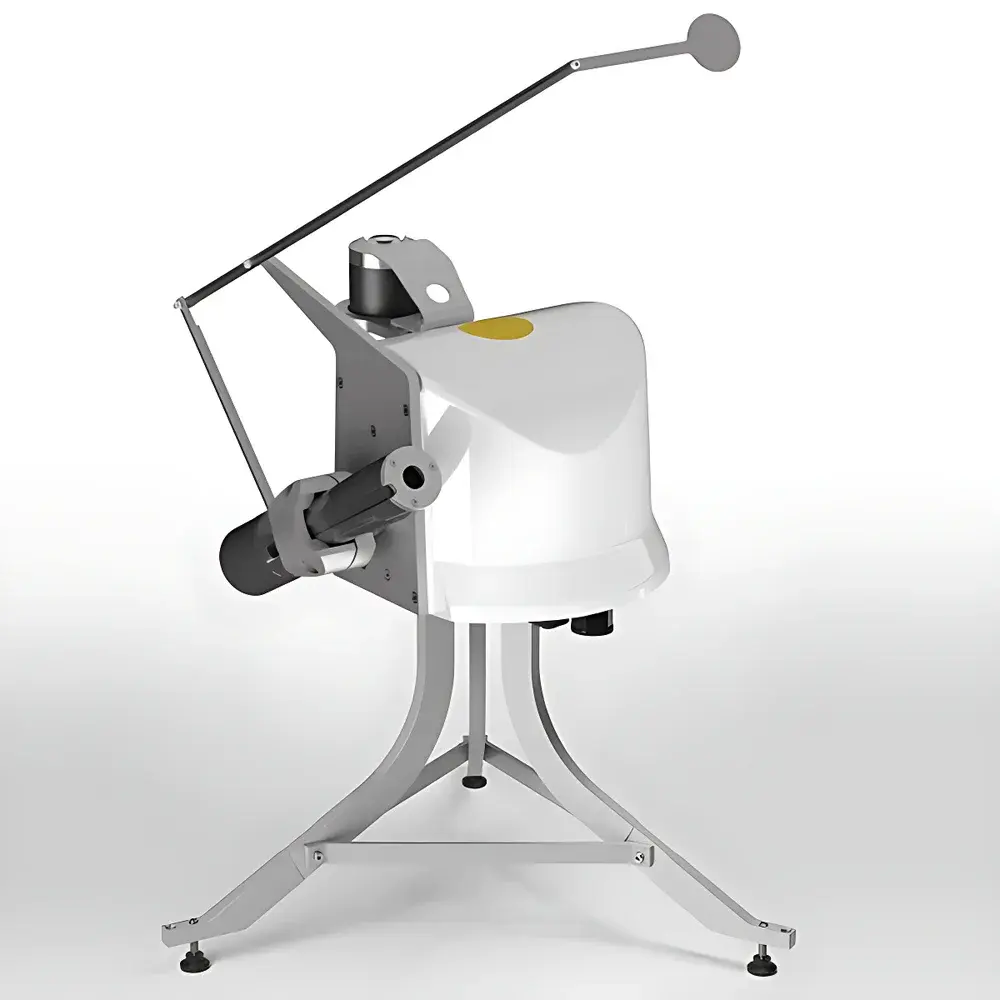
KIPP ZONEN RaZON+ Integrated Solar Monitoring System
| Brand | KIPP ZONEN |
|---|---|
| Origin | Netherlands |
| Manufacturer Type | Authorized Distributor |
| Origin Category | Imported |
| Model | RaZON+ Integrated Solar Monitoring System |
| Pricing | Available Upon Request |
| Tracking Accuracy | 0.2° (Passive) / <0.02° (Active with Optional Sun Sensor) |
| Power Supply | 24 V DC |
| Operating Temperature Range | -20 °C to +50 °C |
| Ingress Protection Rating | IP65 |
| Drive Mechanism | Gear-Driven |
| Communication Interfaces | RS-485 (Modbus® RTU/ASCII), Ethernet (RJ-45), Wi-Fi (Web-Based Interface) |
| Data Processing Interval | 1-minute Averaging |
| Detector Material | Fused Quartz (for Both DNI and DHI Sensors) |
Overview
The KIPP ZONEN RaZON+ Integrated Solar Monitoring System is an engineered solution for high-fidelity, long-term measurement of direct normal irradiance (DNI) and diffuse horizontal irradiance (DHI) in solar resource assessment, PV performance monitoring, and concentrated solar power (CSP) plant operations. Unlike conventional setups requiring separate trackers and independent pyrheliometers and shaded pyranometers, the RaZON+ integrates both optical sensors—namely a quartz-based thermopile direct irradiance sensor and a quartz-detector pyranometer—within a single, co-aligned mechanical platform. Its core operational principle relies on concurrent DNI and DHI acquisition, enabling total horizontal irradiance (GHI) to be derived as GHI = DNI × cos(θz) + DHI, where θz is the solar zenith angle. This calculated GHI approach eliminates systematic errors associated with unshaded pyranometer drift, cosine response deviation, and thermal offset—particularly critical under low sun angles or rapidly changing sky conditions. The system’s architecture conforms to ISO 9060:2018 Class A specifications for spectral response and directional error, and supports traceable calibration per WRR (World Radiometric Reference) protocols.
Key Features
- Integrated dual-sensor design: Co-mounted quartz thermopile DNI sensor and ventilated, shaded pyranometer for DHI—ensuring spatial and temporal synchronization without inter-instrument misalignment.
- Passive solar tracking with <0.2° pointing uncertainty; optional active sun-sensor feedback reduces residual error to <0.02°, meeting IEC 61724-1:2021 requirements for Class A solar monitoring stations.
- Open-tube collimator geometry minimizes dust accumulation on the DNI sensor aperture—reducing maintenance frequency by up to 70% compared to traditional black-body cavity designs.
- Fused quartz detector elements provide superior UV-to-NIR spectral transmission (280–3000 nm), minimal thermal hysteresis, and long-term stability under thermal cycling.
- Gear-driven tracker mechanism operates without lubrication or scheduled servicing—validated for continuous operation across desert, alpine, and coastal environments.
- Onboard data logger performs real-time 1-minute averaging, linearization, and physical unit conversion (W/m²), with internal storage for ≥30 days of raw and processed records.
Sample Compatibility & Compliance
The RaZON+ is designed for outdoor deployment in unattended solar monitoring sites—including utility-scale PV plants, research testbeds, and national meteorological networks. It complies with key international standards governing solar radiation instrumentation: ISO 9060:2018 (spectral responsivity, directional response, temperature dependence), IEC 61724-1:2021 (performance monitoring of PV systems), and ASTM E816 (test methods for pyrheliometers). Its IP65-rated enclosure ensures protection against dust ingress and water jets during monsoon or sandstorm conditions. All electrical interfaces meet EN 61000-6-2 (immunity) and EN 61000-6-4 (emissions) requirements. Calibration certificates are issued with NIST-traceable uncertainty budgets and include WRR transfer documentation.
Software & Data Management
Data acquisition and visualization are managed through a secure, browser-based web interface accessible via Ethernet or Wi-Fi. The embedded HTTP server delivers live status telemetry (tracker position, sensor health, ambient temperature, communication uptime), time-series charts (DNI/DHI/GHI, solar zenith, incidence angle), and downloadable CSV/JSON exports. Modbus® RTU over RS-485 enables seamless integration into SCADA platforms (e.g., Ignition, Siemens Desigo, Schneider EcoStruxure) and third-party energy management systems. Optional audit logging supports GLP-compliant data integrity workflows, including user access timestamps and configuration change history. No proprietary software installation is required—compatible with Chrome, Firefox, Edge, and Safari on desktop and mobile devices.
Applications
- Solar resource assessment for bankable energy yield modeling (e.g., SAM, PVsyst inputs).
- Performance ratio (PR) analysis and degradation rate monitoring in operational PV farms.
- Validation of satellite-derived irradiance products (e.g., CAMS, NSRDB) at ground-truth reference stations.
- Input signal source for CSP heliostat field control algorithms requiring real-time DNI feedback.
- Integration with auxiliary sensors—including module backsheet temperature probes, plane-of-array (POA) pyranometers, and full meteorological suites—via the open Modbus® input port.
FAQ
Does the RaZON+ require periodic recalibration?
Yes—annual recalibration is recommended per ISO/IEC 17025-accredited laboratories using WRR-traceable reference standards. Field verification checks (e.g., clear-sky model comparison) can be performed quarterly.
Can the system operate without internet connectivity?
Yes—the onboard data logger stores all measurements locally and continues tracking autonomously. Remote access and data export resume automatically upon network restoration.
Is the RaZON+ compatible with existing SCADA infrastructure?
Yes—RS-485 Modbus® RTU support allows direct integration with most industrial automation systems without protocol gateways or middleware.
What environmental conditions limit its operational range?
The system is rated for -20 °C to +50 °C ambient operation. Extended exposure above +50 °C may affect long-term quartz detector baseline stability; supplemental shading or ventilation is advised in extreme desert deployments.
How is data security handled in the web interface?
Authentication uses HTTP Basic Auth over TLS 1.2+; default credentials must be changed on first login. No cloud upload occurs unless explicitly configured by the user.
Related Products







