
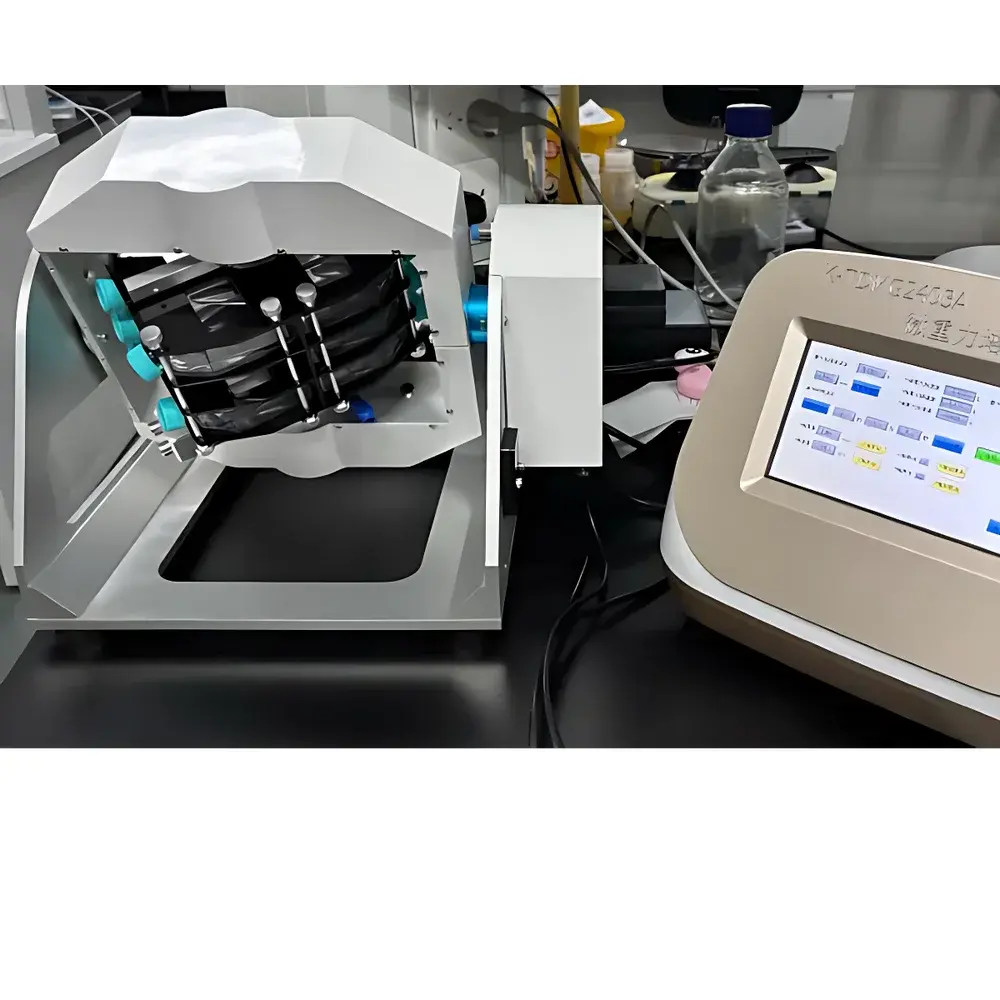
Kirkstall Quantitative Microgravity 3D Cell Culture System
| Brand | Kirkstall |
|---|---|
| Origin | United Kingdom |
| Manufacturer Type | Authorized Distributor |
| Product Category | Imported Instrument |
| Model | Quantitative Microgravity 3D Cell Culture System |
| Pricing | Available Upon Request |
Overview
The Kirkstall Quantitative Microgravity 3D Cell Culture System is an engineered platform for precise, real-time quantification of gravitational vector modulation in vitro. Based on the principle of clinostat-based vector-averaged gravity simulation—utilizing controlled rotational dynamics to nullify or augment net gravitational acceleration—the system enables reproducible generation of defined gravitational environments including simulated microgravity (10⁻³ G), lunar gravity (0.17 G), Martian gravity (0.38 G), and hypergravity (up to 3 G). Unlike passive clinostats or random positioning machines (RPMs), this system integrates triaxial gravimetric sensing (X/Y/Z axes) with ±0.001 G resolution, delivering continuous, traceable gravitational feedback synchronized with culture conditions. Designed for seamless integration into standard CO₂ incubators, it supports long-term, sterility-preserving 3D cell culture under dynamically adjustable mechanical stimuli—critical for modeling physiological and pathophysiological responses in aerospace biology, regenerative medicine, and translational pharmacology.
Key Features
- Triaxial real-time gravity monitoring: High-resolution capacitive accelerometers deliver continuous X/Y/Z gravitational vector output with ±0.001 G accuracy, enabling closed-loop environmental validation.
- Configurable rotation profiles: Four microgravity modes (1–4 rpm) and three hypergravity modes (2.0 G, 2.5 G, 3.0 G) are programmable via touchscreen interface; all modes maintain thermal and gas exchange compatibility with standard incubators.
- Modular culture carrier architecture: Supports ≥10 T25 vented flasks simultaneously; custom mounting fixtures available for Petri dishes, spheroid bioreactors, microfluidic chips, and organ-on-chip platforms.
- In situ operational monitoring: Integrated HD camera provides time-stamped visual verification of rotation stability, flask orientation, and condensation management—essential for GLP-compliant experiment documentation.
- Incubator-compatible design: Fully enclosed stainless-steel chassis with IP54-rated electronics; operates continuously at 37 °C, 5% CO₂, 95% RH without compromising sterility or sensor calibration.
Sample Compatibility & Compliance
The system accommodates primary human cells (e.g., mesenchymal stem cells, iPSC-derived neurons), immortalized lines (SH-SY5Y, 3K-SNCA), 3D organoids (cerebral, intestinal, hepatic), and co-culture models (endothelial–pericyte–neuron tri-cultures). All hardware surfaces meet ISO 10993-5 cytocompatibility standards. Gravimetric data logging complies with ALCOA+ principles (Attributable, Legible, Contemporaneous, Original, Accurate) and supports audit-ready export for FDA 21 CFR Part 11–aligned workflows when paired with validated third-party LIMS or ELN software. System validation protocols align with ASTM F2971-22 (Standard Practice for Simulated Microgravity Testing of Biological Systems) and ESA ELIPS guidelines for ground-based analog studies.
Software & Data Management
The embedded control firmware (v3.2+) provides intuitive touchscreen operation with dual-mode execution: manual rapid-start (single-touch activation) or scheduled protocol runs (up to 99-step sequences with time-stamped parameter logging). Gravity vectors, RPM, temperature drift, and camera timestamps are exported as CSV/JSON with ISO 8601 timestamps. Optional API integration enables synchronization with MATLAB, Python (via PySerial), or LabVIEW for automated analysis of α-synuclein aggregation kinetics, ROS quantification, or mitochondrial respiration correlation. Audit trails include user ID, session duration, mode selection, and sensor calibration status—fully traceable for GxP-regulated environments.
Applications
- Aerospace & Space Biology: Modeling neurodegenerative mechanisms during prolonged spaceflight; evaluating skeletal muscle atrophy, osteocyte mechanotransduction, and vascular remodeling under Mars- and Moon-gravity analogs.
- Stem Cell & Organoid Engineering: Enhancing iPSC differentiation efficiency toward neural crest lineages; promoting extracellular matrix deposition in cartilage and bone organoids; modulating Wnt/β-catenin signaling in gut spheroids.
- Neurodegeneration Research: Accelerated α-synuclein fibrillization and oxidative stress induction in PD models; correlating gravitational load with lysosomal pH dysregulation and mitophagy impairment in SH-SY5Y and 3K-SNCA lines.
- Oncology & Angiogenesis: Studying 3D tumor spheroid invasion under microgravity-induced cytoskeletal reorganization; quantifying VEGF secretion gradients and endothelial tubulogenesis kinetics.
- Protein Crystallization: Facilitating high-quality macromolecular crystal growth by suppressing sedimentation-driven convection—validated for lysozyme, insulin, and monoclonal antibody fragments.
FAQ
How does this system differ from a standard rotating wall vessel (RWV) or random positioning machine (RPM)?
Unlike RWVs—which rely on fluid shear alone—or RPMs—which stochastically average gravity vectors—this system delivers deterministic, quantified gravitational setpoints with real-time triaxial feedback, enabling direct correlation between g-level and phenotypic outcomes.
Can gravity data be synchronized with live-cell imaging or metabolic assays?
Yes. TTL-triggered outputs and timestamp-aligned CSV exports allow precise alignment with confocal microscopy, Seahorse XF analyzers, or plate-reader kinetic assays.
Is calibration traceable to national metrology institutes?
Accelerometer modules are factory-calibrated against NPL (UK) reference standards; full calibration certificates—including uncertainty budgets—are provided with each unit.
What maintenance is required for long-term incubator deployment?
No consumables or periodic recalibration are needed. Bearings are sealed and lubricated for >20,000 hours; routine cleaning uses 70% ethanol—no disassembly required.
Does the system support remote monitoring outside the lab?
When connected to institutional Ethernet/WiFi, secure HTTPS access enables real-time dashboard viewing and protocol adjustment via authenticated web browser—compliant with HIPAA/FERPA network policies.





