
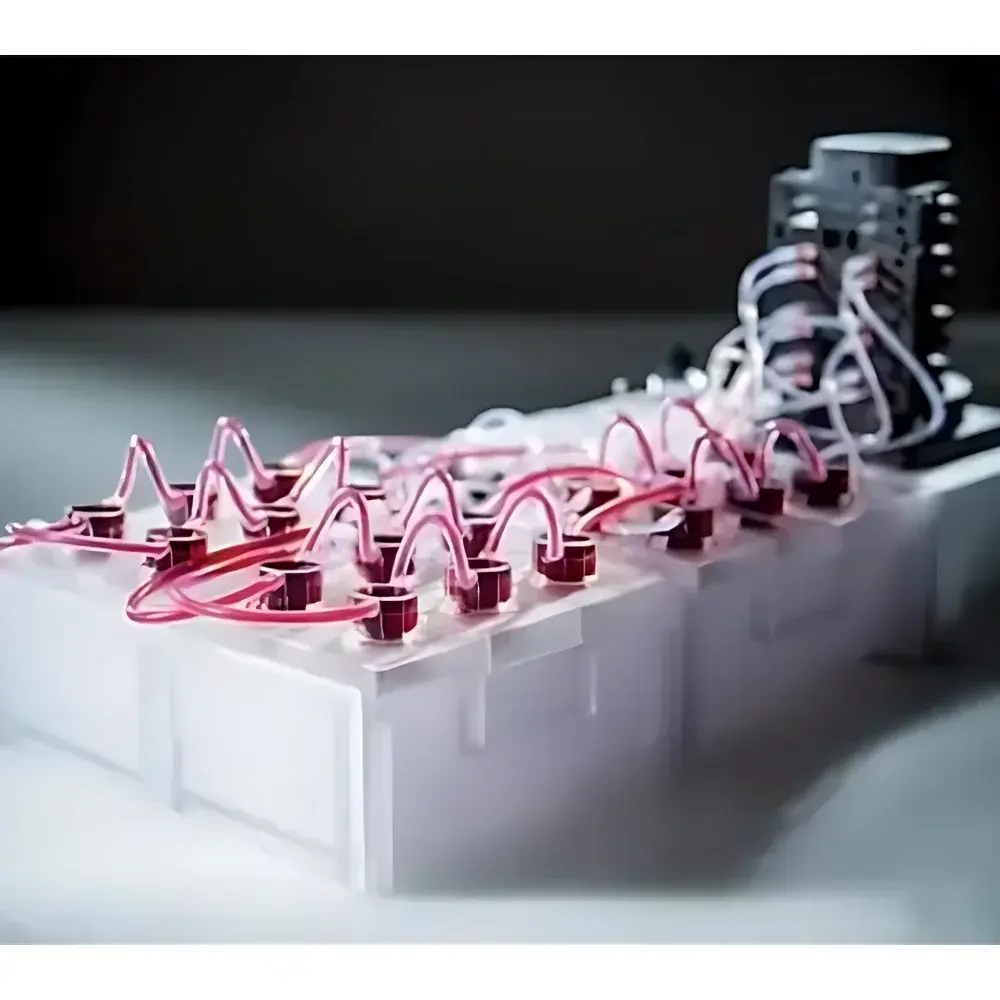
Kirkstall Quasi Vivo® QV600 3D Perfusion Cell Culture System
| Brand | Kirkstall |
|---|---|
| Origin | United Kingdom |
| Model | QV600 |
| Type | Microphysiological System (Organ-on-a-Chip) |
| Regulatory Status | CE-marked for research use only |
| Compliance | Designed in accordance with ISO 13485-aligned quality management practices for R&D instrumentation |
| Software Platform | Quasi Vivo® Control Suite v3.x (Windows-based, audit-trail enabled) |
Overview
The Kirkstall Quasi Vivo® QV600 3D Perfusion Cell Culture System is a modular, closed-loop microphysiological platform engineered to replicate dynamic physiological fluid shear stress and mass transport conditions essential for advanced in vitro tissue modeling. Unlike static monolayer cultures, the QV600 employs precisely regulated peristaltic perfusion across multi-compartment microfluidic chips—enabling sustained 3D co-culture of primary cells, organoids, or explants under physiologically relevant interstitial flow, oxygen tension gradients, and apical-basolateral polarity. Its core architecture implements laminar, low-shear flow profiles (0.1–10 µL/min range typical) calibrated to mimic capillary-level hemodynamics in human tissues such as intestinal villi, placental chorionic villi, or pulmonary alveoli. The system supports long-term culture (≥14 days) with integrated temperature (37 °C ± 0.3 °C), CO2 (5% ± 0.2%), and humidity control, making it suitable for mechanistic studies requiring temporal resolution of barrier function, metabolite secretion, or drug permeation kinetics.
Key Features
- Modular microfluidic chip architecture: Interchangeable chamber modules (QV6, QV12, QV24) compatible with collagen-, Matrigel-, or synthetic hydrogel-embedded 3D constructs
- Precision peristaltic pumping: Dual-channel programmable drive enabling independent control of apical and basolateral perfusion rates, with real-time flow monitoring via integrated pressure sensors
- Gas-permeable PDMS/PET hybrid chip substrates: Support high-resolution live imaging (confocal, phase-contrast, fluorescence) without optical distortion
- Integrated environmental enclosure: Maintains stable 37 °C, 5% CO2, >95% RH during extended operation; validated per ASTM E2912-13 for incubator performance
- GLP-ready data integrity: All operational parameters (flow rate, pressure, temperature, duration) logged with timestamped, user-identifiable entries compliant with FDA 21 CFR Part 11 requirements when used with Quasi Vivo® Control Suite v3.x
- Scalable multi-chamber configuration: Up to six independent culture units can be operated in parallel on a single controller, facilitating dose-response or multi-tissue interaction studies
Sample Compatibility & Compliance
The QV600 accommodates primary human cells (e.g., Caco-2, HUVEC, trophoblasts), patient-derived organoids, and precision-cut tissue explants (placental villi, intestinal mucosa). Chip surfaces are amenable to standard ECM coatings (fibronectin, laminin-521) and surface functionalization (e.g., antibody patterning). All wetted materials meet USP Class VI biocompatibility standards. The system is supplied with CE marking under Directive 2017/745 (MDR) for *in vitro* diagnostic research use only—not intended for clinical application or therapeutic manufacturing. Protocols align with OECD TG 497 (test guideline for intestinal absorption) and ISO/IEC 17025 principles for method validation in academic and contract research organizations.
Software & Data Management
Quasi Vivo® Control Suite v3.x provides deterministic control over pump sequencing, ramp profiles, and environmental setpoints. It generates encrypted .qvd binary logs containing raw sensor outputs, user annotations, and system diagnostics—exportable to CSV or HDF5 for integration with MATLAB, Python (Pandas/NumPy), or commercial PK/PD modeling tools. Audit trails include operator ID, timestamp, parameter changes, and firmware version. Optional add-ons support automated media exchange scheduling and integration with liquid handling robots (via RS-232/Modbus TCP). Software validation documentation (IQ/OQ protocols) is available upon request for GxP-regulated environments.
Applications
- Gastrointestinal absorption modeling: Quantitative assessment of compound permeability across polarized epithelia under pH-gradient perfusion (e.g., atorvastatin uptake with MALDI-MSI correlation)
- Placental barrier function: Real-time analysis of exosome release, hormone secretion (hCG, progesterone), and nanoparticle translocation under maternal-fetal flow simulation
- Nanocarrier evaluation: Elimination of sedimentation artifacts in liposome–cell interaction studies by maintaining suspension state throughout exposure duration
- Tumor microenvironment reconstruction: Co-culture of cancer spheroids with endothelial and stromal cells under interstitial flow to assess invasion and angiogenic signaling
- Toxicity screening: Long-term hepatocyte or cardiomyocyte viability assessment under repeated dosing regimens, with continuous lactate dehydrogenase (LDH) or ATP sampling from effluent lines
FAQ
Is the QV600 compatible with high-content imaging systems?
Yes—the QV600 chip carriers are designed for direct placement on inverted microscopes with motorized stages; working distance clearance exceeds 12 mm, and PDMS optical properties support confocal Z-stacking up to 200 µm depth.
Can I validate my own microfluidic chip design for use with the QV600 controller?
Kirkstall provides mechanical interface specifications (ISO 80369-3 port geometry, tubing OD/ID tolerances) and electrical communication protocols (UART command set) to third-party developers under NDA.
Does the system support sterile operation and aseptic technique?
All fluidic pathways are autoclavable (121 °C, 20 min); chips and tubing are supplied gamma-irradiated (25 kGy); controller housing meets IP54 rating for lab environment resilience.
What regulatory documentation is provided for GLP-compliant studies?
Certificate of Conformance, Factory Calibration Report, and full Software Validation Package (including traceability matrix and test scripts) are included with each system shipment.
How does the QV600 differ from generic microfluidic pumps?
Unlike benchtop syringe pumps, the QV600 delivers physiologically accurate pulsatility-free laminar flow with sub-microliter precision, integrated environmental control, and purpose-built chip interfaces validated for reproducible barrier resistance measurements (TEER) over multi-week durations.
Related Products




