
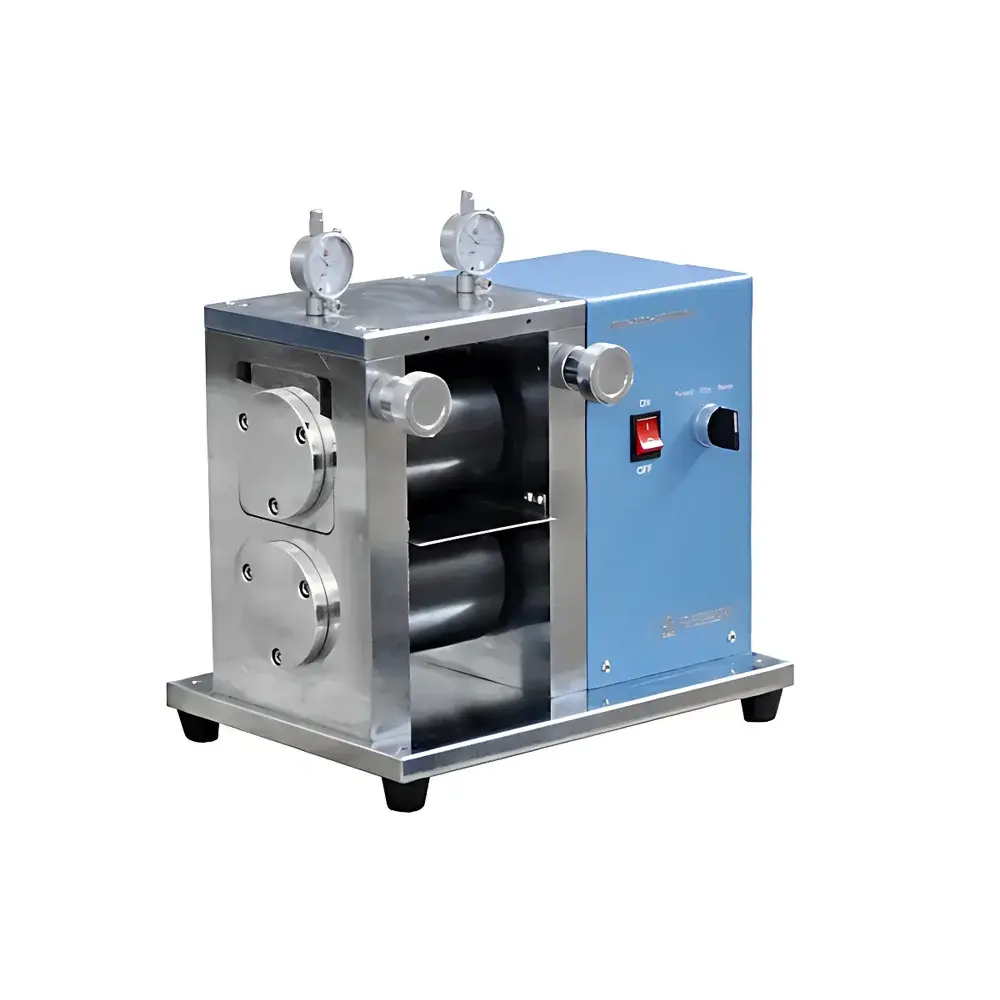
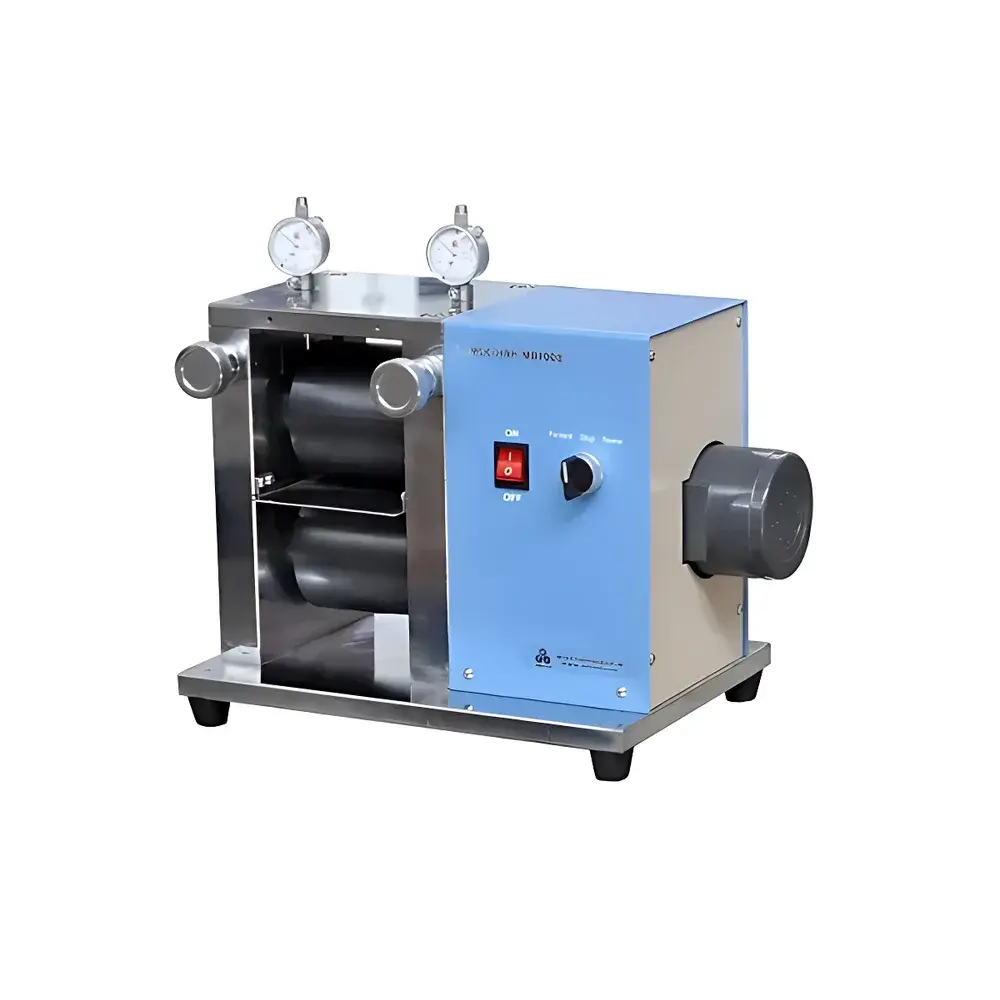
KJ GROUP MSK-HRP-MR100B 4-Inch Ceramic-Coated Electric Roll Press
| Brand | KJ GROUP |
|---|---|
| Origin | Liaoning, China |
| Manufacturer Type | Authorized Distributor |
| Country of Origin | China |
| Model | MSK-HRP-MR100B |
| Power Supply | 220 V AC, Single-Phase |
| Motor Power | 40 W |
| Roll Material | Tool Steel with Full-Surface Ceramic Coating |
| Surface Hardness | >HV100 |
| Roll Dimensions | Ø100 mm × 100 mm |
| Max. Feed Thickness | 2 mm |
| Max. Feed Width | 90 mm |
| Linear Roll Speed | 22 mm/s |
| Roll Runout (TIR) | ≤0.0004 mm |
| Surface Roughness | Ra ≥ 0.2 µm |
| Overall Dimensions | 381 mm × 241.3 mm × 355.6 mm |
Overview
The KJ GROUP MSK-HRP-MR100B 4-Inch Ceramic-Coated Electric Roll Press is a benchtop precision calendering system engineered for controlled thickness reduction and surface densification of thin-film electrode materials used in battery R&D and advanced material prototyping. Unlike conventional steel or chrome-plated roll presses, the MSK-HRP-MR100B features fully ceramic-coated tool steel rolls—applied via plasma-spray or PVD processes—to eliminate metallic ion leaching during compaction of sensitive cathode/anode slurries (e.g., NMC, LFP, silicon-carbon composites). This design directly addresses contamination-critical workflows where trace Fe, Cr, or Ni impurities compromise electrochemical performance, cycle life, and interfacial stability. The system operates on a constant-speed, fixed-gap principle using a calibrated mechanical adjustment mechanism, delivering repeatable linear compression at 22 mm/s without variable-frequency drive complexity—ideal for method development under GLP-aligned lab protocols.
Key Features
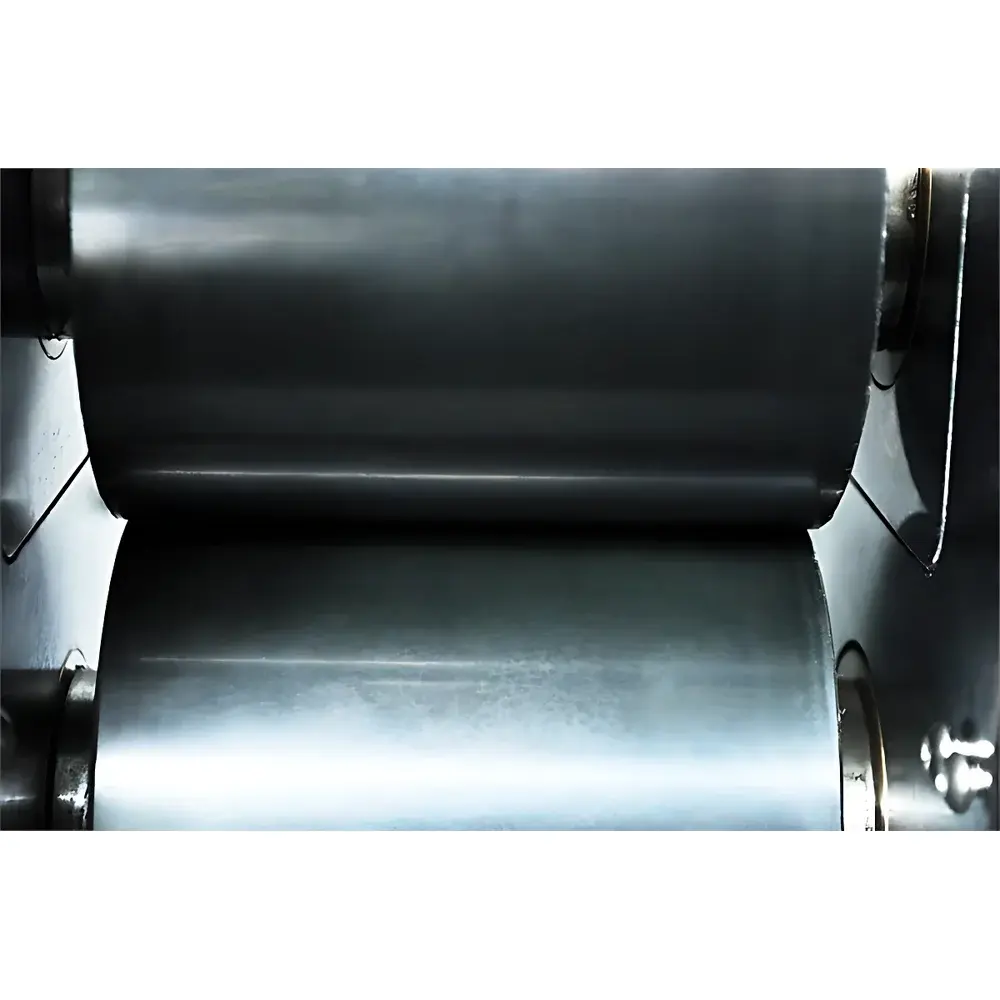
- Ceramic-coated rolls (HV >100) provide exceptional wear resistance and non-reactive surface chemistry, preventing catalytic degradation or metal dissolution into Li-ion electrode coatings.
- Ultra-low roll runout (≤0.0004 mm TIR) ensures uniform pressure distribution across the full 90 mm working width—critical for minimizing edge thinning and maintaining coating integrity in narrow-format test electrodes.
- Precision-ground tool steel substrate combined with Ra ≥ 0.2 µm surface finish supports consistent slurry adhesion and minimizes delamination risk during high-pressure calendering.
- Compact footprint (381 × 241.3 × 355.6 mm) enables integration into gloveboxes (with optional feed-through modifications) or laminar flow hoods for inert-atmosphere processing of air-sensitive materials.
- CE-certified electrical architecture complies with EN 61000-6-2 (immunity) and EN 61000-6-4 (emission) standards, supporting safe operation in shared laboratory environments.
Sample Compatibility & Compliance
The MSK-HRP-MR100B accommodates freestanding foils (Cu/Al current collectors), coated dry films (up to 2 mm total thickness), and solvent-cast composite layers on flexible substrates. It is routinely deployed in academic and industrial labs validating electrode calendering parameters per ASTM D6988 (standard practice for calendering of battery electrode coatings) and ISO 18562-3 (biocompatibility of ceramic surfaces in medical device R&D contexts). While not FDA-registered, its ceramic surface meets ISO 13485-relevant cleanliness requirements for preclinical material screening. No lubricants or coolants are required, eliminating cross-contamination pathways—supporting audit-ready documentation for internal QC procedures.
Software & Data Management
This model operates as a standalone electromechanical instrument with manual gap setting and no embedded microcontroller or digital interface. All operational parameters—including roll speed, physical gap, and pass count—are recorded manually in lab notebooks or integrated into LIMS via standardized SOP templates (e.g., SOP-BAT-017 “Electrode Calendering Protocol”). For traceability, users may pair the press with external digital calipers (e.g., Mitutoyo 500-196-30) and thickness gauges compliant with ISO 2178 (non-magnetic coating thickness measurement), enabling full metrological traceability to NIST-traceable standards. Audit trails meet basic GLP documentation thresholds when coupled with timestamped imaging and operator sign-off.
Applications
- Optimization of porosity-density relationships in Li-ion, solid-state, and Na-ion battery electrodes.
- Calibration of calendering pressure vs. ionic conductivity in sulfide-based solid electrolyte tapes.
- Controlled densification of perovskite absorber layers for photovoltaic prototype cells.
- Thickness homogenization of conductive polymer films (e.g., PEDOT:PSS) prior to transfer printing.
- Pre-compaction of ceramic green tapes (e.g., Al₂O₃, YSZ) for sintering studies in fuel cell and sensor development.
FAQ
Is the ceramic coating applied uniformly across the entire roll surface, including edges and shoulders?
Yes—the coating process covers the full functional length (100 mm) and circumferential surface, verified by cross-sectional SEM-EDS analysis per batch certification reports.
Can the roll gap be adjusted while the machine is running?
No—gap adjustment must be performed with the motor de-energized and emergency stop engaged, in accordance with CE machinery directive Annex I safety requirements.
What maintenance is required to preserve ceramic surface integrity?
Rolls require only periodic cleaning with isopropanol and lint-free wipes; abrasive cleaners, ultrasonic baths, or metal scrapers must be avoided to prevent microscratching.
Does this unit support integration with automated feed systems or vision-based thickness monitoring?
Not natively—but the frame includes M4 threaded mounting points compatible with third-party linear stages and optical profilometers (e.g., Keyence LJ-V series) via custom bracketing.
Is technical documentation available in English with calibration procedures?
Yes—English-language user manual, CE declaration of conformity, and roll concentricity verification report are supplied with each unit.



