
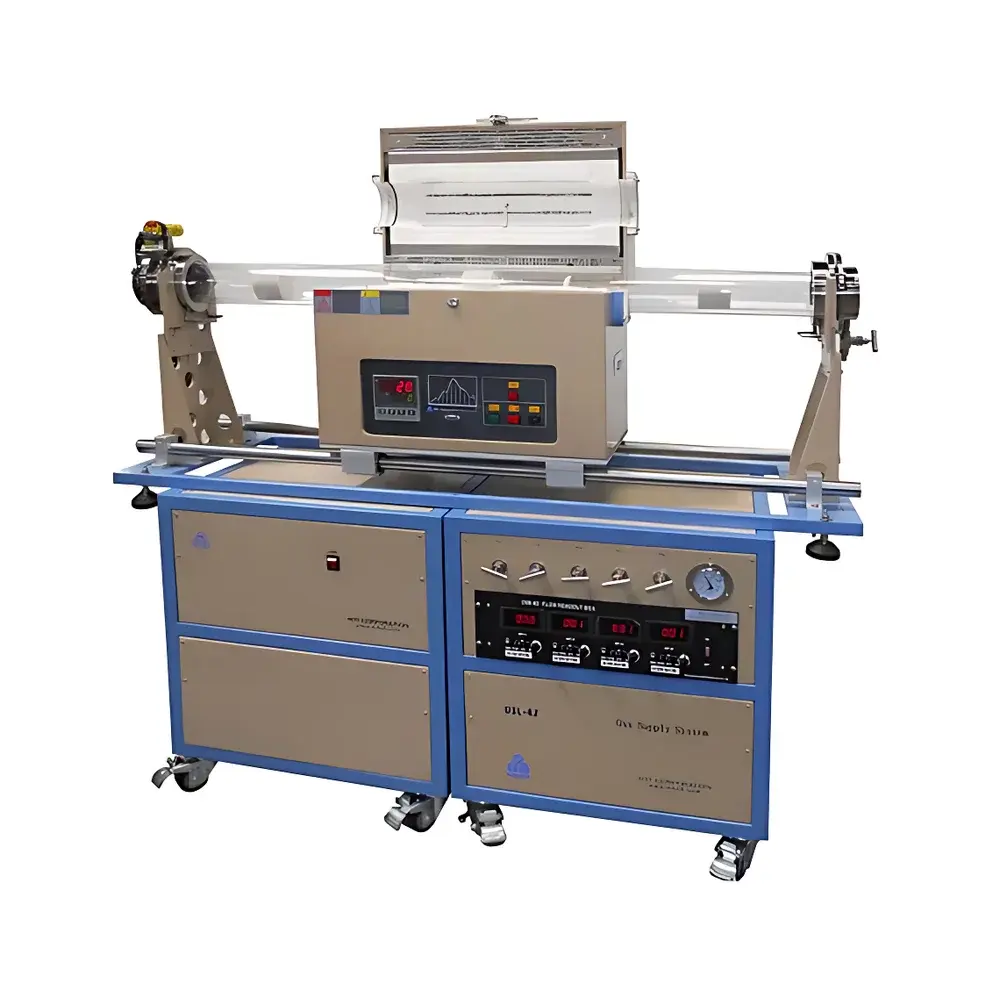
KJ GROUP OTF-1200X-4-C4LV Dual-Tube Sliding Four-Channel Gas Mixing CVD System
| Brand | KJ GROUP |
|---|---|
| Origin | Liaoning, China |
| Manufacturer Type | Authorized Distributor |
| Region of Manufacture | Domestic (China) |
| Model | OTF-1200X-4-C4LV |
| Pricing | Upon Request |
Overview
The KJ GROUP OTF-1200X-4-C4LV is a purpose-engineered dual-tube sliding-type chemical vapor deposition (CVD) system designed for high-precision, scalable thin-film synthesis on flexible metallic foils—particularly targeting next-generation energy applications such as graphene-coated copper or nickel foils for flexible battery current collectors and transparent conductive electrodes. Its core architecture implements a concentric double-quartz-tube configuration with a 10 mm annular gap, enabling precise gas-phase precursor delivery and thermal gradient control during film nucleation and growth. The furnace operates via resistive heating using Mo-doped Fe–Cr–Al alloy elements coated with stabilized zirconia, delivering stable operation up to 1100 °C (with 1000 °C continuous rating) and ±1 °C temperature uniformity across a 120 mm isothermal zone (400–1100 °C). The sliding carriage mechanism allows rapid thermal cycling: preheating the furnace externally before translation into position over the sample enables accelerated ramp rates (>15 °C/min typical), while post-deposition lateral displacement combined with direct inner-tube cooling gas injection achieves controlled quenching—critical for metastable phase stabilization and minimizing interdiffusion in metal–carbon interfaces.
Key Features
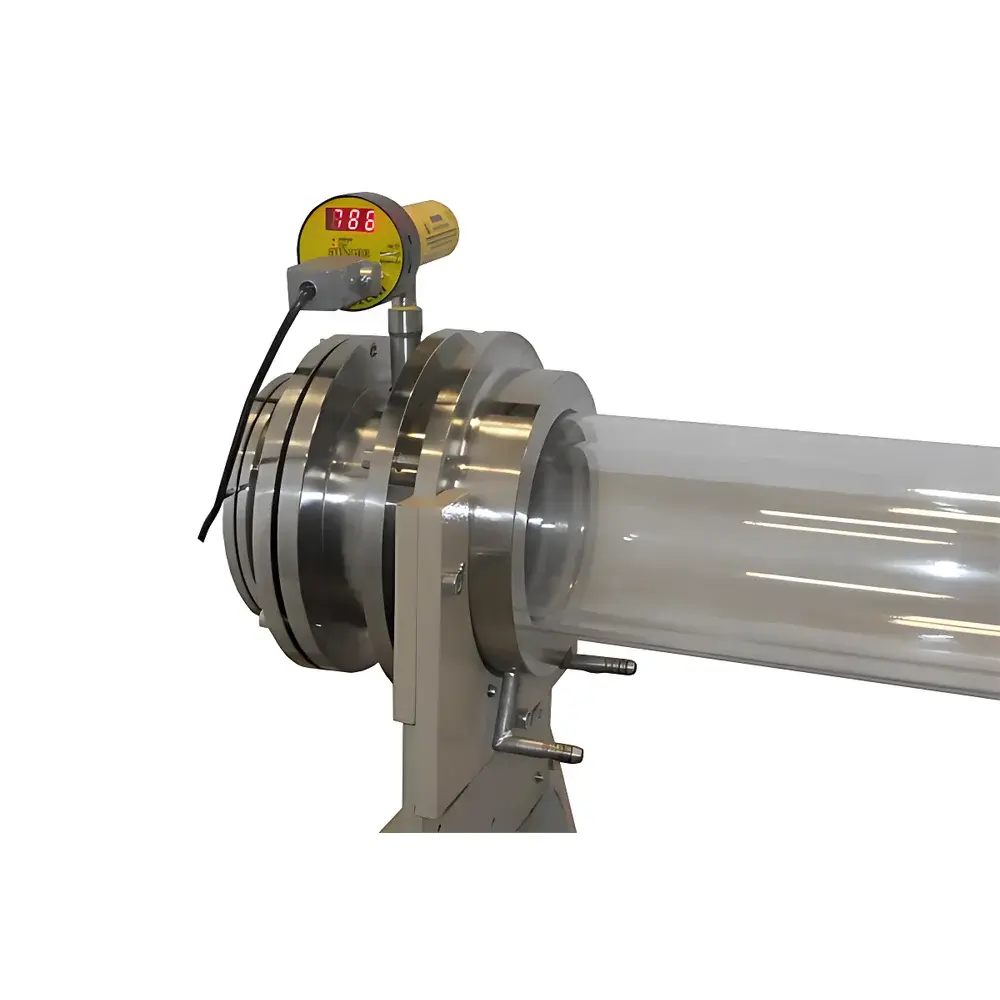
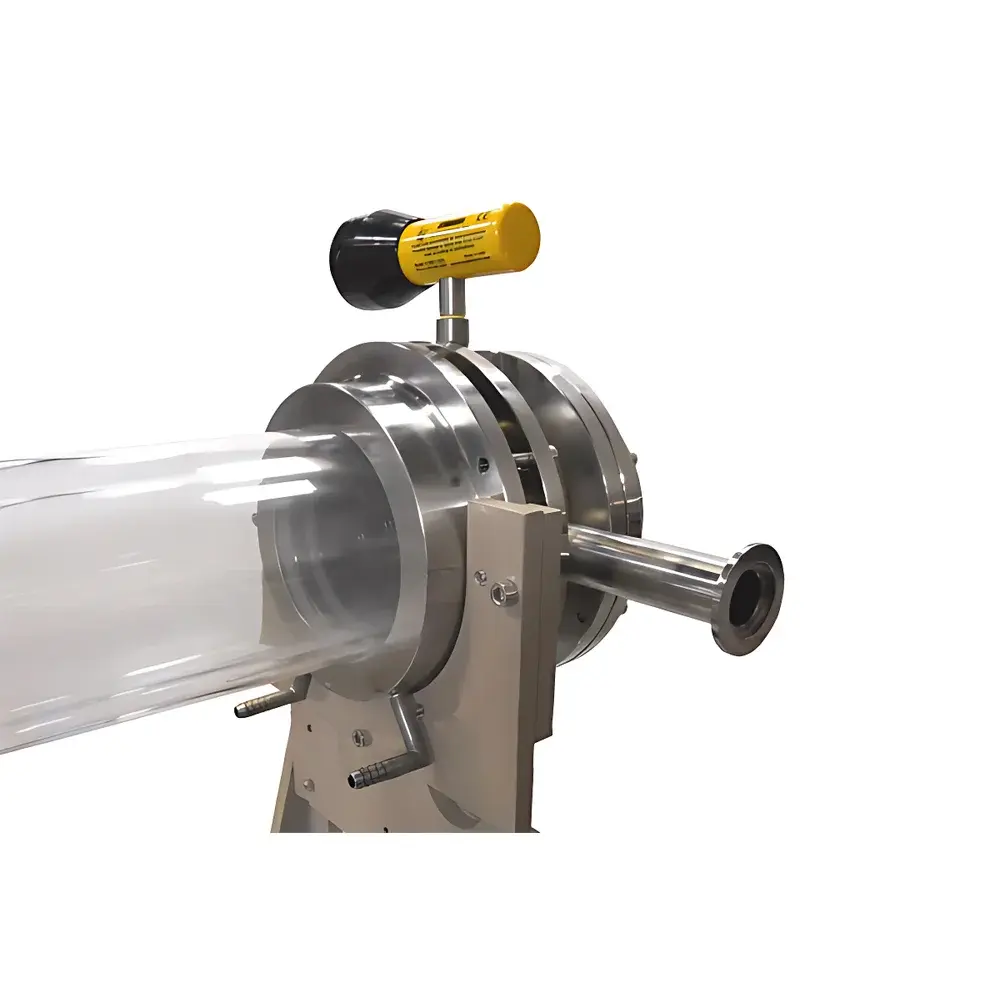
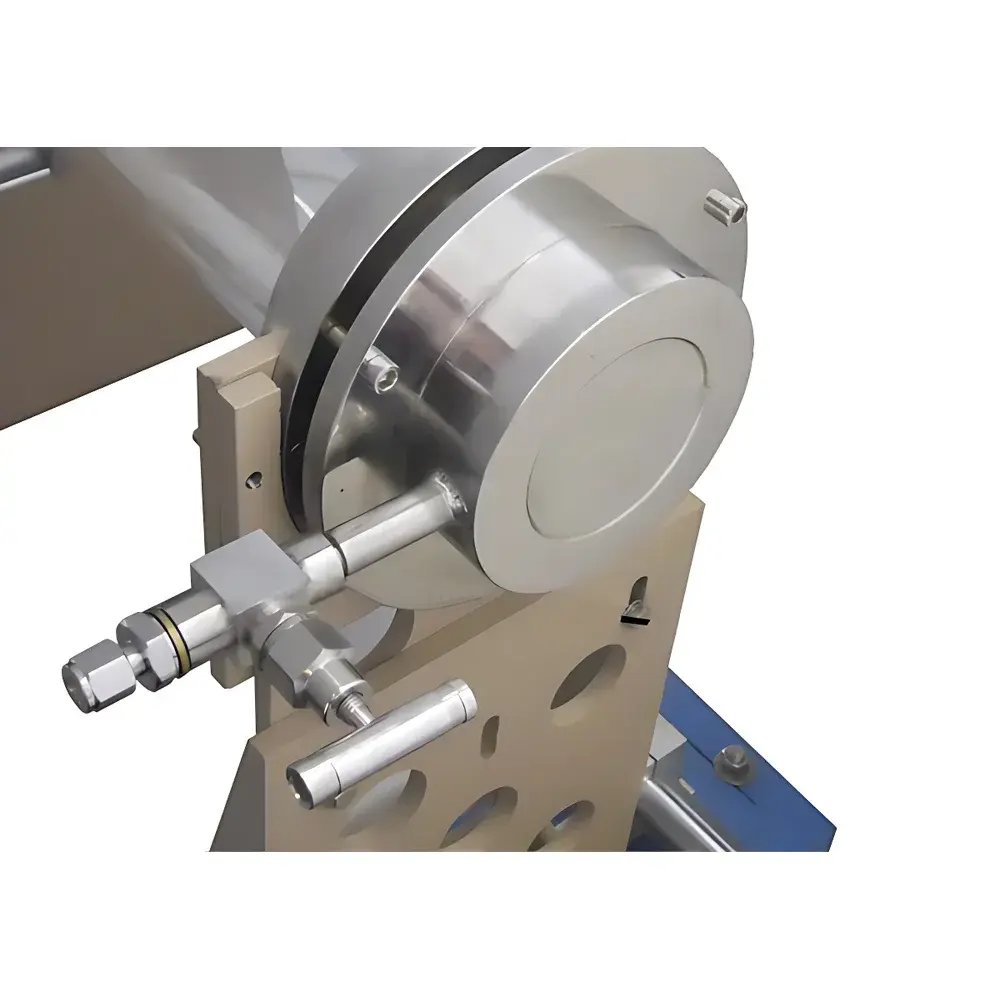
- Dual-quartz-tube design with vacuum-tight stainless-steel KF25 flanges and double-O-ring sealing, supporting both atmospheric and low-pressure CVD (down to 10−2 torr with mechanical pump; optional molecular pump extends to 10−5 torr)
- Sliding rail-mounted furnace assembly enabling precise spatial positioning relative to sample location—facilitating sequential multi-zone processing or rapid thermal transient control
- Four-channel digital mass flow controller (MFC) system with independent stainless-steel needle valves, calibrated ranges: 0–100 sccm (MFC1), 0–200 sccm (MFC2 & MFC3), 0–500 sccm (MFC4); flow accuracy ±0.2% of full scale
- High-purity alumina fiber insulation with US-sourced reflective alumina coating on inner furnace walls—enhancing thermal efficiency and minimizing particulate shedding
- PID-based 30-segment programmable temperature controller with real-time ramp/soak profiling and auto-tuning capability
- Integrated recirculating chiller (deionized water or purified water coolant) for active cooling of outer tube and flange assemblies
- CE-certified electrical architecture compliant with EN 61000-6-3 (EMI) and EN 61000-6-2 (immunity); grounded 380 V AC, 63 A circuit requirement
Sample Compatibility & Compliance
The OTF-1200X-4-C4LV accommodates standard metallic foils—including Cu, Ni, and stainless steel substrates—up to 150 mm × 150 mm × 25 µm thickness, wound directly onto the outer surface of the inner quartz tube. This geometry ensures uniform precursor exposure and minimizes shadowing effects common in horizontal single-tube configurations. The system supports inert (Ar, N2) and reactive (H2, CH4, NH3) gas chemistries at purities ≥99.99%, with all wetted parts constructed from electropolished 316 stainless steel or high-purity quartz. Vacuum integrity meets ASTM E595 outgassing requirements for ultra-high-vacuum compatible instrumentation. While not inherently GLP/GMP validated, its programmable thermal profiles, digital gas flow logging (via optional RS485/Modbus interface), and CE marking support integration into ISO/IEC 17025-accredited laboratory workflows and FDA 21 CFR Part 11-compliant data archiving when paired with validated third-party SCADA software.
Software & Data Management
The system includes an embedded PID controller with USB and RS232 ports for external data logging and remote parameter adjustment. Optional firmware upgrades enable Modbus RTU protocol support, permitting integration with LabVIEW, MATLAB, or custom Python-based process orchestration platforms. All temperature setpoints, actual readings, MFC flow values, and vacuum pressure (when equipped with capacitance manometer) can be timestamped and exported as CSV files. Audit trails—including operator ID, parameter changes, and alarm events—are retained onboard for ≥30 days. For regulated environments, KJ GROUP provides documentation packages supporting IQ/OQ protocols upon request, including calibration certificates traceable to NIST standards for thermocouples and flow sensors.
Applications
- Growth of large-area monolayer and multilayer graphene on Cu/Ni foils for flexible electronics and roll-to-roll manufacturing R&D
- Synthesis of transition metal dichalcogenides (e.g., MoS2, WS2) via sulfurization/selenization of pre-deposited metal films
- Deposition of carbon nanotube forests and vertically aligned graphene on catalytic metal substrates
- Thermal annealing and graphitization studies under controlled reducing atmospheres (H2/Ar mixtures)
- Multi-step heterostructure fabrication requiring sequential gas switching without breaking vacuum
- Process development for solid-state battery interfacial coatings (e.g., Li3PO4, LiNbO3) on current collector foils
FAQ
What is the maximum recommended operating temperature for continuous use?
Continuous operation is rated at 1000 °C; peak short-term capability is 1100 °C (≤2 hours per cycle).
Can this system be upgraded to achieve ultra-high vacuum (UHV) conditions?
Yes—by adding a turbomolecular pumping station (optional accessory), base pressure improves from 10−2 torr to ≤10−5 torr.
Is the inner quartz tube replaceable, and what is its expected service life under typical graphene growth conditions?
Inner tubes are field-replaceable consumables; lifespan averages 12–18 months under routine CH4/H2/Ar cycling at 1000 °C, depending on cleaning frequency and thermal shock history.
Does the system include gas leak detection functionality?
No built-in helium leak detector is included, but KF25 flange ports and standardized 1/4″ VCR fittings allow seamless integration with external residual gas analyzers or helium mass spectrometers.
Are calibration certificates provided for the thermocouples and MFCs?
Factory calibration certificates (traceable to national standards) are supplied with each unit; annual recalibration services are available through KJ GROUP’s regional technical centers.



