
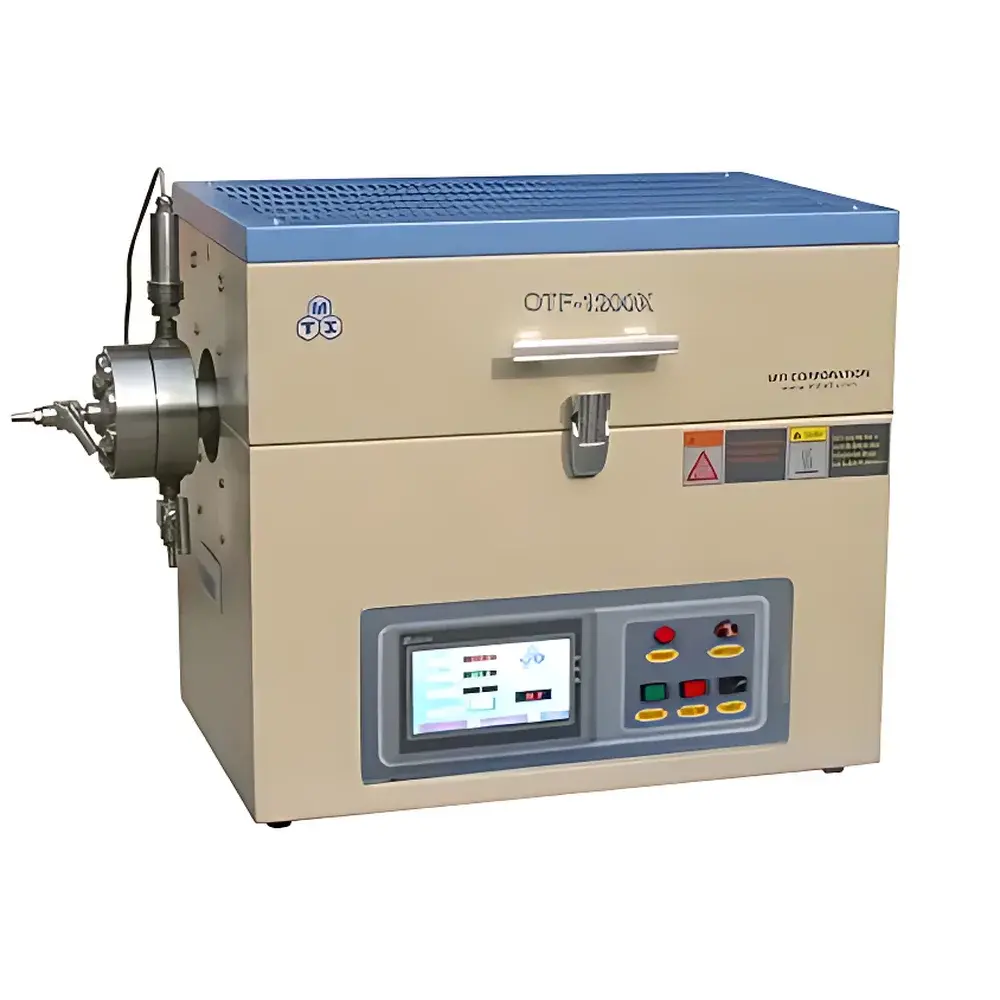
KJ GROUP OTF-1200X-HP-55 High-Pressure Tube Furnace (1100 °C, 20 MPa)
| Brand | KJ GROUP |
|---|---|
| Origin | Liaoning, China |
| Manufacturer Type | Authorized Distributor |
| Country of Origin | China |
| Model | OTF-1200X-HP-55 |
| Power Supply | AC 220 V, 50/60 Hz, 2.5 kW |
| Max Temperature | 1100 °C |
| Max Pressure | 20 MPa (4300 PSI) at 800 °C |
| Heating Zone Length | 250 mm |
| Tube Dimensions | SS310S alloy, OD 55 mm, ID 20 mm, L 550 mm |
| Heating Element | Mo-doped Fe–Cr–Al wire with ZrO₂ coating |
| Max Ramp Rate | ≤25 °C/min |
| Temperature Control Accuracy | ±1 °C |
| PID Program | 30-segment ramp/soak |
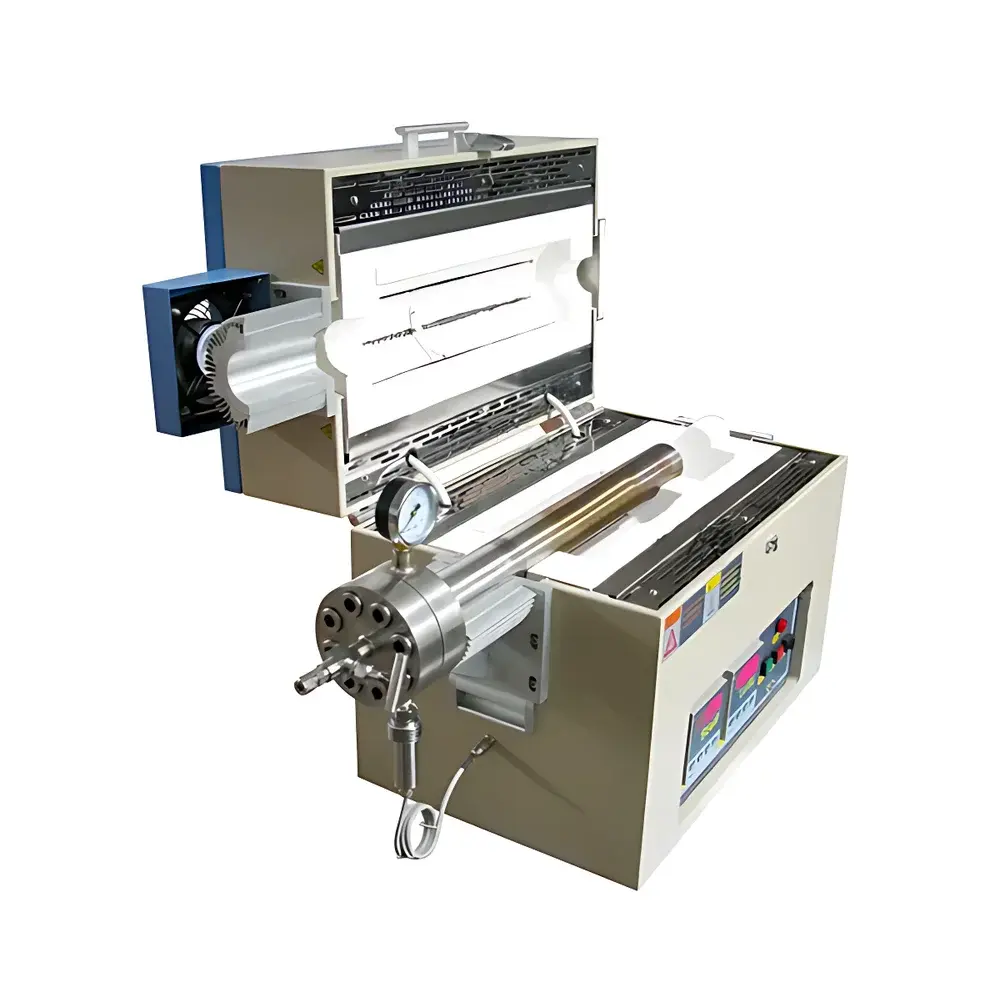
| Cooling | Dual-layer shell with forced-air circulation and aluminum heat sinks |
| Safety | Overheat protection, thermocouple break detection, dual-pressure alarm (adjustable high/low thresholds), automatic cutoff |
| Certification | CE compliant |
| Dimensions (W×D×H) | 550×380×520 mm |
| Weight | 45 kg |
Overview
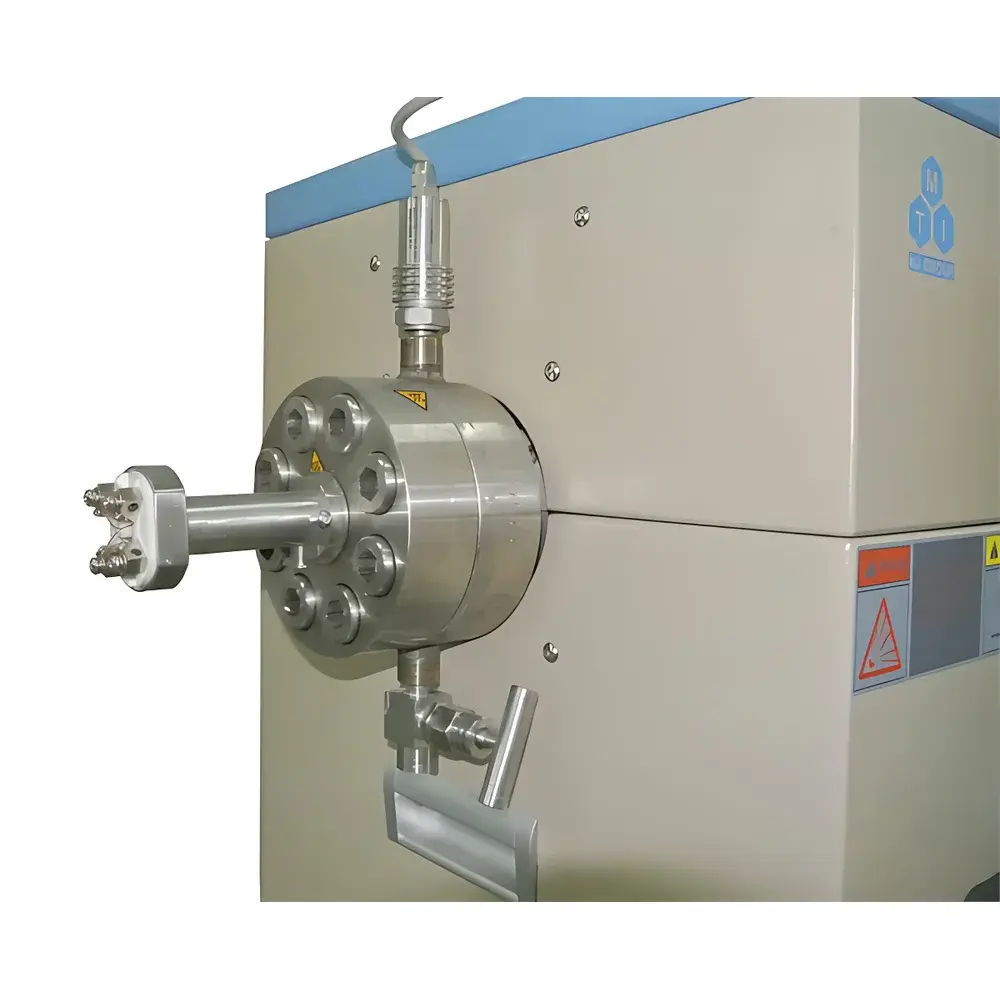
The KJ GROUP OTF-1200X-HP-55 is an open-ended, high-temperature, high-pressure tube furnace engineered for controlled synthesis and thermal processing of advanced materials under elevated pressure and temperature conditions. It operates on resistive heating principles using Mo-doped Fe–Cr–Al alloy elements, delivering precise thermal profiles up to 1100 °C within a sealed SS310S nickel-based alloy tube. The system integrates real-time pressure monitoring via a calibrated transducer mounted directly on the high-temperature flange, enabling dynamic control and documentation of gas environments—oxidizing, inert, or reducing—at pressures up to 20 MPa (4300 PSI) at 800 °C. Its design supports applications requiring simultaneous thermal and mechanical stress, including solid-state reaction kinetics, densification of ceramics, high-pressure phase transformation studies, and small-scale hot isostatic pressing (HIP) of metallic alloys.
Key Features
- Dual-layer stainless steel housing with integrated forced-air cooling and aluminum finned heat sinks—maintains external flange surface temperature below 80 °C during continuous operation at maximum rated conditions.
- High-purity SS310S seamless alloy tube (OD 55 mm, ID 20 mm, L 550 mm) with optimized wall thickness for mechanical integrity and thermal stability under cyclic pressurization.
- Internally coated furnace chamber with imported US-sourced alumina ceramic insulation, enhancing radiant efficiency and extending service life under repeated thermal cycling.
- PID-based temperature controller supporting up to 30 programmable segments for complex thermal protocols; includes over-temperature cut-off and thermocouple failure detection.
- High-integrity sealing architecture: high-temperature alloy flange welded to tube end, sealed with oxygen-free copper or high-purity copper O-rings—validated for leak rates <1×10⁻⁹ mbar·L/s under helium testing.
- Integrated digital pressure monitoring system with LED display and configurable dual-threshold alarm (high/low limits); triggers audible/visual alerts and initiates automatic gas isolation upon deviation.
- CE-certified design compliant with EN 61000-6-3 (EMC) and EN 61000-6-2 (immunity), ensuring safe deployment in regulated laboratory environments.
Sample Compatibility & Compliance
The OTF-1200X-HP-55 accommodates cylindrical samples up to 20 mm in diameter and 250 mm in length, suitable for powders, pellets, sintered compacts, and monolithic rods. Compatible atmospheres include Ar, N2, H2, O2, CO, and mixed gases—subject to material compatibility with SS310S and sealant specifications. The furnace meets requirements for GLP-compliant experimental workflows when paired with validated data logging systems. While not FDA 21 CFR Part 11–certified out-of-the-box, its analog/digital I/O ports support integration with third-party audit-trail-capable controllers for GMP-aligned process validation.
Software & Data Management
Standard operation is managed via front-panel PID interface with real-time display of setpoint, actual temperature, and pressure. Optional touchscreen upgrade provides USB and RS485 connectivity for remote parameter configuration and time-stamped data export (CSV format). When interfaced with LabVIEW™ or Python-based acquisition frameworks, the furnace supports synchronized logging of temperature, pressure, and optional sensor inputs (e.g., embedded Pt wire resistivity measurements). All firmware adheres to IEC 62443-3-3 security baseline for industrial control systems.
Applications
- Synthesis of metastable oxide phases (e.g., perovskites, spinels) under controlled pO2 and hydrostatic pressure.
- Hot isostatic pressing of Ti-6Al-4V, Inconel 718, and other aerospace-grade superalloys at sub-solvus temperatures.
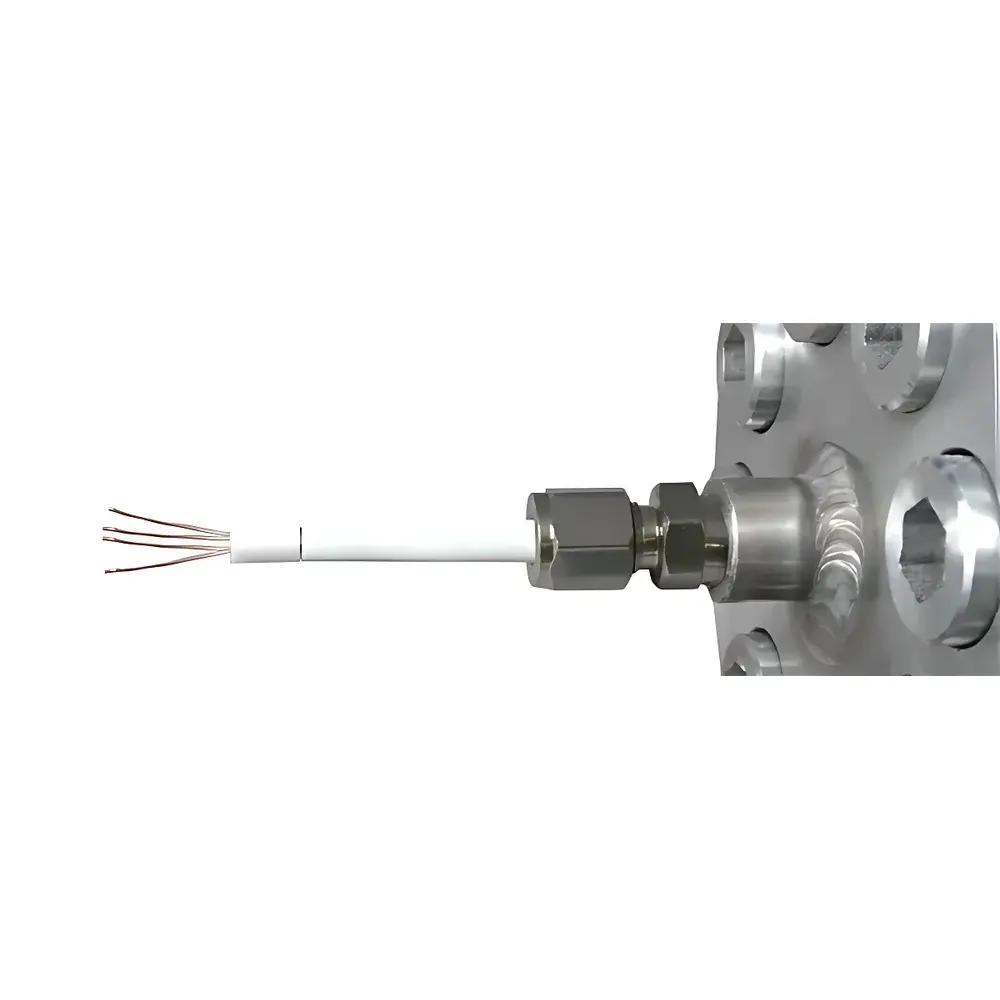
- In situ electrical transport characterization using optional Pt lead wires (Ø0.35 mm) routed through the flange.
- Laser-accessible experiments enabled by optional quartz viewport integration—supports Raman spectroscopy, optical absorption, and pyrometric emissivity mapping under pressure.
- Thermal aging studies of nuclear fuel cladding materials (e.g., Zr–Nb alloys) under simulated PWR/BWR coolant gas environments.
- Calibration reference for high-pressure thermocouples and pressure transducers per ASTM E220 and ISO 17025 traceability protocols.
FAQ
What is the maximum allowable pressure at 1100 °C?
The maximum rated pressure at 1100 °C is 5 MPa (725 PSI), as defined by the ASME B31.3 process piping safety margin for SS310S at sustained elevated temperature.
Can the furnace be used under reducing atmospheres such as H₂?
Yes—provided H₂ concentration remains below 4% by volume in inert carrier gas to mitigate embrittlement risk; full-purity H₂ operation requires prior consultation and optional hydrogen-compatible gasket upgrades.
Is the pressure sensor calibrated and traceable to NIST standards?
The factory-installed pressure transducer is supplied with a manufacturer’s calibration certificate; NIST-traceable recalibration services are available through authorized KJ GROUP metrology partners.
Does the system support vacuum operation prior to pressurization?
Yes—the furnace tube may be evacuated to ≤10−2 mbar using standard vacuum pumps; residual moisture must be removed via bake-out at ≤200 °C before introducing reactive gases.
What maintenance intervals are recommended for long-term reliability?
Inspect O-rings and flange surfaces after every 50 thermal cycles above 800 °C; replace heating elements after 2000 cumulative hours at >900 °C; verify thermocouple accuracy annually per ISO/IEC 17025 guidelines.



