
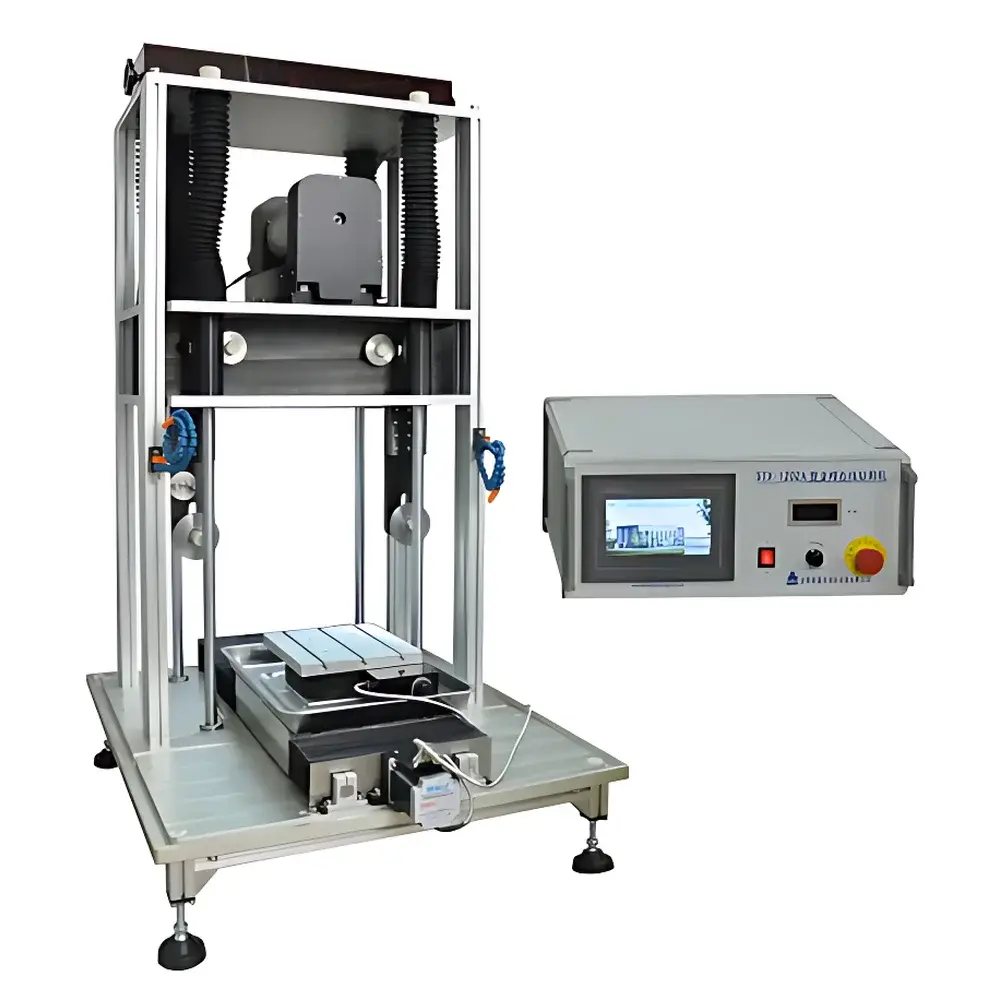
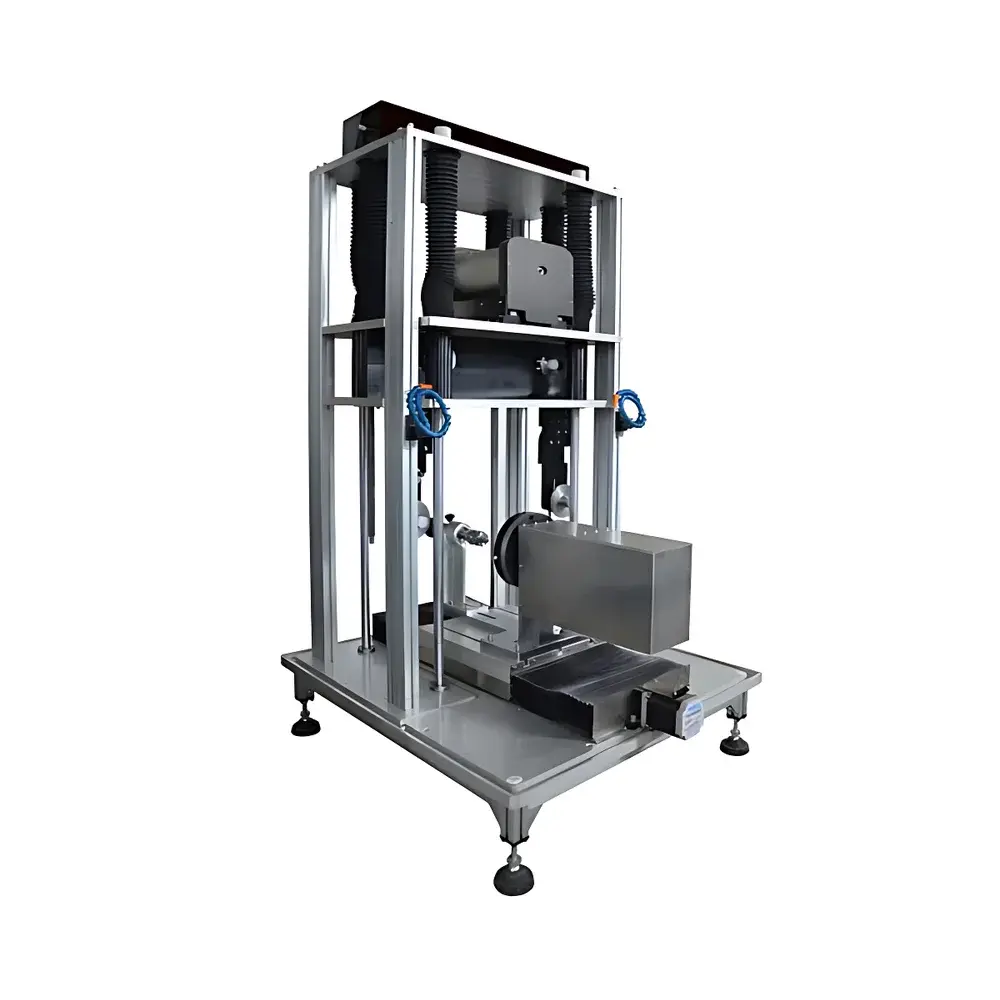
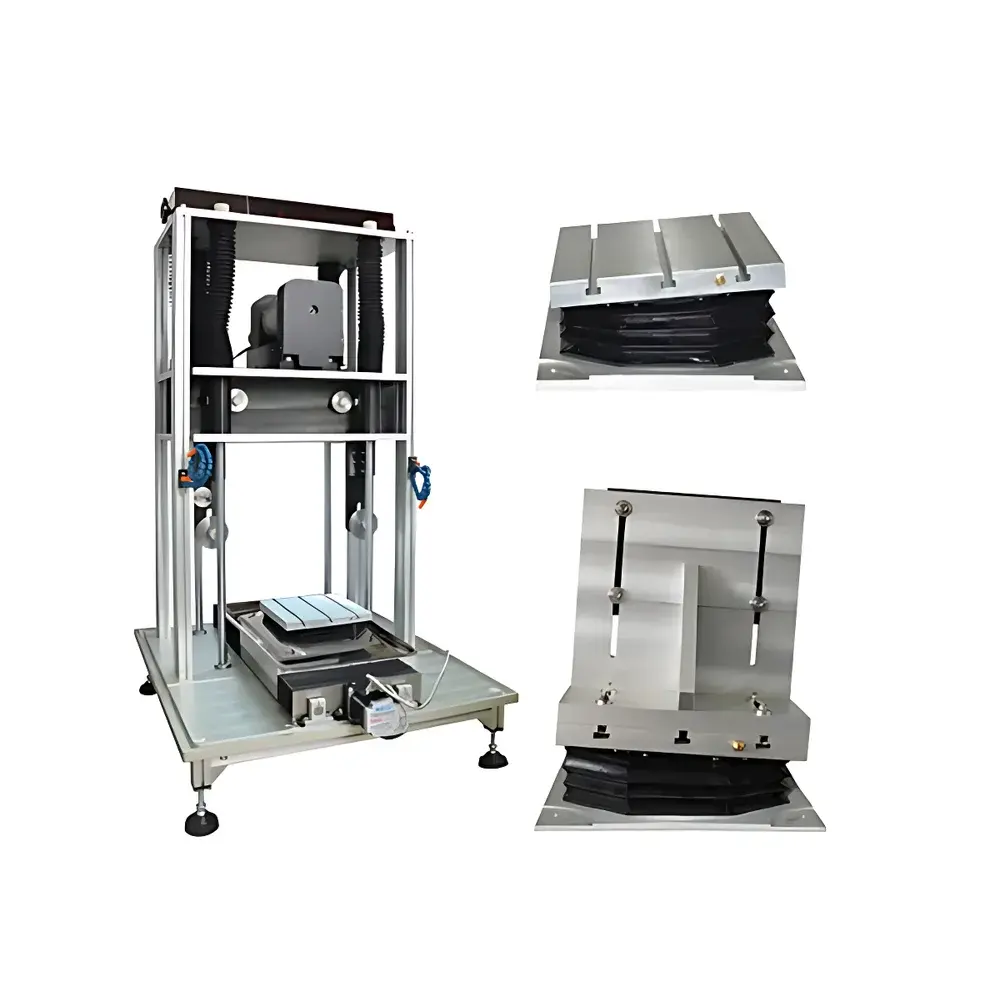
KJ GROUP STX-1203 Fully Automated Diamond Wire Saw
| Brand | KJ GROUP |
|---|---|
| Origin | Liaoning, China |
| Model | STX-1203 |
| Instrument Type | Precision Diamond Wire Saw |
| Power Supply | AC 220 V, 50 Hz |
| Max. Power Consumption | <475 W |
| Main Motor | 250 W AC Variable-Frequency Motor |
| Wire Feed Speed | 0–8 m/s (adjustable, digital display) |
| Max. Wire Length | ≤150 m |
| Max. Wire Diameter | ≤0.45 mm |
| Y-Axis Travel | ≤300 mm (digital readout, resolution 0.01 mm) |
| Z-Axis Travel | ≤300 mm (digital readout, resolution 0.01 mm) |
| Rotary Stage Range | 0–360° (resolution 0.01°, repeatability <0.032°) |
| Max. Sample Dimensions | Ø300 mm × 300 mm |
| Tension System | Pneumatic (0–1 MPa adjustable) |
| Safety Features | Wire-break auto-stop, emergency stop switch |
| Operating Environment | Altitude <1000 m, Temp. 10–40 °C, RH 45–65 % |
| Footprint | 1200 mm × 1100 mm × 1800 mm (clearance required) |
| Net Weight | ~200 kg |
Overview
The KJ GROUP STX-1203 Fully Automated Diamond Wire Saw is an industrial-grade precision slicing system engineered for high-accuracy sectioning of brittle, hard, and heterogeneous materials in research laboratories and quality control environments. It operates on the principle of abrasive wire cutting—utilizing a continuously recirculating diamond-impregnated monofilament under controlled tension and kinematic feed to achieve non-contact, low-stress material removal. Unlike rotary saws or abrasive cutters, this system minimizes thermal damage, micro-cracking, and edge chipping—critical for preserving crystallographic integrity, interfacial morphology, and dimensional fidelity in downstream analysis (e.g., SEM, XRD, TEM sample prep). Designed for unattended operation, the STX-1203 integrates PLC-based motion control with real-time digital feedback across three axes (Y, Z, R), enabling reproducible slice thickness control within ±10 µm—meeting requirements for geological thin-sectioning, semiconductor wafer dicing, and biomedical histology applications.
Key Features
- Three-axis programmable motion system: Y-axis (longitudinal feed, 0.01–300 mm range), Z-axis (vertical descent, 1–300 mm range), and R-axis (360° continuous rotation, 0.01° resolution) — all equipped with digital linear encoders for traceable positioning.
- Pneumatic wire tensioning system with 0–1 MPa adjustable pressure range, ensuring optimal force calibration for wire diameters from 0.125 mm to 0.45 mm — preventing breakage during high-tension cuts on hard ceramics or sapphire.
- Variable wire speed drive (0–8 m/s, digitally displayed) synchronized with Z-axis feed rate (0.05–40 mm/min), allowing dynamic optimization of material removal rate versus surface finish.
- Robust frame architecture with vibration-damped base and rigid column assembly — minimizing deflection during extended cuts on large-format samples (up to Ø300 mm × 300 mm).
- Intuitive 7-inch HMI touchscreen interface with dual-mode operation: manual jog controls for setup and alignment, plus automated sequence programming for batch processing (up to 999 cycles per job).
- Integrated safety protocols including real-time wire break detection (via tension sensor + optical monitoring), hardware-based emergency stop circuitry, and interlocked enclosure options (STX-1203 optional guard kit).
Sample Compatibility & Compliance
The STX-1203 accommodates a broad spectrum of inorganic and organic solids with Vickers hardness values below that of diamond (~70–100 GPa), including but not limited to technical ceramics (Al2O3, ZrO2, SiC), single crystals (Si, Ge, GaAs, sapphire), infrared optical substrates (ZnSe, ZnS, CaF2), geological specimens (granite, basalt, meteorites), composite laminates (CFRP, GFRP), and hydrated biological tissues (fixed bone-implant interfaces, calcified vascular plaques). Its non-thermal cutting mechanism supports preparation compliant with ASTM E3, ISO 14577 (instrumented indentation correlation), and USP (for pharmaceutical excipient tablet sectioning). When operated with certified calibration artifacts and documented SOPs, the system supports GLP/GMP-aligned workflows requiring audit-ready positional traceability and process parameter logging.
Software & Data Management
The embedded PLC controller logs all operational parameters—including wire speed, feed rate, tension pressure, cycle count, and axis positions—at 100 ms intervals during each cut. Data export is supported via USB 2.0 to CSV format for integration into LIMS or statistical process control platforms. Optional Ethernet connectivity enables remote monitoring and firmware updates through secure HTTP(S) endpoints. While no proprietary PC software is bundled, the machine’s MODBUS RTU interface allows third-party SCADA integration (e.g., Ignition, Siemens WinCC) for centralized lab equipment management. All motion commands are stored in non-volatile memory with timestamped version control—supporting 21 CFR Part 11-compliant electronic records when deployed with validated user access controls and audit trail configuration.
Applications
- Geoscience: Preparation of petrographic thin sections (30 µm target thickness) from igneous, metamorphic, and sedimentary rock cores; oriented slicing of mineral aggregates for EBSD orientation mapping.
- Materials Science: Cross-sectional dicing of thermoelectric ingots (Bi2Te3, PbTe), piezoelectric wafers, and multilayer ceramic capacitors (MLCCs) without delamination.
- Electronics: Kerf-loss-minimized segmentation of photovoltaic silicon bricks and sapphire LED substrates prior to lapping and polishing.
- Medical Device R&D: Sectioning of osseointegrated titanium implants with surrounding bone tissue for histomorphometric analysis (e.g., bone-to-implant contact ratio quantification).
- Optics & Photonics: Edge-trimming of IR-transmitting windows (Ge, ZnS) and laser gain media (Nd:YAG rods) while maintaining wavefront fidelity.
- Academic Research: Serial sectioning of fossilized biominerals, archaeological ceramics, and additive-manufactured metal parts for microstructural reconstruction.
FAQ
What types of diamond wire are compatible with the STX-1203?
Standard configurations support wires with diameters of 0.125 mm, 0.25 mm, 0.35 mm, and 0.42 mm. Custom wire specifications (e.g., resin-bonded vs. metal-bonded, concentration grade) can be accommodated upon verification of tensile strength and groove geometry compatibility.
Is coolant circulation required during operation?
Yes — a closed-loop cutting fluid system (included: submersible pump and reservoir) is mandatory to dissipate frictional heat, suppress dust, and extend wire life. Recommended fluids include water-soluble synthetic coolants or low-viscosity mineral oils optimized for diamond abrasives.
Can the STX-1203 perform angled or bevel cuts?
Not natively — the standard configuration features orthogonal Y-Z-R kinematics. However, optional add-ons such as the STX-1200-YB oscillating stage or STX-1200-A rotary-tilt stage enable controlled angular slicing (±15° tilt, ±5° oscillation amplitude) for anisotropic material evaluation.
What maintenance intervals are recommended for pneumatic components?
Air filter elements should be inspected every 200 operating hours and replaced if moisture or particulate accumulation is observed. Pressure regulators and solenoid valves require functional verification semiannually per ISO 8573-1 Class 4 compressed air quality guidelines.
Does the system support integration with automated sample loading systems?
The STX-1203 includes dry-contact I/O terminals (24 V DC) for external trigger synchronization. Integration with robotic arms or motorized sample carousels requires custom mechanical interfacing and is supported under KJ GROUP’s OEM collaboration program.



