
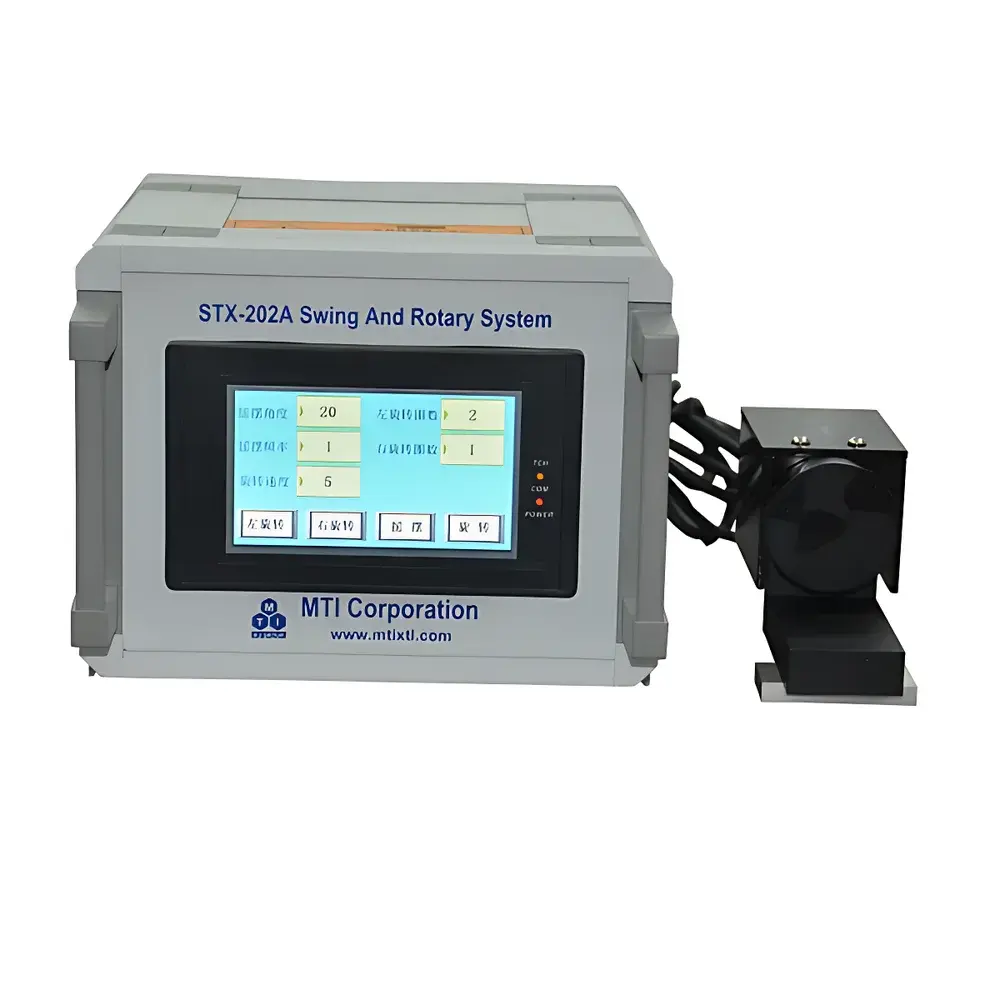
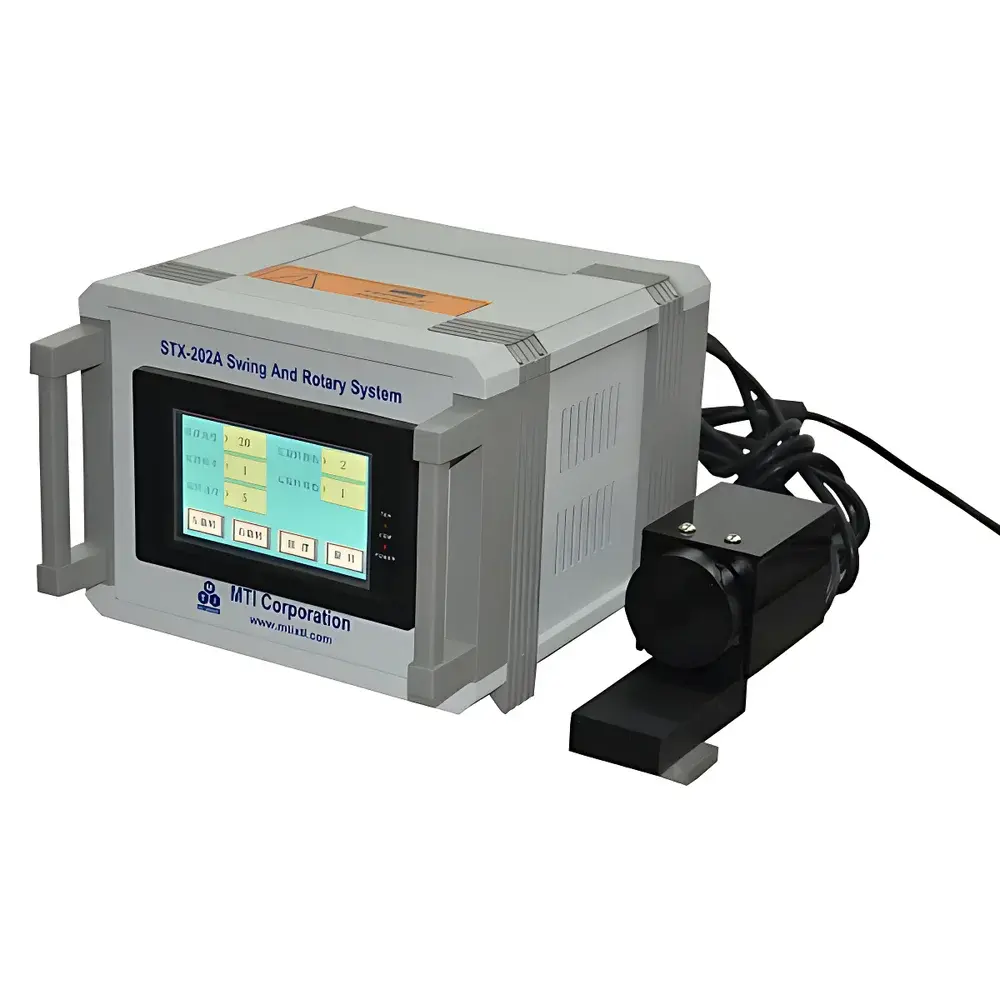
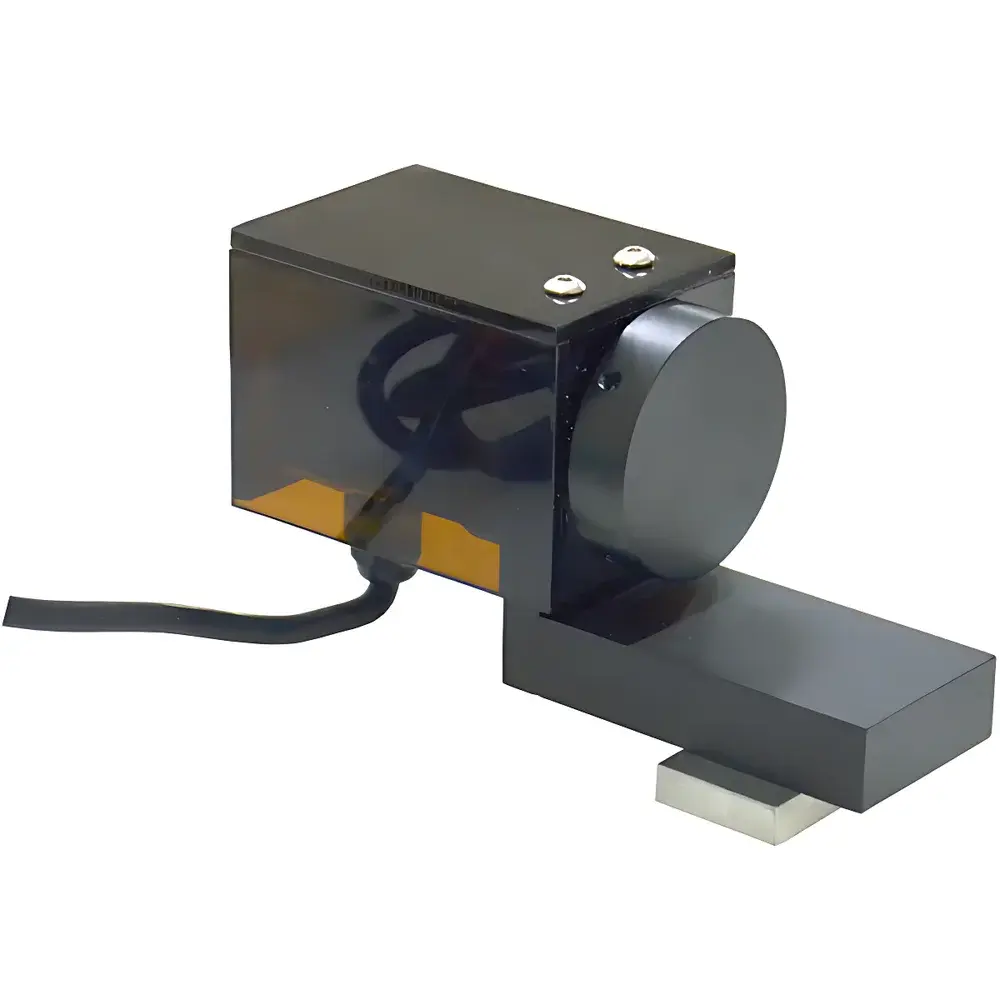
KJ GROUP STX-202A-A Oscillating & Rotating Sample Holder Assembly
| Brand | KJ GROUP |
|---|---|
| Origin | Liaoning, China |
| Manufacturer Type | Authorized Distributor |
| Country of Origin | China |
| Model | STX-202A-A |
| Instrument Type | Precision Diamond Wire Saw Accessory |
| Input Voltage | DC 24 V |
| Oscillation Angle | ±23° |
| Oscillation Frequency | 1–20 cycles/min |
| Rotation Direction | Bidirectional (Left/Right) |
| Rotation Count Range | 1–999 revolutions per cut cycle |
| Rotational Speed | 1–30 rpm |
| Max Sample Diameter for Rotary Cutting | Φ50 mm |
| Sample Stage Diameter | Φ48 mm |
| Dimensions | 140 × 54 × 81 mm |
| Weight | ~1 kg |
| Operating Environment | Altitude < 1000 m |
Overview
The KJ GROUP STX-202A-A Oscillating & Rotating Sample Holder Assembly is a purpose-engineered mechanical accessory designed exclusively for integration with the STX-202A and STX-202AQ diamond wire saw systems. It operates on the principle of synchronized oscillation and controlled rotational motion to modulate the relative trajectory between the diamond-impregnated wire and the sample surface during cutting. This dual-axis motion strategy mitigates linear wire tracking artifacts—such as groove formation, edge chipping, and localized thermal stress accumulation—that commonly arise in conventional unidirectional or fixed-angle wire sawing. By introducing precisely regulated angular oscillation (±23°) combined with programmable bidirectional rotation (1–999 revolutions per cut cycle), the STX-202A-A enables quasi-helical wire engagement geometry. This results in statistically uniform material removal across the cut plane, significantly reducing surface topography deviations and enhancing flatness reproducibility—particularly critical for preparing optical-grade crystals, semiconductor wafers, ceramic substrates, and metallurgical cross-sections requiring minimal post-cut polishing.
Key Features
- Independent dual-motion control: Simultaneous oscillation (1–20 cycles/min) and rotation (1–30 rpm) with fully decoupled parameter programming.
- Bidirectional rotational indexing: Programmable left/right rotation counts (1–999 rev) to accommodate asymmetric crystallographic orientations or anisotropic material responses.
- Compact modular design: Dimensions of 140 × 54 × 81 mm and mass of ~1 kg enable seamless integration into existing STX-202A/AQ gantry configurations without structural modification.
- DC24 V low-voltage actuation: Ensures electromagnetic compatibility and operational safety in sensitive laboratory environments, including cleanrooms and EMI-controlled analytical suites.
- Φ48 mm precision-machined sample stage: Features radial runout ≤ 5 µm and axial wobble < 3 µm (verified per ISO 230-2), supporting high-fidelity alignment of specimens up to Φ50 mm diameter.
- Thermally stable aluminum alloy housing: Minimizes dimensional drift under sustained operation within specified ambient conditions (10–40 °C, 45–65 % RH).
Sample Compatibility & Compliance
The STX-202A-A is validated for use with brittle, hard, and heterogeneous materials—including single-crystal sapphire, silicon carbide, fused quartz, lithium niobate, tungsten carbide composites, and polycrystalline ceramics—where surface integrity directly impacts downstream metrology (e.g., XRD rocking curve analysis, TEM lamella preparation, or interferometric flatness verification). Its motion profile complies with ASTM F2734-22 (Standard Practice for Preparation of Semiconductor Wafer Cross-Sections) and supports GLP-aligned documentation when paired with STX-202AQ’s audit-trail-enabled controller firmware. No hazardous fluids, gases, or vacuum interfaces are required; ventilation is recommended solely to dissipate ambient heat from adjacent drive electronics.
Software & Data Management
The assembly interfaces via standardized TTL-level digital I/O with the host STX-202A/AQ controller. Motion parameters (oscillation frequency, amplitude, rotation count, direction, and speed) are configured through the system’s embedded HMI or optional PC-based KJ-CutPro software (v3.2+). All motion sequences are timestamped and logged internally with microsecond resolution, enabling traceable correlation between cut parameters and post-processing metrology data. While the STX-202A-A itself does not store data, its command execution conforms to IEC 62304 Class B software lifecycle requirements when deployed within KJ GROUP’s certified instrument ecosystem.
Applications
- Preparation of low-defect-density slices for synchrotron X-ray topography and Laue diffraction.
- Cutting of piezoelectric wafers with minimized domain disruption and electrode delamination risk.
- Sectioning of geological thin sections (e.g., zircon, monazite) for U–Pb geochronology where surface roughness < 50 nm Ra is mandatory.
- Manufacturing of optical cavity mirrors and laser gain media blanks requiring sub-micron flatness (λ/10 @ 633 nm).
- Failure analysis of multilayer electronic packages, where orthogonal oscillation prevents interfacial peeling at dielectric–metal boundaries.
FAQ
Is the STX-202A-A compatible with third-party diamond wire saws?
No. Mechanical and electrical interfaces are proprietary to KJ GROUP’s STX-202A and STX-202AQ platforms.
Does the unit require calibration prior to use?
No routine calibration is specified; however, users must verify stage concentricity and oscillation symmetry annually using a dial indicator per KJ GROUP Service Bulletin SB-STX-202A-A-01.
Can oscillation and rotation be disabled independently?
Yes. Each axis is controlled via discrete enable/disable signals, allowing standalone oscillation, standalone rotation, or combined motion modes.
What maintenance intervals are recommended?
Lubrication of rotary bearings is recommended every 500 operational hours; oscillation pivot points require inspection every 1000 hours per the Maintenance Log Template ML-STX-202A-A Rev. 2.0.
Is the STX-202A-A compliant with FDA 21 CFR Part 11?
The accessory itself is not subject to Part 11; however, when operated under KJ-CutPro v3.2+ with enabled electronic signatures and audit trails on a validated system, full Part 11 compliance is achievable at the integrated instrument level.



