
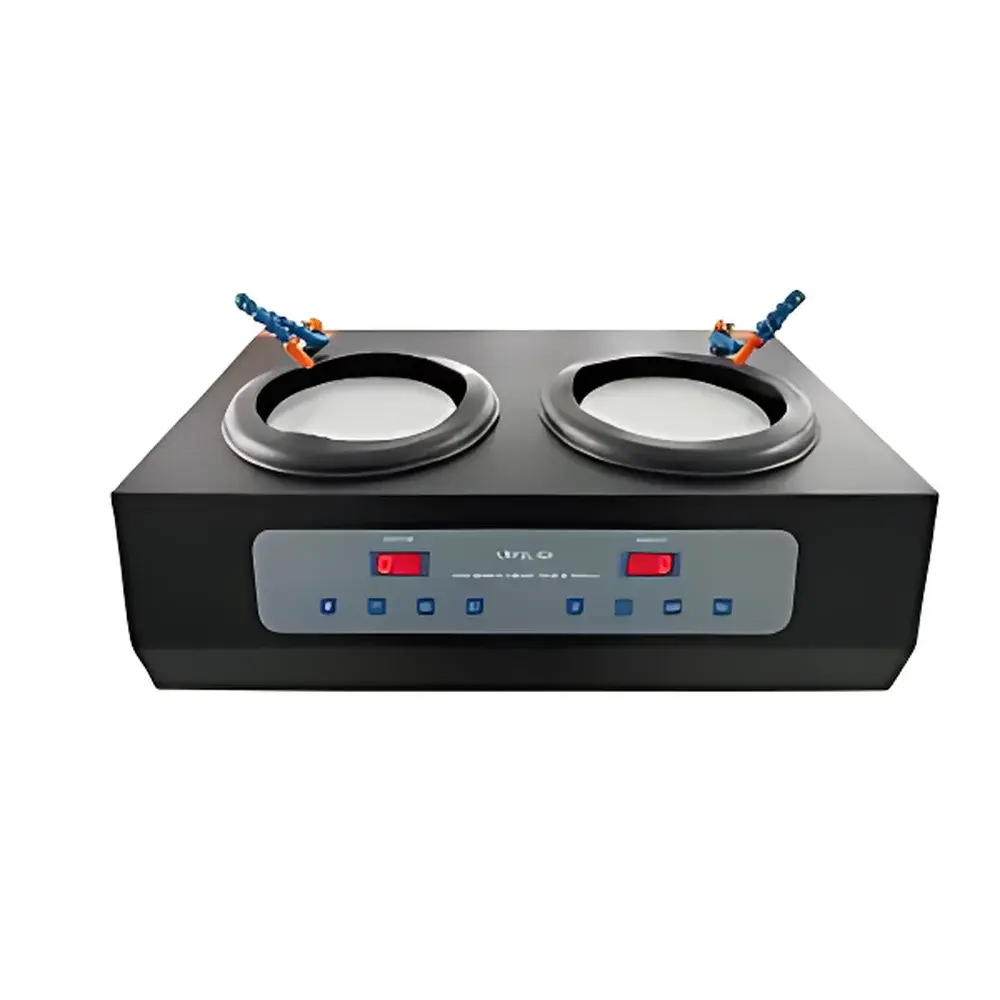
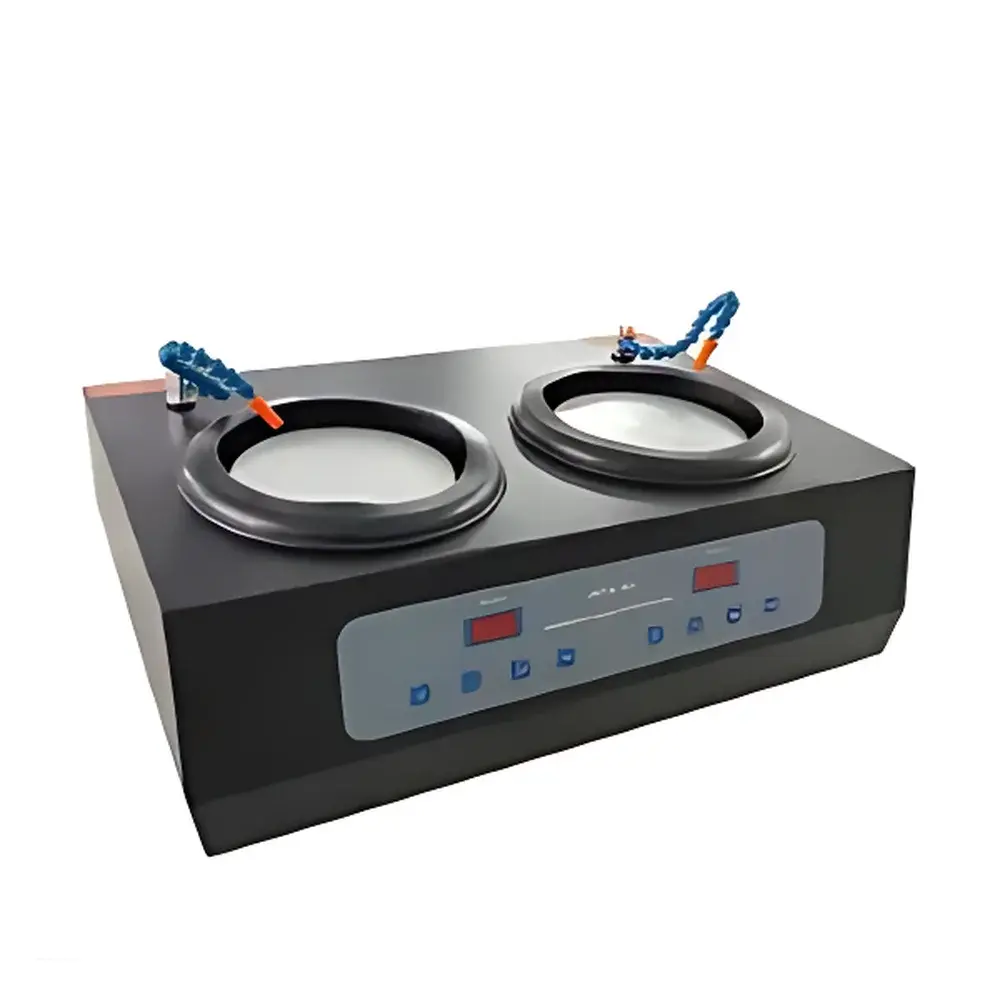
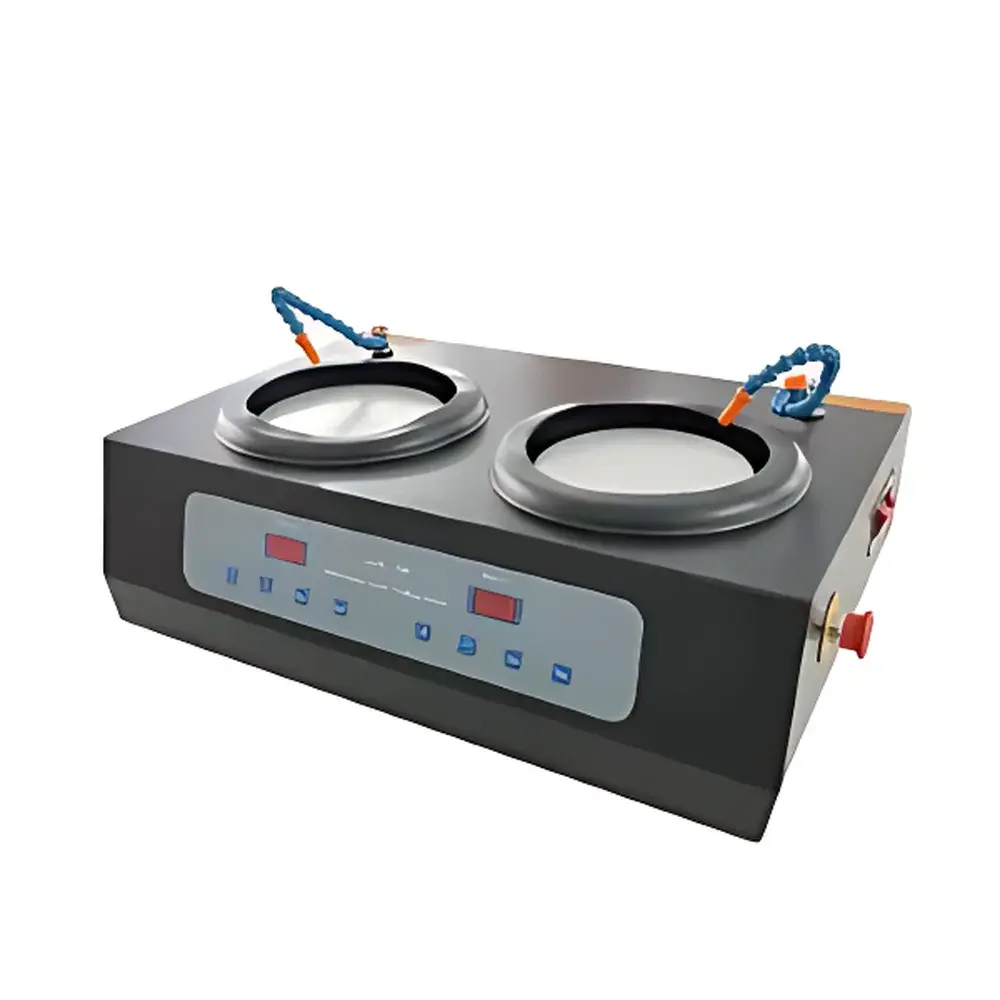
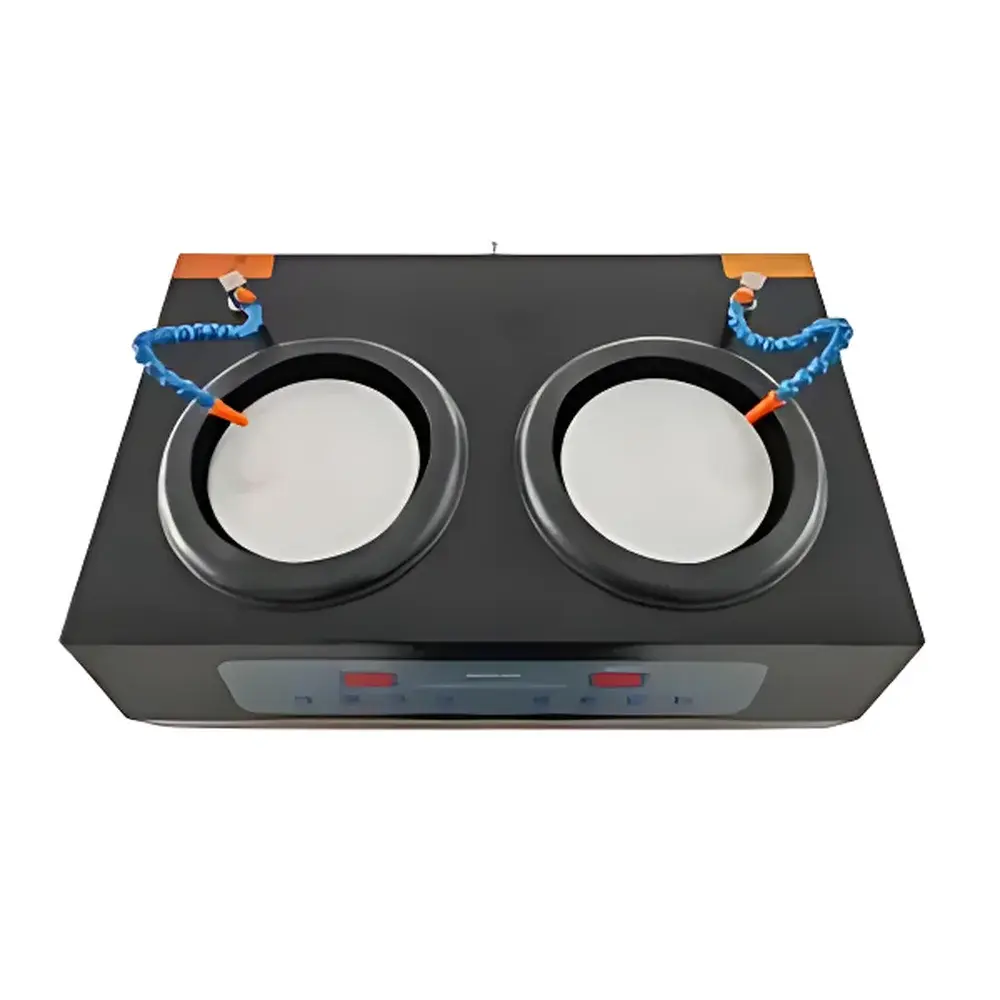
KJ GROUP UNIPOL-820 Dual-Station Metallographic Grinding and Polishing System
| Brand | KJ GROUP |
|---|---|
| Origin | Liaoning, China |
| Manufacturer Type | Authorized Distributor |
| Country of Origin | China |
| Model | UNIPOL-820 |
| Dimensions (L×W×D) | 720 mm × 530 mm × 350 mm |
| Number of Grinding/Polishing Plates | 2 |
| Plate Diameter | Ø203 mm |
| Speed Range | 50–600 rpm |
Overview
The KJ GROUP UNIPOL-820 Dual-Station Metallographic Grinding and Polishing System is an engineered solution for precision sample preparation in metallurgical, materials science, and geological laboratories. Designed around a dual-plate rotational architecture, the system enables simultaneous or independent operation of two Ø203 mm grinding/polishing stations—each driven by a dedicated DC motor (110 V, 165 W) with closed-loop speed control. The unit operates on the principle of controlled abrasive contact under consistent pressure and rotational shear, facilitating reproducible planarization, material removal, and surface finish optimization across diverse specimen types. Its mechanical design prioritizes stability, low acoustic emission (<65 dB(A) at 1 m), and thermal management during extended operation—critical for maintaining microstructural integrity during multi-stage preparation sequences (e.g., coarse grinding → fine grinding → polishing → final diamond suspension finishing). The UNIPOL-820 complies with fundamental mechanical safety standards applicable to laboratory rotating equipment (IEC 61000-6-2/6-4, EN 61326-1) and supports traceable, repeatable workflows required in ISO/IEC 17025-accredited testing environments.
Key Features
- Dual independent grinding/polishing stations with synchronized or isolated operation—enabling parallel processing of dissimilar samples without cross-contamination.
- Magnetic retention system for polishing cloths and abrasive papers: eliminates adhesive wrinkling and ensures uniform substrate contact via magnetically coupled steel backing plates and polymer-coated magnetic discs (supplied as standard).
- Digital speed display and stepless electronic speed control (50–600 rpm) with ±2 rpm repeatability, calibrated against internal tachometric feedback.
- Modular mounting interface compatible with optional accessories including automatic dispensing units (e.g., SKZD-3 suspension dropper), recirculating coolant pumps, TEM wedge fixtures (UNIPOL-01), and custom-diameter platen adapters.
- Robust cast-aluminum chassis with vibration-damped base; operational weight ≈44 kg; designed for stable placement on ≥100 kg-rated lab benches with grounded AC power supply (110/230 V, 50/60 Hz, 10 A).
Sample Compatibility & Compliance
The UNIPOL-820 accommodates a broad spectrum of rigid and semi-rigid specimens up to 100 mm in diameter, including ferrous and non-ferrous metals, sintered ceramics (Al₂O₃, ZrO₂), optical crystals (ZnSe, ZnS, Si, Ge), PCB substrates, geological thin sections, refractory composites, and polymeric matrices. Its open-platform configuration allows integration with standardized sample holders compliant with ASTM E3–22 (Standard Guide for Preparation of Metallographic Specimens) and ISO 14577–1:2015 (Metallic materials — Instrumented indentation test). While the base system does not include automated force control or real-time thickness monitoring, it interfaces seamlessly with third-party metrology tools such as the SKCH-1 precision thickness gauge for post-process verification. All electrical components meet CE marking requirements for laboratory equipment; grounding continuity and insulation resistance are validated per IEC 61010-1.
Software & Data Management
The UNIPOL-820 employs embedded microcontroller-based logic (8-bit MCU with EEPROM parameter storage) and features tactile push-button interface with LED status indicators. It does not incorporate onboard software, network connectivity, or data logging capabilities—intentionally preserving deterministic mechanical behavior and minimizing failure vectors common in firmware-dependent systems. However, its analog/digital hybrid control architecture supports external process synchronization: trigger outputs can initiate timed reagent delivery from compatible dispensers (e.g., SKZD-3), and RPM signals may be routed to external DAQ systems for audit-trail recording. For GLP/GMP-regulated labs, manual logbooks or LIMS-integrated SOPs are recommended to document speed settings, dwell times, consumable lot numbers, and operator IDs per run—aligning with FDA 21 CFR Part 11 principles where electronic records are implemented downstream.
Applications
- Routine metallographic specimen preparation for light microscopy (LM) and scanning electron microscopy (SEM) analysis in quality control and failure analysis labs.
- Surface planarization of infrared-transmitting crystals prior to anti-reflection coating deposition or interferometric characterization.
- Preparation of polished cross-sections from multilayer ceramic capacitors (MLCCs), solder joints, and thermally sprayed coatings for porosity and interfacial defect assessment.
- Geological thin-section production for petrographic analysis under polarized light, including brittle rock types requiring low-stress abrasion protocols.
- Research-scale fabrication of TEM lamellae using wedge-polishing fixtures (UNIPOL-01), particularly for brittle semiconductors and oxide ceramics.
FAQ
What voltage configurations are supported?
The UNIPOL-820 ships with region-specific power modules: 110 V / 60 Hz for North America and 230 V / 50 Hz for EU/UK markets. Domestic Chinese units operate at 220 V / 50 Hz. Voltage selection is hardwired; field conversion is not supported.
Is water cooling mandatory?
Continuous tap-water circulation is recommended for sessions exceeding 30 minutes or when using high-viscosity slurries. The unit includes inlet/outlet ports (G1/4″ BSP) but requires user-supplied plumbing and drainage infrastructure.
Can I use non-magnetic polishing pads?
Yes—standard mechanical clamping rings (supplied) provide alternative fixation for non-magnetizable substrates; however, magnetic mounting is preferred for rapid changeover and edge uniformity.
What maintenance intervals are advised?
Motor brushes should be inspected every 1,500 operating hours; bearings require grease replenishment every 2 years under typical lab usage (≈4 hrs/day, 5 days/week). No firmware updates or calibration certificates are issued—mechanical alignment checks are performed at factory shipment only.
Are consumables ISO-certified?
KJ GROUP supplies abrasive papers (240#–1500#), synthetic and polyurethane polishing cloths, and W2.5 diamond paste in accordance with ISO 6344-2 (coated abrasives) and ISO 10523 (diamond suspension concentration tolerances); lot-specific CoA documentation is available upon request.



