
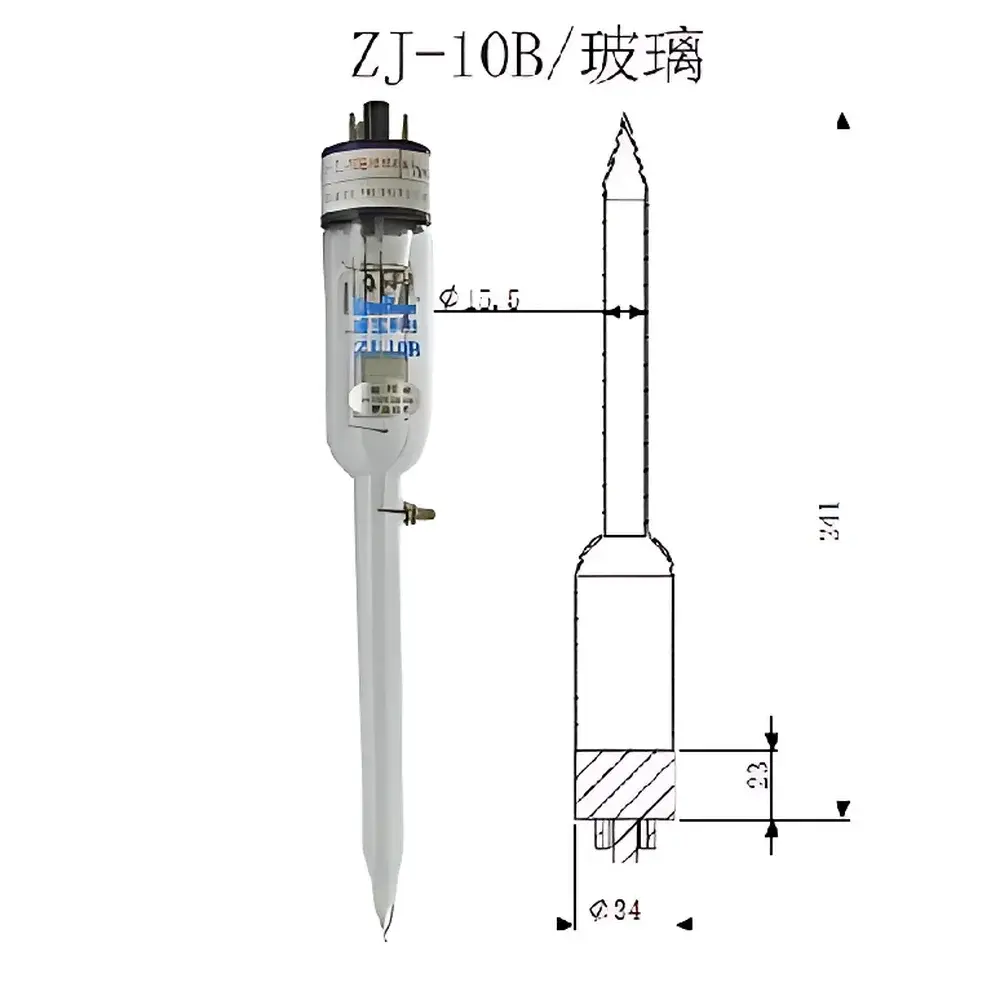
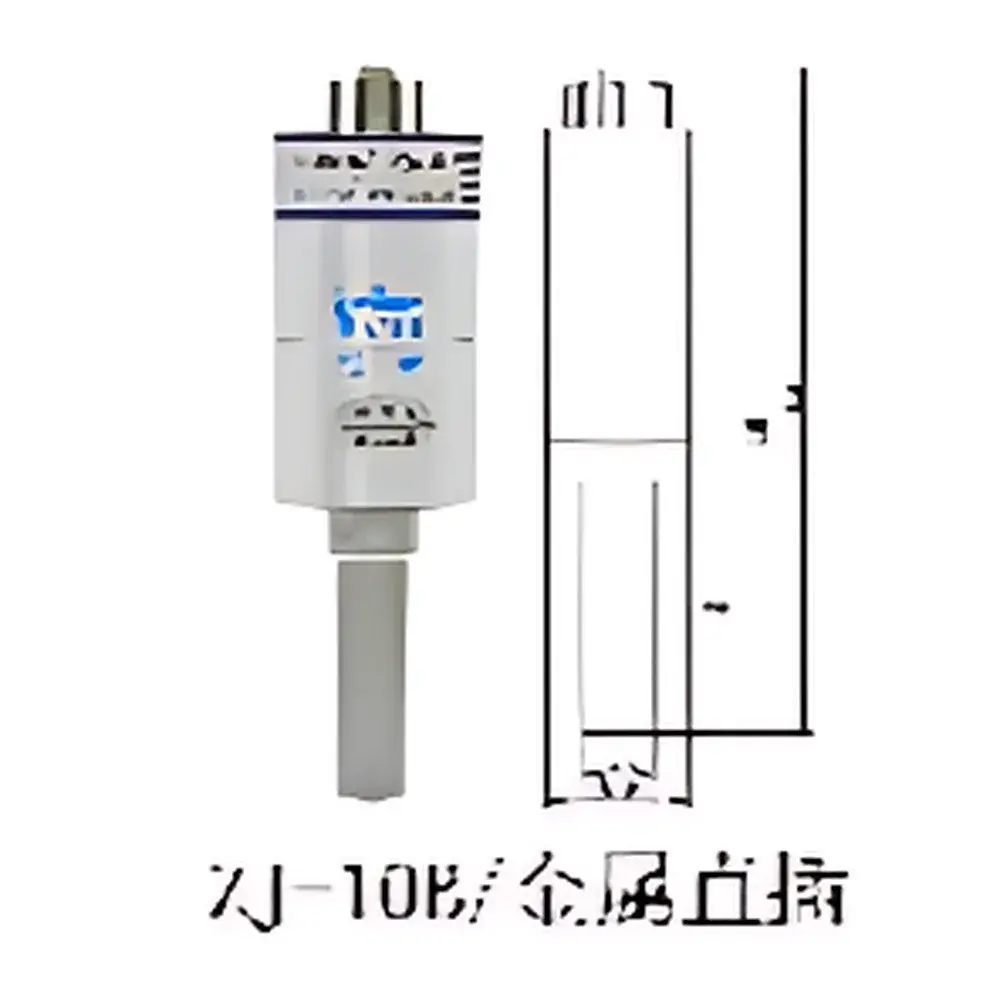
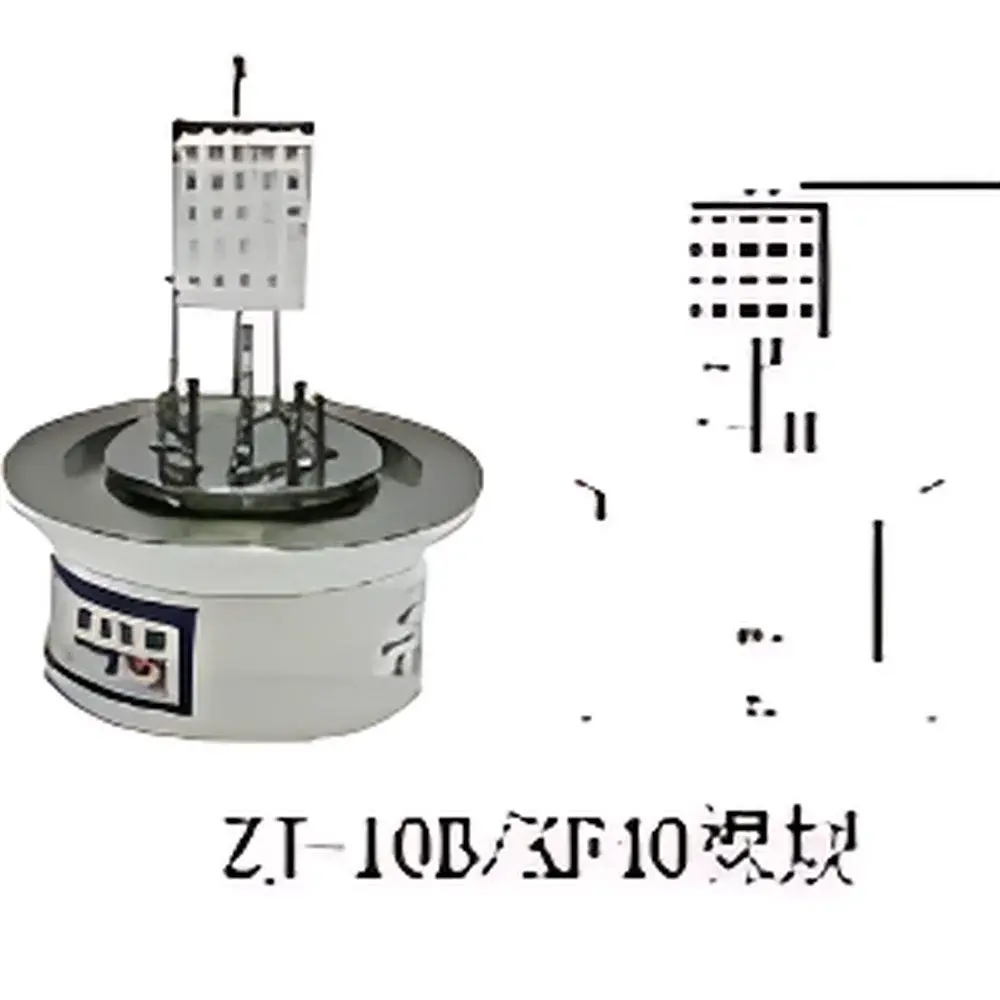
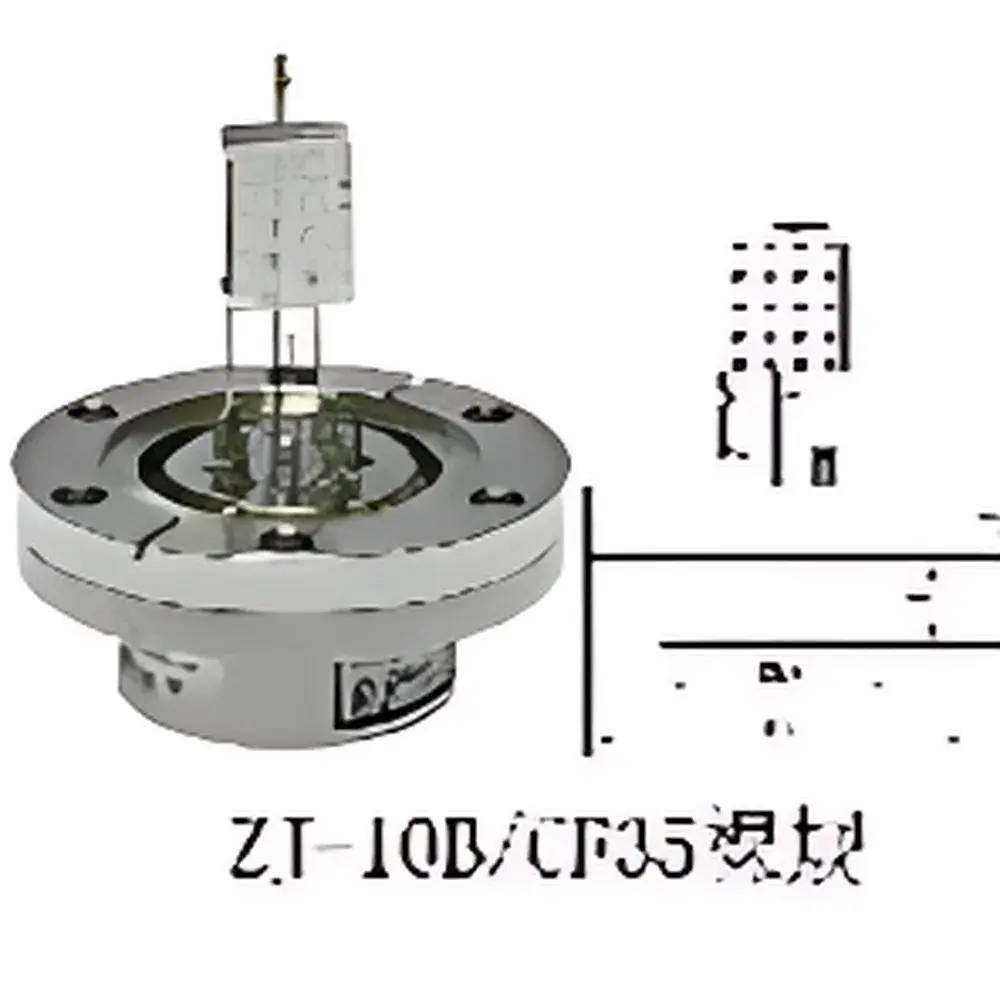
KJ GROUP ZJ-10B Hot Cathode Ionization Vacuum Gauge
| Brand | KJ GROUP |
|---|---|
| Origin | Liaoning, China |
| Manufacturer Type | Authorized Distributor |
| Country of Origin | China |
| Model | ZJ-10B |
| Measurement Range | 6.5×10¹ – 1×10⁻⁴ Pa |
| X-ray Limit | 3×10⁻⁴ Pa |
| Sensitivity | 0.015 ±15% Pa⁻¹ |
| Accelerating Electrode Potential (vs. Ground) | 165 V |
| Cathode Potential (vs. Ground) | 50 V |
| Collector Potential (vs. Ground) | 0 V |
| Emission Current | 50 µA (1×10² – 1×10⁻² Pa), 500 µA (1×10⁻² – 1×10⁻⁴ Pa) |
| Max. Baking Temperature | 80 °C (glass/metal/KF flanges), 450 °C (CF flanges) |
| Vacuum Port Options | Φ15.5±0.5 mm glass, Φ15.5±0.1 mm metal, KF10/KF16/KF25/KF40, CF16/CF25/CF35 |
Overview
The KJ GROUP ZJ-10B Hot Cathode Ionization Vacuum Gauge is a robust, triode-type Bayard–Alpert (B–A) configuration gauge engineered for accurate and stable pressure measurement in medium to high vacuum environments. It operates on the fundamental principle of electron-impact ionization: thermionically emitted electrons from a noble-metal oxide cathode traverse a grid-anode structure and collide with residual gas molecules, generating positive ions proportional to gas density. These ions are collected at a central, negatively biased filament—acting as the collector electrode—yielding an ion current linearly related to absolute pressure under controlled operating conditions. Designed for long-term reliability in industrial and research vacuum systems, the ZJ-10B features a platinum-iridium or yttria-coated oxide cathode that resists oxidation and withstands transient atmospheric exposure during venting cycles, minimizing degradation and extending operational lifetime beyond typical hot-cathode gauges.
Key Features
- Triode B–A geometry with optimized electrode spacing and shielding to suppress X-ray photoelectron current, enabling reliable measurements down to 1×10⁻⁴ Pa
- Noble-metal oxide cathode offering enhanced thermal stability, low work function, and resistance to poisoning by reactive gases (e.g., O₂, H₂O, hydrocarbons)
- Dual-range emission current operation: 50 µA for 1×10² – 1×10⁻² Pa; 500 µA for extended sensitivity in 1×10⁻² – 1×10⁻⁴ Pa range
- Standardized electrical interface with fixed bias potentials: accelerating electrode at +165 V, cathode at +50 V, collector at ground potential (0 V)
- Multi-interface compatibility: supports glass (Φ15.5±0.5 mm), metal (Φ15.5±0.1 mm), and industry-standard vacuum flanges including KF10–KF40 and CF16–CF35
- High-temperature bakeout capability: rated for continuous operation up to 80 °C on glass, metal, and KF-sealed systems; up to 450 °C on all-metal CF-flanged variants
Sample Compatibility & Compliance
The ZJ-10B is compatible with common vacuum system gases including N₂, Ar, He, H₂, O₂, and air—calibrated against nitrogen per ISO 3567:2022 (Vacuum technology — Calibration of ionization gauges). While absolute accuracy depends on gas composition, the gauge provides repeatable relative pressure trends essential for process monitoring and system diagnostics. It complies with electromagnetic compatibility requirements per IEC 61326-1 for laboratory and industrial use. The gauge’s construction adheres to vacuum cleanliness standards outlined in ASTM E1917–21 (Standard Guide for Vacuum System Integrity Testing), and its metal-ceramic sealing and low-outgassing materials support UHV-readiness when paired with appropriate flange types (CF series). Note: For applications requiring traceable calibration or regulatory audit trails (e.g., semiconductor tool qualification or GLP-compliant thin-film deposition), users must integrate the ZJ-10B with a controller supporting NIST-traceable calibration files and 21 CFR Part 11–compliant data logging.
Software & Data Management
The ZJ-10B functions as a transducer requiring external control electronics—typically a dedicated ion gauge controller (e.g., KJ GROUP VG-100 series or third-party compatible units such as MKS 925 or INFICON Transpector). Modern controllers provide analog (0–10 V or 4–20 mA) and digital (RS-485, Modbus RTU, or Ethernet/IP) outputs, enabling integration into SCADA, PLC, or LabVIEW-based vacuum management platforms. Firmware-supported features include auto-ranging, emission current regulation, zero suppression, and real-time X-ray limit compensation. Audit-ready data acquisition systems may record timestamped ion current, emission current, and derived pressure values with configurable sampling intervals, supporting ISO/IEC 17025 documentation requirements for metrological traceability.
Applications
- Medium/high vacuum monitoring in diffusion pump and turbomolecular pump-backed systems (e.g., coating chambers, electron beam welders, mass spectrometer inlets)
- Process control in physical vapor deposition (PVD), chemical vapor deposition (CVD), and sputtering systems where pressure stability between 10⁻¹ and 10⁻⁴ Pa is critical
- R&D vacuum chambers requiring cost-effective, field-serviceable ionization sensing without ultra-high vacuum (UHV) complexity
- Leak detection support via pressure rise rate analysis following helium spray tests
- Education and training labs demonstrating fundamental vacuum physics, electron–gas interactions, and ion current–pressure relationships
FAQ
What vacuum ranges is the ZJ-10B rated for, and where is measurement considered quantitative versus indicative?
The ZJ-10B provides quantitative measurement from 6.5×10¹ Pa to 1×10⁻⁴ Pa. Between 10² Pa and 6×10¹ Pa, and again from 3×10⁻⁴ Pa to 1×10⁻⁴ Pa, readings serve only as qualitative references due to space charge effects and rising X-ray limit contributions.
Can the ZJ-10B be baked out? What are the temperature limits by flange type?
Yes—glass and KF-flanged versions support bakeout up to 80 °C; CF-flanged variants (CF16, CF25, CF35) are rated for 450 °C, enabling integration into UHV-compatible systems.
Is the ZJ-10B compatible with reactive or corrosive process gases?
The noble-metal oxide cathode offers improved resistance to oxidation and mild chemical attack compared to pure tungsten filaments, but prolonged exposure to halogens, strong acids, or silanes is not recommended without protective gas ballasting or differential pumping.
Does the gauge require periodic recalibration?
Yes—annual calibration against a reference standard is recommended per ISO/IEC 17025 guidelines, especially when used in regulated environments or for quantitative process validation.
How does the ZJ-10B differ from cold cathode (Penning) gauges?
Unlike cold cathode gauges, the ZJ-10B uses thermionic emission, delivering superior stability, lower noise, and better repeatability below 10⁻³ Pa—but requires warm-up time and is more sensitive to filament burnout during accidental atmospheric exposure.
Related Products



