
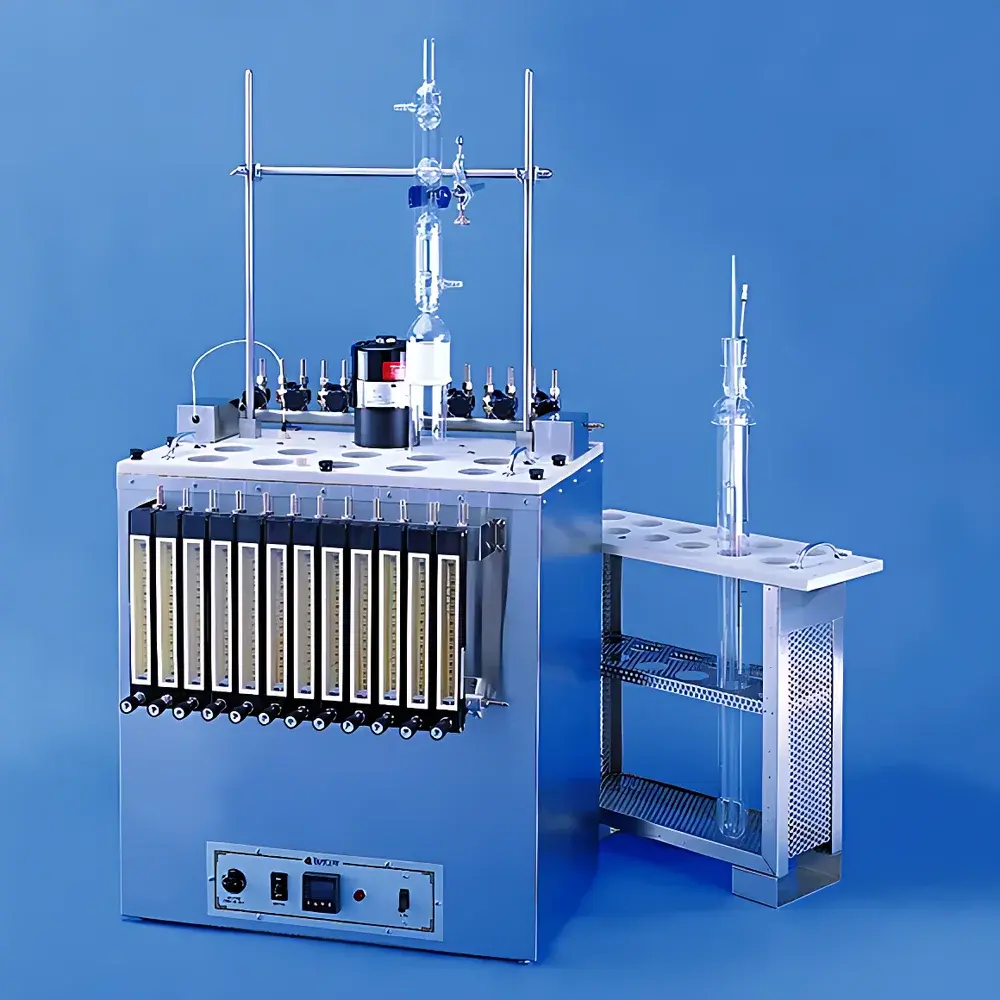
Koehler K12239 High-Temperature Multi-Method Oxidation Bath
| Brand | Koehler |
|---|---|
| Origin | USA |
| Manufacturer Status | Authorized Distributor |
| Origin Category | Imported |
| Model | K12239 |
| Product Type | Laboratory Instrument |
| Test Parameter | Oxidation Stability |
| Compliance Standards | ASTM D943, D2274, D2440, D2893, D4310, D4636, D5968, D6594 |
| Sample Capacity | 12 reaction vessels |
| Temperature Range | Ambient to 200 °C |
| Temperature Accuracy | ±0.1 °C (±0.2 °F) |
| Bath Medium | High-Temperature Silicone Oil |
| Control System | Microprocessor-Based LED Digital Temperature Controller |
| Dimensions (W×D×H) | 65 × 61 × 107 cm |
| Weight | 96.6 kg |
| Power Supply | 220–240 V, 50/60 Hz, Single-Phase |
Overview
The Koehler K12239 High-Temperature Multi-Method Oxidation Bath is a precision-engineered laboratory instrument designed for standardized evaluation of oxidation stability and corrosivity in petroleum-based fluids—including lubricating oils, insulating oils, hydraulic fluids, and distillate fuels. It operates on the principle of accelerated oxidative aging under controlled thermal and gaseous environments, replicating long-term service conditions in a condensed timeframe. The system maintains a uniform, stable bath temperature from ambient up to 200 °C using high-thermal-stability silicone oil as the heat-transfer medium. Oxygen or purified dry air is introduced directly into individual sample vessels at precisely regulated flow rates, enabling reproducible simulation of oxidative stress in the presence of catalytic metal surfaces (e.g., copper wire or strips). This methodology aligns with fundamental principles of autoxidation kinetics, where initiation, propagation, and termination reactions are thermally activated and monitored via measurable degradation endpoints—such as sludge formation, acid number increase, viscosity change, or interfacial tension loss.
Key Features
- Multi-standard compliance: Fully supports eight ASTM test methods—D943 (TOST), D2274 (Rotating Bomb Oxidation Test), D2440 (RBOT with copper catalyst), D2893 (Oxidation Stability of Turbine Oils), D4310 (Oxidation Stability of Hydraulic Oils), D4636 (Oxidation Stability of Aviation Turbine Fuels), D5968 (Oxidation Stability of Diesel Fuel), and D6594 (Oxidation Stability of Biodiesel Blends).
- Modular vessel configuration: Accommodates up to 12 standard glass reaction vessels; configurable down to 10 vessels for specific protocols including ASTM D5968 and U.S. Department of Defense test methods FTM 791-5307 and 791-5308.
- Precision thermal control: Microprocessor-based digital temperature controller with LED display ensures setpoint stability within ±0.1 °C across the full operating range (ambient to 200 °C).
- Gas delivery flexibility: Optional mass flow controllers or calibrated rotameters enable accurate, independent regulation of oxygen or dry air flow per vessel—critical for method-specific stoichiometric consistency.
- Robust mechanical architecture: Heavy-duty stainless steel frame, reinforced insulation, and integrated safety cutoffs support continuous unattended operation in regulated laboratory environments.
Sample Compatibility & Compliance
The K12239 is validated for use with a broad spectrum of hydrocarbon-based fluids, including mineral and synthetic lubricants, transformer oils, aviation and industrial turbine oils, diesel fuels, and biodiesel blends. Its design conforms strictly to the apparatus requirements outlined in each referenced ASTM standard—particularly regarding vessel geometry, immersion depth, catalyst placement, gas dispersion, and thermal uniformity across the bath volume. All configurations meet GLP documentation requirements when paired with compliant data logging systems. The instrument itself does not require FDA 21 CFR Part 11 validation; however, its output parameters (temperature, time, flow rate) are fully traceable and recordable in audit-ready formats when interfaced with Koehler’s optional data acquisition modules.
Software & Data Management
While the base K12239 operates via standalone hardware controls, it is compatible with Koehler’s optional PC-based data acquisition and reporting software suite. This software enables real-time monitoring of bath temperature, individual vessel run times, and (when equipped) gas flow profiles. Data export is supported in CSV and PDF formats for integration into LIMS platforms or internal QA/QC databases. All logged entries include timestamps, operator ID fields, and method-specific metadata tags—supporting ISO/IEC 17025 traceability and internal audit readiness. No proprietary drivers or cloud dependencies are required; communication occurs via standard RS-232 or USB-to-serial interface.
Applications
- Quality assurance of new lubricant formulations prior to field deployment
- Comparative oxidative life assessment of base stocks and additive packages
- Stability screening of reclaimed or re-refined oils
- Regulatory conformance testing for OEM specifications (e.g., Caterpillar TO-4, Cummins CES 20081)
- Research into antioxidant depletion kinetics and degradation pathway analysis
- Corrosion inhibitor efficacy evaluation under simulated service temperatures
FAQ
What bath medium is required for operation?
High-temperature silicone oil with a flash point ≥300 °C and thermal stability up to 220 °C is specified. Koehler recommends K-12239-SOIL or equivalent certified grades.
Can the K12239 be used for non-petroleum samples such as bio-based hydraulic fluids?
Yes—provided the fluid exhibits thermal stability below 200 °C and compatibility with standard borosilicate glass vessels and copper catalysts. Method adaptation may require validation per ASTM D6138 or internal protocol.
Is calibration certification included with shipment?
A factory calibration report documenting temperature uniformity and controller accuracy at three points (100 °C, 150 °C, 200 °C) is provided. NIST-traceable recalibration services are available through authorized Koehler service centers.
How is safety managed during extended high-temperature operation?
The unit incorporates dual redundant thermal fuses, overtemperature cut-off, and insulated outer casing rated for continuous 200 °C surface exposure. A ventilation hood is recommended when operating above 150 °C due to potential volatile emissions from degraded oil samples.
What maintenance intervals are recommended?
Bath oil should be inspected quarterly and replaced annually or after 2,000 operational hours—whichever occurs first. Flow meters require annual verification; temperature sensors are verified biannually against reference RTDs.






