
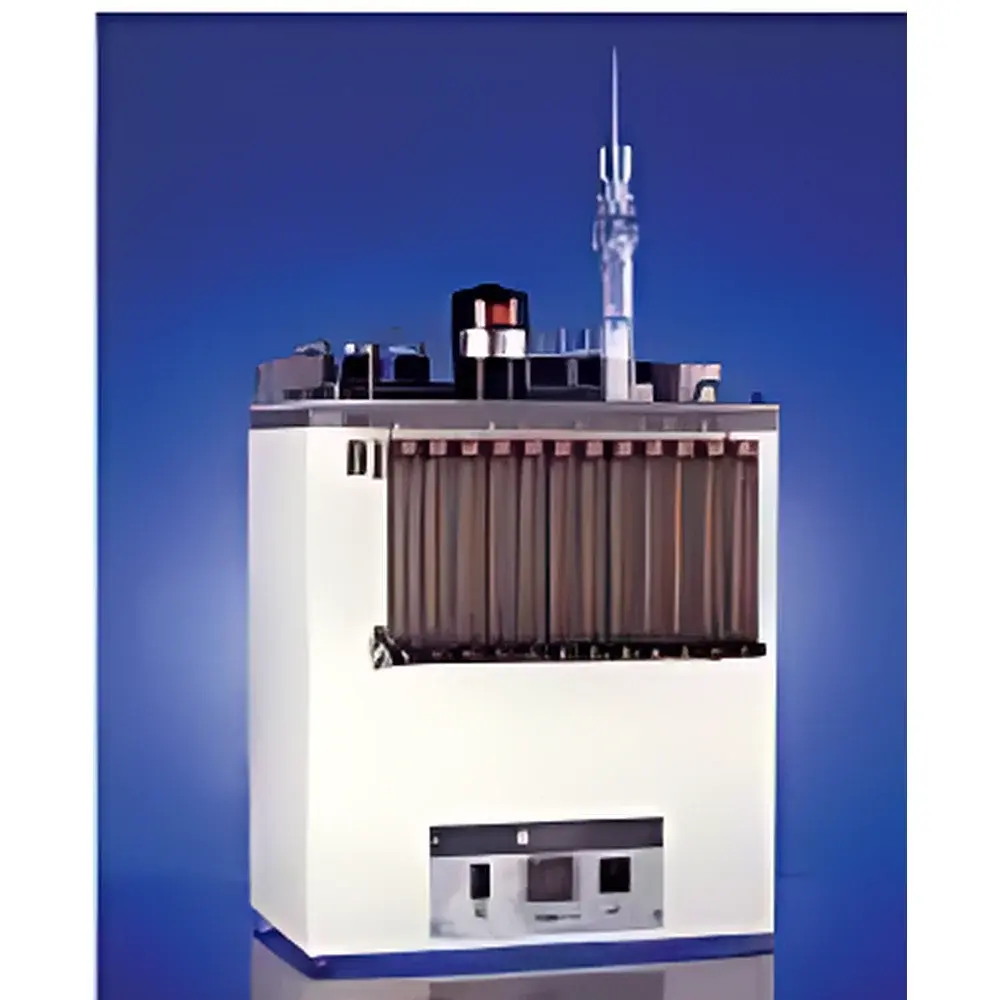
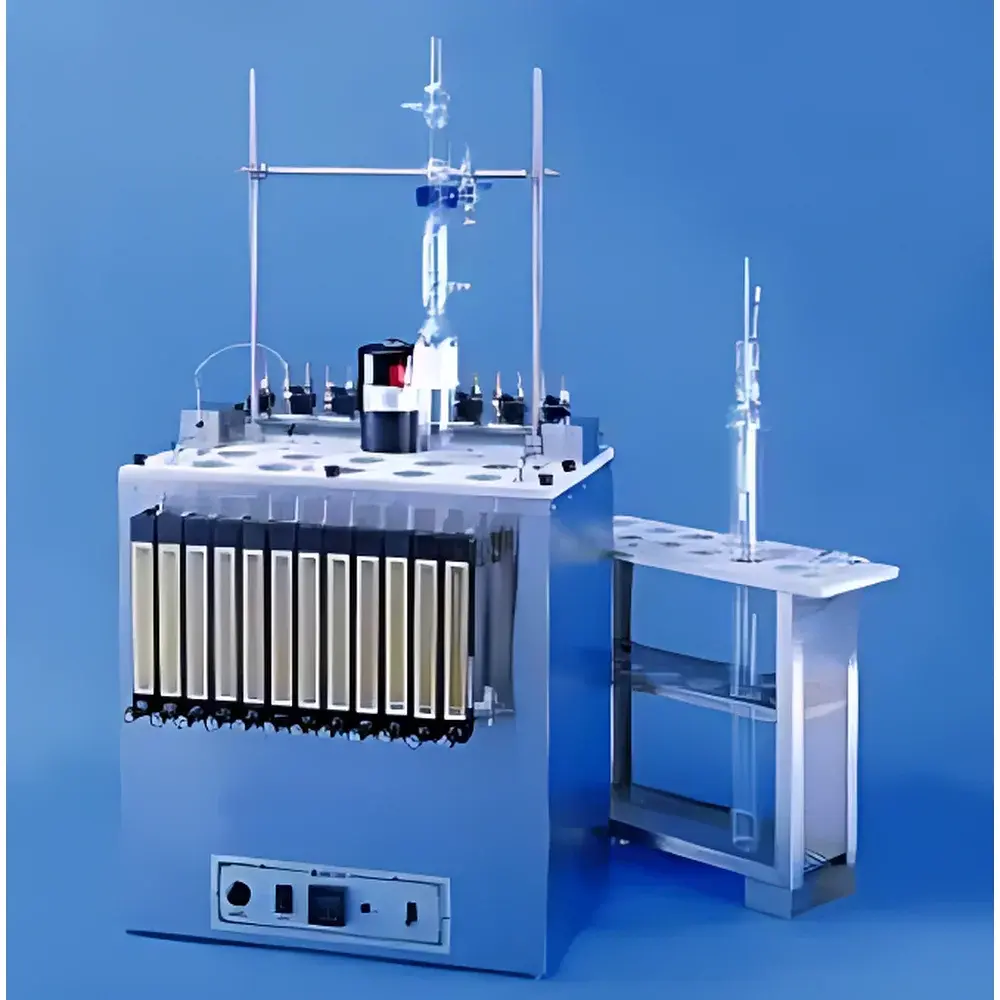
Koehler K12290/K12219/K12339/K12395 Oxidation Stability Test Bath
| Brand | Koehler |
|---|---|
| Origin | USA |
| Model Series | K12290, K12219, K12339, K12395 |
| Sample Capacity | 8 / 12 / 30 / 60 positions |
| Temperature Range | Ambient to 100 °C |
| Temperature Stability | ±0.1 °C (±0.2 °F) |
| Bath Volume | 37.8 L (8-pos) / 71.9 L (12-pos) / 227 L (30-pos) / 432 L (60-pos) |
| Bath Medium | White Mineral Oil |
| Compliance | ASTM D943, D2274, D2893, D4310, D6158 |
Overview
The Koehler Oxidation Stability Test Bath series (models K12290, K12219, K12339, and K12395) is a precision-engineered laboratory instrument designed for the accelerated evaluation of oxidation resistance in lubricating oils, turbine oils, hydraulic fluids, and distillate fuel oils. Operating on the principle of controlled oxidative aging under standardized thermal and gaseous conditions, these baths facilitate reproducible determination of oxidation stability per internationally recognized test methods. Samples are subjected to elevated temperature (typically 95 °C or 100 °C), oxygen or dry air flow, and—where applicable—catalytic metal surfaces (copper and iron) in the presence of water, simulating long-term service degradation mechanisms. The system’s fundamental architecture ensures uniform thermal distribution across all sample positions, minimizing inter-bath variability and supporting regulatory compliance in quality control and R&D environments.
Key Features
- Microprocessor-based LED digital temperature controller with ±0.1 °C stability over ambient to 100 °C range, ensuring strict adherence to ASTM and ISO thermal protocols.
- Modular bath configurations: 8-position (37.8 L), 12-position (71.9 L), 30-position (227 L), and 60-position (432 L) units—each optimized for throughput scalability without compromising thermal homogeneity.
- Bath medium: high-purity white mineral oil selected for its inertness, low volatility, and consistent thermal conductivity across extended operational cycles.
- Robust stainless-steel construction with insulated housing to minimize heat loss and maintain energy efficiency during multi-day testing sequences.
- Integrated gas dispersion manifold compatible with regulated oxygen or dry air supply, meeting flow-rate and purity requirements specified in ASTM D2274 and D4310.
- Front-access design with removable sample racks for rapid loading/unloading and routine maintenance; no internal obstructions impede airflow or thermal convection.
Sample Compatibility & Compliance
These test baths accommodate standard ASTM oxidation test vessels—including glass oxidation tubes (e.g., D943), pressurized bomb assemblies (D2274), and copper/iron catalyst trays (D2893, D4310)—across all model variants. Each configuration supports full alignment with method-defined sample geometry, immersion depth, and headspace volume constraints. Regulatory traceability is embedded through hardware-level conformity with ASTM D943 (inhibitor life measurement), D2274 (turbine oil sludge formation), D4310 (distillate fuel oxidation stability), D2893 (oxidation corrosion tendency), and corresponding DIN, ISO, and NF standards. Units are routinely deployed in GLP-compliant laboratories and support audit-ready documentation when paired with validated SOPs and calibration records.
Software & Data Management
While the Koehler Oxidation Stability Test Baths operate as standalone hardware platforms, they are fully compatible with external data acquisition systems and LIMS integration via analog output (0–5 V or 4–20 mA) and RS-232/RS-485 interfaces (optional). Temperature logs can be timestamped and exported in CSV format for trending analysis, deviation reporting, and 21 CFR Part 11–compliant electronic record retention when used with validated third-party software. Calibration certificates traceable to NIST standards are provided with each unit, and annual recalibration intervals align with ISO/IEC 17025 requirements for accredited testing laboratories.
Applications
- Quantitative assessment of antioxidant package effectiveness in formulated lubricants and base stocks.
- Comparative screening of oxidation induction time (OIT) across batch lots or supplier materials.
- Corrosion and sludge formation evaluation in inhibited mineral oils under accelerated aging (ASTM D2893, D4310).
- Stability benchmarking of aviation turbine oils (MIL-PRF-23699, D6594) and industrial gear oils (ISO 8573-1).
- Supporting formulation development and shelf-life prediction for specialty fluids including biodegradable hydraulic oils and synthetic esters.
- Regulatory submission testing for OEM specifications requiring ASTM D943 or ISO 4263 compliance.
FAQ
What standards does the Koehler Oxidation Stability Test Bath support?
It fully complies with ASTM D943, D2274, D2893, D4310, D6158; AOCS CD12-57; DIN 51586 and 51587; ISO 4263 and ISO 12205; and French NF standards M 07-047 and T 60-150.
Can the bath be used for both open-tube and pressurized oxidation tests?
Yes—models are mechanically and thermally rated for use with ASTM D943 (open-tube), D2274 (pressurized bomb), and D2893 (catalyst tray) configurations, subject to proper accessory selection.
Is temperature uniformity verified across all sample positions?
Yes—thermal mapping per ASTM E740 confirms ≤±0.2 °C inter-position variance at setpoint, validated during factory commissioning and documented in the Certificate of Conformance.
What maintenance is required for long-term reliability?
Routine replacement of bath oil every 12–18 months (or per visible degradation), quarterly verification of sensor accuracy, and annual calibration using traceable reference thermometers are recommended.
Are spare parts and technical support available globally?
Koehler Instruments provides global spares distribution and application engineering support through authorized distributors, with lead times aligned to ISO 9001-certified logistics networks.





