
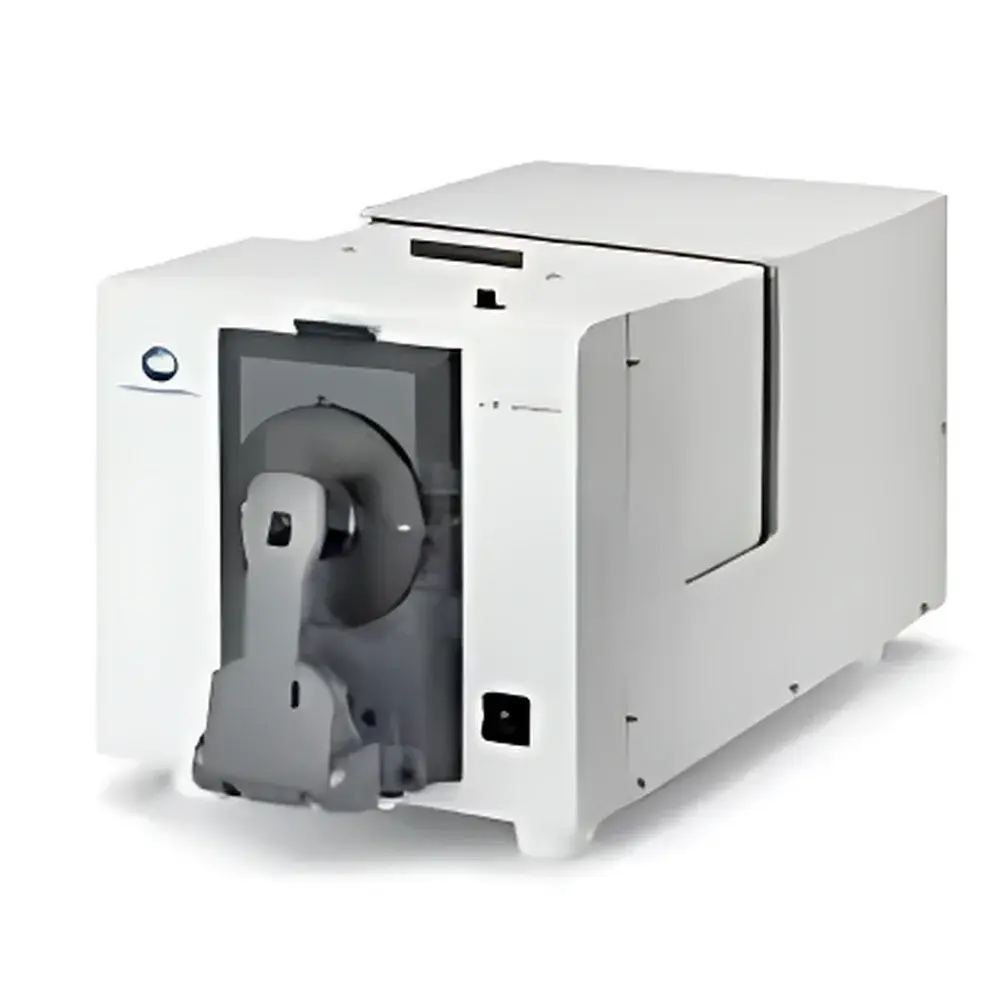
Konika-Minolta CM-3700A Desktop Spectrophotometer
| Brand | Konica Minolta |
|---|---|
| Origin | Japan |
| Model | CM-3700A |
| Instrument Type | Desktop |
| Optical Geometry | d/8° integrating sphere |
| Light Source | Pulsed Xenon Lamp |
| Spectral Range | 360 nm – 740 nm |
| Wavelength Interval | 10 nm |
| FWHM | ~14 nm |
| Reflectance Range | 0–200% (resolution: 0.001%) |
| Repeatability | ΔE*ab ≤ 0.005 (after white calibration, 30 measurements at 10 s intervals) |
| Transmittance Geometry | d/0° |
| UV Control | Motorized filter, 1000-step adjustable |
| Measurement Apertures | LAV Φ25.4 mm / Φ28 mm, MAV Φ8 mm / Φ11 mm, SAV 3 mm × 5 mm / 5 mm × 7 mm |
| Measurement Time | 0.6–0.8 s |
| Minimum Interval | 3 s |
| Inter-instrument Agreement | Avg. ΔE*ab ≤ 0.08, Max. ΔE*ab ≤ 0.3 (BCRA Series II 12-color tile set) |
| Temperature Drift | ΔE*ab ≤ 0.05 / °C |
| Dimensions | 271 × 274 × 500 mm |
| Weight | 18 kg |
Overview
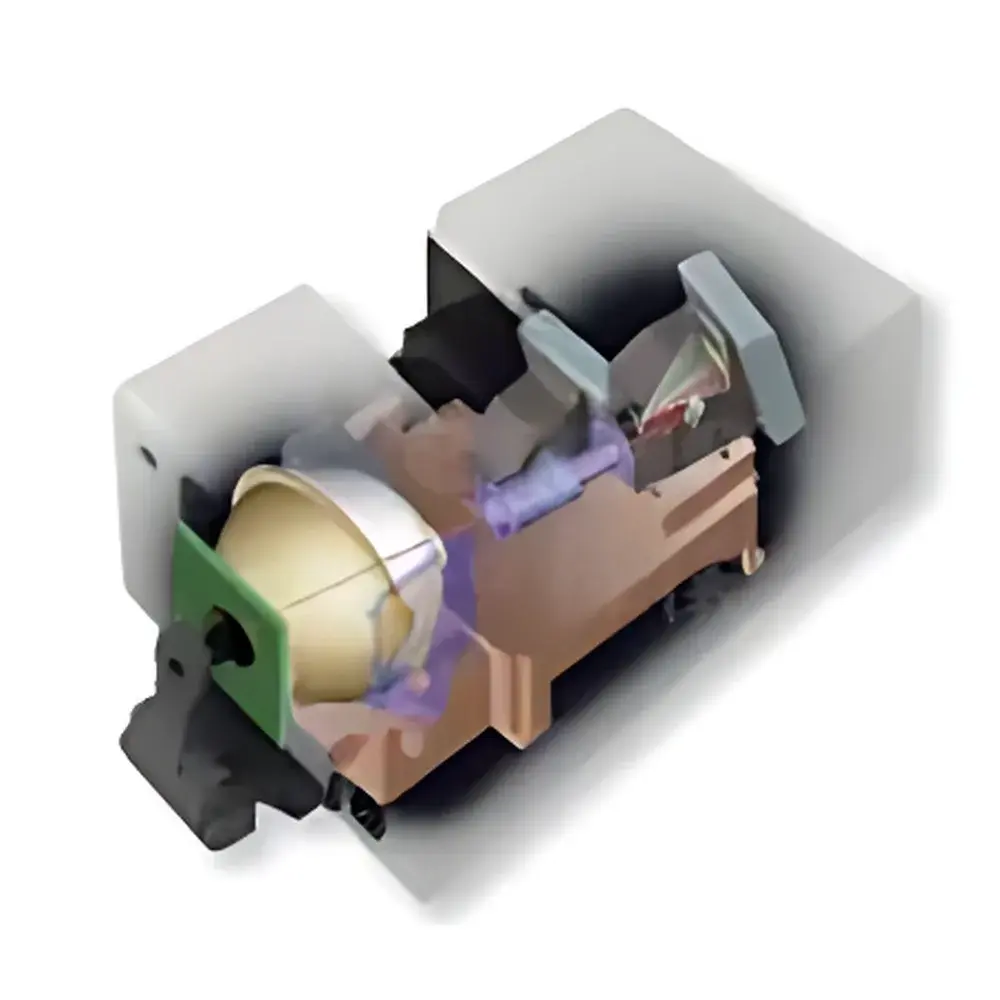
The Konica Minolta CM-3700A is a high-precision desktop spectrophotometer engineered for absolute colorimetric accuracy and long-term stability in demanding industrial and laboratory environments. Operating on the CIE-compliant d/8° integrating sphere geometry with dual-mode SCI (Specular Component Included) and SCE (Specular Component Excluded) measurement capability, the CM-3700A delivers traceable, reproducible spectral data across reflective and transmissive samples. Its optical architecture—featuring a large-diameter (152 mm) integrating sphere coated with high-reflectance BaSO₄-based material, dual flat-field holographic gratings, and a 38-element silicon photodiode array mounted on low-thermal-expansion stainless steel—ensures minimal spectral stray light and exceptional signal-to-noise ratio, particularly critical for low-reflectance (e.g., black plastics, dark textiles) and fluorescent materials (e.g., optical brightener-treated papers). The pulsed xenon lamp provides stable, high-intensity illumination across the full 360–740 nm spectral range with negligible thermal drift, enabling consistent performance without warm-up delay or lamp aging artifacts.
Key Features
- Ultra-high repeatability: ΔE*ab ≤ 0.005 for white reference (30 consecutive readings), and ΔE*ab ≤ 0.05 for BCRA black standard (1% reflectance) — validated per ISO 13655 and ASTM E308.
- Dual-beam feedback system continuously monitors lamp output via a dedicated reference channel and dynamically compensates for intensity and spectral shifts in real time.
- Motorized UV adjustment with 1000-step resolution enables precise control of UV content in the illumination beam — essential for accurate measurement of fluorescent substrates per ISO 11664-6 and TAPPI T485.
- Three interchangeable apertures (LAV: Φ25.4 mm; MAV: Φ8 mm; SAV: 3 × 5 mm) support flexible sampling from large-area panels to small printed patches or textile swatches.
- Transmittance mode employs d/0° geometry with a variable-thickness sample chamber (up to 50 mm), accommodating liquids, films, glass, and molded plastic specimens using standardized cuvettes or custom fixtures.
- Robust mechanical construction: optical components rigidly mounted on aluminum alloy blocks; thermal compensation design minimizes drift (<0.05 ΔE*ab/°C) across operational temperature range (13–33°C).
Sample Compatibility & Compliance
The CM-3700A meets or exceeds international metrological requirements for color measurement instrumentation. Its optical design conforms to ISO 7724-1 (d/8° reflectance), ISO 13655 (spectral measurement conditions), ASTM E308 (color computation), DIN 5033-7, JIS Z 8722 Condition C, and ISO 9050 (transmittance). It supports GLP/GMP workflows through audit-trail-capable software integration and complies with FDA 21 CFR Part 11 when used with SpectraMagic™ NX v3.6+ and appropriate system validation protocols. The instrument accommodates opaque solids (plastics, ceramics, painted metals), translucent films, dyed fibers, paper, and liquid solutions — including those containing optical brighteners, pigments, or UV-absorbing additives. All calibration standards (white tile CM-A154, zero calibration box CM-A155) are NIST-traceable and certified per ISO 17025-accredited procedures.
Software & Data Management
Controlled exclusively via USB 1.1 interface, the CM-3700A integrates seamlessly with Konica Minolta’s SpectraMagic™ NX software — a validated platform supporting spectral data acquisition, multi-instrument network synchronization, tolerance definition (ΔE*ab, ΔL*a*b*, CMC, ΔE00), pass/fail reporting, and statistical process control (SPC) charting. Raw spectral data (360–740 nm @ 10 nm intervals) is stored in industry-standard CIE XYZ, L*a*b*, L*C*h, and spectral reflectance/transmittance formats (.csv, .spc, .qtx). The software supports automated batch reporting, PDF certificate generation with digital signatures, and export to enterprise QMS systems (e.g., SAP QM, TrackWise) via ODBC or API. Audit trails record user actions, calibration events, firmware updates, and measurement history with timestamps and operator IDs — fulfilling regulatory documentation requirements under ISO 9001, IATF 16949, and pharmaceutical color release testing guidelines.
Applications
The CM-3700A serves as a primary reference instrument in global color management networks across automotive OEMs (paint, interior trim), packaging converters (flexographic/gravure inks), textile mills (dye lot matching), plastics compounders (masterbatch consistency), and paper manufacturers (brightness and whiteness certification). Its low-noise performance enables reliable measurement of near-black automotive coatings (L* < 5), high-gloss metallic finishes (via SCE mode), and UV-fluorescent security papers. In R&D labs, it supports pigment dispersion analysis, weathering studies (ASTM D2244), and formulation optimization using spectral difference mapping. Regulatory applications include USP color assessment for pharmaceutical tablets and ISO 12647-2 compliance verification in commercial printing.
FAQ
What standards does the CM-3700A comply with for reflectance measurement?
It conforms to ISO 7724-1, ASTM E308, DIN 5033-7, JIS Z 8722 Condition C, and CIE Publication No. 15:2004.
Can the CM-3700A measure fluorescent samples accurately?
Yes — its motorized UV filter allows continuous, fine-tuned adjustment of UV irradiance (1000 steps), enabling compliance with ISO 11664-6 for fluorescent material characterization.
Is inter-instrument agreement documented and traceable?
Yes — each unit is factory-calibrated against BCRA Series II tiles; average inter-instrument agreement is ΔE*ab ≤ 0.08, maximum ≤ 0.3, with full traceability to NMI-Japan (AIST) standards.
Does the system support 21 CFR Part 11 compliance?
When deployed with SpectraMagic™ NX v3.6+ under validated IT infrastructure and documented SOPs, it supports electronic records, audit trails, and role-based access control required by FDA regulations.
What is the recommended calibration frequency for routine QC use?
Daily white calibration is advised; zero calibration every 24 hours or after ambient temperature shifts >2°C; full recalibration annually by an ISO/IEC 17025-accredited service provider.




