
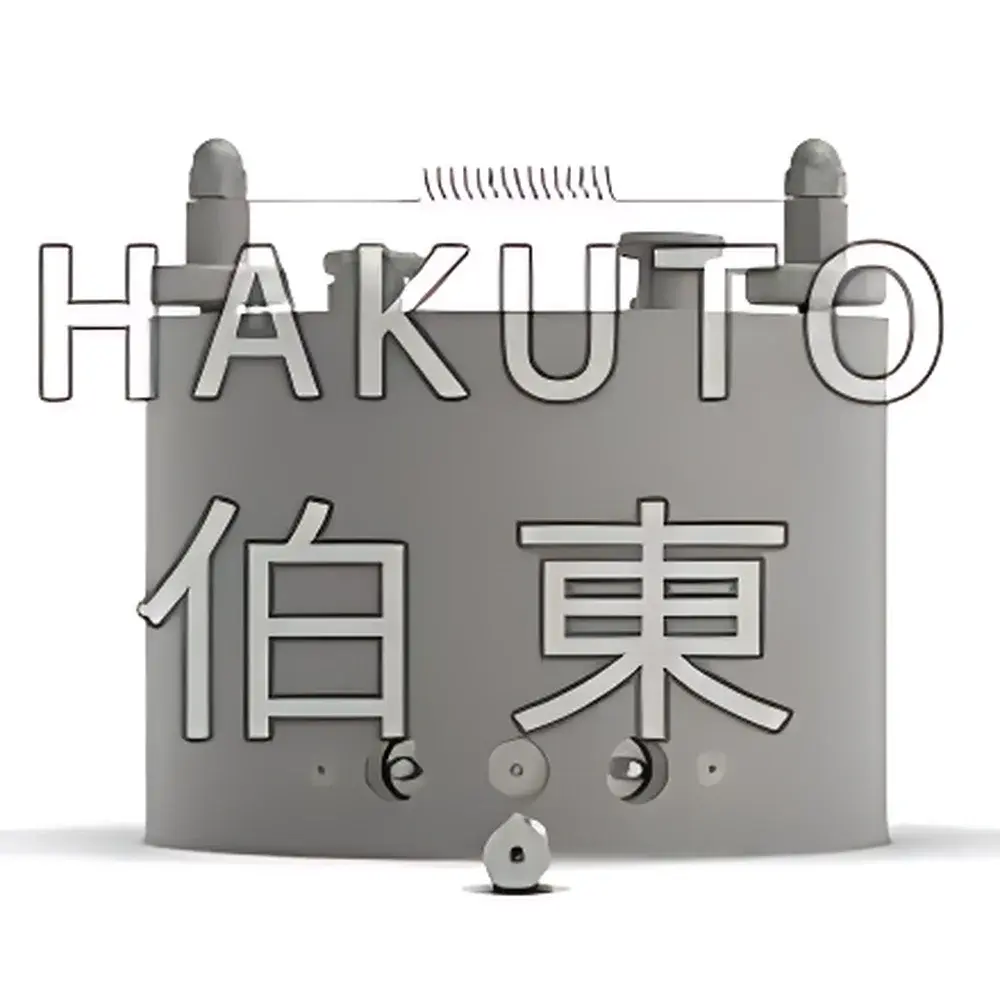
KRI eH 1000 Hall-Effect Ion Source
| Brand | Kaufman |
|---|---|
| Origin | USA |
| Model | eH 1000 |
| Discharge Voltage | 50–300 V DC |
| Discharge Current | up to 10 A |
| Beam Divergence (HWHM) | >45° |
| Anode Diameter | ~5 cm |
| Physical Dimensions | Ø5.7" × H5.5" |
| Compatible Gases | Ar, Xe, Kr, O₂, N₂, organic precursors |
| Mounting Options | flange-mounted (CF, ISO-K, or custom), no water cooling required |
| Operating Pressure Range | 1×10⁻⁴ – 5×10⁻³ Torr |
| Typical Applications | ion-assisted deposition (IAD), in-situ pre-cleaning, low-energy sputter etching, surface activation |
Overview
The KRI eH 1000 Hall-effect ion source is an engineered solution for precision ion beam generation in medium-scale vacuum systems. Based on magnetically confined plasma discharge principles—specifically the crossed-field (E×B) configuration characteristic of Hall-effect thruster physics—the eH 1000 produces a broad, uniform, and highly controllable ion beam without requiring thermionic cathodes or high-power RF excitation. Unlike gridded Kaufman-type ion sources, the eH 1000 eliminates grid erosion and associated lifetime limitations while maintaining stable operation across variable gas chemistries and pressure regimes typical of coating and surface engineering environments (1×10⁻⁴ to 5×10⁻³ Torr). Its compact cylindrical form factor (Ø5.7″ × 5.5″ height) integrates seamlessly into load-lock chambers, UHV-compatible deposition tools, and modular PVD/CVD platforms. Designed for reliability under continuous duty cycles, the eH 1000 delivers repeatable ion current density profiles essential for process reproducibility in regulated manufacturing settings.
Key Features
- Modular anode assembly: Field-replaceable anode structure enables rapid maintenance with minimal system downtime; plug-and-play spare anodes reduce mean time to repair (MTTR).
- Broad-beam architecture: >45° half-width half-maximum (HWHM) beam divergence ensures uniform ion flux distribution over substrates up to 200 mm diameter—critical for consistent IAD film stress control and etch rate homogeneity.
- Gas-agnostic operation: Stable plasma ignition and sustained discharge across inert (Ar, Xe, Kr), reactive (O₂, N₂), and organic precursor gases—enabling multi-step processes such as oxide passivation followed by polymer functionalization within a single chamber.
- Air-cooled design: No external water cooling required; thermal management achieved via conduction through stainless-steel housing and optimized anode geometry—simplifying integration into space-constrained or mobile vacuum systems.
- DC magnetic confinement: Integrated permanent magnets provide fixed-field confinement; optional eHx-30010A controller supports closed-loop voltage/current regulation, real-time gas flow sequencing (up to 4 gases), and analog/digital I/O for PLC synchronization.
Sample Compatibility & Compliance
The eH 1000 is compatible with conductive, semiconductive, and insulating substrates—including Si wafers, III-V compound semiconductors (GaAs, InP), optical glasses, flexible polymer films (PET, PI), and ceramic coatings. Its low-energy ion capability (adjustable 50–300 eV per ion) minimizes subsurface damage during pre-clean or surface activation steps—meeting requirements for EU RoHS-compliant thin-film fabrication and ISO 14644-1 Class 5 cleanroom-compatible toolsets. While not certified to a specific regulatory standard out-of-the-box, the source’s deterministic power delivery, traceable gas flow control, and absence of consumable filaments support compliance with GLP/GMP documentation frameworks when integrated into validated vacuum processing lines. Optional hollow cathode neutralizers enable charge compensation for insulating substrates—ensuring electrostatic stability per ASTM F2627-21 guidelines for ion beam-assisted thin film metrology.
Software & Data Management
The eH 1000 operates via analog setpoints or digital RS-232/RS-485 interface using KRI’s proprietary eHx-30010A power supply controller. This unit provides programmable ramp profiles, interlock monitoring (vacuum status, over-temperature, arc detection), and timestamped operational logs stored onboard (16 MB non-volatile memory). When connected to host SCADA or LabVIEW-based control systems, full parameter logging—including discharge voltage, current, gas selection, and neutralizer bias—is achievable at 10 Hz sampling resolution. Audit trail functionality meets FDA 21 CFR Part 11 requirements when deployed with electronic signature-enabled host software and role-based access controls. Firmware updates are performed via USB port; configuration files are exportable for cross-tool process replication.
Applications
- Ion-Assisted Deposition (IAD): Enhances adhesion, density, and refractive index control in optical coatings (TiO₂, SiO₂, Ta₂O₅) deposited by e-beam evaporation or sputtering.
- In-situ and load-lock pre-cleaning: Removes hydrocarbon monolayers and native oxides from substrates prior to deposition—reducing interfacial defects in MEMS and photonic devices.
- Low-energy ion etching: Achieves sub-nanometer material removal rates on delicate surfaces (e.g., graphene transfer layers, photoresist topography) without lattice disorder.
- Surface modification: Introduces polar functional groups on polymeric substrates (e.g., PET, PC) to improve ink adhesion or biocompatibility—validated per ISO 15489-1 for record integrity.
- Direct ion beam deposition: Enables stoichiometric metal-oxide synthesis using reactive gas mixtures (e.g., Ti + O₂ → TiO₂) without auxiliary heating.
- III-V semiconductor processing: Selective surface passivation of GaN and AlGaN heterostructures prior to gate dielectric formation.
FAQ
What vacuum level is required for stable eH 1000 operation?
Optimal performance is achieved between 1×10⁻⁴ and 5×10⁻³ Torr; operation below 5×10⁻⁵ Torr may result in unstable plasma ignition due to insufficient neutral gas density.
Can the eH 1000 be used with oxygen without anode oxidation concerns?
Yes—the anode is fabricated from high-purity graphite or borosilicate ceramic variants (eH1000x02), both exhibiting excellent resistance to oxidative erosion at discharge voltages ≤300 V.
Is remote angle adjustment supported?
An optional motorized tilt mount (KRI TA-100) provides ±15° programmable beam incidence control, enabling oblique-angle IAD for columnar microstructure tuning.
How does the eH 1000 compare to traditional Kaufman sources in terms of lifetime?
With no grids or thermionic filaments subject to sputter erosion or thermal fatigue, the eH 1000 demonstrates >10,000 hours MTBF under nominal operating conditions—exceeding typical grid-limited Kaufman sources by 3–5×.
Does the system support automated gas switching during a single process step?
Yes—the eHx-30010A controller supports sequenced gas valve actuation with <50 ms transition latency, enabling reactive ion beam synthesis protocols (e.g., alternating Ar/N₂ pulses for nitride formation).



