
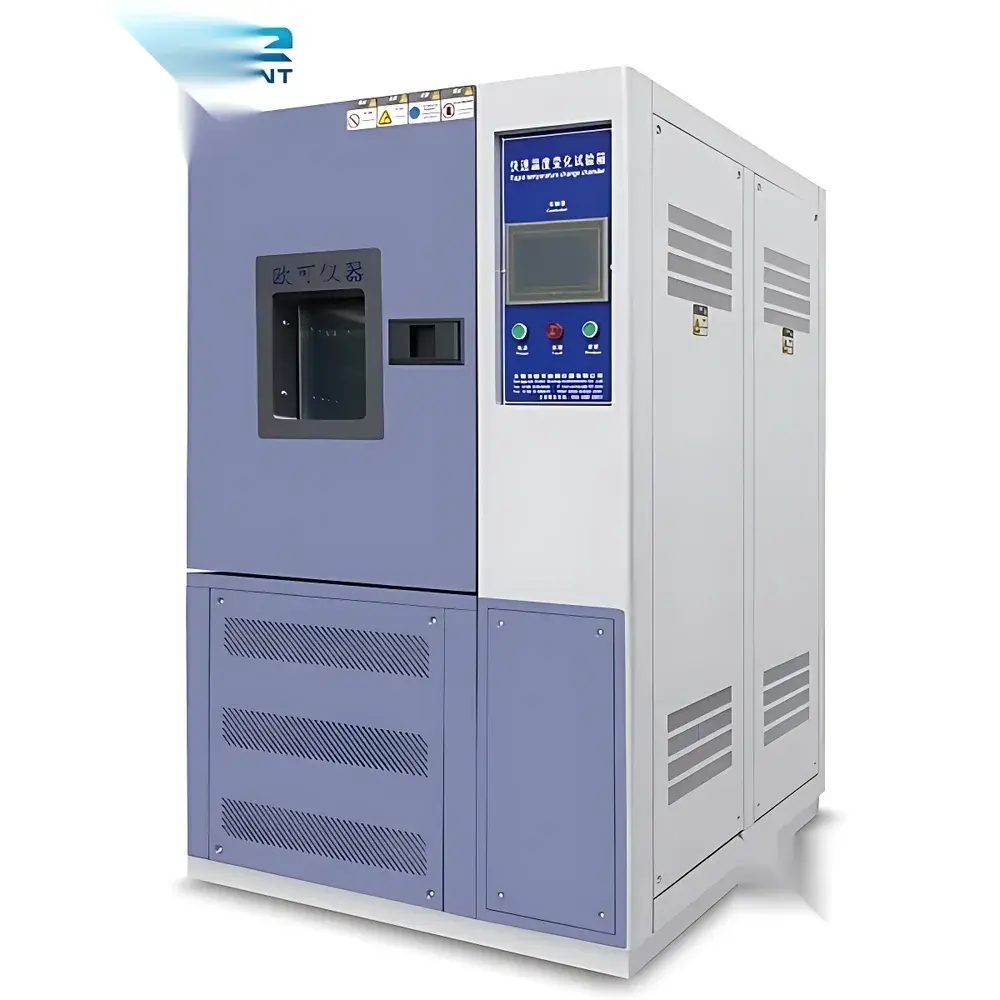
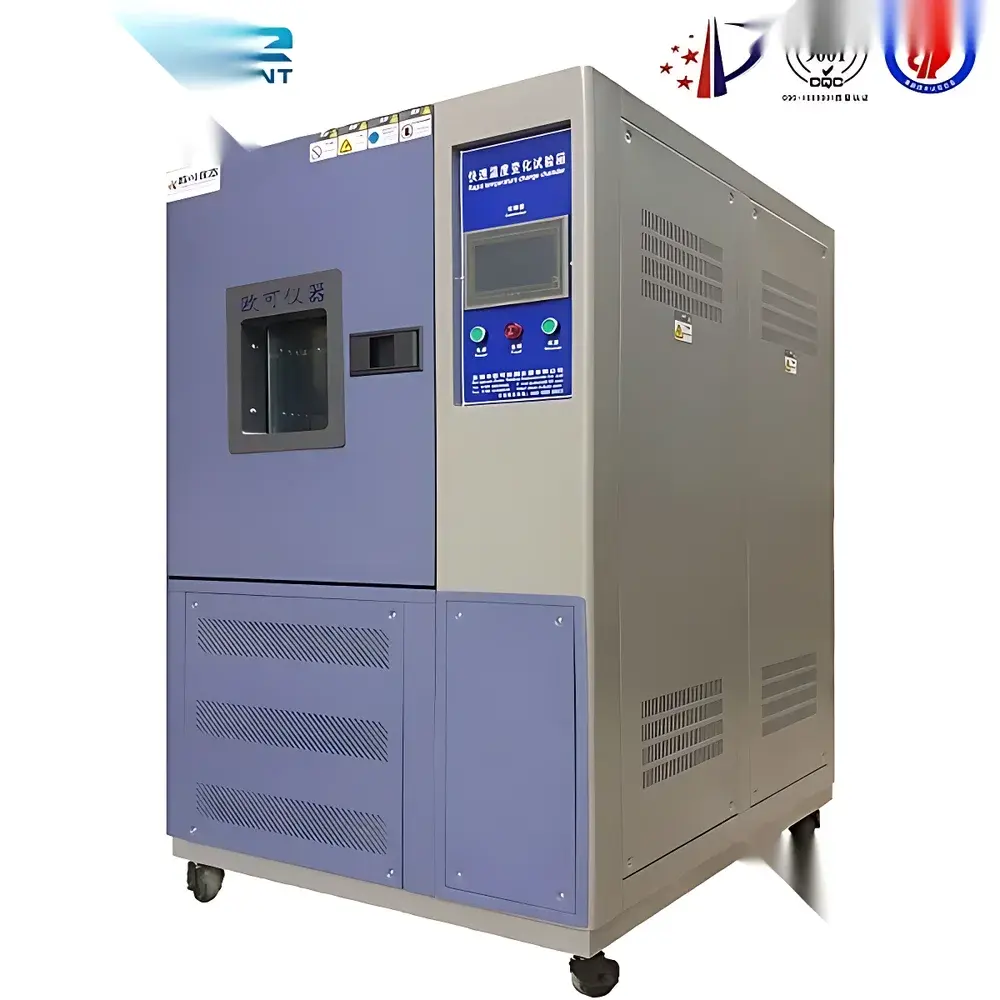
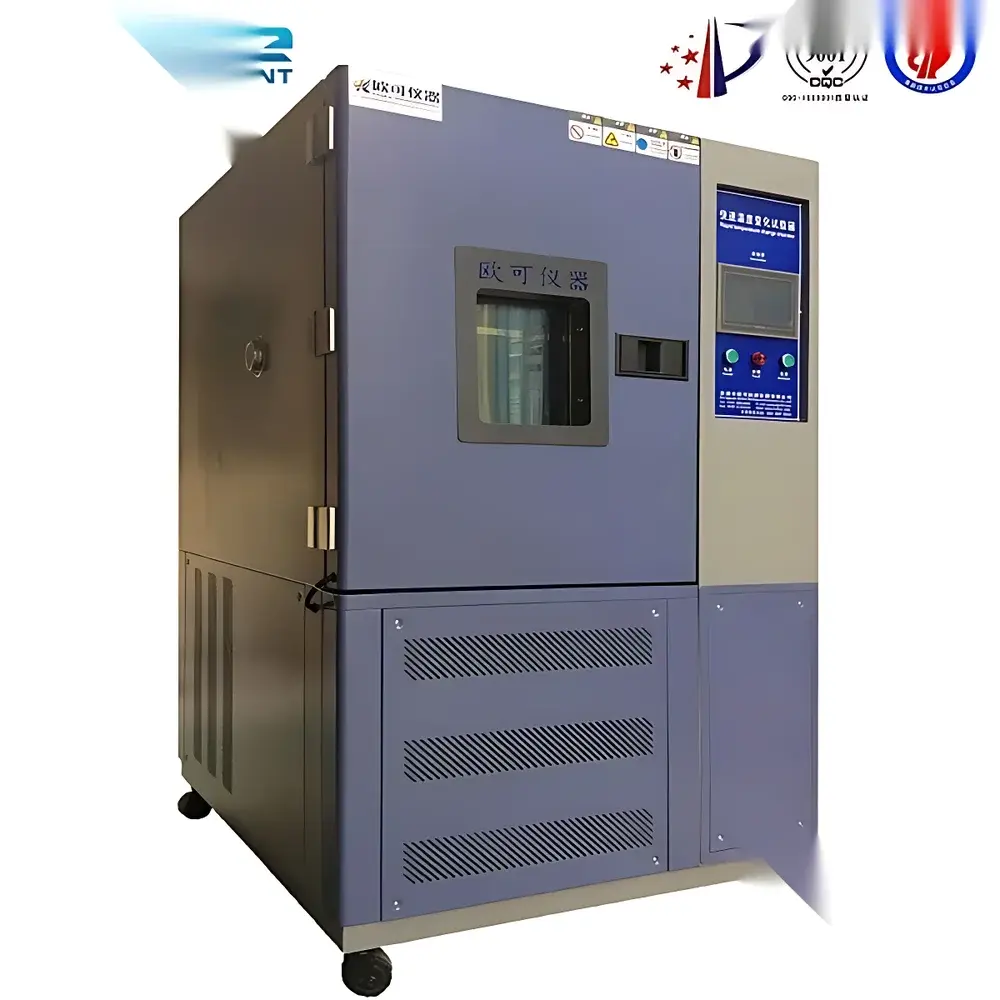
KS-TH-1500 Advanced Thermal Stress Chamber for Accelerated Environmental Testing
| Brand | Other Brands |
|---|---|
| Origin | Imported |
| Manufacturer Type | Authorized Distributor |
| Temperature Range Options | A: −20°C to 150°C |
| B | −40°C to 150°C |
| C | −60°C to 150°C |
| D | −70°C to 150°C |
| Humidity Range | 20–98% RH (customizable) |
| Temperature Uniformity | ±2°C |
| Temperature Fluctuation | ±0.5°C |
| Humidity Deviation | +2 / −3% RH |
| Heating Rate | 1.0–3.0°C/min (customizable) |
| Cooling Rate | 2.0°C/min (customizable) |
| Internal Dimensions | 100 × 100 × 150 cm (W × D × H) |
Overview
The KS-TH-1500 Advanced Thermal Stress Chamber is an engineered environmental simulation system designed for accelerated reliability testing of high-value components and assemblies under controlled thermal and hygrothermal stress conditions. Based on the principle of accelerated life testing (ALT), it subjects test specimens to precisely regulated temperature cycling, steady-state extremes, and combined temperature-humidity profiles—enabling rapid identification of latent design flaws, material degradation mechanisms, and interfacial failure modes. Its architecture complies with core requirements of MIL-STD-810H Method 502.7 (Temperature Shock), Method 501.7 (High Temperature), Method 502.7 (Low Temperature), and IEC 60068-2-1/2/14/30 for environmental stress screening (ESS) and qualification testing. The chamber supports both standalone thermal profiling and synchronized thermohygrometric stress protocols, making it suitable for pre-compliance validation in aerospace, photovoltaic module certification, automotive electronics, and industrial-grade power electronics development.
Key Features
- Precision-engineered dual-wall chamber structure: Inner liner fabricated from electropolished SUS304 stainless steel (mirror finish) for corrosion resistance and ease of contamination control; outer shell constructed from A3 cold-rolled steel with durable epoxy-polyester powder coating.
- Optimized thermal management: High-efficiency vapor-compression refrigeration system coupled with PID-controlled electric heating elements; ultra-fine glass fiber insulation (≥120 mm thickness) with non-metallic thermal-break bridging at structural junctions to minimize parasitic heat transfer.
- Intelligent humidity generation: External boiler-type steam humidifier with energy recovery design—reducing power consumption by up to 70% versus conventional resistive systems; independent routing of steam lines and electrical control boards to eliminate cross-contamination risk and enhance MTBF.
- User-centric accessibility: Front-access maintenance doors for electrical and fluid subsystems; integrated castor wheels with locking mechanism for stable repositioning; large observation window with embedded heated tempered glass and LED illumination for real-time visual monitoring without thermal disturbance.
- Robust sealing architecture: Dual-lip high-tensile silicone gasket system at door interface, rated for continuous operation across the full temperature range (−70°C to +150°C); optional feedthrough ports (25 mm / 50 mm / 100 mm diameter) with hermetic compression seals for external signal/power interfacing.
Sample Compatibility & Compliance
The KS-TH-1500 accommodates a broad spectrum of physical configurations—from single-component PCBs and semiconductor packages to full-size solar photovoltaic modules (up to 1.5 m² footprint) and avionics enclosures. Its internal volume (1.5 m³) and reinforced floor loading capacity (≥150 kg uniformly distributed) support static and dynamic mounting fixtures per ASTM E1782 and IPC-9701 standards. The system meets electromagnetic compatibility (EMC) Class B emission limits per CISPR 11 and operates within ambient noise constraints defined in ISO 7730 for laboratory environments. All control firmware and data logging functions are structured to support audit-ready documentation per GLP and GMP frameworks, including configurable event-triggered data capture, user access levels, and timestamped operational logs.
Software & Data Management
Equipped with an OYO 8226-series microprocessor-based controller featuring a 7-inch capacitive touchscreen interface, the chamber delivers intuitive profile programming, real-time parameter visualization, and alarm-driven notification via relay outputs or optional Ethernet/IP integration. The embedded PID algorithm incorporates auto-tuning and adaptive compensation for load-dependent thermal inertia, ensuring stable setpoint tracking even during rapid ramp transitions. Data export is supported in CSV format via USB port; optional RS-485 Modbus RTU or Ethernet TCP/IP communication enables seamless integration into centralized MES or LIMS platforms. Full compliance with FDA 21 CFR Part 11 is achievable through third-party validated software add-ons providing electronic signatures, audit trails, and role-based permission controls.
Applications
- Thermal cycling validation of space-grade ICs and hybrid microcircuits per ECSS-Q-ST-60-13C.
- Humidity freeze testing of automotive ADAS sensors in accordance with ISO 16750-4.
- Accelerated moisture sensitivity level (MSL) evaluation for plastic-encapsulated microcircuits (JEDEC J-STD-020).
- Reliability screening of PV module backsheet materials under damp heat (IEC 61215-2 MQT 10.1) and thermal cycling (MQT 11).
- Qualification of battery management systems (BMS) for EV traction packs under extended low-temperature soak and high-temperature hold conditions.
FAQ
What temperature ramp rates are achievable across the full operating range?
Standard configuration supports 2.0°C/min cooling and 1.0–3.0°C/min heating, with optional high-speed variants available for specialized applications requiring ≥5°C/min profiles.
Can the chamber be configured for HALT/HASS protocols?
Yes—the control system supports multi-segment ramp-hold sequences, programmable dwell times, and user-defined transition triggers, enabling implementation of industry-standard HALT step-stress profiles when paired with external vibration tables.
Is remote monitoring and control supported out of the box?
Basic remote status readout is enabled via Modbus RTU over RS-485; full remote operation requires optional Ethernet gateway module and compatible SCADA or LabVIEW integration.
How is calibration traceability maintained?
The system includes dual-channel NIST-traceable PT100 sensors (one for chamber air, one for sample zone) and supports periodic verification using external reference thermometers compliant with ISO/IEC 17025-accredited calibration laboratories.
What safety certifications does the unit carry?
CE marking per Machinery Directive 2006/42/EC and Low Voltage Directive 2014/35/EU; additional UL/cUL listing available upon request for North American deployment.



