
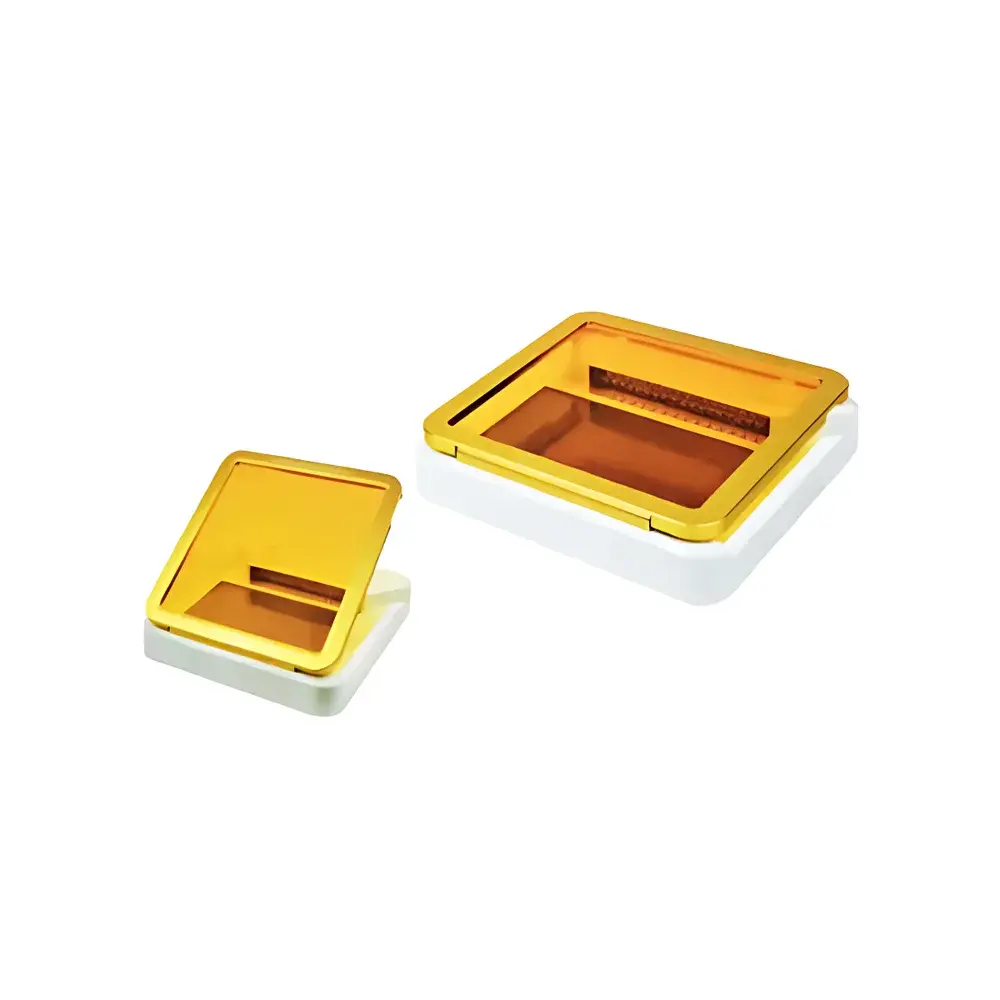
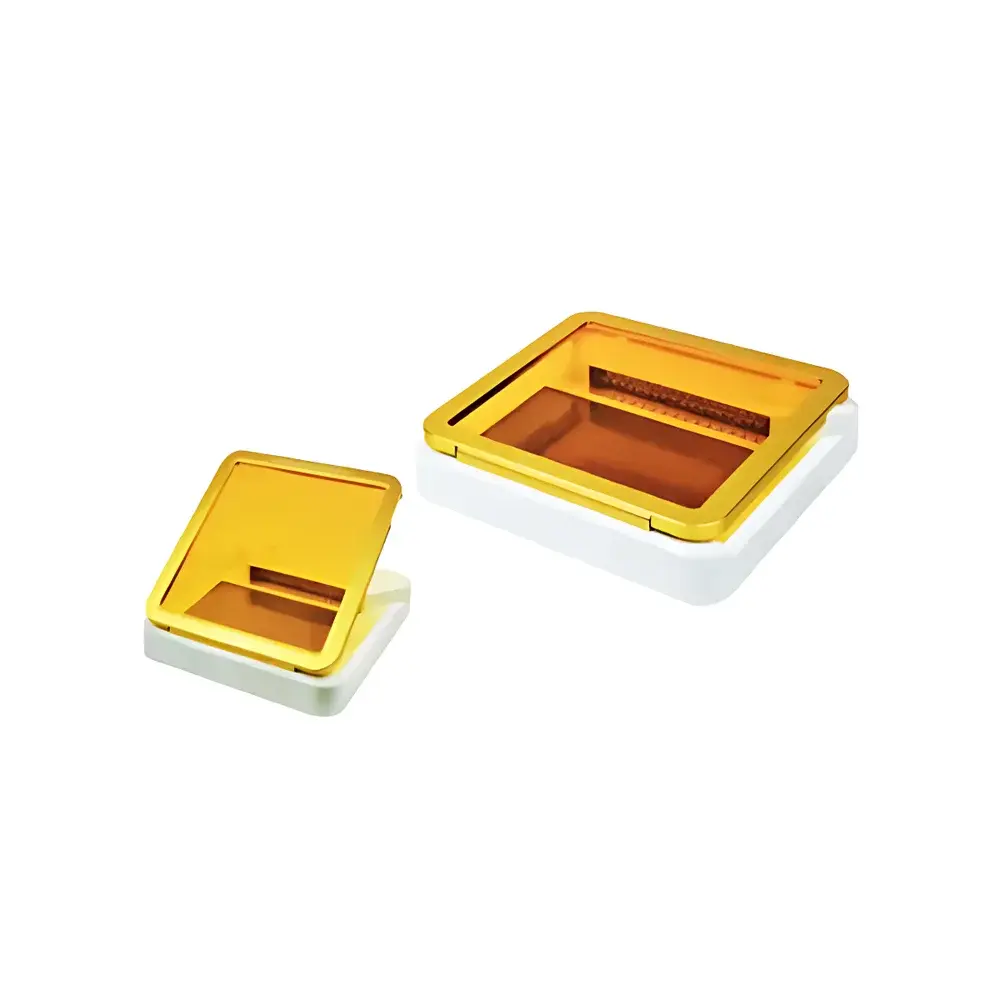
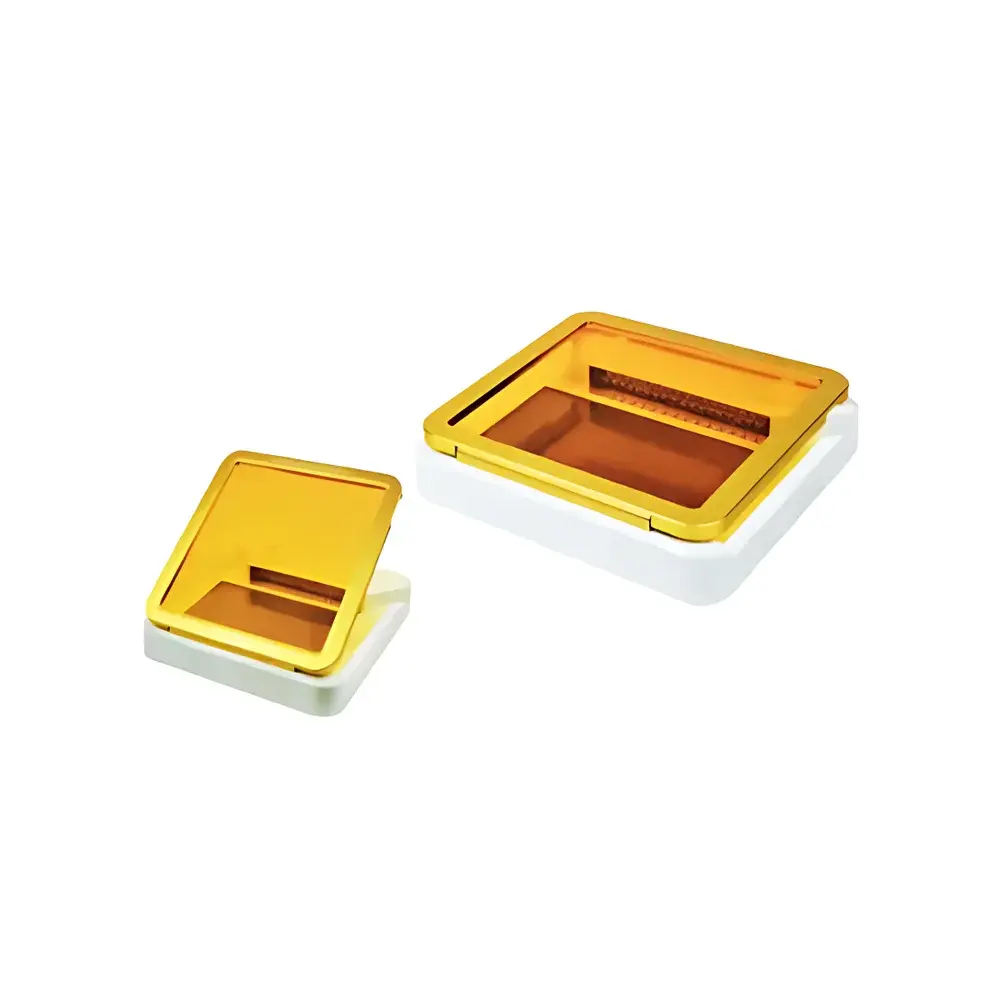
Kylin-Bell GL-1000 Ultra-Thin Blue Light Transilluminator and Gel Cutter
| Brand | Kylin-Bell |
|---|---|
| Origin | Jiangsu, China |
| Manufacturer Type | Authorized Distributor |
| Regional Category | Domestic (PRC) |
| Model | GL-1000 |
| Instrument Type | Benchtop |
| Wavelength Type | Single Wavelength |
| Blue Light Peak Emission | 470 nm |
| Excitation Area | 100 × 150 mm |
| Illumination Source | 108 high-output, long-life LEDs |
| Filter Cover | Full-size transparent acrylic filter lid |
| Power Input | DC 24 V via external adapter |
| Dimensions (W×D×H) | 210 × 210 × 30 mm |
| Net Weight | 1.3 kg |
| LED Lifetime | ≥10,000 hours |
| Compliance | CE-marked, RoHS-compliant, GLP-supportive design |
Overview
The Kylin-Bell GL-1000 Ultra-Thin Blue Light Transilluminator and Gel Cutter is an engineered solution for safe, high-fidelity visualization and precise excision of nucleic acid and protein bands in stained electrophoretic gels. Unlike conventional UV transilluminators that rely on 254 nm or 302 nm ultraviolet radiation—posing documented risks of DNA damage, operator phototoxicity, and rapid fluorophore bleaching—the GL-1000 employs narrow-band 470 nm blue light emission. This wavelength optimally excites modern nucleic acid dyes (e.g., SYBR Safe, GelRed, GelGreen, and BlueView) while minimizing photodegradation of DNA fragments and eliminating the requirement for UV-blocking eyewear or face shields during routine operation. Its solid-state LED architecture delivers uniform irradiance across the full 100 × 150 mm active area without hotspots or edge falloff, enabling consistent band detection—even for low-abundance targets—and reproducible gel documentation under ambient laboratory lighting.
Key Features
- 470 nm monochromatic blue LED array with 108 individually calibrated emitters ensures high photon flux density and spatial uniformity (±5% intensity variation across illumination field)
- Ultra-low-profile mechanical design (30 mm height) facilitates integration beneath imaging systems, inside biosafety cabinets, or on crowded benchtops without obstructing workflow
- Full-size transparent acrylic filter lid provides unobstructed top-down viewing, eliminates parallax distortion, and serves as a stable cutting surface with integrated gel alignment guides
- Adjustable-angle lid mechanism enables secure locking at any position between 0° and 90°, supporting both overhead observation and angled dissection—operable with one hand
- Zero-UV architecture eliminates ozone generation, lamp warm-up delays, and mercury disposal concerns associated with legacy UV transilluminators
- DC 24 V power architecture ensures electrical isolation from mains voltage, reducing ground-loop interference during concurrent use with sensitive CCD or CMOS gel imagers
- Passive thermal management and sealed LED housing yield maintenance-free operation with rated lifetime exceeding 10,000 hours at nominal drive current
Sample Compatibility & Compliance
The GL-1000 is validated for use with agarose and polyacrylamide gels (up to 3 mm thickness) stained with commercially available blue-light–compatible fluorescent dyes. It supports standard molecular weight markers, PCR products, restriction digests, and SDS-PAGE–resolved proteins when paired with appropriate protein-specific stains (e.g., Deep Purple, Krypton). No modification to existing electrophoresis protocols is required. From a regulatory standpoint, the device conforms to IEC 61000-6-3 (EMC emissions), IEC 61000-6-1 (immunity), and RoHS Directive 2011/65/EU. Its absence of UV-C or UV-B emission removes classification under IEC 62471 (Photobiological Safety of Lamps), thereby exempting it from mandatory hazard labeling and occupational exposure monitoring per OSHA 1910.133 and EU Directive 2006/25/EC. The unit’s design supports Good Laboratory Practice (GLP) documentation workflows through stable, repeatable illumination parameters traceable to factory calibration reports.
Software & Data Management
As a hardware-only transillumination platform, the GL-1000 does not include embedded firmware or proprietary software. It functions as a standards-compliant peripheral compatible with all major third-party gel documentation systems—including Bio-Rad ChemiDoc, Azure Biosystems cSeries, UVP VisionWorks, and Syngene GeneSys—via standard optical coupling. Illumination stability (±0.5% intensity drift over 60 min at 25°C ambient) ensures quantitative repeatability across sequential imaging sessions. When used in regulated environments (e.g., clinical diagnostics or QC labs), the device’s fixed-wavelength output and absence of user-adjustable parameters simplify IQ/OQ validation protocols and align with FDA 21 CFR Part 11 requirements for audit-trail–capable instrumentation where no electronic records are generated locally.
Applications
- Safe excision of DNA fragments for cloning, sequencing library preparation, and TA/Blunt-end ligation
- Quantitative band intensity assessment in expression studies using calibrated blue-light–optimized imaging pipelines
- Routine quality control of plasmid preps, PCR amplifications, and CRISPR editing efficiency assays
- Teaching laboratory implementation where student safety, operational simplicity, and long-term cost-of-ownership are prioritized
- Field-deployable molecular diagnostics setups requiring low-power, shock-resistant, and ozone-free illumination
- High-throughput screening workflows integrated with automated gel slicers and downstream liquid handlers
FAQ
Does the GL-1000 require UV protective eyewear?
No. The 470 nm blue light output falls outside the hazardous UV spectrum (100–400 nm) and poses no risk of corneal or lens photodamage; standard lab safety glasses are sufficient.
Can it be used with ethidium bromide-stained gels?
Ethidium bromide exhibits weak excitation at 470 nm; sensitivity is significantly reduced compared to SYBR-based dyes. For optimal performance, we recommend switching to blue-light–optimized alternatives.
Is the illumination area adjustable?
No—the 100 × 150 mm active area is fixed and optimized for standard mini-gel formats (e.g., 8 × 10 cm and 10 × 10 cm combs); no masking or aperture controls are provided.
What is the expected service life of the LED module?
Rated minimum operational lifetime is 10,000 hours at 25°C ambient temperature and nominal drive current, with gradual lumen depreciation <15% over that period.
Does the unit support dimming or intensity modulation?
No. The GL-1000 operates at fixed maximum output to ensure consistency across applications; intensity control is managed externally via camera exposure settings or neutral-density filters.




