
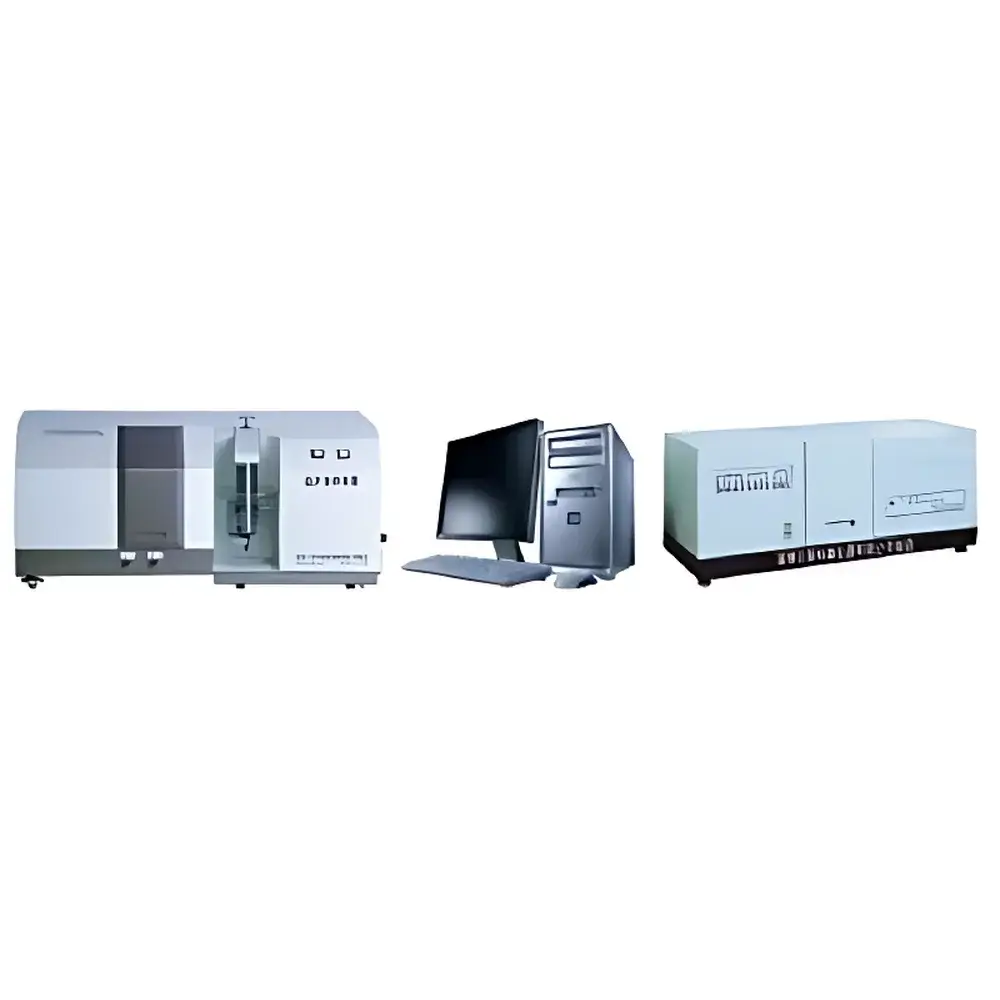
Kyocera JL-9100 Used Laser Particle Size Analyzer
| Brand | Kyocera |
|---|---|
| Origin | Beijing, China |
| Model | JL-9100 |
| Dispersion Method | Wet Dispersion |
| Measurement Range | 0.001–3500 µm |
| Repeatability | >1% |
| Measurement Time | 10 seconds |
| Optical Principle | Laser Diffraction |
| Number of Size Channels | 32 |
| Sample Concentration Range | 0.002–0.2 vol% |
| Data Output | D10, D50, D90, Mode Diameter, Number/Volume/Weight-Average Diameters, Specific Surface Area, Histograms, Cumulative Curves, Fitting Accuracy |
Overview
The Kyocera JL-9100 Used Laser Particle Size Analyzer is a benchtop instrument engineered for rapid, non-invasive particle size distribution (PSD) analysis of dispersed particulate systems using the principle of laser diffraction. Based on Mie scattering theory and validated against ISO 13320:2020 and ASTM E799-21 standards, it quantifies the angular intensity distribution of light scattered by a polydisperse suspension or aerosol when illuminated by a collimated He-Ne or semiconductor laser beam. The resulting diffraction pattern is captured by a multi-element photodetector array and transformed via inverse Abel transform and constrained regularization algorithms into a volume-based size distribution. Designed for routine quality control and R&D applications in industrial laboratories, the JL-9100 delivers stable optical alignment, temperature-compensated detection, and robust signal-to-noise performance—enabling reliable characterization of particles ranging from submicron colloids to coarse granules up to 3500 µm.
Key Features
- Wide dynamic measurement range: 0.001 µm to 3500 µm in a single measurement cycle, supporting both fine nanoparticle suspensions and coarse mineral aggregates
- Wet dispersion module with integrated ultrasonic deagglomeration (up to 50 W, adjustable duty cycle) and programmable peristaltic circulation pump (flow rate: 0.5–4.0 L/min)
- 32-channel logarithmic size classification optimized for high resolution in critical median regions (e.g., D10–D90)
- Measurement duration ≤10 seconds per sample, including auto-alignment, background subtraction, and real-time data acquisition
- Optical path sealed against ambient dust and humidity; laser source stability monitored continuously via internal reference photodiode
- Compliance-ready architecture: supports audit trail logging, user access levels, and electronic signature capability for GLP/GMP environments
Sample Compatibility & Compliance
The JL-9100 accommodates aqueous and organic suspensions across diverse industries—including ceramics, cement, pharmaceutical excipients, catalysts, battery electrode slurries, and agrochemical formulations. It accepts samples with refractive indices between 1.33 (water) and 2.8 (metal oxides), provided appropriate dispersant selection and sonication parameters are applied. All wet dispersion protocols adhere to ISO 14887:2022 for sample preparation reproducibility. Instrument validation includes traceability to NIST-traceable polystyrene latex (PSL) standards and GBW(E)120009C certified reference materials. Full compliance documentation—including IQ/OQ templates, calibration certificates, and uncertainty budgets—is available upon request for FDA 21 CFR Part 11–aligned deployments.
Software & Data Management
The analyzer operates under Kyocera’s proprietary ParticleSight™ v4.x software suite, compatible with Windows 10/11 (64-bit). The interface supports real-time scatter pattern visualization, automatic baseline correction, and iterative Mie model fitting with user-defined complex refractive index inputs. Data outputs include volumetric, number-weighted, and surface-area-weighted distributions; statistical descriptors (D10, D50, D90, span, relative width); specific surface area (via equivalent spherical model); and residual fitting error metrics. Export formats include CSV, XML, PDF reports, and direct integration with LIMS via ODBC. Software features full 21 CFR Part 11 functionality: role-based login, electronic signatures, immutable audit trails, and configurable retention policies for raw scatter data and processed results.
Applications
- Quality assurance of ceramic powders and sintering feedstocks in advanced manufacturing
- Monitoring attrition and agglomeration behavior of catalysts during fluidized-bed reactor operation
- Batch release testing of inhalable drug particles per USP <1724> and Ph. Eur. 2.9.31
- Characterization of cement clinker fineness and slag reactivity grading
- Emulsion droplet sizing in food-grade oil-in-water systems
- Grading of abrasive media used in precision lapping and polishing processes
- Environmental analysis of suspended sediment and dredged material fractions
FAQ
Is this unit factory-refurbished or independently serviced?
This JL-9100 unit has undergone third-party technical verification including optical alignment validation, detector linearity check, and dispersion system pressure integrity testing. A full service report and post-calibration certificate are included.
Does the system support dry powder dispersion?
No—the JL-9100 is configured exclusively for wet dispersion. Dry powder measurement requires optional add-on modules not present in this configuration.
What is the typical measurement uncertainty for D50 in routine operation?
Under controlled lab conditions (23 ± 1°C, ISO 8573-1 Class 4 air, trained operators), volumetric D50 repeatability is ≤1.2% RSD (n=6), consistent with ISO 13320 Annex B acceptance criteria.
Can raw scatter data be exported for independent reprocessing?
Yes—full unprocessed photodetector array intensity vectors (32-channel time-series) are saved in binary format and exportable via software API for external Mie inversion or machine learning preprocessing.
Is original manufacturer support still available for this model?
Kyocera discontinued direct support for the JL-9100 series in 2021; however, certified third-party service partners provide spare parts, firmware updates, and on-site maintenance contracts under extended warranty terms.
Related Products



