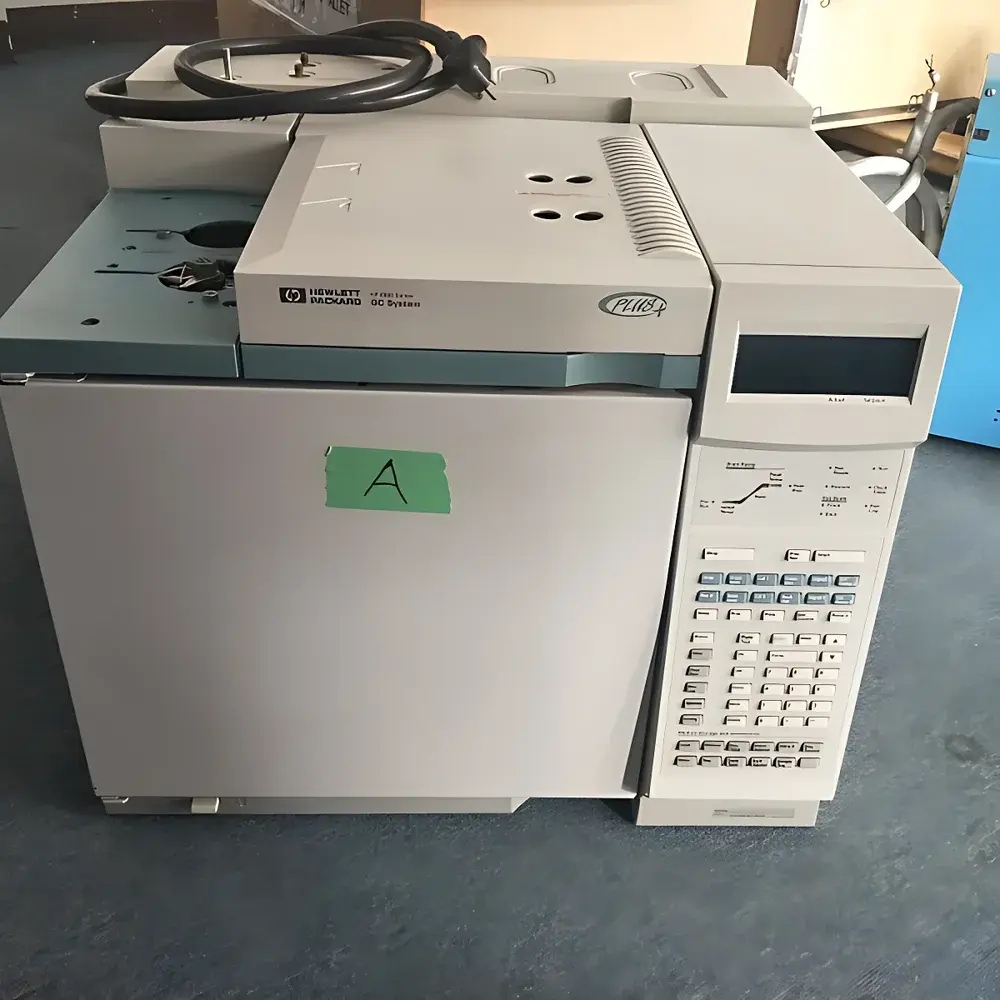
Kyocera WX-LC HPLC Maintenance and Repair Service
| Brand | Kyocera |
|---|---|
| Origin | Beijing, China |
| Manufacturer Type | Authorized Distributor |
| Product Category | Domestic Instrument |
| Model | WX-LC |
| Service Fee | USD 1,400–2,800 (excl. parts) |
| Field Experience | 10 years |
| Instrument Type | Analytical Instrument |
| Response Time | Within 12 hours |
| Service Scope | HPLC Maintenance & Repair |
| Service Location | Beijing, China |
Overview
Kyocera WX-LC HPLC Maintenance and Repair Service is a comprehensive third-party technical support solution engineered for laboratories operating high-performance liquid chromatography systems in regulated and research environments. Unlike OEM-dependent service models, this program delivers factory-aligned diagnostics, component-level troubleshooting, and performance validation—without the premium pricing or extended lead times associated with original equipment manufacturer (OEM) field service contracts. The service is grounded in fundamental chromatographic system physics: consistent mobile phase delivery (via reciprocating piston pumps), precise sample introduction (through automated injection mechanisms), stable optical detection (using deuterium/tungsten lamp-based UV-Vis optics), and thermally controlled separation environments (column ovens). All interventions follow ISO/IEC 17025-aligned procedural rigor, ensuring traceability, reproducibility, and compliance readiness for GLP, GMP, and ISO 13485 workflows.
Key Features
- Predictive and corrective maintenance protocols validated across 10+ years of field deployment on Agilent, Waters, Shimadzu, Thermo Fisher, and国产 HPLC platforms—including Kyocera WX-LC systems.
- 12-hour on-site or remote response SLA for critical instrument downtime events, with priority escalation for QC/QA labs under regulatory audit pressure.
- Full-system deep maintenance: pump head disassembly, check valve inspection, seal replacement, solvent inlet filter cleaning, and pressure/leak integrity verification per ASTM D6988-18 guidelines.
- Autosampler mechanical recalibration: syringe drive lubrication, needle seat reseating, vial gripper alignment, and motor thermal load assessment to eliminate carryover and injection volume drift.
- UV-Vis detector optical path refurbishment: grating and mirror surface decontamination using ISO Class 5 cleanroom-grade solvents; photodiode baseline noise profiling; flow cell window polishing and gasket replacement where degradation exceeds USP signal-to-noise thresholds.
- Column oven thermal stability verification via NIST-traceable PT100 probe mapping across full operating range (5–80°C), including ramp rate consistency and hold-time accuracy testing.
Sample Compatibility & Compliance
This service supports all common HPLC configurations used in pharmaceutical QC, environmental analysis, food safety testing, and academic research—including reversed-phase, HILIC, ion-exchange, and size-exclusion applications. All maintenance procedures comply with documented laboratory practices required under FDA 21 CFR Part 11 (for electronic records generated during service reporting), ISO 9001:2015 (service process control), and GLP Annex 7 (instrument qualification documentation). Calibration certificates, maintenance logs, and pre/post-service performance verification reports are provided in English, formatted for inclusion in lab quality management systems (QMS). No OEM proprietary software locks or firmware restrictions are bypassed; all interventions preserve instrument firmware integrity and audit trail continuity.
Software & Data Management
Service documentation is delivered via secure PDF report with embedded metadata (date, technician ID, instrument serial number, test parameters, pass/fail status). Where applicable, raw diagnostic data (e.g., pump pressure traces, detector absorbance baselines, autosampler timing logs) are exported in CSV format compatible with LabWare LIMS, Empower, or OpenLab CDS. Remote diagnostics utilize encrypted VNC sessions compliant with ISO/IEC 27001 information security standards. All reports include revision-controlled versioning and digital signature fields for QA sign-off. Electronic records adhere to ALCOA+ principles (Attributable, Legible, Contemporaneous, Original, Accurate, Complete, Consistent, Enduring, Available) as defined by WHO TRS 1019 and MHRA GxP Data Integrity Guidance.
Applications
The WX-LC maintenance program directly supports method robustness in regulated applications: residual solvent quantification (ICH Q3C), impurity profiling (ICH Q5), dissolution testing (USP ), peptide purity assessment (USP ), and pesticide residue screening (EPA Method 531.1). It extends instrument lifecycle beyond OEM-recommended service intervals while maintaining data integrity for regulatory submissions. Academic users benefit from reduced operational overhead without compromising chromatographic resolution or retention time stability—critical for method transfer between core facilities. Contract research organizations (CROs) leverage this service to standardize cross-site HPLC fleet reliability, minimizing inter-lab variability in PK/PD studies.
FAQ
Do you replace OEM-certified parts during repair?
Yes—we source genuine Kyocera and OEM-equivalent components verified to meet original dimensional tolerances, material specifications, and fluid compatibility requirements. All replacements are documented with part numbers and batch traceability.
Can maintenance be scheduled during non-production hours?
Absolutely. We offer after-hours and weekend service windows aligned with your lab’s operational calendar to avoid workflow disruption.
Is preventive maintenance covered under annual service agreements?
Yes. Multi-year PM contracts include quarterly system health checks, firmware update coordination, consumables inventory review, and performance trending reports.
Do you provide training for lab staff on basic troubleshooting?
Each service visit includes a 30-minute knowledge-transfer session covering error code interpretation, routine cleaning protocols, and early-failure symptom recognition.
How is data integrity preserved during firmware updates or calibration?
All changes are performed under change control documentation; pre- and post-update system suitability test (SST) results are archived with electronic signatures per 21 CFR Part 11 Subpart B requirements.