
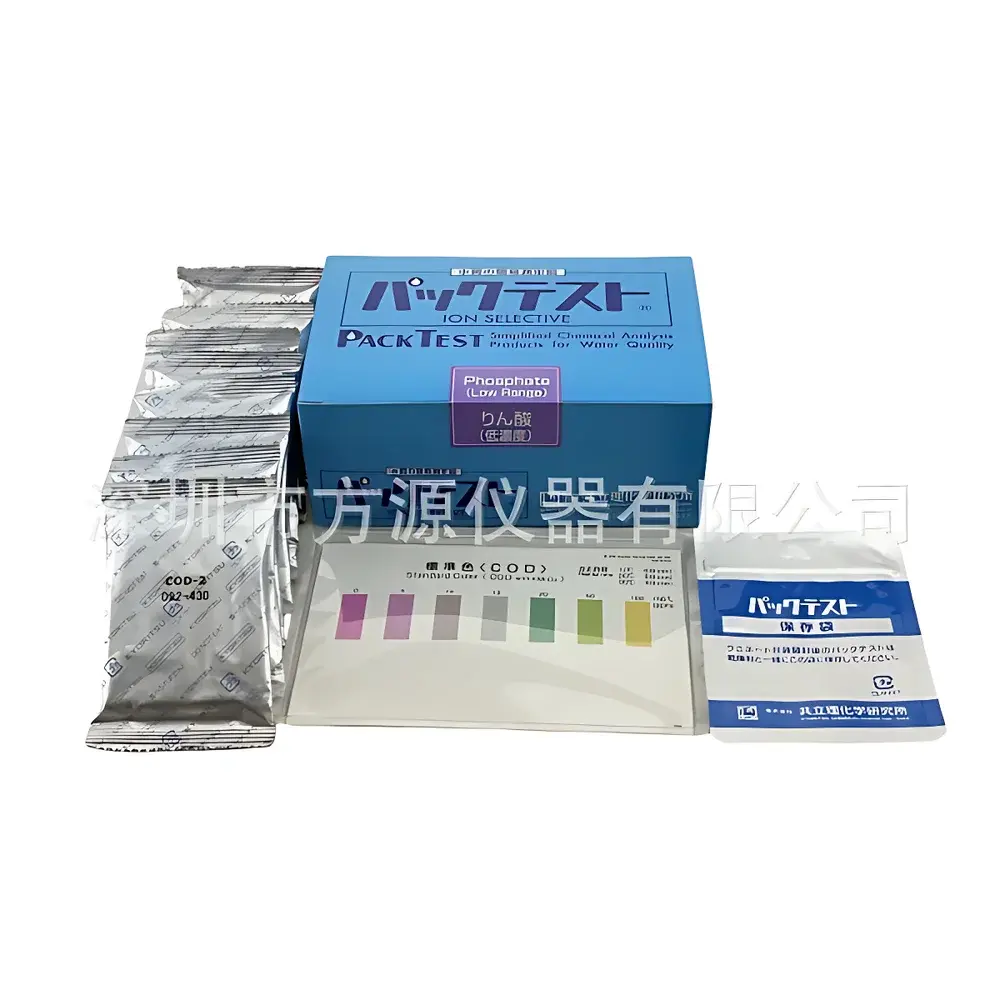
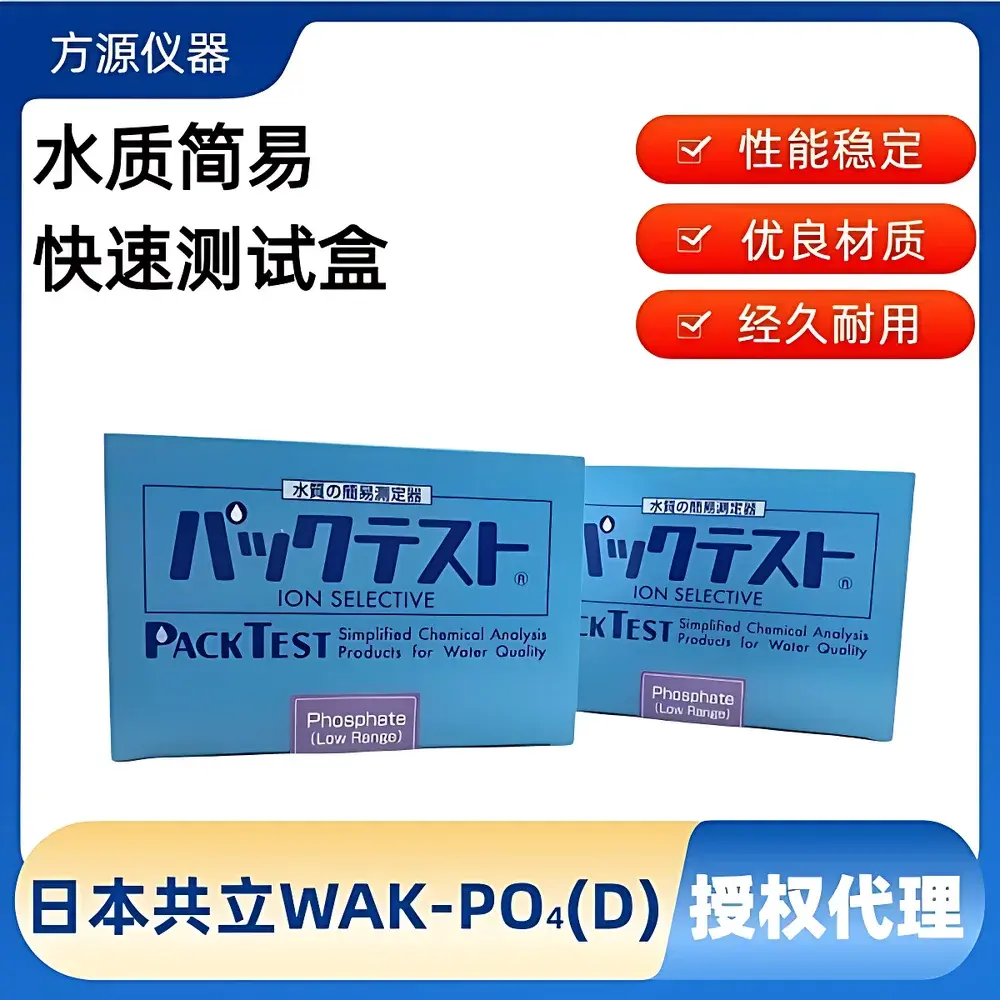
Kyoritsu WAK-PO4(D) Low-Concentration Phosphate Test Kit
| Brand | Kyoritsu |
|---|---|
| Origin | Japan |
| Product Type | Imported Reagent-Based Water Quality Test Kit |
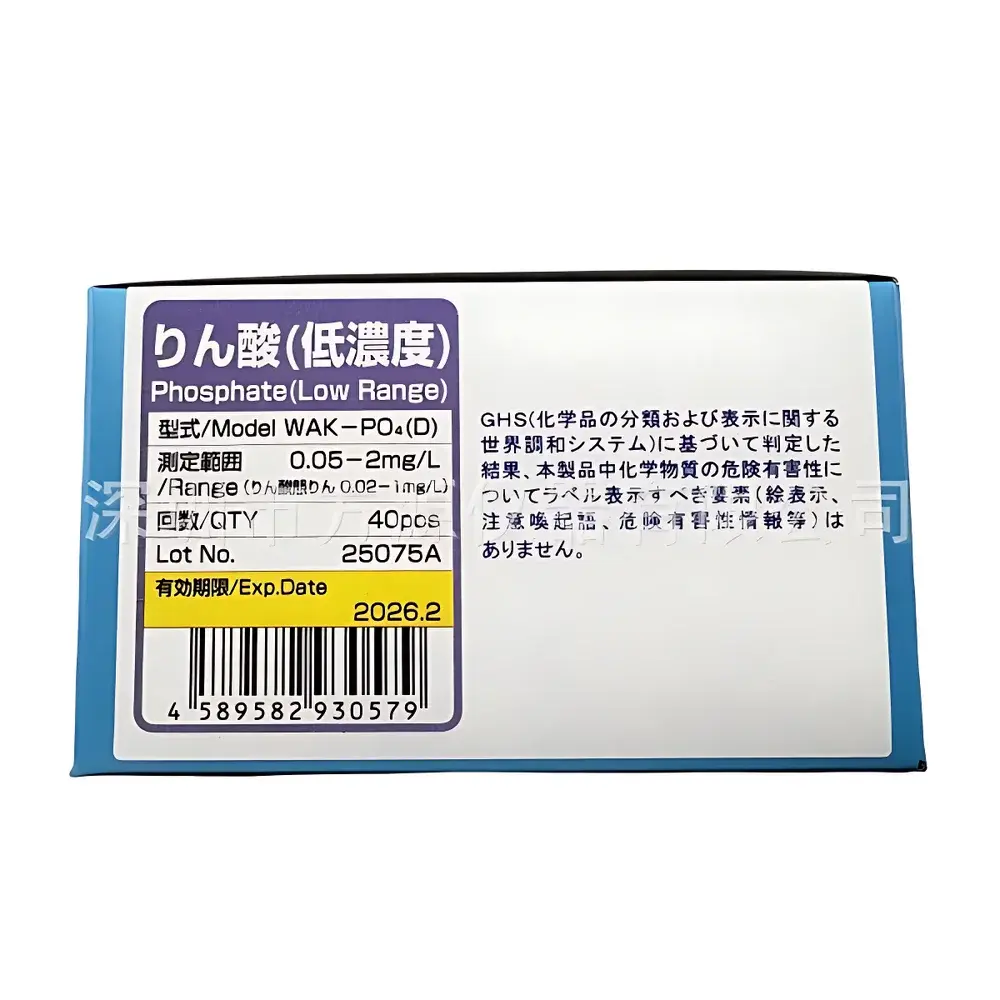
| Model | WAK-PO4(D) |
| Measurement Parameter | Orthophosphate (as PO₄³⁻) and Phosphate Phosphorus (as P) |
| Detection Range | 0.05–2 mg/L (as PO₄³⁻) |
| Reaction Time | 5 minutes |
| Test Capacity | 50 determinations per kit |
| Instrument Category | Laboratory-Use Colorimetric Test Kit |
| Measurement Principle | Ascorbic Acid-Molybdate Blue Method (Standard Spectrophotometric Color Development) |
Overview
The Kyoritsu WAK-PO4(D) Low-Concentration Phosphate Test Kit is a precision-engineered, reagent-based colorimetric method designed for the quantitative determination of orthophosphate (PO₄³⁻) and phosphate phosphorus (P) in freshwater, wastewater effluents, drinking water sources, and process water streams. It implements the standardized ascorbic acid–molybdate blue reaction—aligned with ISO 6878:2004 and ASTM D515-89 (Reapproved 2020)—where orthophosphate ions react with ammonium molybdate and potassium antimonyl tartrate under acidic conditions to form phosphomolybdic acid, subsequently reduced by ascorbic acid to yield an intense blue-colored complex. Absorbance is measured at 880 nm using a calibrated spectrophotometer or compatible photometer, enabling trace-level quantification with high reproducibility and minimal interferences from common anions (e.g., nitrate, sulfate) when sample pretreatment guidelines are followed.
Key Features
- Precision-calibrated pre-measured reagent vials eliminate manual weighing and pipetting errors, ensuring consistent stoichiometry across all 50 tests.
- Dual-range reporting: simultaneous quantification in both orthophosphate ion (PO₄³⁻) and phosphate-phosphorus (P) units, supporting regulatory compliance with diverse reporting requirements (e.g., EU Water Framework Directive vs. US EPA Method 365.4).
- Optimized low-concentration range (0.02–1 mg/L as P) meets stringent monitoring needs for oligotrophic surface waters, treated drinking water, and low-nutrient recirculating systems.
- No external heating or digestion required—reaction completes within 5 minutes at ambient temperature (20–25°C), minimizing operator workload and energy use.
- Stable lyophilized reagents with ≥24-month shelf life when stored desiccated at 2–8°C; lot-specific calibration curves provided on certificate of analysis.
- Compatible with Kyoritsu’s K-1000 series portable photometers and all laboratory-grade spectrophotometers equipped with 10-mm pathlength cuvettes.
Sample Compatibility & Compliance
The WAK-PO4(D) kit is validated for use with clarified, non-turbid aqueous samples having turbidity <5 NTU and suspended solids <10 mg/L. For raw wastewater or high-solids influents, centrifugation (3000 × g, 10 min) or membrane filtration (0.45 µm PVDF) is recommended prior to analysis. The method conforms to GLP documentation standards and supports audit-ready data integrity when paired with instruments compliant with FDA 21 CFR Part 11 (electronic records/signatures). Validation reports include spike recovery (92–105% at 0.1 and 0.5 mg/L P), repeatability (RSD ≤3.2%, n=6), and detection limit (0.012 mg/L as P, calculated per ISO 11843-2). It is routinely applied in laboratories accredited to ISO/IEC 17025:2017 for environmental testing.
Software & Data Management
While the WAK-PO4(D) kit itself is reagent-based and does not embed firmware or onboard software, its integration into digital workflows is supported via Kyoritsu’s optional K-Link PC software (v4.2+), which enables automated calibration curve generation, batch result export (CSV, PDF), and trend analysis across multiple test kits—including parallel use with WAK-TN-i-3 (total nitrogen) for TN:TP ratio assessment. All generated reports include metadata fields for analyst ID, sample ID, date/time stamp, instrument serial number, and reagent lot traceability—satisfying minimum ALTA (Analytical Laboratory Traceability Assurance) requirements. When used with spectrophotometers featuring built-in LIMS interfaces (e.g., Shimadzu UV-1900i, Hach DR3900), raw absorbance values and concentration outputs can be transmitted directly to enterprise-level laboratory information management systems.
Applications
- Regulatory compliance monitoring for phosphorus discharge limits under NPDES permits and EU Urban Wastewater Treatment Directive (91/271/EEC).
- Source water surveillance in reservoirs and rivers to assess eutrophication risk and support nutrient load modeling.
- Performance verification of tertiary phosphorus removal processes (e.g., iron salt coagulation, lanthanum-modified bentonite dosing).
- QA/QC of potable water distribution systems, particularly post-chloramination where orthophosphate serves as corrosion inhibitor.
- Research applications in limnology, hydroponics, and aquaculture, where sub-0.1 mg/L P resolution is critical for nutrient budgeting.
- Field-deployable verification of online phosphate analyzers (e.g., Hach TL23, Endress+Hauser Liquiline CM44P) during routine calibration checks.
FAQ
What is the difference between WAK-PO4(D) and WAK-PO4?
WAK-PO4(D) targets low-concentration orthophosphate (0.05–2 mg/L as PO₄³⁻), optimized for clean water matrices; WAK-PO4 covers a higher range (0.2–10 mg/L as PO₄³⁻) and is suited for secondary effluents or industrial process streams.
Can this kit measure total phosphorus?
No—WAK-PO4(D) measures only filterable orthophosphate. Total phosphorus requires acid persulfate digestion (e.g., using Kyoritsu WAK-TP-DIGEST kit) prior to colorimetric analysis.
Is interference from arsenate or silicate significant?
Arsenate (>0.5 mg/L) may cause positive bias; silicate >20 mg/L may suppress color development. Sample dilution or molybdate-free blank correction is advised per ISO 6878 Annex B.
How should expired reagents be disposed?
Discard as hazardous chemical waste per local regulations (UN1993, Class 9). Do not pour down drains; consult Safety Data Sheet Section 13 for disposal guidance.
Does the kit include calibration standards?
No—calibration standards must be prepared separately using certified reference material (e.g., NIST SRM 3182), though pre-printed calibration curves are supplied with each kit lot.
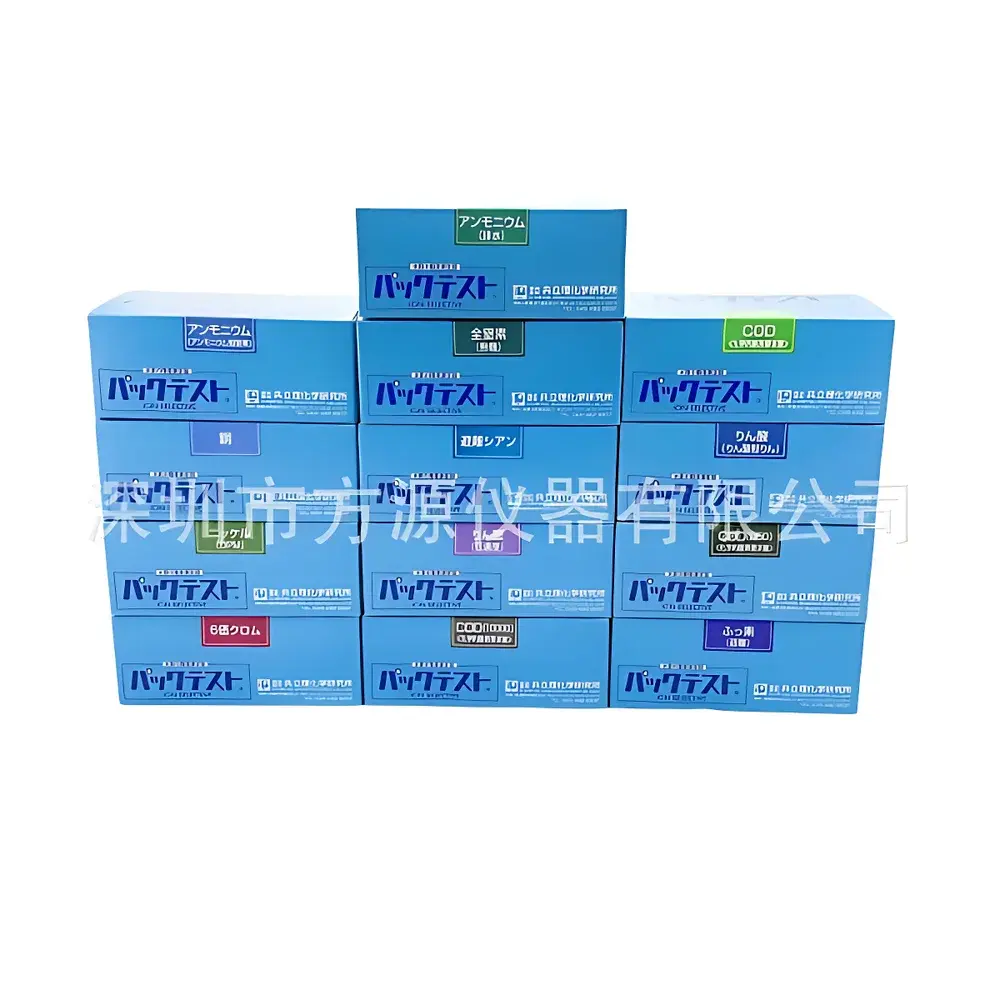
Related Products







