
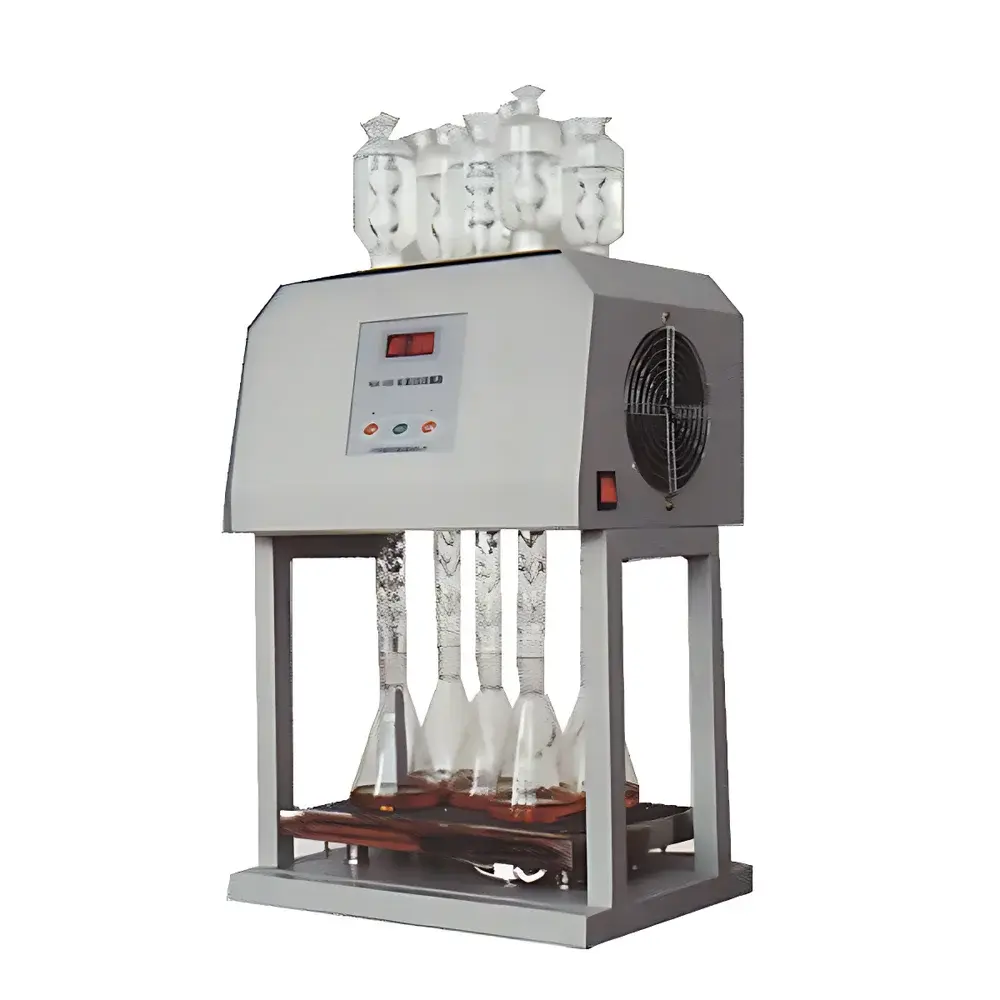
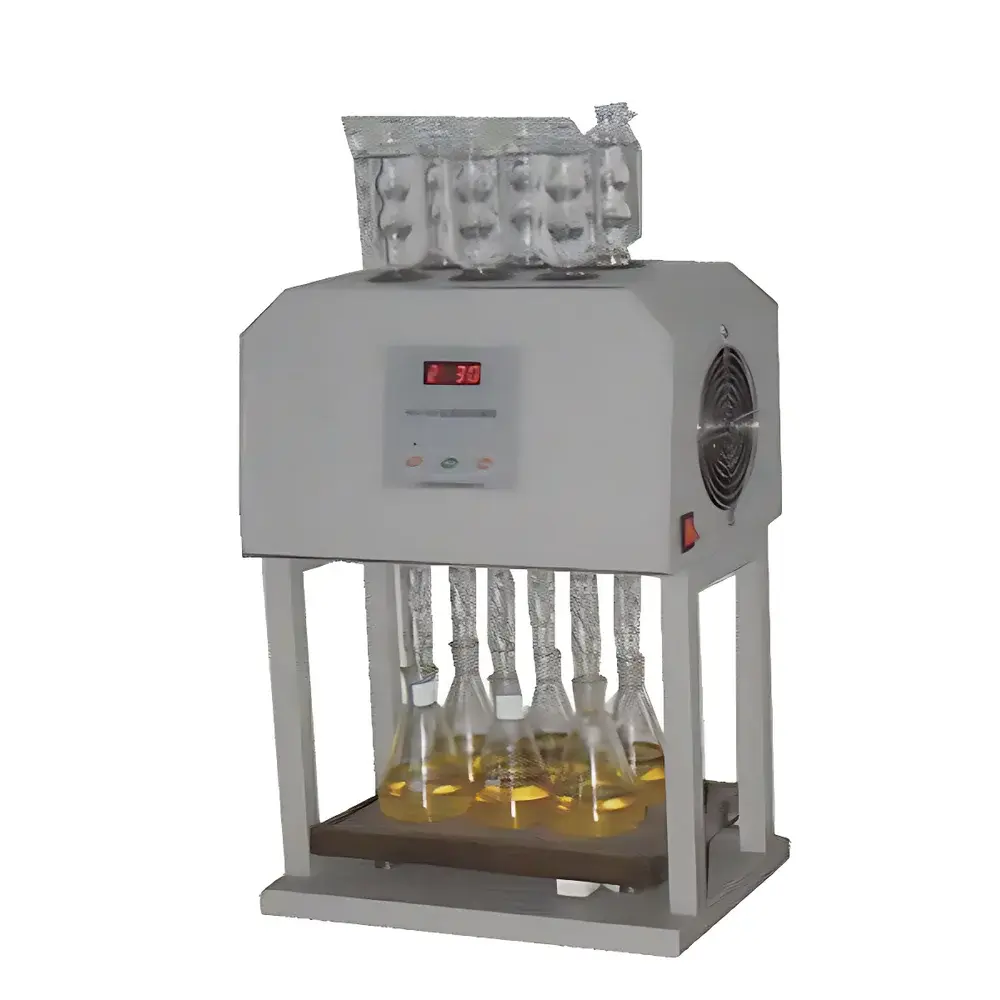
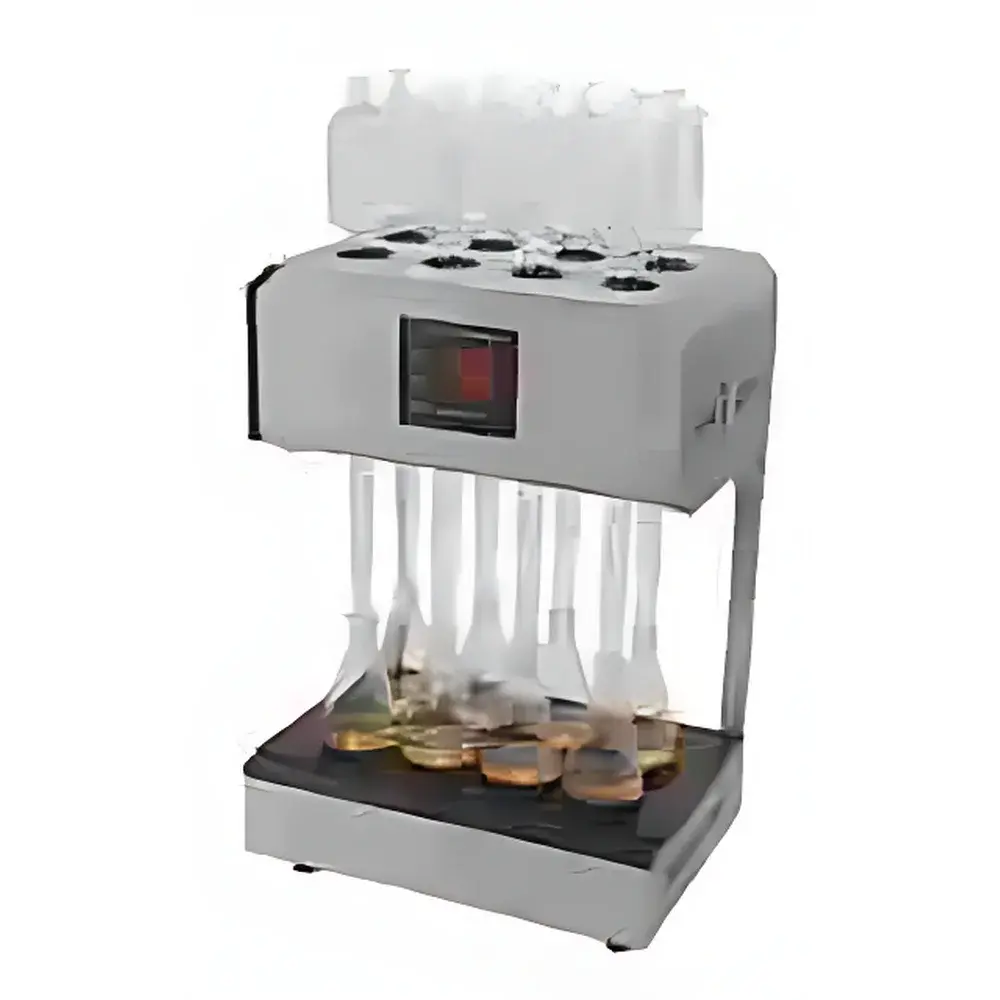
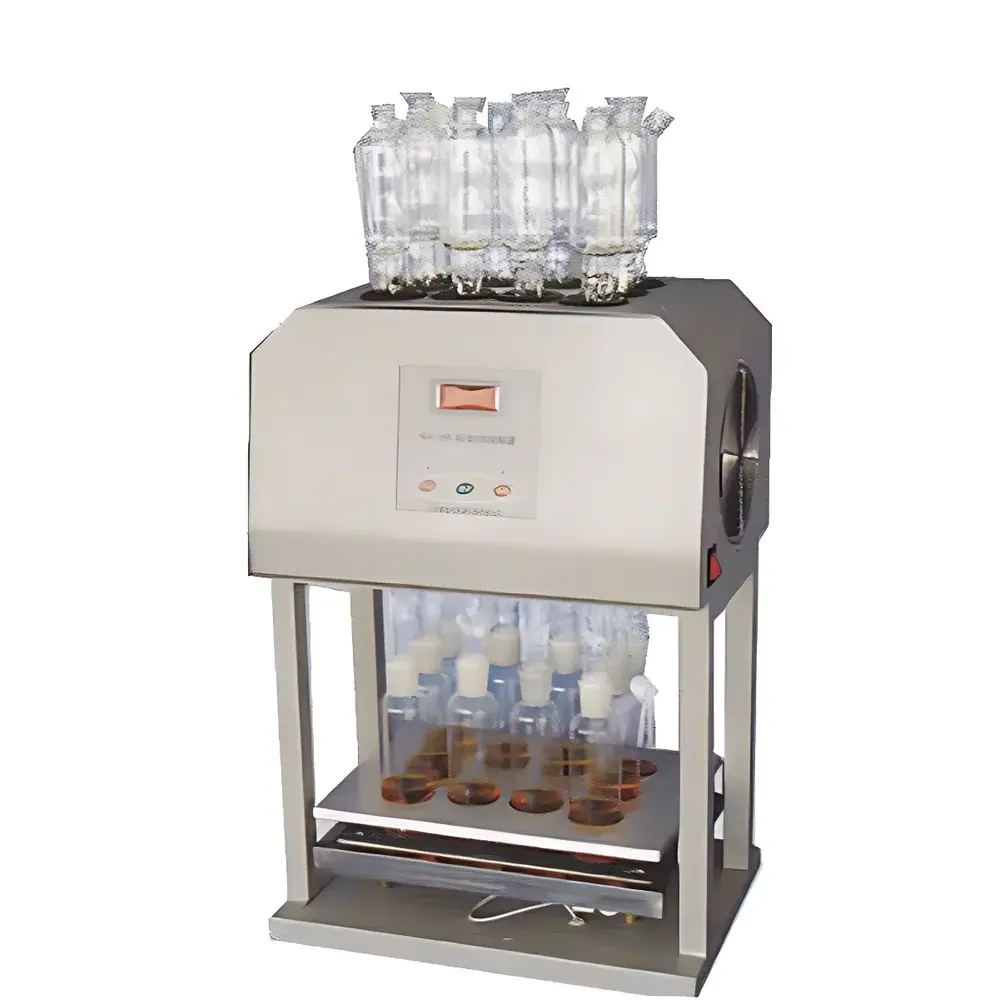
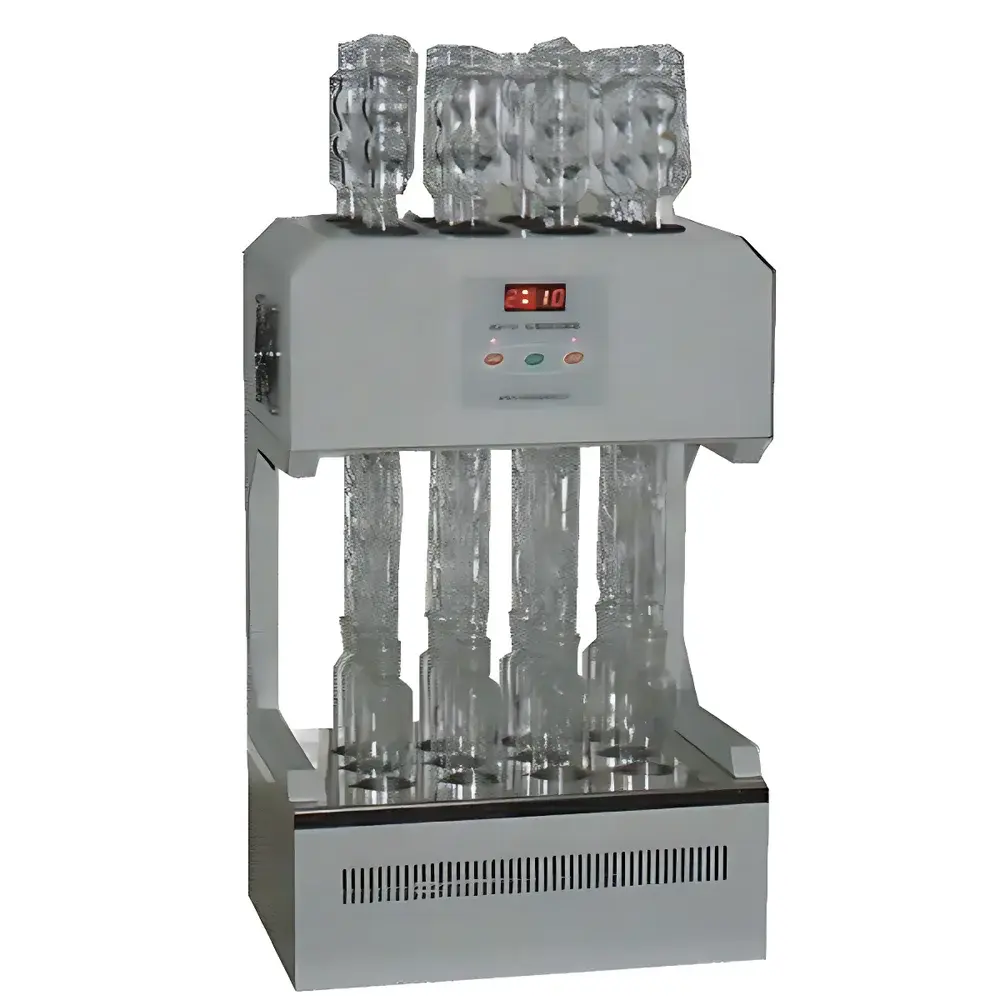
Kyoyuan KY-100COD Standard COD Digestion Reactor
| Brand | Kyoyuan |
|---|---|
| Model | KY-100COD |
| Heating Temperature Range | 25–170 °C (±1 °C) |
| Timer Setting Range | 0–180 min |
| Sample Capacity | 5 or 10 conical flasks simultaneously |
| Cooling Method | Forced-air cooling |
| Reflux Tube Type | Glass spiky condenser (replaces traditional spherical condenser) |
| Power Control | Microelectronic timing and temperature regulation |
| Origin | Jiangsu, China |
| Manufacturer Status | OEM/ODM manufacturer |
| Compliance | Designed for ASTM D1252, ISO 6060, and HJ 828–2017 methods |
Overview
The Kyoyuan KY-100COD Standard COD Digestion Reactor is a precision-controlled thermal digestion system engineered for reproducible, compliant chemical oxygen demand (COD) analysis in environmental laboratories. It operates on the principle of closed-reflux, high-temperature acid digestion—typically using potassium dichromate (K₂Cr₂O₇) under strongly acidic (H₂SO₄) and catalytic (Ag₂SO₄, HgSO₄) conditions—to oxidize organic matter in aqueous samples. The reactor maintains precise thermal profiles across multiple reaction vessels, ensuring uniform reaction kinetics and minimizing inter-sample variability. Unlike open-heating hot plates or non-regulated sand baths, the KY-100COD integrates microelectronic temperature and timer control to deliver traceable, repeatable heating cycles essential for regulatory compliance and method validation.
Key Features
- Microprocessor-based dual-parameter control: Independent adjustment of heating temperature (25–170 °C ±1 °C) and digestion duration (0–180 min), with real-time digital display and audible end-of-cycle alert.
- Parallel digestion architecture: Accommodates either 5 or 10 standard 250-mL Erlenmeyer flasks fitted with glass spiky reflux condensers—designed to maximize internal surface area and minimize vapor loss while eliminating the need for water-cooled spherical condensers.
- Forced-air cooling system: Replaces conventional tap-water condensation, reducing laboratory water consumption by >95% and eliminating risks associated with inconsistent coolant flow, temperature drift, or plumbing dependency.
- Thermally insulated heating block: Constructed from corrosion-resistant, high-thermal-mass aluminum alloy with embedded Ni-Cr resistance heaters, ensuring spatial temperature uniformity ≤±2 °C across all positions.
- Auto-shutdown safety protocol: Power deactivation upon timer completion or thermal overload detection (≥180 °C), compliant with IEC 61010-1 safety standards for laboratory electrical equipment.
Sample Compatibility & Compliance
The KY-100COD supports standard EPA-approved and China’s HJ 828–2017-compliant digestion protocols for wastewater, surface water, industrial effluents, and digested sludge filtrates. Its design accommodates common COD reagent systems—including dichromate-based (Method 410.4), mercury-free alternatives (e.g., AgNO₃–TiOSO₄ catalyst systems), and total nitrogen/total phosphorus co-digestion workflows when paired with appropriate reagent kits. The unit meets functional equivalence requirements for ASTM D1252 (Parts A & B), ISO 6060, and GB/T 11914–1989. All operational parameters—including setpoint temperature, dwell time, and start/stop timestamps—are manually recordable for GLP documentation; optional RS-232 interface enables integration into LIMS for audit-trail generation (though native 21 CFR Part 11 compliance requires external software validation).
Software & Data Management
The KY-100COD operates as a standalone hardware platform without embedded firmware-based data logging. All parameter settings are retained via non-volatile memory during power interruption. For laboratories requiring electronic records, the unit supports analog output (0–5 V) proportional to block temperature (calibration certificate available upon request) and TTL-level timer status signals. Integration with third-party data acquisition systems (e.g., LabVIEW, MATLAB, or ELN platforms) is achievable via external relay modules or programmable logic controllers (PLCs). Users are advised to implement procedural controls—including operator ID logging, calibration verification logs, and daily performance checks using certified COD reference standards (e.g., potassium hydrogen phthalate)—to satisfy ISO/IEC 17025 accreditation requirements.
Applications
- Routine COD determination in municipal wastewater treatment plants (WWTPs) for process control and discharge compliance monitoring.
- Environmental monitoring agencies conducting quarterly effluent audits per national discharge permits (e.g., China’s “Discharge Permit Management Regulation” or EU Urban Wastewater Treatment Directive Annex I).
- Research laboratories performing method development for low-COD natural waters or high-chloride industrial streams, where precise thermal ramping and hold stability directly impact chloride interference correction accuracy.
- Educational institutions teaching standard methods for water quality analysis—leveraging its visual reflux design and tactile temperature/timer interface to reinforce analytical chemistry fundamentals.
- Co-digestion support for simultaneous TN and TP analysis, provided reagent compatibility and digestion temperature profiles align with HJ 636–2012 and HJ 670–2013 protocols.
FAQ
What digestion methods is the KY-100COD validated for?
It is functionally aligned with closed-reflux dichromate oxidation per HJ 828–2017, ASTM D1252, and ISO 6060. Validation for alternative oxidants (e.g., permanganate) requires user-established protocol verification.
Can the unit be used for mercury-free COD digestion?
Yes—provided the selected catalyst system (e.g., TiOSO₄–AgNO₃) remains stable at 165 °C and does not corrode the glass reflux assembly or heating block surface.
Is calibration traceable to national standards?
Temperature calibration uses NIST-traceable RTD probes; users must perform annual verification per ISO/IEC 17025 Section 6.5.2 using accredited thermometry equipment.
Does the forced-air cooling meet safety requirements for volatile acid handling?
The condenser design ensures ≥95% reflux efficiency at 165 °C; however, fume hood use is mandatory during reagent addition and post-digestion venting per OSHA 29 CFR 1910.1200.
What maintenance intervals are recommended?
Visual inspection of heater contacts and condenser integrity every 200 runs; cleaning of aluminum block grooves with non-abrasive ethanol wipes after each batch; annual verification of thermal uniformity across all positions.







