
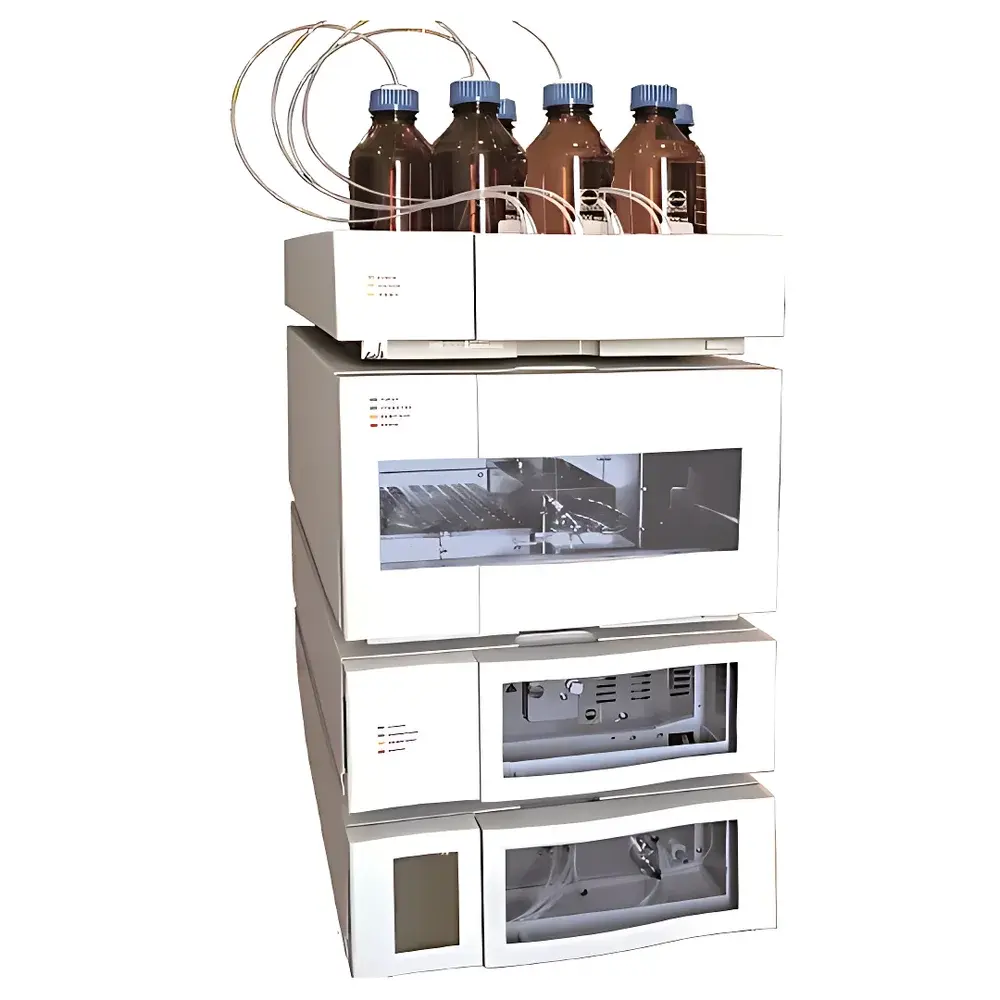
Lab-Amino Acid Derivatization System AA9800+
| Brand | LABA (Tianjin Lab-Automation) |
|---|---|
| Origin | USA |
| Manufacturer Type | Authorized Distributor |
| Origin Category | Imported Instrument |
| Instrument Type | Post-Column Derivatization System |
| Pump Flow Rate | 0.001–10.000 mL/min |
| Maximum Pump Pressure | 6000 psi |
| Autosampler Injection Volume | 0.1–500 µL |
| Autosampler Temperature Control | 4–40 °C |
| Post-Column Reactor Temperature Range | Ambient to 200 °C |
| Detection Wavelengths | 440 nm and 570 nm |
| Flow Cell Volume | 10 µL |
Overview
The LABA AA9800+ Amino Acid Derivatization System is a dedicated, high-precision post-column derivatization platform engineered for quantitative and qualitative analysis of both free and hydrolyzed amino acids in complex biological, food, pharmaceutical, and clinical matrices. It operates on the well-established ninhydrin-based post-column derivatization principle: after chromatographic separation on a specialized cation-exchange amino acid column, eluted amino acids react with ninhydrin reagent under precisely controlled thermal conditions (up to 200 °C) to form chromophores with characteristic absorbance maxima at 440 nm (proline, hydroxyproline) and 570 nm (all other α-amino acids). This dual-wavelength detection enables simultaneous quantification of primary and secondary amines with high specificity and reproducibility. The system integrates fully programmable fluidic control, thermally stabilized reaction zones, and inert flow paths—ensuring minimal carryover, baseline stability, and compliance with method validation requirements for regulated environments.
Key Features
- Full post-column derivatization architecture with integrated, temperature-programmable reactor (ambient to 200 °C) and dual-wavelength UV-Vis detection (440 nm / 570 nm)
- High-pressure, low-pulsation binary pump capable of precise flow delivery from 0.001 to 10.000 mL/min at up to 6000 psi
- Refrigerated autosampler with programmable temperature control (4–40 °C), injection volume range 0.1–500 µL, and needle wash capability
- Inert fluidic path constructed entirely of PEEK and titanium components; compatible with aggressive ninhydrin reagents and acidic/basic buffers
- Integrated vacuum degasser and automated in-line cleaning protocol to extend seal life and reduce maintenance downtime
- Dual-channel real-time pressure monitoring with overpressure cutoff and audible/visual fault alerts
- Programmable gradient elution support via multi-buffer switching valve and column oven with temperature ramping capability
- Onboard self-diagnostic routines covering pump calibration, detector lamp energy, valve actuation, and temperature sensor verification
Sample Compatibility & Compliance
The AA9800+ accommodates a broad spectrum of sample types—including tissue hydrolysates, cell culture supernatants, plasma/serum, milk proteins, plant extracts, and synthetic peptide digests—without requiring pre-column derivatization or extensive cleanup. Its robust design meets key regulatory expectations for analytical instrumentation used in GLP and GMP laboratories. All critical operational parameters (flow rate, temperature, injection volume, gradient timing, detector wavelength selection) are electronically logged with timestamped audit trails. Data integrity is reinforced through password-protected method access, electronic signatures, and exportable raw data files compliant with FDA 21 CFR Part 11 requirements when paired with validated LIMS or chromatography data systems. The system supports method transfer per ASTM D6580 and ISO 13877 for amino acid profiling in nutritional labeling and quality control applications.
Software & Data Management
Control and data acquisition are performed via LABA ChromoSoft™ v4.x, a Windows-based application designed specifically for amino acid analysis workflows. The software provides intuitive method building with buffer sequencing, temperature ramping profiles, and reaction coil dwell time optimization. Real-time chromatogram display includes peak integration with customizable baselines, retention time locking, and automatic identification using built-in amino acid retention time libraries. Quantitative results are generated using external standard or internal standard calibration curves, with optional linear/nonlinear regression models. All raw data (.raw), processed reports (.pdf/.xlsx), and instrument logs are stored in a structured folder hierarchy with configurable backup intervals. Export formats include ASCII, CSV, and AIA-compliant .cdf for interoperability with third-party chemometric tools and enterprise data warehouses.
Applications
- Quantitative amino acid profiling in infant formula, sports nutrition products, and dietary supplements per AOAC 994.12 and USP <2040>
- Stability-indicating assays for biopharmaceuticals, including monitoring deamidation and oxidation in monoclonal antibodies
- Clinical diagnostics of inborn errors of metabolism (e.g., phenylketonuria, maple syrup urine disease) using plasma or dried blood spot samples
- Quality control of fermentation broths in industrial enzyme and amino acid production (e.g., lysine, glutamic acid)
- Validation of protein hydrolysis efficiency in proteomics sample preparation workflows
- Research-grade characterization of novel peptides, cyclodextrin conjugates, and non-proteinogenic amino acid analogs
FAQ
What derivatization chemistry does the AA9800+ support?
The system is optimized for ninhydrin-based post-column derivatization but can be adapted for o-phthalaldehyde (OPA) or fluorenylmethyloxycarbonyl chloride (FMOC) protocols with minor hardware modifications and method revalidation.
Is column oven temperature control included?
Yes—the system includes a precision column oven with programmable temperature ramping from ambient to 90 °C, enabling pH- and temperature-dependent selectivity tuning across amino acid classes.
Can the AA9800+ be integrated into an existing HPLC platform?
It functions as a standalone derivatization module and is compatible with most commercial HPLC systems via standard 1/16″ stainless steel or PEEK tubing interfaces and TTL-triggered detection synchronization.
What maintenance intervals are recommended for routine operation?
Daily: needle wash and system purge; weekly: reactor coil inspection and buffer line flushing; quarterly: pump seal replacement and detector lamp energy check—full schedule provided in the GLP-compliant maintenance logbook.
Does the system support multi-user access with role-based permissions?
Yes—ChromoSoft™ supports up to 16 user accounts with configurable permissions for method editing, data review, audit trail access, and instrument configuration changes.
Related Products





