
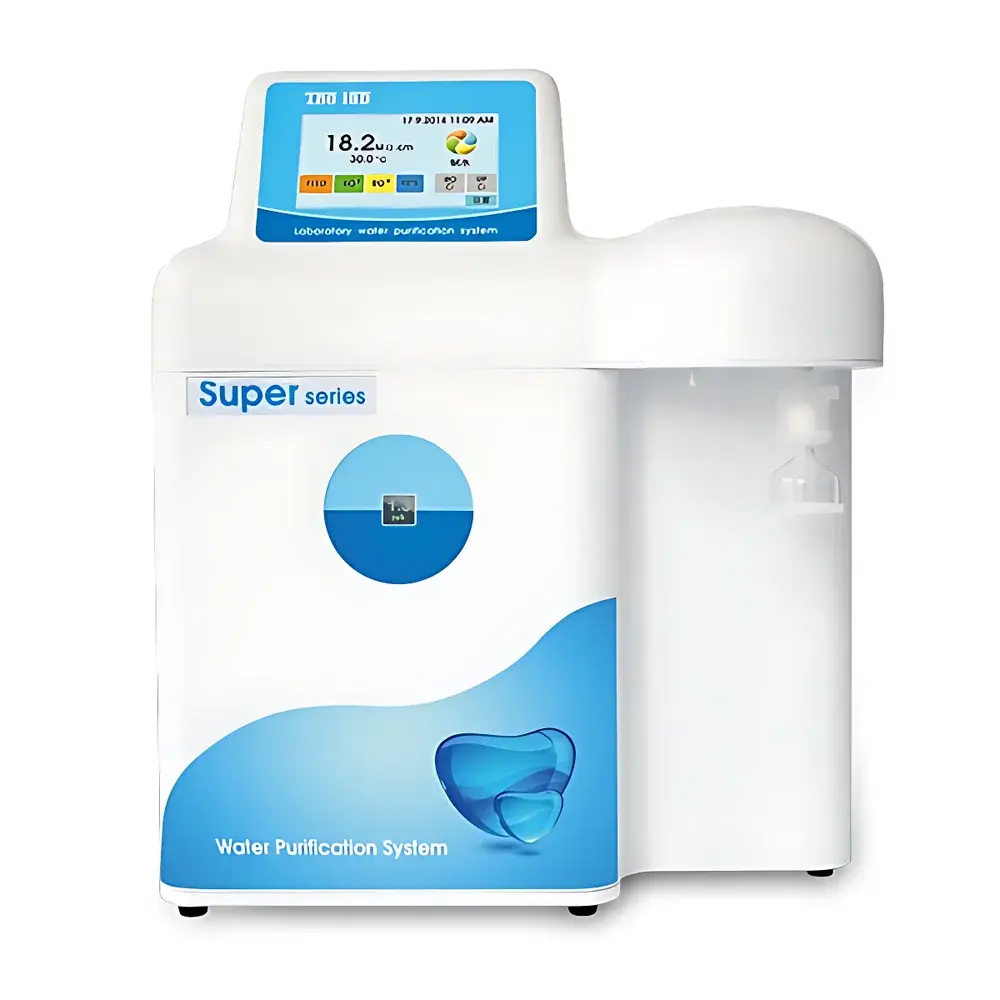
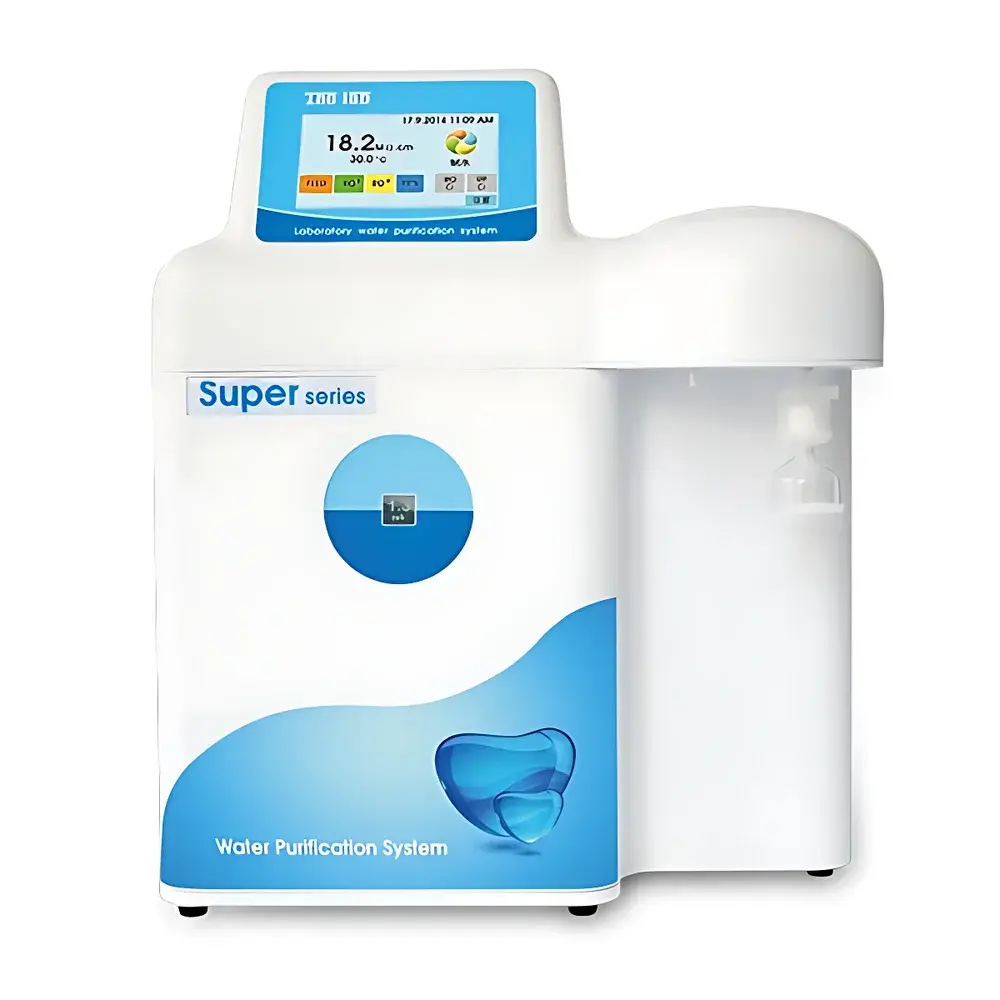
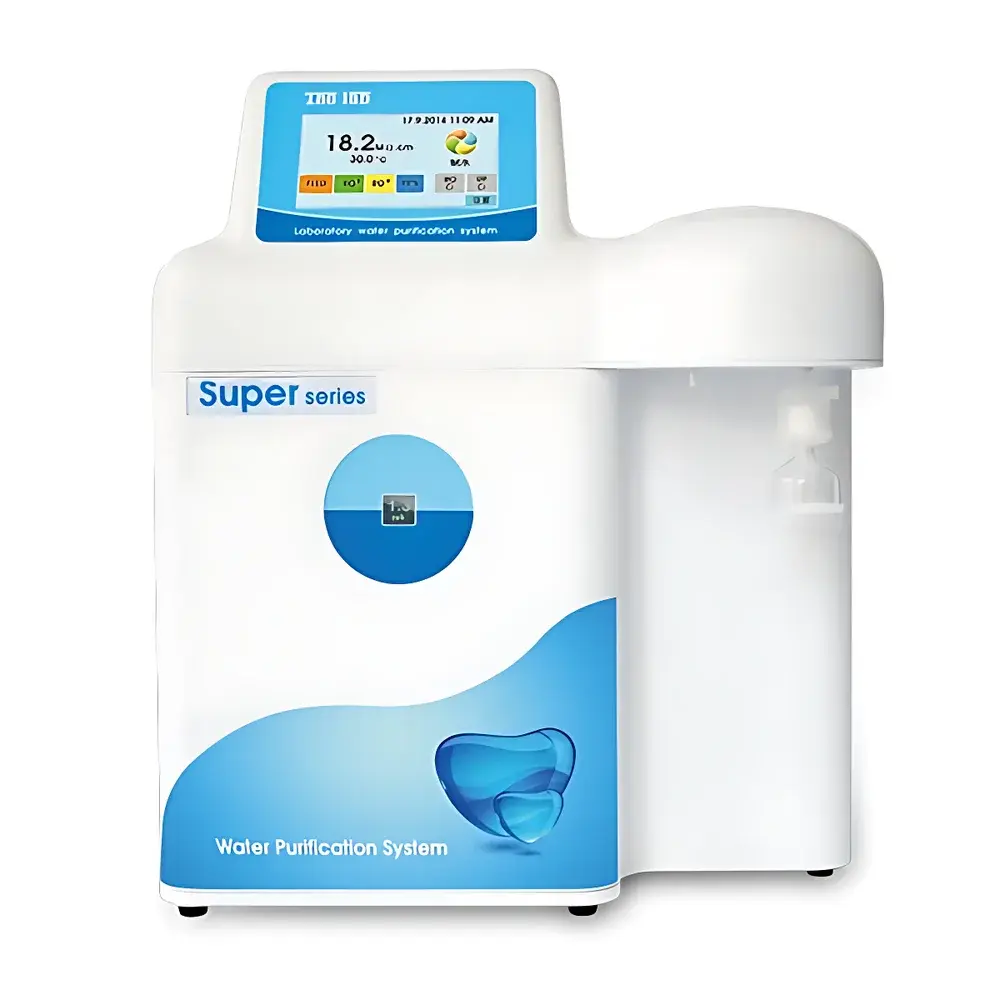
The Lab Dura Ultra-Pure Water System
| [Brand | The Lab |
|---|---|
| Origin | USA |
| Model | Dura |
| Purification Grade | Type I (ASTM D1193-20, USP <1231>, CLSI A2-A4, EP 2.2.44, CAP/ISO 15195) |
| Resistivity | 18.2 MΩ·cm at 25°C |
| Heavy Metals & Soluble Silica | <0.01 ppb |
| Total Organic Carbon (TOC) | <3 ppb |
| Microbial Count | <0.001 CFU/mL |
| Endotoxins | <0.001 EU/mL |
| Particles (>0.1 µm) | <1 particle/mL |
| DI Water Resistivity | >16 MΩ·cm |
| RO Water Conductivity | 1–5 µS/cm |
| Flow Rate | Up to 2.0 L/min |
| Dimensions | 545 × 470 × 610 mm |
| Weight | ~16 kg |
| Power | 220 V, 50 Hz, 240 W] |
Overview
The The Lab Dura Ultra-Pure Water System is an engineered solution for laboratories requiring consistent, high-fidelity Type I ultrapure water per ASTM D1193-20, USP , CLSI A2–A4, European Pharmacopoeia 2.2.44, and ISO 15195 standards. Designed for operation with municipal tap water or pre-treated feed water (e.g., RO or distilled), the Dura employs a validated dual-stage reverse osmosis (RO) architecture—featuring dual high-efficiency RO pumps, dual RO membranes, and an intermediate storage tank—to deliver stable, low-conductivity permeate (<5 µS/cm) even under variable inlet water quality. This robust pretreatment stage ensures long-term membrane integrity and reduces dependence on upstream water conditioning. The integrated post-RO purification train includes dual-wavelength UV oxidation (185 nm + 254 nm), ultrafiltration (MWCO 5000 Da), and a single-pass, high-capacity ion exchange cartridge using Dow resins—enabling final resistivity of 18.2 MΩ·cm, TOC <3 ppb, endotoxin <0.001 EU/mL, and bacterial retention <0.001 CFU/mL. All wetted components—including NSF-certified tubing, fittings, and PES-based terminal filters—are selected to minimize extractables and maintain trace-level purity across extended operational cycles.
Key Features
- Dual-stage RO system with independent booster pumps and intermediate buffer tank—optimized for energy efficiency, reduced wastewater ratio (~1:2), and stable permeate conductivity (1–5 µS/cm) regardless of source water variability
- Integrated triple-pump architecture: primary RO pump, secondary RO pump, and dedicated recirculation/disinfection pump supporting automated sanitization protocols
- Real-time, three-point conductivity monitoring: feed water, RO permeate, and final ultrapure water—with configurable alarm thresholds and GLP-compliant event logging
- Modular, tool-free consumables design: twist-lock prefilter cartridges, field-replaceable RO membranes, and unified ultra-purification columns with extended service life and reduced TOC leaching
- On-demand chemical disinfection: tablet-based sanitization cycle activated via touchscreen interface—validated to reduce biofilm formation without manual disassembly
- Recirculation mode with adjustable flow rate and periodic UV exposure—maintains microbial control during standby without compromising resistivity
- 106 × 57 mm LCD display with animated system status visualization, dynamic parameter graphs, and intuitive navigation for routine operation and troubleshooting
- Comprehensive consumables lifecycle management: programmable replacement timers for prefilter, RO membrane, UV lamp, and ultra-purification column—with remaining-life countdown and auto-alert functionality
- Full-system alarm suite: low feed pressure, tank overfill, conductivity excursion, consumables expiration, and UV lamp failure detection—all logged with timestamps and severity classification
- Automated RO membrane antiscalant flush: combines power-on priming and scheduled maintenance cycles to inhibit fouling and extend membrane service life beyond 24 months under typical lab conditions
Sample Compatibility & Compliance
The Dura system is certified compliant with global regulatory frameworks governing analytical and life science applications. Its output meets or exceeds Type I reagent water specifications defined in ASTM D1193-20 (Grade I), USP (Purified Water and Water for Injection), CLSI A2–A4 (Clinical Laboratory Standards), EP 2.2.44 (European Pharmacopoeia), and ISO 15195 (Reference Measurement Systems). The inclusion of a 5000 Da MWCO ultrafilter and dual-layer 0.45 + 0.1 µm PES terminal filtration enables endotoxin removal to <0.001 EU/mL—making it suitable for cell culture, IVF, monoclonal antibody production, and molecular biology workflows requiring pyrogen-free water. RNase/DNase levels are maintained below 1 pg/mL and 5 pg/mL respectively in FV/FD variants, supporting sensitive nucleic acid applications. All fluid-path materials—including 316L stainless steel UV chamber, NSF/ANSI 61-certified PE storage tanks, and medical-grade PES membranes—undergo rigorous leachables testing per USP and ISO 10993-12.
Software & Data Management
Data integrity and audit readiness are embedded into the Dura’s firmware architecture. RS232 and USB interfaces support automated export of time-stamped records including water temperature, three-point conductivity values, UV intensity, and consumables usage metrics. All logged events—including alarm triggers, manual interventions, and disinfection cycles—are timestamped and stored with immutable GLP-compliant audit trails. Password-protected dual-tier access (operator and administrator) prevents unauthorized configuration changes. System logs comply with FDA 21 CFR Part 11 requirements when paired with validated third-party LIMS integration. Optional data archiving supports CSV and PDF report generation, enabling seamless alignment with ISO/IEC 17025 accreditation documentation and internal QA review processes.
Applications
- HPLC, UHPLC, and LC-MS mobile phase preparation where low TOC and ionic contamination are critical for baseline stability and column longevity
- ICP-MS and ICP-OES sample dilution and standard preparation—minimizing spectral interferences from trace metals and silicates
- Cell culture media formulation and sterile filtration, leveraging ultra-low endotoxin and nuclease content
- Next-generation sequencing library prep, qPCR, and CRISPR-Cas9 editing workflows requiring RNase/DNase-free water
- Atomic absorption spectroscopy (AAS) and GF-AAS calibration standards preparation
- Pharmaceutical QC testing per USP and EP 2.2.44 water quality verification protocols
- Electrophysiology and patch-clamp experiments demanding ultra-low conductance and particulate-free delivery
FAQ
What feed water quality is required for optimal Dura performance?
The system is designed for municipal tap water (with typical hardness <200 ppm CaCO₃) or pre-treated RO water. Feed temperature must be maintained between 5–45°C and inlet pressure ≥1 atm. Integrated KDF/carbon prefiltration accommodates moderate chlorine and particulate loads.
Does the Dura support remote monitoring or network integration?
While the base model features local RS232/USB connectivity, Ethernet or Wi-Fi modules are available as factory-installed options—enabling integration with centralized lab infrastructure management platforms and cloud-based analytics dashboards.
How often must consumables be replaced under standard lab usage?
Prefilter cartridges require replacement every 6–12 months depending on feed water quality; RO membranes typically last 24–36 months; UV lamps are rated for 9,000 hours; ultra-purification columns achieve 1,000–1,500 L throughput before regeneration or replacement—subject to real-time monitoring and user-defined thresholds.
Is validation documentation provided for GMP/GLP environments?
Yes—the Dura ships with IQ/OQ protocol templates, material compliance certificates (NSF, RoHS, REACH), and a full set of factory test reports including conductivity, TOC, endotoxin, and microbiological challenge data—supporting user-executed PQ under ISO 13485 or FDA 21 CFR Part 11 frameworks.
Can the system be configured for continuous circulation without draw-off?
Yes—recirculation mode operates independently of dispensing activity, maintaining constant flow through the UF/UV/terminal filter loop at user-defined intervals (1–24 h) to suppress microbial regrowth while preserving resistivity and TOC performance.



