
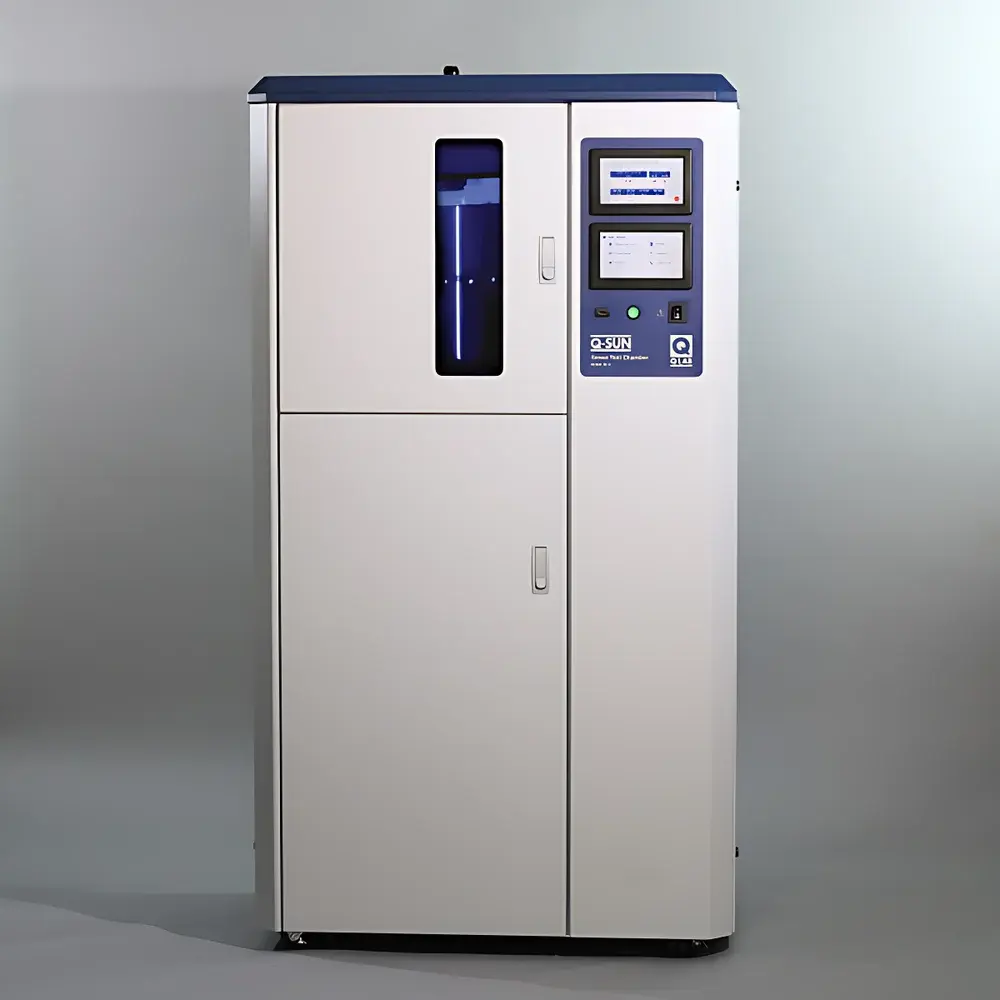
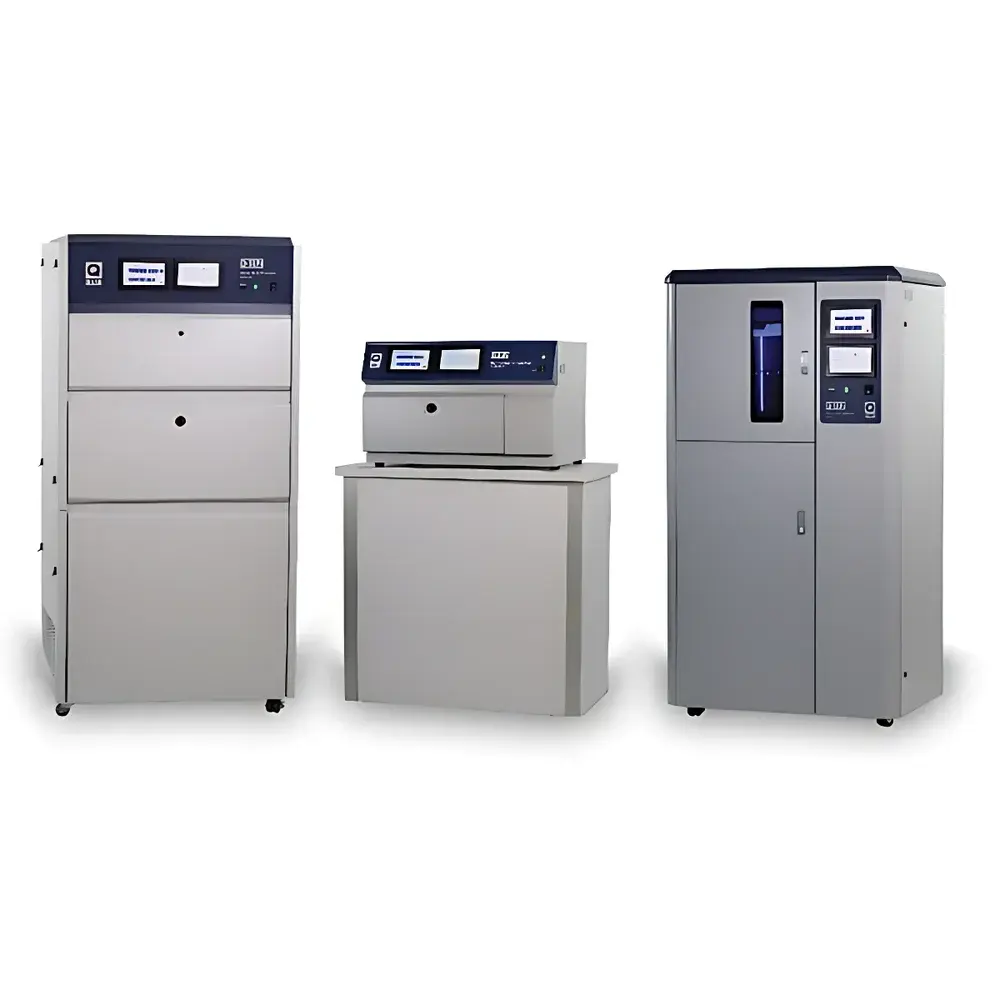
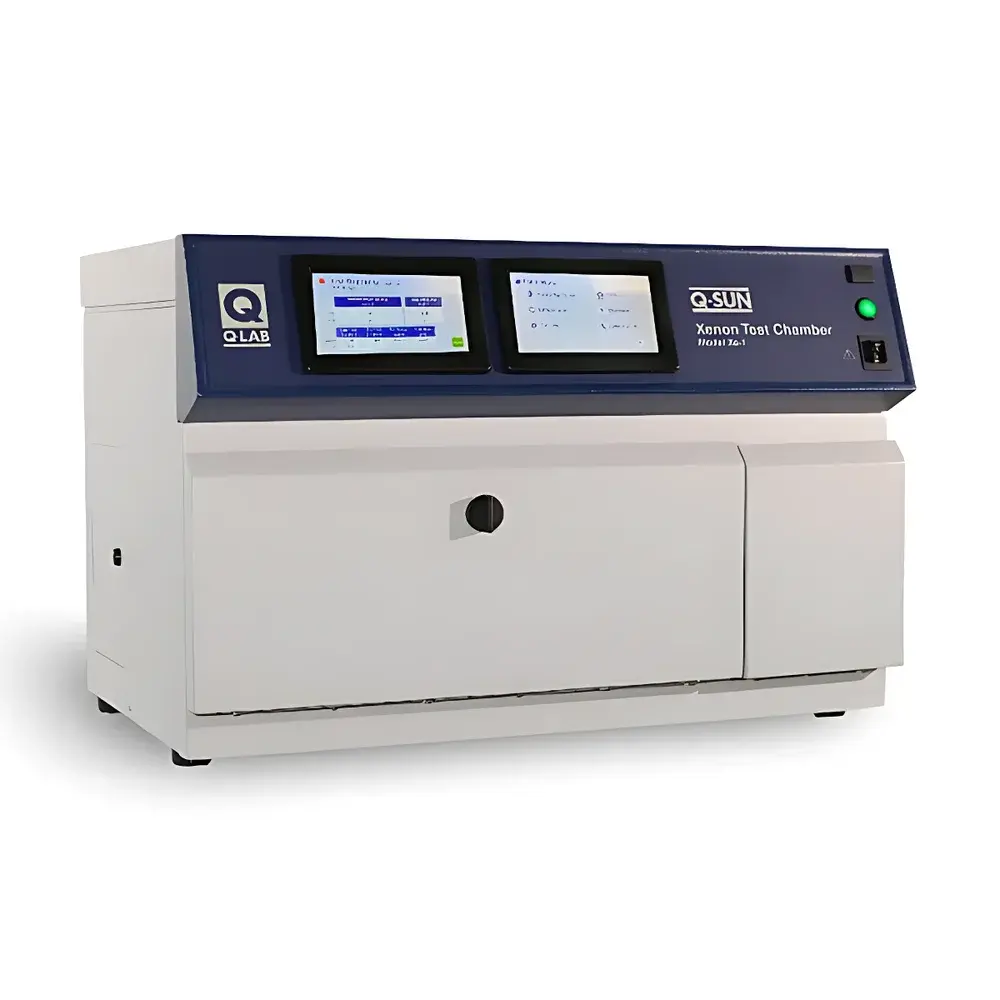
Q-LAB Q-SUN Xenon Arc Weathering Test Chamber
| Brand | Q-LAB |
|---|---|
| Origin | USA |
| Manufacturer Type | Original Equipment Manufacturer (OEM) |
| Product Origin | Imported |
| Model | Q-SUN Series (Xe-1, Xe-2, Xe-3) |
| Xenon Lamp Power | 1.8 kW |
| Irradiance Range | 0.25–1.3 W/m² (at 340 nm) |
| Light Cycle | Programmable |
| Humidity Range | 10–95% RH |
Overview
The Q-LAB Q-SUN Xenon Arc Weathering Test Chamber is an engineered solution for accelerated photodegradation, weathering, and light stability assessment of materials exposed to outdoor environmental stressors. Utilizing a stabilized 1.8 kW xenon arc lamp, the system reproduces the full solar spectrum (290–800 nm), closely matching natural sunlight irradiance when filtered through appropriate optical filters—such as borosilicate outer and quartz inner filters for daylight simulation or UV-enhanced configurations per ISO 4892-2 and ASTM G155. Unlike fluorescent or metal halide alternatives, xenon arc technology delivers spectrally accurate UV, visible, and near-infrared energy, enabling correlation with real-world field exposure across polymers, coatings, textiles, automotive interiors, and packaging materials. The Q-SUN platform operates on a fundamental principle of controlled radiant exposure: precise spectral filtering, calibrated irradiance monitoring via integrated broadband or narrowband (340 nm) sensors, and synchronized environmental conditioning—including temperature, humidity, and optional water spray—to simulate diurnal cycles of solar heating, condensation, and precipitation.
Key Features
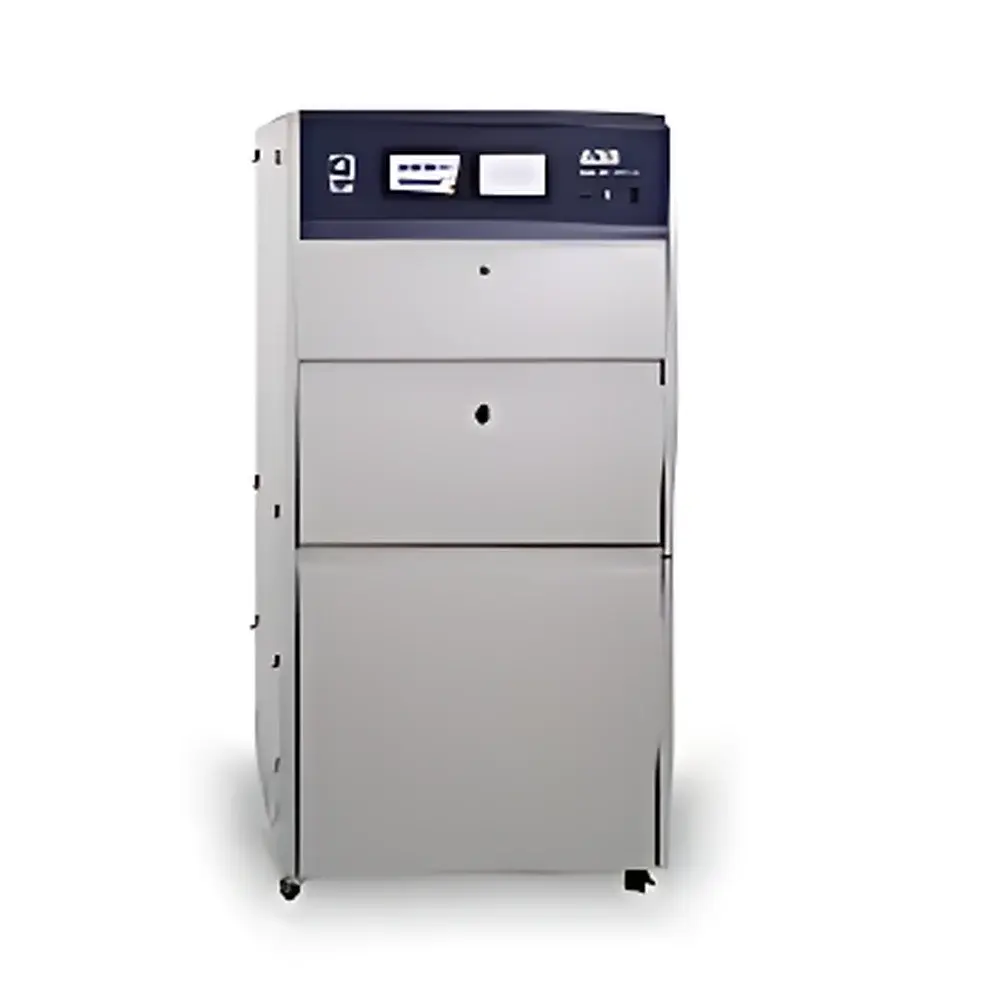
- Three modular configurations: Xe-1 (benchtop flat-bed), Xe-2 (rotating drum), and Xe-3 (large-format sliding tray)—each optimized for distinct sample geometries and throughput requirements.
- Long-life xenon lamps with stable output over extended operational periods; filter assemblies designed for maintenance-free performance under standard operating conditions per Q-LAB’s service guidelines.
- Real-time irradiance control using closed-loop feedback with traceable NIST-calibrated sensors; programmable irradiance setpoints from 0.25 to 1.3 W/m² @ 340 nm.
- Independent regulation of chamber air temperature (typically 10–90°C), black panel or black standard temperature (BPT/BST), and relative humidity (10–95% RH) with high repeatability.
- Optional environmental modules: front spray, back spray, dual-spray (for acid rain or detergent simulation), refrigerated cooling unit, and humidity pre-conditioning.
- Intuitive touchscreen interface with preloaded test standards (e.g., ISO 4892-2, ASTM D4329, SAE J2527, AATCC TM16) and customizable cycle programming.
Sample Compatibility & Compliance
The Q-SUN series accommodates diverse specimen types—from flat coupons and films (Xe-1), cylindrical or curved parts on rotating drums (Xe-2), to large 3D assemblies up to 1.2 m in length (Xe-3). All models comply with international material testing standards requiring xenon arc exposure, including ISO 4892-2, ASTM G155, IEC 60068-2-9, and SAE J2412. Hardware-level data logging meets GLP/GMP documentation requirements, with audit-trail-capable software options supporting FDA 21 CFR Part 11 compliance for regulated industries. Filter sets are certified to maintain spectral fidelity throughout rated lamp life, eliminating periodic recalibration drift associated with degraded optics.
Software & Data Management
Q-LAB’s SunEye™ software provides comprehensive test orchestration, real-time parameter visualization, and automated report generation. Users define multi-step exposure cycles combining irradiance ramping, temperature/humidity profiling, and timed spray events. Raw sensor data—including irradiance, chamber temperature, BST, RH, and lamp voltage—is timestamped and stored in secure binary archives compliant with ISO/IEC 17025 traceability frameworks. Export formats include CSV, PDF, and XML for integration into LIMS or enterprise QA systems. Optional remote monitoring via Ethernet/IP enables centralized fleet management across global R&D labs.
Applications
The Q-SUN chamber supports predictive durability evaluation across sectors: polymer degradation kinetics (yellowing, gloss loss, tensile strength reduction), automotive exterior coating validation (ISO 20670), textile colorfastness per AATCC TM16, medical device packaging integrity (ASTM F1980), and aerospace composite UV resistance screening (SAE AMS 3670). Its reproducible acceleration ratios—typically 5× to 10× natural exposure—enable rapid iteration in formulation development while maintaining statistical correlation to outdoor benchmark sites (e.g., Arizona or Florida exposure racks).
FAQ
What spectral filters are included with each Q-SUN model?
All units ship with daylight-filtered configurations meeting ISO 4892-2; optional filters for extended UV, window glass transmission, or UV-B enhancement are available upon request.
Can the Q-SUN system meet ASTM D4329 requirements for plastic testing?
Yes—the Xe-2 and Xe-3 models support full compliance with ASTM D4329, including specified irradiance control at 340 nm, humidity cycling, and condensation phases.
Is calibration traceable to national standards?
Irradiance sensors are factory-calibrated against NIST-traceable reference standards; annual recalibration services are offered with documented uncertainty budgets.
How is sample mounting standardized across models?
Xe-1 uses horizontal flat trays with clip-based fixtures; Xe-2 employs rotating drums with adjustable sample clamps; Xe-3 features motorized sliding trays with universal mounting rails compatible with ASTM G151-compliant holders.
Does the system support unattended operation for extended cycles?
Yes—robust thermal management, lamp fault detection, and power-loss recovery protocols ensure reliable multi-week continuous operation without manual intervention.



