
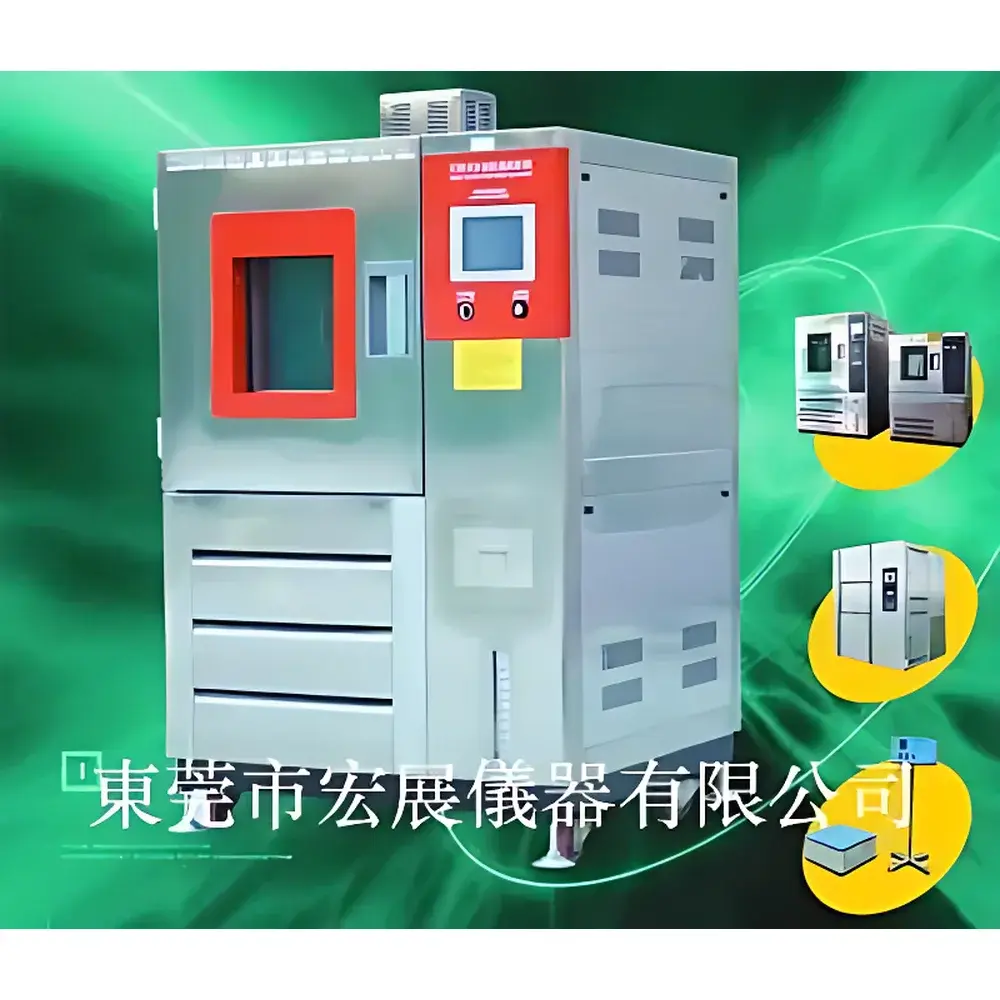
LabCompanion RC-225 High-Low Temperature Alternating Environmental Test Chamber
| Brand | LabCompanion |
|---|---|
| Model | RC-225 |
| Internal Chamber Dimensions | 500 × 750 × 600 mm (W×H×D) |
| Temperature Range | −70°C to +150°C |
| Temperature Uniformity | ±2.0°C |
| Temperature Fluctuation | ±0.5°C |
| Temperature Deviation | ±2.0°C |
| Cooling Rate | 1.0–1.2°C/min |
| Power Consumption | 5 kW |
| Supply Voltage | AC 380 V, 50 Hz |
| Construction | Stainless Steel Interior / Powder-Coated Cold-Rolled Steel Exterior |
| Safety Protections | Over-Temperature, Over-Pressure, and Phase-Failure Monitoring |
| Controller | Taiwan-Made Microprocessor-Based PID Controller with Platinum RTD (PT100) Sensor |
Overview
The LabCompanion RC-225 is a precision-engineered high-low temperature alternating environmental test chamber designed for rigorous thermal stress evaluation of materials, components, and finished products under controlled, repeatable, and standards-compliant conditions. Based on forced-air convection with optimized airflow distribution, the chamber employs a dual-stage cascade refrigeration system capable of achieving and sustaining temperatures from −70°C to +150°C. Its thermal control architecture integrates a microprocessor-based PID controller—originally developed in Taiwan—with a high-stability platinum resistance thermometer (PT100) as the primary sensing element. This configuration ensures minimal thermal lag, rapid setpoint recovery, and long-term drift stability essential for qualification testing per IEC 60068-2-1 (cold), IEC 60068-2-2 (dry heat), and MIL-STD-810H Method 502.6. The chamber’s internal volume of 225 L (500 × 750 × 600 mm) supports medium-scale samples—including PCB assemblies, automotive ECUs, polymer housings, and medical device packaging—while maintaining ISO 17025-aligned uniformity (±2.0°C) and stability (±0.5°C fluctuation) across the working zone.
Key Features
- Forced-air thermal circulation system engineered to meet IEC 60068-3-5 airflow velocity and turbulence requirements for uniform thermal exposure
- Cascade refrigeration circuit utilizing environmentally compliant HFC refrigerants (R404A/R23), enabling reliable sub-zero operation down to −70°C without liquid nitrogen dependency
- Microprocessor PID controller with real-time logging, programmable ramp-soak profiles, and user-configurable alarm thresholds for over-temperature, over-pressure, and phase failure
- Double-wall insulated chamber construction: 100 mm thick polyurethane foam insulation (thermal conductivity ≤0.022 W/m·K) between stainless steel inner liner (SUS304, 1.2 mm) and powder-coated cold-rolled steel outer shell
- Integrated safety interlocks including mechanical door lock, independent high-limit cut-off thermostat, and automatic compressor shutdown upon sensor fault detection
- Front-access cable port (φ50 mm) with silicone gasket and optional brass gland fittings for external instrumentation integration
Sample Compatibility & Compliance
The RC-225 accommodates a broad range of sample geometries and mass loads typical in electronics reliability (JEDEC JESD22-A104), automotive validation (SAE J2412), and aerospace component screening (RTCA DO-160 Section 4). Its interior dimensions allow vertical mounting of 19-inch rack modules (up to 4U height) or horizontal placement of stacked test boards (max. load: 50 kg distributed). All thermal performance specifications comply with ASTM E145 Class II requirements for gravity-convection and forced-air chambers. The unit is fully compatible with GLP and GMP environments when paired with optional audit-trail-enabled data logging (per FDA 21 CFR Part 11) and supports traceable calibration per ISO/IEC 17025 using NIST-traceable PT100 probes.
Software & Data Management
While the standard RC-225 operates via its embedded touch-panel interface, optional PC-based software (LabCompanion TempLink Pro v3.2) enables remote monitoring, multi-chamber synchronization, and automated report generation in PDF/CSV formats. The software logs timestamped temperature readings at user-defined intervals (1 s to 60 min), supports alarm event tagging, and exports data compliant with IEEE 11073-10201 for integration into enterprise quality management systems (QMS). All firmware updates are digitally signed and verified; configuration backups can be exported to USB storage with AES-256 encryption.
Applications
- Thermal cycling qualification of printed circuit board assemblies (PCBAs) per IPC-9701A
- Accelerated aging studies of lithium-ion battery cells under variable low-temperature discharge conditions
- Validation of adhesive bond integrity in structural composites subjected to −40°C ↔ +85°C cycling
- Environmental stress screening (ESS) of avionics modules prior to HALT/HASS
- Stability testing of pharmaceutical packaging per ICH Q1A(R3) guidelines
- Material coefficient-of-thermal-expansion (CTE) correlation studies using in-situ dimensional metrology fixtures
FAQ
What is the minimum achievable temperature and how long does it take to reach −70°C from ambient?
The RC-225 achieves −70°C within approximately 65–75 minutes from 25°C, depending on chamber loading and ambient conditions. Cooling rate is specified at 1.0–1.2°C/min under no-load conditions per IEC 60068-3-4.
Is the chamber suitable for humidity-controlled testing?
No—the RC-225 is a dry-temperature-only chamber. For combined temperature/humidity testing, consider the LabCompanion RH-225 series with integrated steam humidification and desiccant dehumidification modules.
Can the PID controller be calibrated onsite by the user?
Yes—field calibration of the PT100 sensor is supported via the controller’s service menu using a certified reference thermometer (±0.1°C accuracy required). Full calibration certificates are issued upon completion by authorized LabCompanion service engineers.
Does the unit include compliance documentation for export to the EU or USA?
All RC-series chambers ship with CE Declaration of Conformity (2014/30/EU EMC Directive, 2014/35/EU LVD Directive), RoHS 2011/65/EU compliance statement, and factory test reports per EN 60068-2-1/2. UL/cUL listing is available as an optional factory-certified configuration.
What maintenance intervals are recommended for optimal long-term performance?
Compressor oil and refrigerant filter driers should be replaced every 24 months; evaporator coil cleaning and airflow verification every 12 months; and full system performance verification (uniformity, fluctuation, recovery time) every 6 months when used in regulated QA/QC environments.



