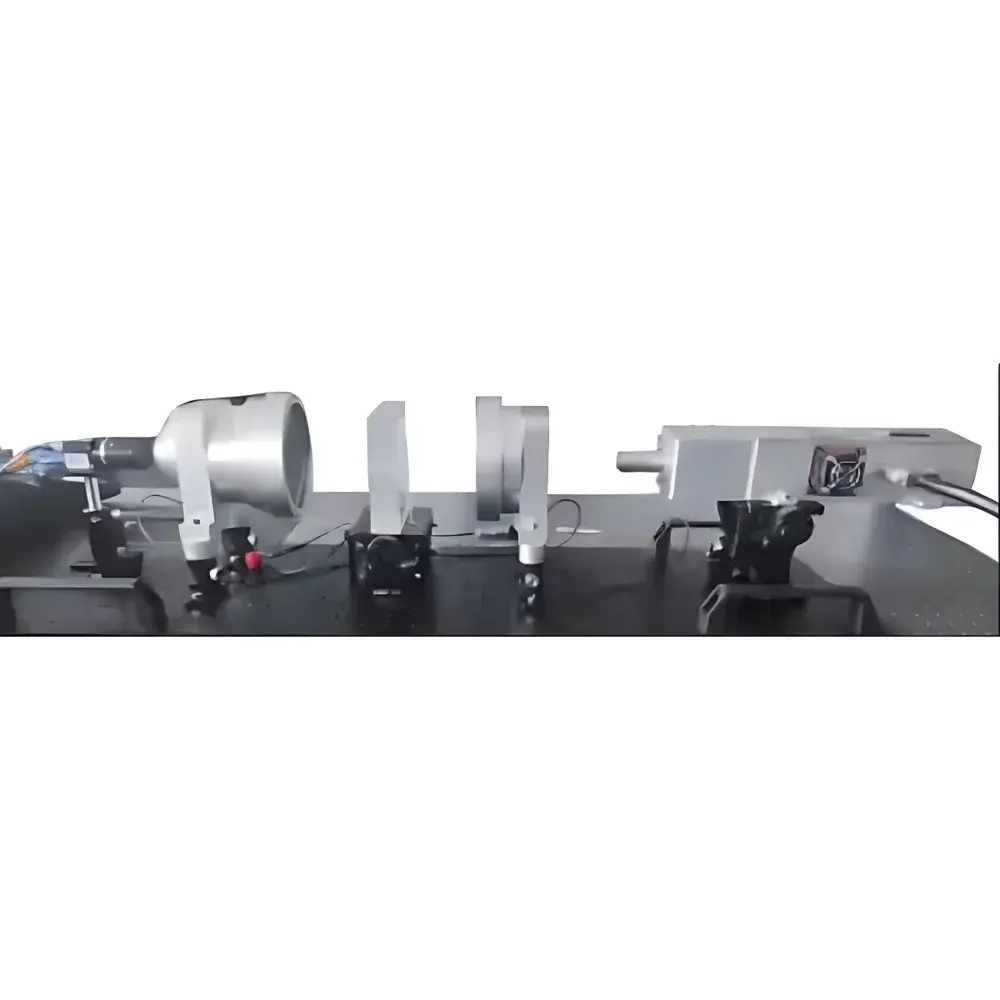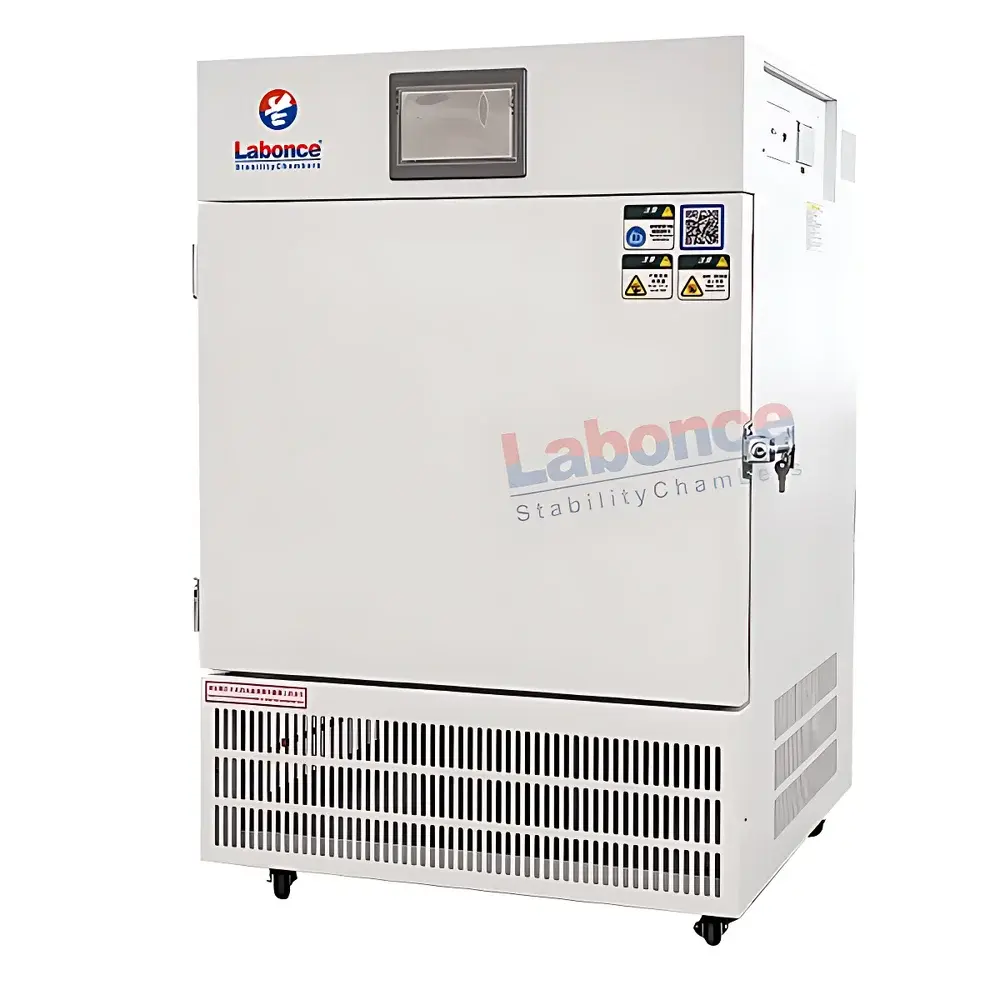
Labonce Labonce-150TPS-1 Pharmaceutical Photostability Testing Chamber
| Brand | Labonce |
|---|---|
| Origin | Beijing, China |
| Manufacturer Type | Direct Manufacturer |
| Model | Labonce-150TPS-1 |
| Internal Volume | 150 L |
| Temperature Range | 15–50 °C |
| Illumination Control | Independent Visible Light (100–8000 Lux, D65-spectrum compliant) and Near-Ultraviolet (320–400 nm, 0.84–5 W/m²) |
| Uniformity | ±2.0 °C intra-shelf temperature deviation, <±1.0 °C temperature fluctuation during illumination |
| Compliance | ICH Q1B, Chinese Pharmacopoeia 2020 Edition |
| Construction | Exterior – Powder-coated steel |
| Insulation | High-density polyurethane foam |
| Cooling System | Imported hermetic compressor |
| Controller | ≥7-inch programmable color touchscreen with audit trail and three-tier user permissions |
| Data Management | Built-in thermal dot-matrix printer + internal electronic storage + USB export |
| Safety | Dual overtemperature protection, compressor overheat/overpressure cutoff, remote SMS alert for temperature deviation and power failure |
| Dual-door design | Inner tempered glass door + outer solid insulated door |
| Power Supply | AC 220 V ±10%, 50 Hz |
| Ambient Operating Range | +5 to +35 °C |
| Rated Power | 1.5 kW |
| Configuration | Single illumination shelf, test port with rubber plug, casters, door lock |
Overview
The Labonce Labonce-150TPS-1 Pharmaceutical Photostability Testing Chamber is an ICH Q1B-compliant environmental simulation system engineered for regulatory-grade photostability assessment of drug substances and products under controlled visible light and near-ultraviolet (UV-A) irradiation. It implements the core photostability testing principle defined in ICH Q1B — exposure to a total visible light dose of not less than 1.2 × 10⁶ lux·hours and a near-UV energy dose of at least 200 W·h/m² — while maintaining precise, documented thermal and humidity conditions throughout the exposure cycle. The chamber integrates dual-spectrum irradiation sources (D65-standard visible light and 320–400 nm UV-A), independently programmable and continuously monitored via calibrated sensors. Its architecture supports GLP- and GMP-aligned workflows through hardware-enforced access control, real-time data logging, and full electronic audit trail functionality.
Key Features
- Dual independent irradiation channels: D65-spectrum visible light (100–8000 lux, setpoint accuracy ±500 lux at 4500 lux) and near-UV (320–400 nm, 0.84–5 W/m²), each with real-time radiometric monitoring and closed-loop intensity regulation.
- Single-shelf illumination configuration optimized for uniform irradiance distribution: Top-mounted lamp array ensures ≤±5% spatial irradiance variation across the shelf surface per ICH Q1B Annex recommendations.
- Three-tier hierarchical user permission system (Operator / Supervisor / Administrator) with role-based access control enforced at firmware level; all parameter changes, login/logout events, and alarm acknowledgments are time-stamped and immutably logged.
- Robust thermal management: Hermetically sealed imported compressor, high-density polyurethane insulation (≥80 mm thickness), and precision PID-controlled air circulation ensure temperature stability of ±1.0 °C during active illumination and ≤±2.0 °C intra-shelf uniformity at setpoints between 15–50 °C.
- Dual-door physical isolation: Inner tempered glass door enables non-intrusive visual inspection without thermal or photic disturbance; outer solid insulated door maintains chamber integrity and blocks ambient light ingress.
- Comprehensive safety architecture: Redundant overtemperature cutoffs (independent mechanical and electronic sensors), compressor overpressure/overheat protection, and configurable SMS alerts for temperature excursions, power loss, or door-open events.
Sample Compatibility & Compliance
The Labonce-150TPS-1 accommodates standard pharmaceutical packaging formats — including vials, blister cards, sachets, and secondary cartons — on its 650 × 490 × 500 mm stainless steel shelf. All wetted surfaces are constructed from electropolished 304 stainless steel to eliminate leachables and support validated cleaning protocols. The chamber meets the essential design and performance criteria outlined in ICH Q1B (2022 revision), USP , and Chapter 905 of the Chinese Pharmacopoeia 2020 Edition. Its illumination spectral output is verified against CIE Publication No. 15 and ISO/CIE 10527:2014 for D65 daylight simulation. For regulated environments, the system supports 21 CFR Part 11 compliance when paired with validated electronic signatures and archived audit logs.
Software & Data Management
The embedded ≥7-inch capacitive touchscreen controller runs a deterministic real-time OS with dedicated photostability test profile editor. Users define multi-step programs combining temperature, humidity (optional add-on), visible light intensity, UV-A irradiance, and duration per stage. All sensor outputs — including lux, W/m², °C, and %RH — are sampled at 10-second intervals and stored in encrypted binary format with SHA-256 checksum integrity verification. Data export is supported via USB 2.0 interface in CSV and PDF report formats, including metadata (operator ID, timestamp, instrument serial number, calibration due date). Integrated thermal dot-matrix printer provides immediate hardcopy of current readings and alarm summaries — traceable to the same audit log.
Applications
- ICH Q1B photostability stress testing of active pharmaceutical ingredients (APIs) and finished dosage forms (tablets, capsules, injectables, creams).
- Forced degradation studies under light exposure to identify photolytic degradation pathways and validate analytical method specificity.
- Comparative evaluation of light-protective packaging efficacy (e.g., amber vials vs. opaque blisters).
- Stability protocol execution per WHO Technical Report Series No. 953 and EMA CHMP Guideline on Stability Testing.
- Supporting regulatory submissions (IND, NDA, MAA) requiring documented photostability data packages compliant with FDA, PMDA, and EMA expectations.
FAQ
Does the Labonce-150TPS-1 meet ICH Q1B photostability irradiance requirements?
Yes — it delivers ≥1.2 × 10⁶ lux·hours of visible light (D65 spectrum) and ≥200 W·h/m² of near-UV (320–400 nm) energy within a single test cycle, with real-time dosimetry tracking and automatic termination upon dose completion.
Is the system suitable for GLP-compliant laboratories?
Yes — its built-in audit trail, electronic signatures (via optional validation package), three-tier permissions, and immutable data storage satisfy OECD GLP Principles and FDA GLP regulations (21 CFR Part 58).
Can irradiance uniformity be verified per ICH Q1B Annex?
Yes — the top-mounted lamp layout and internal reflectivity design achieve ≤±5% irradiance variation across the shelf; users may perform mapping per ASTM E2652-20 using NIST-traceable lux and UV-A meters.
What calibration documentation is provided?
Each unit ships with factory calibration certificates for temperature, relative humidity (if equipped), visible light sensor, and UV-A radiometer — all traceable to CNAS-accredited standards.
Is remote monitoring supported?
Yes — optional Ethernet/Wi-Fi module enables integration with laboratory information management systems (LIMS) and centralized alarm dashboards via Modbus TCP or HTTP API.