
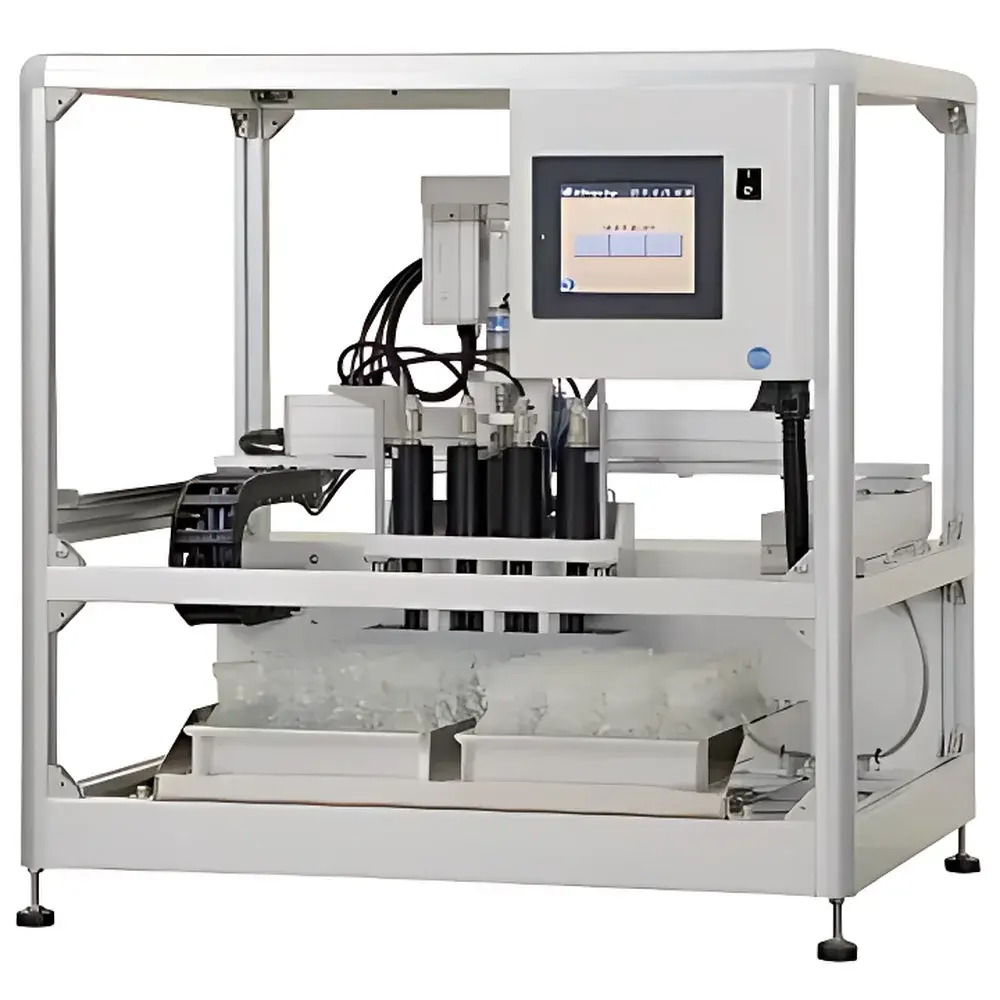
LABOTEC BOD-990-D20C Automated 5-Day Biochemical Oxygen Demand (BOD₅) Analyzer
| Origin | Japan |
|---|---|
| Manufacturer Type | Authorized Distributor |
| Origin Category | Imported Instrument |
| Model | BOD-990-D20C |
| Instrument Type | Laboratory BOD Analyzer |
| Measurement Principle | Microbial Electrode Method |
| Measurement Range | 0–4000 mg/L |
| Detection Limit | 0.001 mg/L |
| Accuracy | ±0.1 mg/L |
| Single-Sample Measurement Time | 45 s |
| Repeatability | ±0.1 mg/L |
Overview
The LABOTEC BOD-990-D20C is a fully automated, microprocessor-controlled biochemical oxygen demand (BOD₅) analyzer engineered for precise, high-throughput determination of dissolved oxygen consumption by aerobic microorganisms in water samples over a standard 5-day incubation period. Unlike conventional dilution-and-incubation methods (e.g., HJ 505–2009), this system implements the microbial electrode method—where immobilized nitrifying bacteria on a gas-permeable membrane catalyze oxygen-dependent oxidation of organic substrates, generating a current proportional to BOD concentration. The electrochemical transduction enables real-time, non-destructive quantification without sample depletion or reagent addition. Designed specifically for compliance with Chinese environmental standard HJ 506–2009 and Japanese Industrial Standard JIS K 0102-32.3, the BOD-990-D20C delivers trace-level sensitivity and metrological rigor required in regulatory water quality laboratories.
Key Features
- Integrated microbial electrode sensor with PTFE membrane and stabilized nitrifier biofilm—ensuring long-term operational stability and minimal drift.
- Automated calibration sequence with zero-oxygen and saturated-oxygen reference points, traceable to NIST-certified standards.
- Dual-channel intelligent dilution module (compatible with optional KI-250-D20C pre-dilution unit) supporting simultaneous preparation of up to 12 samples per batch, compliant with HJ 505–2009 dilution protocols.
- Programmable incubation control: maintains 20.0 ± 0.2 °C throughout 120-hour BOD₅ assay via Peltier-regulated water bath with active temperature homogenization.
- Self-diagnostic firmware that monitors electrode response kinetics, membrane integrity, and signal-to-noise ratio—flagging deviations beyond ISO/IEC 17025-defined uncertainty thresholds.
- Modular design with IP54-rated enclosure, corrosion-resistant fluidic pathways (316L SS and PFA tubing), and tool-free sensor cartridge replacement.
Sample Compatibility & Compliance
The BOD-990-D20C accepts raw or pre-filtered aqueous matrices including surface water, municipal wastewater, industrial effluents, and treated sewage—without requirement for centrifugation or chemical pretreatment. It accommodates sample volumes from 25 mL to 250 mL in standardized BOD bottles (250–300 mL capacity, per HJ 505–2009). All measurement workflows adhere to internationally recognized validation frameworks: data acquisition complies with FDA 21 CFR Part 11 requirements for electronic records and signatures; audit trails are time-stamped, immutable, and exportable in CSV/Excel formats. The system supports GLP/GMP-aligned operation through configurable user roles, electronic signature enforcement, and instrument qualification documentation (IQ/OQ/PQ templates provided).
Software & Data Management
Equipped with LABOTEC BODSoft v4.2, the analyzer provides a Windows-based interface with bilingual (English/Chinese) language support, intuitive workflow navigation, and context-sensitive help. Software modules include: (1) Method Editor for custom BOD protocol definition (e.g., variable incubation durations, multi-point dilution schemes); (2) Real-Time Trend Viewer displaying dissolved oxygen decay curves with first-order kinetic fitting; (3) Batch Report Generator conforming to HJ 506–2009 reporting structure—including dilution factor, blank correction, and confidence interval estimation at 95% CI. Raw sensor data, calibration logs, and environmental chamber parameters are stored locally with automatic backup to network drives. Export formats include PDF, XML (for LIMS integration), and ASTM E1447-compliant structured data files.
Applications
This instrument serves as a primary analytical platform in municipal water utilities for effluent compliance monitoring against discharge limits (e.g., GB 8978–1996); in environmental testing laboratories performing third-party certification under CNAS accreditation; and in industrial R&D facilities evaluating biodegradability of new surfactants, pharmaceutical intermediates, or agrochemical formulations. Its 45-second per-sample throughput enables daily analysis of >100 specimens—making it suitable for time-critical applications such as stormwater event response or wastewater treatment plant process optimization. The low detection limit (0.001 mg/L) further supports ultra-trace BOD assessment in oligotrophic source waters and advanced tertiary treatment verification.
FAQ
Does the BOD-990-D20C require daily recalibration?
No—electrode response remains stable for ≥72 hours under continuous operation; however, a two-point calibration (zero and span) is recommended before each analytical batch per ISO 5815-1:2012.
Can the system handle samples with high suspended solids or toxicants?
Yes—optional filtration adapters (0.45 µm PVDF) and nitrifier strain variants resistant to common inhibitors (e.g., chloramines, heavy metals) are available upon request.
Is remote diagnostics supported?
Yes—via encrypted TLS 1.2 connection; authorized service engineers can perform firmware updates, sensor diagnostics, and parameter validation without on-site visit.
What consumables require periodic replacement?
Electrode membrane cartridges (6-month nominal lifespan), electrolyte solution (replenished every 30 days), and O-ring kits (annually or after 500 cycles).
How is traceability ensured across multiple instruments in a lab network?
Each unit ships with a unique NIST-traceable calibration certificate; software synchronizes timestamps to UTC via NTP and embeds instrument ID, firmware version, and sensor serial number into every exported dataset.







