
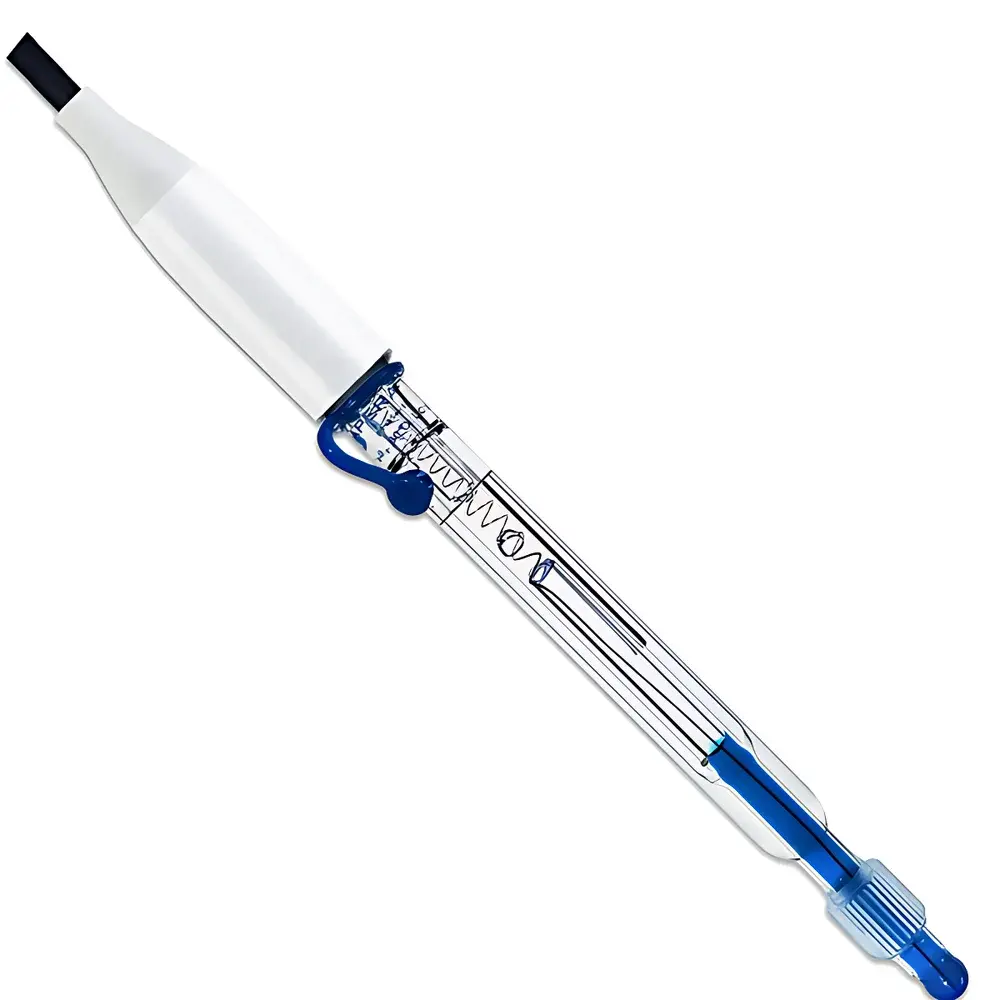
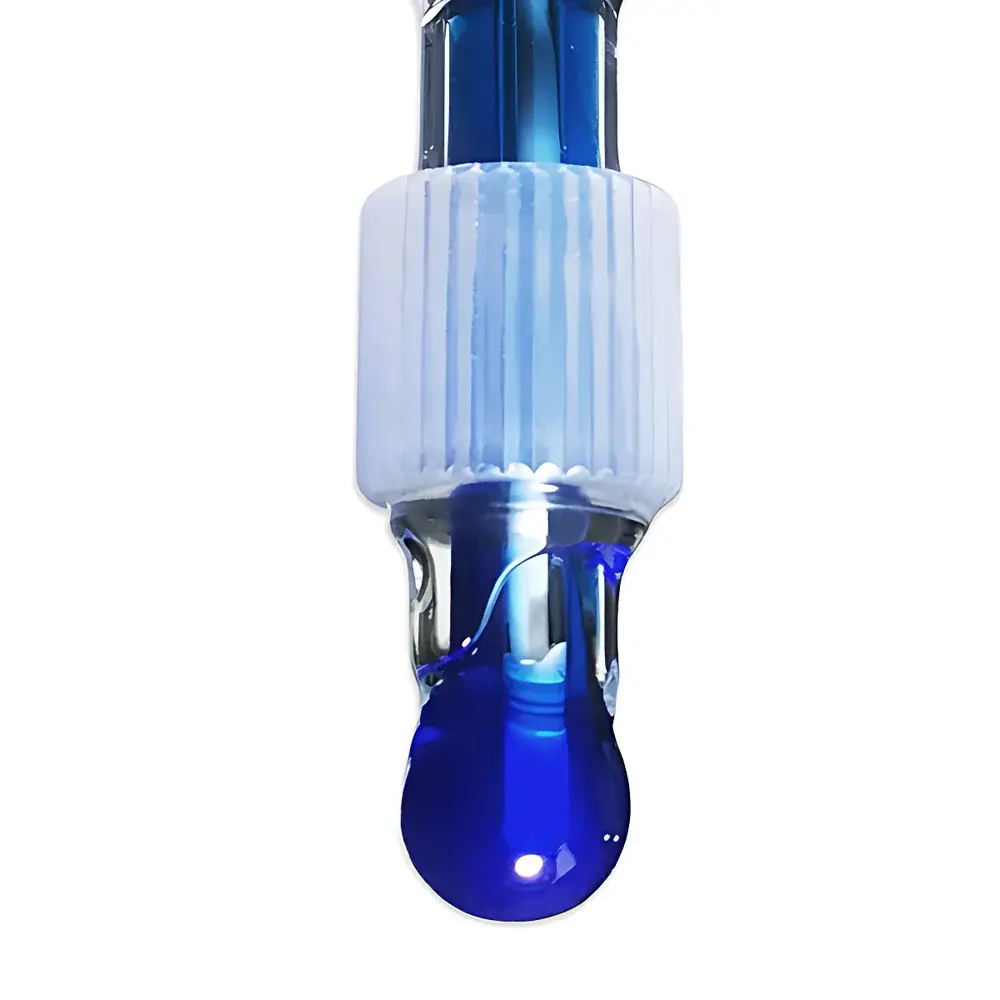
LabSen873 Tri-Combined pH Electrode for Non-Aqueous and Organic Solvent Applications
| Brand | SANXIN (Sanxin Peray) |
|---|---|
| Origin | Shanghai, China |
| Manufacturer Type | Direct Manufacturer |
| Model | LabSen873 |
| Measurement Range | 1–13 pH |
| Reference Junction | Dual-Liquid-Junction with Movable Sleeve |
| Sensing Membrane | Reinforced Thick-Film pH Glass |
| Internal Electrolyte | Blue Gelled Polymer Electrolyte |
| Temperature Compensation | Integrated Pt1000 RTD Sensor |
| Compatibility | Methanol, Ethanol, Isopropanol, DMSO, Acetonitrile, Hexane, Chloroform, Toluene, etc. |
| Construction | PHY Protective Hydration Layer for Organic Solvent Resistance |
Overview
The LabSen873 Tri-Combined pH Electrode is an engineered electrochemical sensing solution designed specifically for accurate and stable potentiometric pH measurement in non-aqueous media and low-dielectric organic solvents. Unlike conventional aqueous-referenced pH electrodes—whose glass membrane hydration layer rapidly dehydrates and whose liquid junction potential drifts unpredictably in organic environments—the LabSen873 employs a proprietary thick-film glass formulation combined with a dual-liquid-junction architecture and PHY (Polymer-Hydrated Yttria-stabilized) protective membrane technology. This design preserves the integrity of the hydrated gel layer at the inner surface of the pH-sensitive glass, enabling reliable Nernstian response (59.16 mV/pH at 25 °C) across heterogeneous solvent systems where water activity is negligible or absent. The electrode complies with fundamental electrochemical measurement principles outlined in ISO 3696 (water for analytical use), ASTM D1293 (pH of water), and IUPAC Technical Reports on non-aqueous pH metrology, and is validated for use in titration workflows under GLP-compliant laboratory environments.
Key Features
- Tri-combined configuration integrating pH sensing element, reference system, and temperature sensor (Pt1000) in a single robust shaft—eliminating inter-electrode alignment errors and simplifying calibration protocols.
- Reinforced thick-film pH glass membrane with mechanical strength exceeding conventional electrodes by >10×, reducing risk of fracture during handling in viscous or abrasive organic matrices.
- PHY (Polymer-Hydrated Yttria-stabilized) protective layer applied directly to the outer glass surface—retains essential water content at the glass–solution interface even in anhydrous solvents such as chloroform or hexane, ensuring consistent H+ ion exchange kinetics.
- Dual-liquid-junction design: primary junction uses a movable sleeve filled with 1 M KCl gel electrolyte optimized for miscibility with polar aprotic solvents (e.g., DMSO, acetonitrile); secondary junction provides stable salt bridge continuity and mitigates junction potential hysteresis.
- Blue gelled internal electrolyte—non-flowing, bubble-free polymer matrix eliminates convective thermal gradients inside the glass bulb, improving signal stability and reproducibility (typical drift <0.02 pH/h in ethanol at 25 °C).
- Integrated Pt1000 resistance temperature detector enables automatic temperature compensation per NIST SRM traceable algorithms—critical for accurate pH calculation in solvents with temperature-dependent activity coefficients.
Sample Compatibility & Compliance
The LabSen873 demonstrates operational stability across a broad spectrum of organic solvents classified by dielectric constant (εr) and donor number (DN). It is validated for direct immersion in methanol (εr = 33), ethanol (εr = 24), isopropanol (εr = 18), dimethyl sulfoxide (DMSO, εr = 47), acetonitrile (εr = 36), and low-polarity media including toluene (εr = 2.4), chloroform (εr = 4.8), and n-hexane (εr = 1.9). The electrode meets functional requirements for method validation under USP , EP 2.2.3, and ISO/IEC 17025-accredited laboratories performing pH-controlled synthesis, catalyst characterization, or pharmaceutical intermediate analysis. Its construction avoids mercury-based components and conforms to RoHS Directive 2011/65/EU.
Software & Data Management
When paired with compatible benchtop pH meters (e.g., SANXIN PHS-3C, PHS-3D, or third-party devices supporting analog mV input and RTD integration), the LabSen873 supports full audit trail functionality including timestamped calibration records, slope/mV offset logging, and temperature-compensated pH output. Raw mV data export is compatible with CSV and Excel formats; no proprietary software lock-in is required. For regulated environments, the electrode’s stable zero-point and consistent asymmetry potential (< ±15 mV in buffer pH 7.00) support 21 CFR Part 11-compliant electronic record retention when used with validated instrument firmware.
Applications
- Quality control of active pharmaceutical ingredients (APIs) dissolved in ethanol or IPA during crystallization process monitoring.
- pH-titrations in non-aqueous media for pKa determination of weak bases using perchloric acid in glacial acetic acid.
- In-process monitoring of lithium battery electrolyte formulations (e.g., LiPF6 in EC/DMC) where residual acidity impacts SEI formation.
- Acid–base catalysis studies in anhydrous toluene or THF reaction mixtures.
- Environmental analysis of hydrocarbon-contaminated soil extracts requiring pH assessment without aqueous dilution artifacts.
FAQ
Can the LabSen873 be used in pure acetonitrile without aqueous buffer addition?
Yes—it is specifically engineered for direct measurement in anhydrous acetonitrile, provided the reference junction sleeve is pre-conditioned with 1 M KCl gel and the electrode is calibrated using non-aqueous pH standards traceable to IUPAC recommendations.
What is the recommended storage solution for long-term preservation?
Store vertically in SANXIN’s proprietary non-aqueous storage gel (Cat. No. SS-GEL-ORG) or, alternatively, in 3 M KCl saturated with AgCl—never in distilled water or dry air.
Does the electrode require special calibration procedures?
Two-point calibration using certified non-aqueous pH standards (e.g., benzoic acid/sodium benzoate in DMSO) is recommended; aqueous buffers (pH 4.01/7.00/10.01) may be used only for initial slope verification, not routine calibration.
Is the Pt1000 temperature sensor compatible with all major pH meter brands?
It outputs standard 100–138.5 Ω at 0–100 °C and is compatible with any meter supporting Pt1000 RTD input per DIN EN 60751.
How often should the movable sleeve junction be cleaned?
Rinse with fresh solvent after each measurement series; perform ultrasonic cleaning in ethanol for 5 min weekly if used continuously in high-viscosity media like glycerol/DMSO blends.




