Labsphere UV2000 UV Transmittance Analyzer
| Brand | Labsphere |
|---|---|
| Origin | USA |
| Manufacturer Type | Authorized Distributor |
| Product Category | Imported Instrument |
| Model | UV2000 |
| Instrument Type | Benchtop |
| Wavelength Range | 250–450 nm |
| Light Source | Pulsed Xenon Lamp |
| Detector | High-Performance Diode Array Spectrometer |
| Optical Integration | Spectralon® Integrating Sphere |
| Wavelength Accuracy | ±1 nm |
| Measurement Time | <5 s per sample |
| UV Band Calculation | UVA (315–400 nm), UVB (280–315 nm) |
| Compliance Standards | AS/NZS 4399:1996, EN 13758-1:2001, AATCC TM 183-2000, ISO 17166:2019, GB/T 18830, CIE S107/E |
Overview
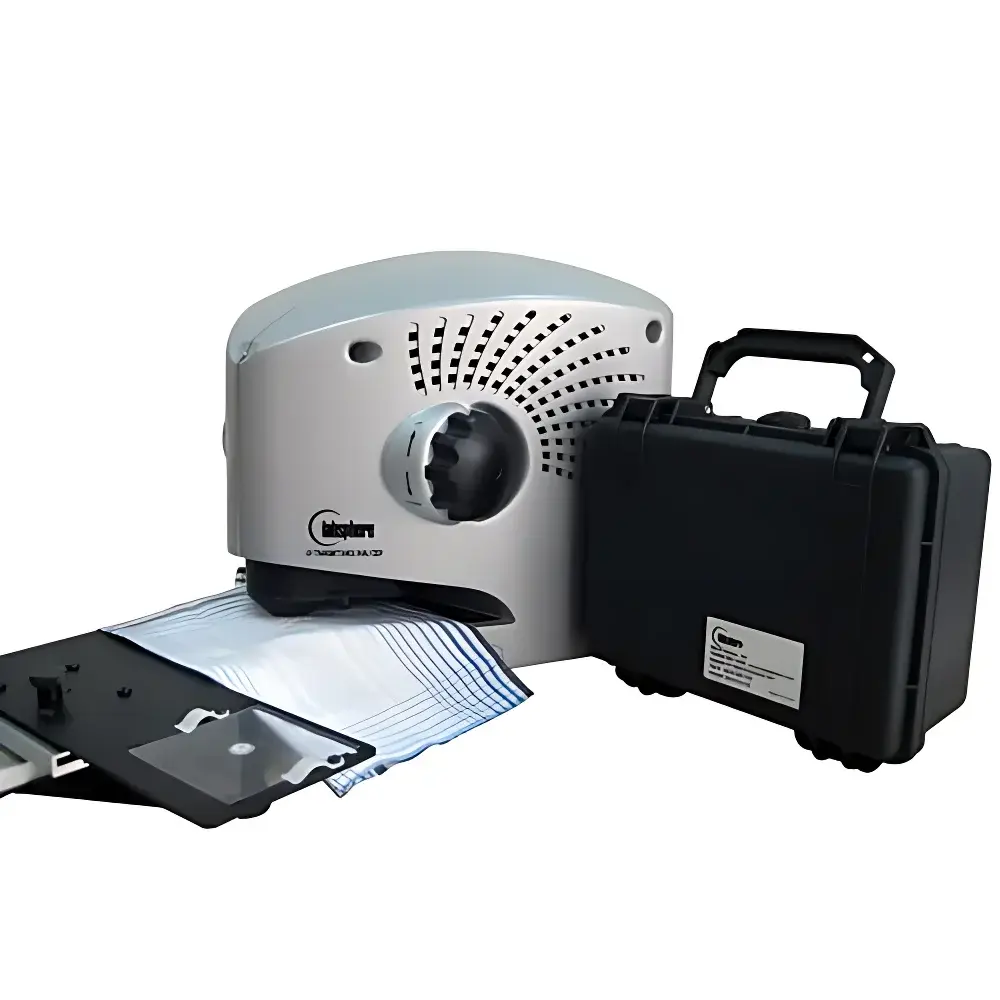
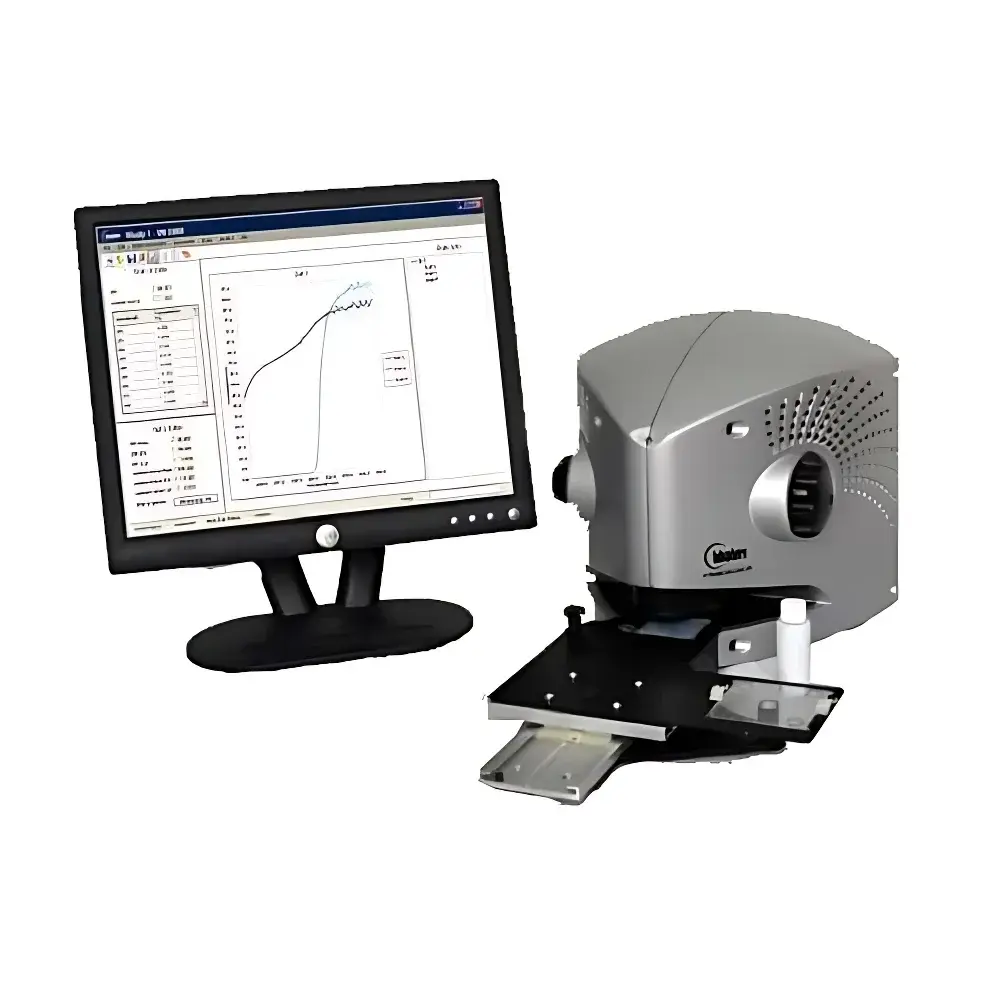
The Labsphere UV2000 UV Transmittance Analyzer is a precision benchtop spectrophotometric system engineered for quantitative assessment of ultraviolet radiation transmission through textiles, films, coatings, and topical formulations. It operates on the principle of diffuse transmittance spectroscopy, utilizing a pulsed xenon light source coupled with a high-stability diode array spectrometer and a Spectralon®-coated integrating sphere to deliver uniform, Lambertian illumination and collection geometry. This configuration ensures high photometric accuracy, minimal stray light (<0.01% at 340 nm), and exceptional inter-instrument reproducibility—critical for regulatory-grade UPF (Ultraviolet Protection Factor) and SPF (Sun Protection Factor) determination. Designed in alignment with international photobiological safety and textile performance standards, the UV2000 enables rapid spectral acquisition across the biologically relevant UV range (250–450 nm), supporting both UVA (315–400 nm) and UVB (280–315 nm) band analysis under standardized solar-weighted irradiance conditions.
Key Features
- Pulsed xenon lamp with optimized UV output and negligible ozone generation—ensuring operator safety and long-term lamp stability
- Spectralon® integrating sphere with >99% diffuse reflectance above 250 nm, enabling robust measurement of heterogeneous, textured, or low-transmittance samples (e.g., woven fabrics, knits, coated membranes)
- High-resolution diode array spectrometer with ±1 nm wavelength accuracy and flash-to-flash repeatability better than ±0.2% T over 500 consecutive measurements
- Automated spectral integration and weighted calculation of UPF per AS/NZS 4399 and SPF per ISO 24444 using preloaded CIE erythemal action spectrum (CIE S007/E:2022) and ASTM E2720 solar reference spectra
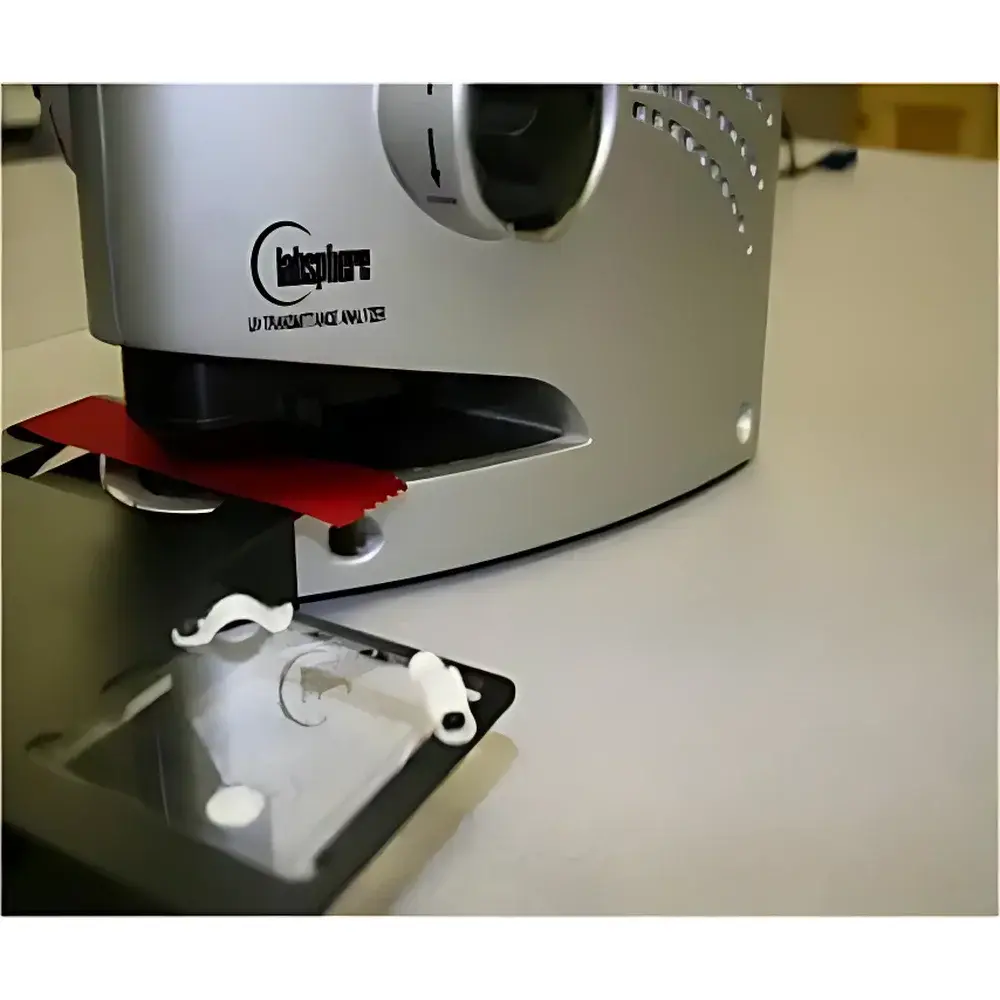
- Integrated sample positioning stage with manual micrometer adjustment for repeatable optical path alignment and zero-background calibration
- No sample replacement error: single-position measurement eliminates mechanical repositioning drift; fluorescence-insensitive detection architecture minimizes spectral artifact from UV-excited emitters
Sample Compatibility & Compliance
The UV2000 accommodates flat, flexible, and semi-rigid specimens up to 100 mm × 100 mm, including dyed and undyed woven/knit textiles, nonwovens, polymer films, sunscreen-laden substrates, and cosmetic formulation films on quartz or acrylic carriers. Its optical design conforms rigorously to the geometric and radiometric requirements of AS/NZS 4399:1996 (sun protective clothing), EN 13758-1:2001 (textiles), AATCC TM 183-2000 (transmittance method), ISO 17166:2019 (CIE S107/E erythema weighting), and GB/T 18830 (Chinese textile standard). All firmware and software modules support audit-ready data logging compliant with GLP principles, including timestamped raw spectra, instrument configuration metadata, and user-defined test parameters.
Software & Data Management
The UV2000 is operated via Labsphere’s proprietary UV Analysis Suite—a menu-driven Windows application supporting multi-language UI, customizable report templates (PDF/CSV/XLSX), and full traceability per FDA 21 CFR Part 11 requirements (user authentication, electronic signatures, audit trail export). The software embeds CIE S007/E:2022 erythemal weighting, ISO 24444 SPF algorithm, and COLIPA/Boots Star Rating extensions. Users may define custom spectral weighting functions, adjust integration bandwidths (e.g., 6 discrete bands from 290–400 nm), and export calibrated transmittance spectra with NIST-traceable wavelength calibration certificates. Raw spectral datasets are stored in HDF5 format for interoperability with MATLAB, Python (SciPy), and third-party chemometric platforms.
Applications
- UPF certification testing of sun-protective apparel, hats, and shade fabrics per ISO 17166 and AS/NZS 4399
- SPF validation of sunscreen formulations on synthetic skin substrates (e.g., PMMA plates) per ISO 24444
- UV-blocking efficacy screening of automotive window films, architectural glazing, and ophthalmic lens materials
- R&D of UV-absorbing polymers, nanostructured coatings, and photostable pigment systems
- Quality control of UV-curable resins and photoinitiator-doped inks during process development
- Regulatory submission support for FDA OTC monograph compliance and EU Cosmetics Regulation (EC No. 1223/2009) Annex VI documentation
FAQ
Does the UV2000 require external calibration standards for routine operation?
No—each system ships with a NIST-traceable tungsten-halogen and deuterium lamp for wavelength and photometric calibration. Factory-installed Spectralon® reference tiles enable daily verification without consumables.
Can the UV2000 measure SPF on human skin or in vivo?
No—the instrument is designed exclusively for *in vitro* transmittance measurement on planar substrates. SPF claims for topical products must be derived from validated *in vitro* protocols aligned with ISO 24444 and cannot replace clinical testing for regulatory labeling.
Is ozone generated during operation?
No—the pulsed xenon source operates below the 240 nm threshold required for significant ozone production; all UV emission is filtered and contained within the sealed optical cavity.
What sample thickness limitations apply?
Optimal performance is achieved with samples ≤3 mm thick and free of internal scattering interfaces. For highly opaque or layered composites, optional collimated beam accessories are available to minimize edge diffraction effects.
How is data integrity maintained for regulatory audits?
All measurements include embedded digital signatures, immutable timestamps, operator ID, instrument serial number, and full spectral metadata. Audit trails are exportable in CSV format and comply with ALCOA+ principles for GxP environments.