
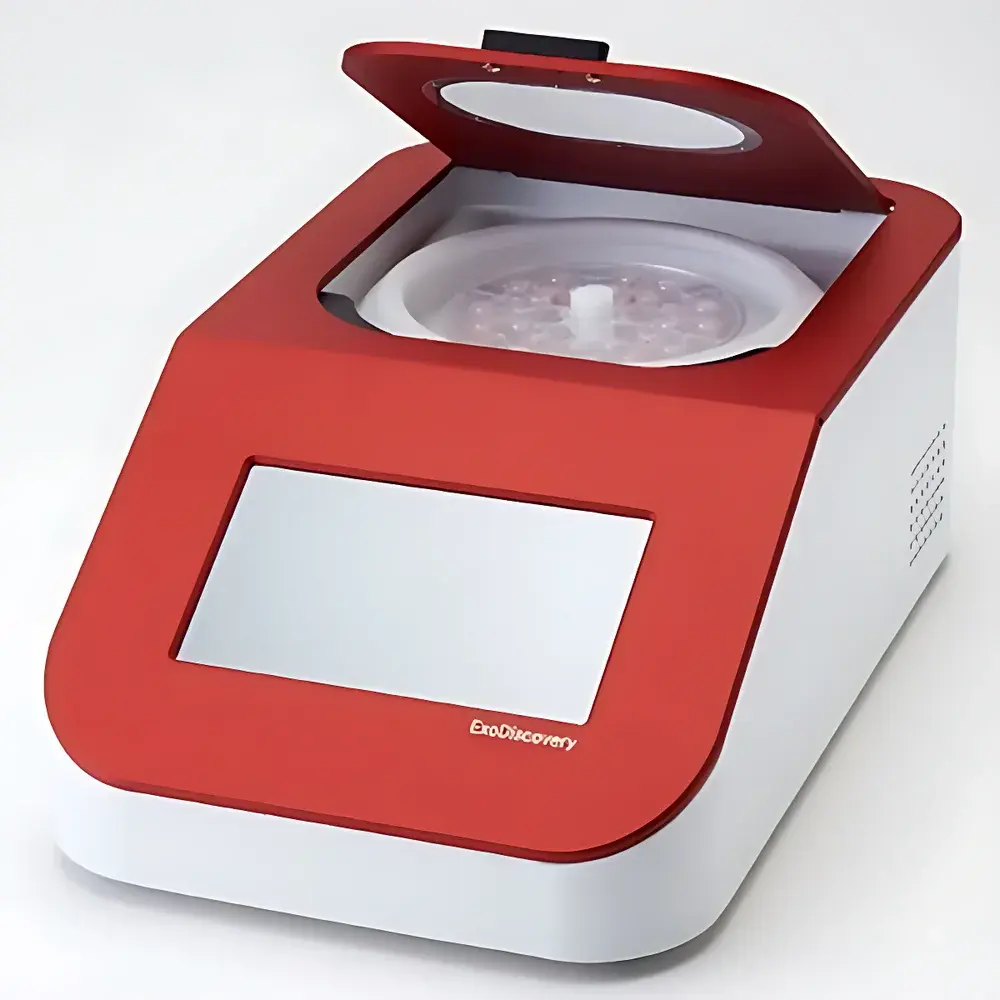
LabSpinner ExoDiscovery Rapid Exosome Isolation and Purification System
| Brand | LabSpinner |
|---|---|
| Origin | South Korea |
| Manufacturer Type | Authorized Distributor |
| Origin Category | Imported |
| Model | ExoDiscovery |
| Quotation | Upon Request |
| Sample Volume | 4 mL |
| Operating Principle | Centrifugal Tangential Flow Filtration (TFF) Microfluidic Platform with Proprietary FAST (Fluid-Assisted Separation Technology) |
| Processing Time | 10–40 minutes |
Overview
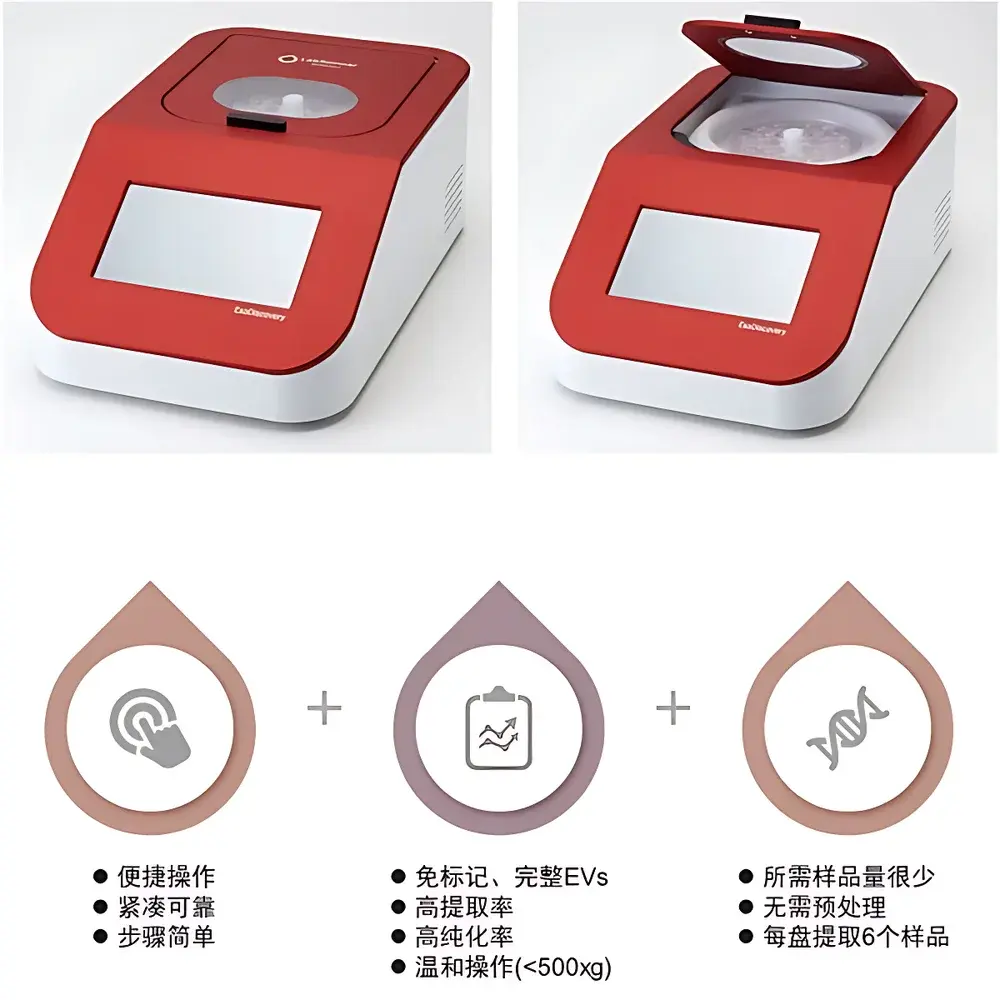
The LabSpinner ExoDiscovery Rapid Exosome Isolation and Purification System is an engineered centrifugal microfluidic platform designed for the gentle, reproducible, and scalable isolation of extracellular vesicles (EVs), particularly exosomes (30–150 nm in diameter), from low-volume biological fluids. Unlike conventional ultracentrifugation (UC), polymer-based precipitation, or immunoaffinity capture—methods often associated with aggregation, co-isolation of contaminants, or low recovery—the ExoDiscovery leverages a hybrid physical separation principle: centrifugal tangential flow filtration (TFF) integrated with LabSpinner’s proprietary FAST (Fluid-Assisted Separation Technology). This architecture enables laminar, pressure-controlled fluid dynamics across integrated nanoscale membranes, minimizing shear-induced damage while maximizing particle retention fidelity. The system operates under controlled gravitational forces (<500 × g), ensuring structural integrity of fragile exosomal membranes and preservation of native surface markers and cargo (e.g., tetraspanins CD63/CD81, RNA, and functional proteins)—a critical requirement for downstream functional assays, biomarker validation, and therapeutic EV development.
Key Features
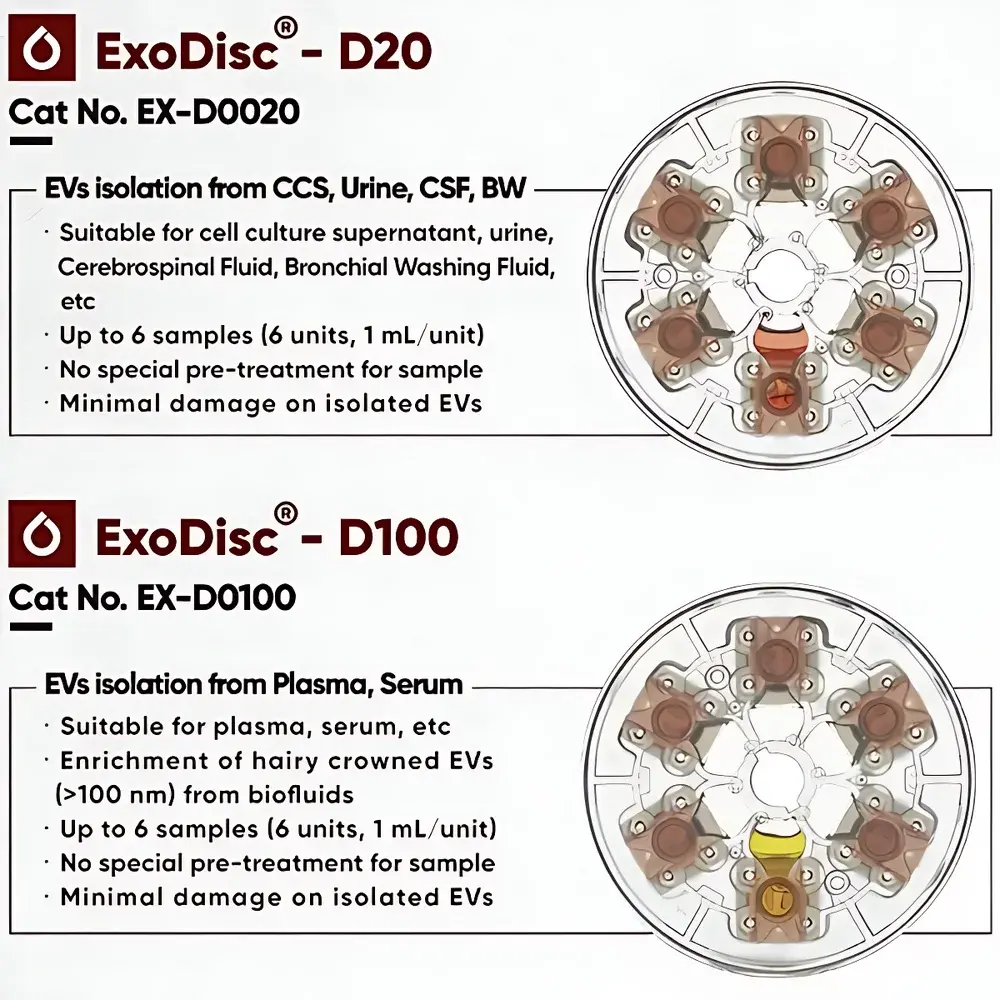
- Centrifugal TFF microfluidic architecture with six parallel, independent nanofiltration chambers per ExoDisc cartridge
- Proprietary FAST fluidic design that decouples transmembrane pressure from centrifugal force, enabling low-shear (<500 × g), high-throughput filtration
- Integrated 4 mL sample processing capacity optimized for clinical and preclinical biofluids (cell culture supernatant, plasma, serum, urine, CSF, BALF)
- Process time of 10–40 minutes per run—significantly shorter than UC (≥6 hours) or size-exclusion chromatography (SEC)
- No requirement for specialized reagents, antibodies, or hazardous solvents; fully compatible with downstream analytical workflows (NTA, TEM, Western blot, ELISA, RNA-seq, proteomics)
- Cartridge-based operation ensures inter-run consistency, reduces operator variability, and supports GLP-compliant documentation when paired with audit-trail-capable lab software
Sample Compatibility & Compliance
The ExoDiscovery system is validated for use with a broad spectrum of biologically relevant matrices, including but not limited to: conditioned cell culture media (adherent and suspension lines), human and murine plasma/serum (EDTA- or citrate-anticoagulated), urine (native or centrifuged), cerebrospinal fluid (CSF), bronchoalveolar lavage fluid (BALF), and saliva. Each ExoDisc cartridge incorporates certified low-protein-binding polyethersulfone (PES) membranes with defined 100 kDa MWCO and nominal pore size of ~50 nm—aligned with ISO 24705:2022 guidelines for EV characterization and ASTM E3231-21 standards for extracellular vesicle isolation performance reporting. The closed-cartridge format minimizes environmental contamination and meets basic biosafety level 2 (BSL-2) handling requirements. While not a medical device per FDA 21 CFR Part 820, the system supports research-use-only (RUO) workflows compliant with CLIA-equivalent quality control frameworks and facilitates traceability required for IND-enabling studies.
Software & Data Management
The ExoDiscovery operates via a dedicated touchscreen interface with embedded protocol libraries (e.g., “Plasma EV Isolation”, “Cell Supernatant Concentration”, “Urine Pre-Clearing”) and real-time rotational speed/torque monitoring. All run parameters—including rotor speed (rpm), duration, temperature (ambient), and cartridge lot ID—are automatically logged with timestamp and user ID. Exportable CSV logs support integration into LIMS environments and satisfy minimum ALCOA+ (Attributable, Legible, Contemporaneous, Original, Accurate, Complete, Consistent, Enduring, Available) data integrity criteria. Optional API connectivity allows synchronization with third-party ELN platforms (e.g., Benchling, LabArchives) for automated metadata tagging and audit trail generation—critical for GMP-aligned process development labs conducting EV-based therapeutic manufacturing feasibility studies.
Applications
- Isolation of intact, functionally active exosomes for liquid biopsy biomarker discovery and validation in oncology, neurodegeneration, and immunometabolism
- Preparative-scale EV enrichment prior to cryo-EM structural analysis or single-vesicle fluorescence imaging
- Routine QC of EV yields and purity in academic core facilities and CROs supporting extracellular vesicle therapeutics
- Standardized EV isolation across multi-site translational cohorts where inter-laboratory reproducibility is essential
- Development of EV-based drug delivery vehicles requiring high-vesicle-integrity input material
FAQ
What sample types are validated for use with the ExoDiscovery system?
Cell culture supernatants, human and animal plasma/serum, urine, cerebrospinal fluid (CSF), bronchoalveolar lavage fluid (BALF), and saliva have been experimentally verified for compatibility.
Does the system require calibration or routine maintenance beyond cartridge replacement?
No recalibration is needed between runs; only standard centrifuge rotor balancing and periodic verification of lid seal integrity are recommended per manufacturer’s preventive maintenance schedule.
Can the isolated exosomes be used directly for RNA extraction or NTA without further cleanup?
Yes—eluates are free of polymer precipitants, antibody fragments, or column matrix carryover, making them immediately suitable for RNA isolation kits and nanoparticle tracking analysis (NTA) without desalting or buffer exchange.
Is the ExoDisc cartridge sterile and RNase/DNase-free?
All ExoDisc cartridges are gamma-irradiated and certified RNase/DNase-free, with endotoxin levels <0.5 EU/mL, meeting ISO 11137 standards for sterile medical device components.
How does ExoDiscovery compare to ultracentrifugation in terms of exosome yield and purity?
Published comparative studies report 2.1–3.4× higher recovery of CD63+ vesicles from 4 mL plasma versus UC, with 40–60% reduction in apolipoprotein B (ApoB) co-isolation—confirmed by SDS-PAGE and mass spectrometry profiling.
Related Products




