
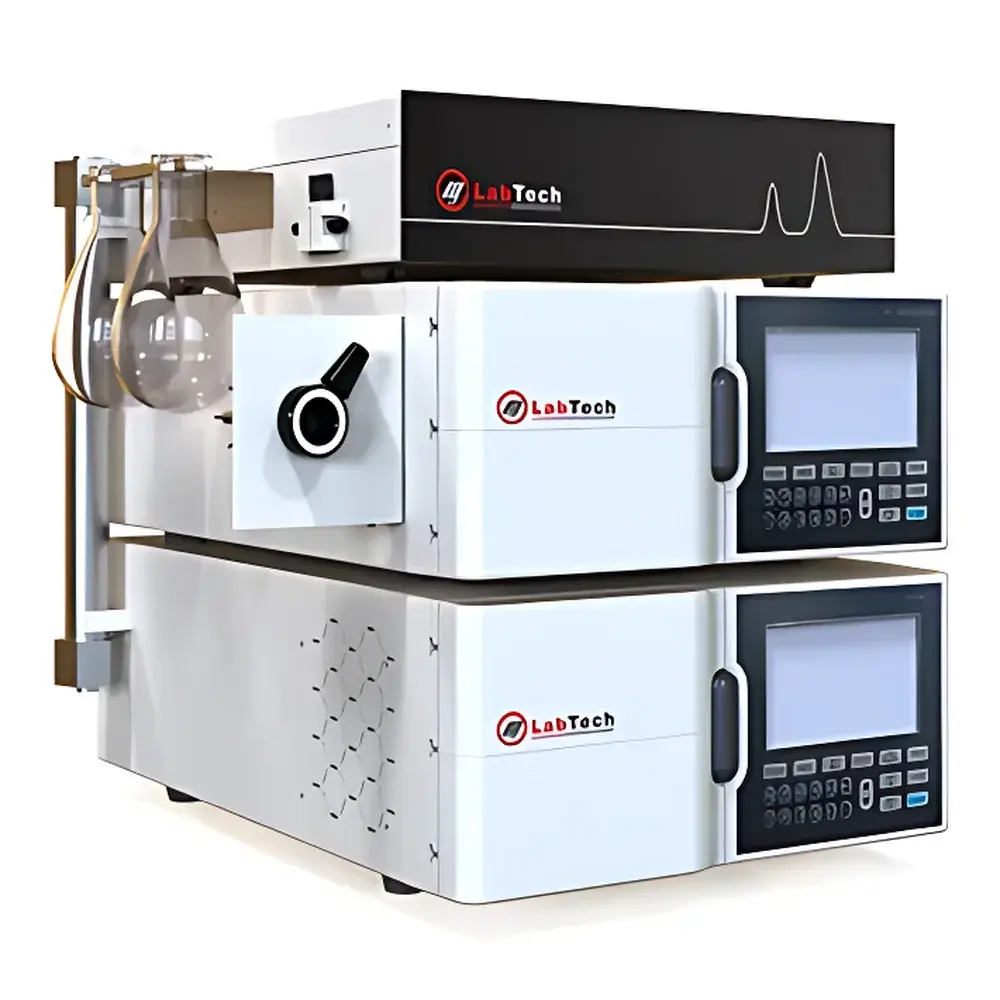
LabTech GPC600 mini Semi-Automatic Gel Permeation Chromatography (GPC) Purification System
| Brand | LabTech |
|---|---|
| Origin | Beijing, China |
| Manufacturer Type | Direct Manufacturer |
| Product Category | Domestic |
| Model | GPC600 mini |
| Pricing | Upon Request |
| Flow Rate | Contact Manufacturer |
| Maximum Pressure | Contact Manufacturer |
| Flow Stability | Contact Manufacturer |
| Auto-Sample Volume | Contact Manufacturer |
| Auto-Sample Capacity | Contact Manufacturer |
Overview
The LabTech GPC600 mini is a semi-automatic gel permeation chromatography (GPC) purification system engineered for precise, reproducible molecular-size-based fractionation of complex matrices. Operating on the fundamental principle of size-exclusion chromatography (SEC), the system separates analytes from interfering macromolecular matrix components (e.g., lipids, proteins, polymers) and low-molecular-weight contaminants (e.g., pigments, plasticizers, pesticides) by differential elution through a porous cross-linked dextran or polyacrylamide gel stationary phase. Unlike high-pressure liquid chromatography (HPLC)-based systems, GPC600 mini utilizes ambient- to low-pressure solvent delivery—optimized for robustness, solvent economy, and compatibility with volatile organic solvents such as cyclohexane, ethyl acetate, and dichloromethane. Designed for routine laboratory environments in environmental monitoring, food safety testing, agricultural residue analysis, and clinical sample preparation, the GPC600 mini delivers consistent fractionation performance without requiring full automation infrastructure, making it especially suitable for mid-throughput labs balancing cost-efficiency with analytical rigor.
Key Features
- Semi-automatic operation: Manual sample injection via precision 6-port injection valve, followed by fully automated column elution, fraction detection, and target-fraction collection.
- Stainless-steel GPC columns: Pre-packed, factory-validated columns eliminate manual packing variability, ensure batch-to-batch reproducibility, and reduce solvent consumption by up to 30% compared to traditional glass-column setups.
- Dual-position rotary evaporation-compatible collection: Two interchangeable 50–250 mL round-bottom flasks mount directly onto the collector manifold—enabling seamless transfer to rotary evaporators without intermediate vial handling or solvent exposure.
- High-accuracy dual-piston reciprocating pump: Delivers stable flow rates across variable backpressures; optimized for low-pulsation delivery essential for baseline stability in UV detection.
- Variable-wavelength UV detector (190–400 nm): Enables selective detection of aromatic analytes (e.g., PAHs, PCBs, mycotoxins) while suppressing interference from saturated hydrocarbon matrix components.
- Septum-piercing sealed collection: Each fraction is dispensed under inert atmosphere into septum-capped vials or flasks, minimizing solvent evaporation, oxidation, and operator exposure to VOCs.
- Modular architecture: Base unit supports future integration with LabTech’s GPC600 UP upgrade kit or full GPC1000 series modules—including autosamplers, fraction re-injection valves, and multi-solvent gradient capability—without hardware replacement.
Sample Compatibility & Compliance
The GPC600 mini accommodates a broad range of extract matrices, including lipid-rich environmental sediments, fatty food homogenates (e.g., fish tissue, dairy products), pesticide-spiked plant tissues, and clinical plasma extracts. Sample loading volumes range from 0.5 to 5 mL, compatible with standard QuEChERS, ASE, or Soxhlet extracts. The system meets foundational requirements for method validation under ISO/IEC 17025:2017 and supports GLP-compliant workflows when paired with audit-trail-enabled data acquisition software. Column chemistries comply with ASTM D5296 (standard test method for molecular weight averages of polystyrene by GPC) and EPA Method 3640A (gel permeation chromatography cleanup). All wetted materials (316L stainless steel, PEEK, FEP) are resistant to common GPC solvents and certified non-leaching per USP Class VI standards.
Software & Data Management
Control and data acquisition are managed via LabTech’s GPC Control Suite v3.2—a Windows-based application supporting instrument parameter configuration, real-time UV chromatogram visualization, fraction trigger logic (time-, peak-, or threshold-based), and CSV/TXT export for LIMS integration. The software logs all critical events—including pump pressure, UV absorbance, valve positions, and collection timestamps—with optional digital signature and electronic record retention compliant with FDA 21 CFR Part 11 Annex 11 requirements when deployed with validated server infrastructure. No cloud dependency; all data remains locally stored on user-configured network drives or encrypted local SSDs.
Applications
- Environmental analysis: Cleanup of soil/sediment extracts prior to GC-MS analysis of PAHs, organochlorine pesticides, and dioxin-like compounds.
- Food safety: Removal of triglycerides and sterols from vegetable oil, meat, and seafood extracts before LC-MS/MS quantification of veterinary drug residues.
- Agricultural testing: De-lipidation of grain and fruit extracts to enhance sensitivity in multi-residue pesticide screening.
- Clinical toxicology: Isolation of small-molecule drugs and metabolites from protein-precipitated plasma samples.
- Polymer characterization support: Fractionation of polymer degradation products for subsequent MALDI-TOF or SEC-MALS analysis.
FAQ
What sample volume range is supported for manual injection?
Typical injection volumes range from 0.5 mL to 5.0 mL, depending on matrix viscosity and target analyte concentration. Custom injection loops (1–10 mL) are available upon request.
Is column regeneration possible with the pre-packed stainless-steel columns?
Yes—columns are designed for ≥100 injections under standard operating conditions. Regeneration protocols using THF or chloroform are included in the operator manual.
Can the system be validated for regulated laboratories?
Yes—full IQ/OQ documentation packages, including pump linearity tests, UV wavelength accuracy verification, and fraction collector positional accuracy reports, are available as optional add-ons.
Does the UV detector support peak integration and retention time locking?
Basic peak detection and retention time logging are supported; advanced integration and method transfer functions require optional GPC Analysis Module v2.1.
What maintenance intervals are recommended for routine operation?
Pump seal inspection every 500 hours; UV lamp replacement every 2,000 hours; column performance verification every 20 runs or quarterly—whichever occurs first.



