
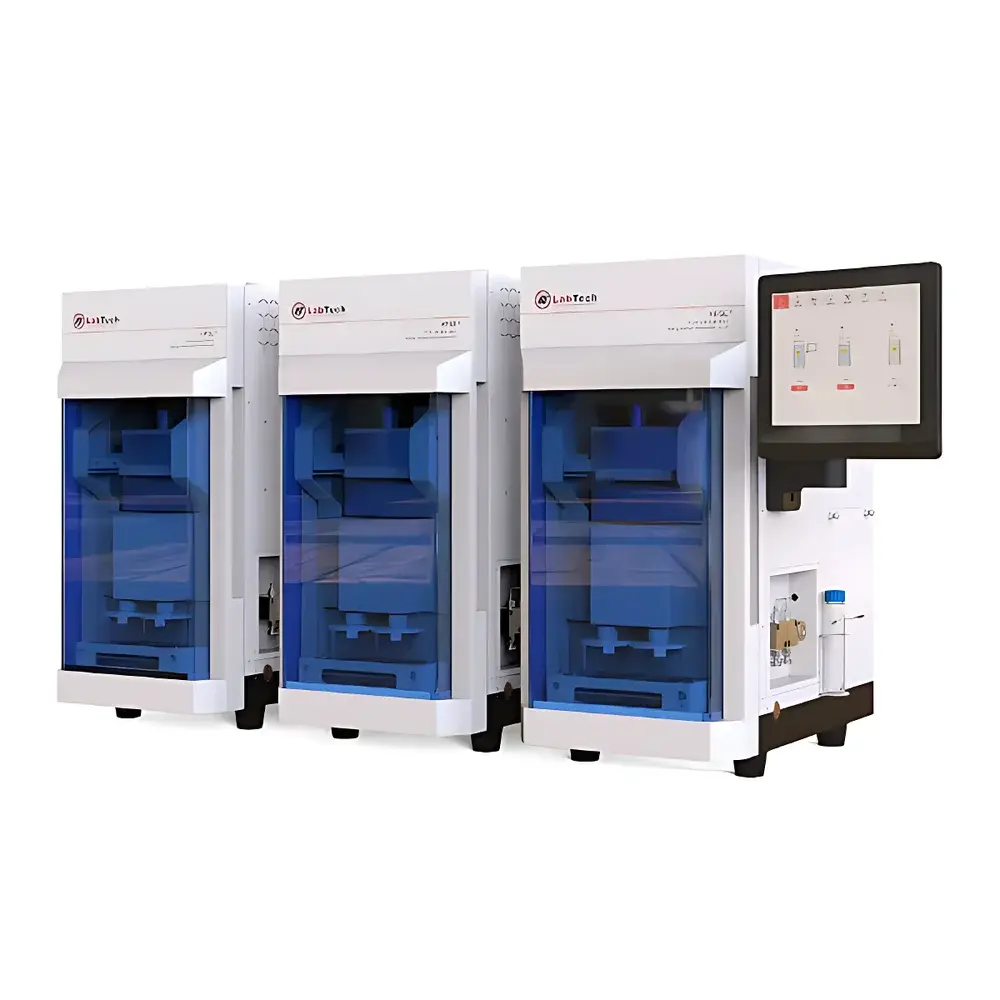
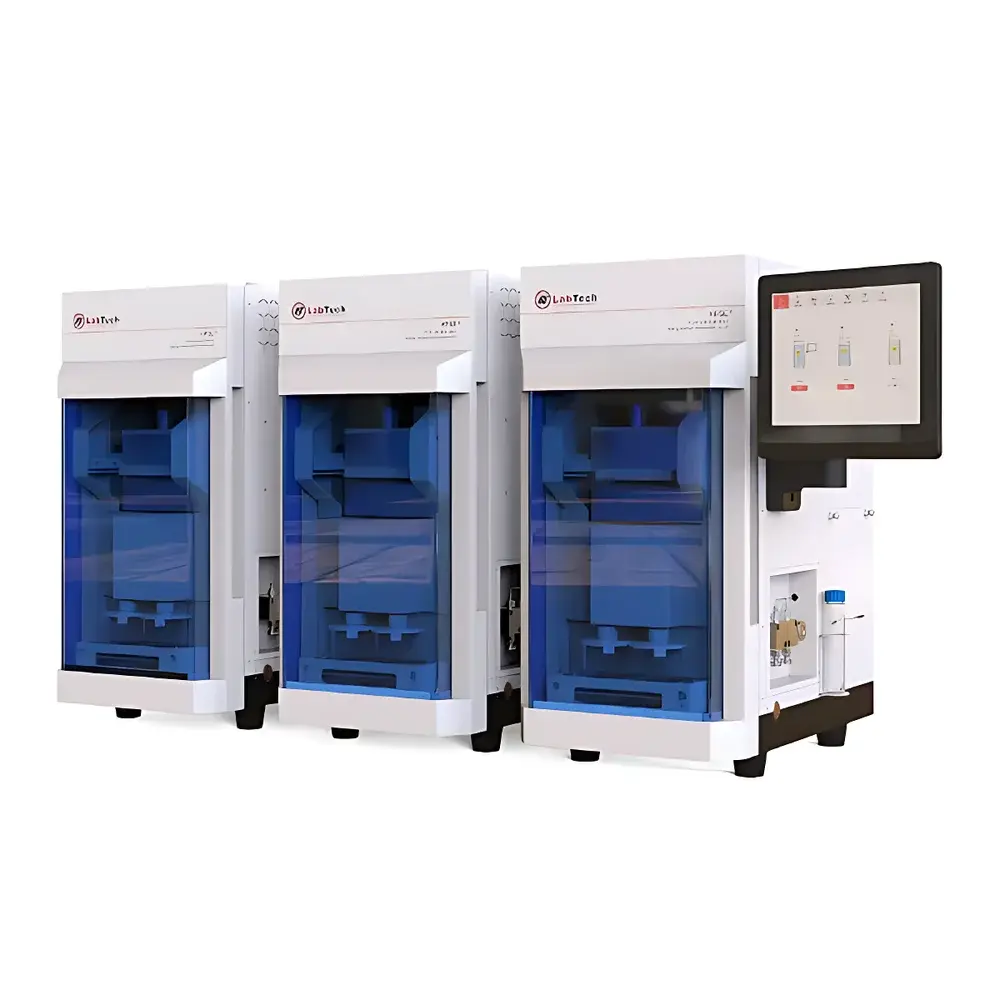
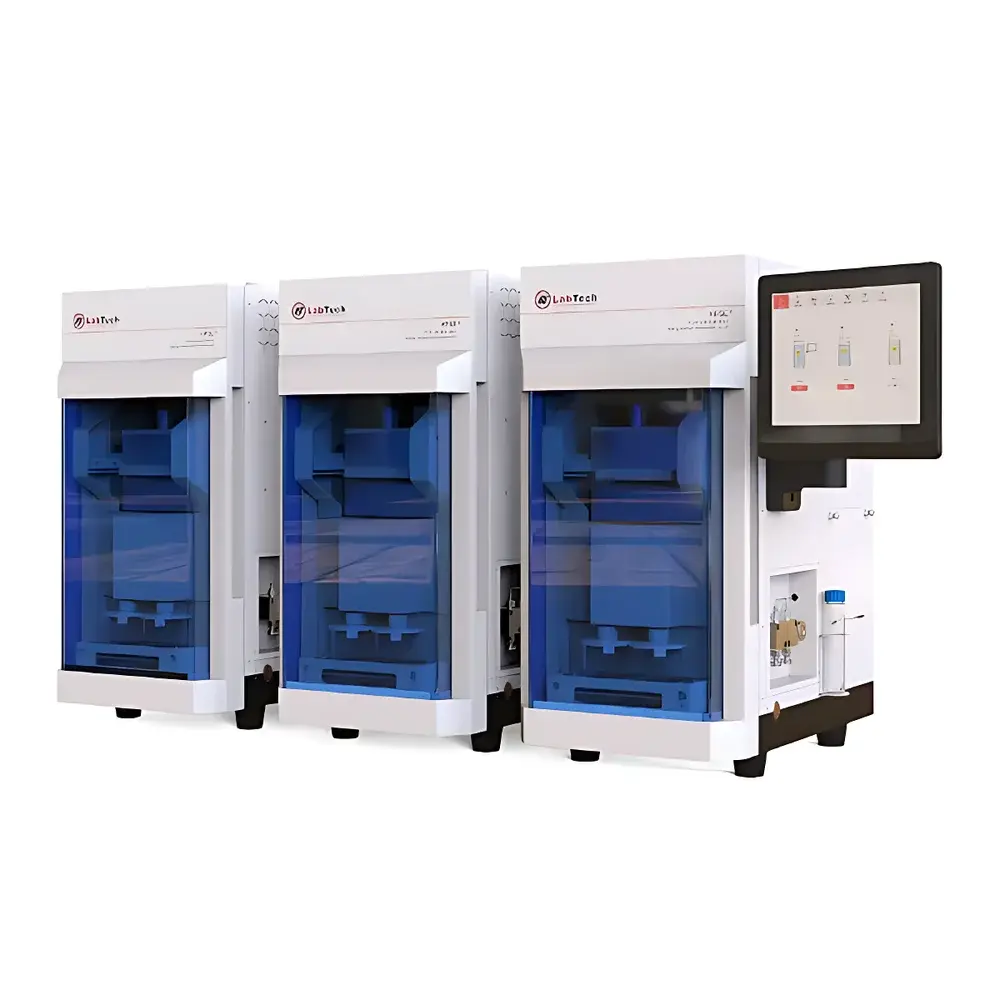
LabTech HPSE Series Accelerated Solvent Extractor
| Brand | LabTech |
|---|---|
| Origin | Beijing, China |
| Manufacturer Type | Authorized Distributor |
| Product Category | Domestic |
| Model | HPSE Series |
| Instrument Type | Solid-Phase Extraction (SPE) / Pressurized Liquid Extraction (PLE) |
| Temperature Range | 0–50 °C |
| Pressure Range | Up to 10 MPa |
| Extraction Cell Volume | 10–100 mL (standard configuration supports 100 mL cells) |
| Flow Rate | Up to 100 mL/min |
| Dimensions (W × D × H) | 500 × 600 × 650 mm |
| Sample Capacity | 6 positions (modular |
Overview
The LabTech HPSE Series Accelerated Solvent Extractor is an engineered solution for pressurized liquid extraction (PLE), a widely accepted sample preparation technique standardized in methods such as EPA Method 3545A, ASTM D7689, and ISO 14507. Operating on the principle of elevated temperature and pressure to enhance solvent penetration and analyte solubility, the HPSE system enables rapid, reproducible extraction of organic compounds—including pesticides, PAHs, PCBs, pharmaceutical residues, and natural product constituents—from solid and semi-solid matrices. Unlike conventional Soxhlet or ultrasonic extraction, PLE reduces extraction time from hours to minutes while minimizing solvent consumption by up to 90%, aligning with green chemistry principles and laboratory sustainability goals.
Key Features
- Modular Multi-Channel Architecture: Configurable for 2-, 4-, or 6-sample parallel processing; field-upgradable to expand throughput without hardware replacement.
- Dynamic Pressure Regulation: Integrated high-flow pump (up to 100 mL/min) coupled with real-time pressure feedback enables automatic adjustment across the full 0–10 MPa range—optimized per cell volume and matrix density.
- Auto-Sealing Extraction Cells: Patented self-aligning force-accumulating seal mechanism eliminates manual tightening; ensures leak-free operation at full pressure and maintains consistent sealing force across repeated cycles.
- Wide Cell Compatibility: Supports interchangeable extraction cells from 1 mL to 100 mL, enabling method flexibility for diverse applications—from trace-level environmental soil analysis to high-mass herbal powder extraction.
- Integrated Safety & Environmental Design: Fully enclosed solvent pathway with vapor-tight connections; built-in exhaust port compatible with standard lab fume hood ducting or centralized ventilation systems—no requirement for external enclosure.
- Thermal Precision Control: PID-regulated heating block with ±0.5 °C stability over 0–50 °C range; independent temperature monitoring per cell position in multi-channel mode.
Sample Compatibility & Compliance
The HPSE Series is validated for use with common organic solvents (e.g., hexane, acetone, dichloromethane, methanol, and their mixtures) and compatible with a broad spectrum of solid and semi-solid samples: environmental soils/sediments, air filters, food commodities (grains, spices, dairy powders), traditional Chinese medicinal herbs, polymer matrices, and biological tissues. It complies with core regulatory frameworks governing analytical sample preparation, including EPA SW-846 Chapter 3 (extraction methodologies), ISO/IEC 17025 requirements for method validation, and GLP-aligned operational documentation practices. Optional audit-trail-enabled software supports 21 CFR Part 11 compliance when deployed in regulated environments.
Software & Data Management
Controlled via LabTech’s proprietary HPSE Manager software (Windows-based), the system provides intuitive method programming, real-time monitoring of pressure/temperature/flow profiles, and automated sequence logging. All extraction parameters—including cell ID, solvent batch, operator ID, start/end timestamps, and deviation alerts—are timestamped and exportable in CSV or PDF formats. The software architecture supports LIMS integration through configurable API endpoints and includes electronic signature capability for user authentication and change control. Raw data files are stored with immutable metadata, satisfying traceability requirements under ISO 17025 Clause 7.5 and FDA guidance on data integrity.
Applications
- Environmental laboratories: Extraction of persistent organic pollutants (POPs) from contaminated soils, sediments, and airborne particulates per EPA 3545A and EN 16167.
- Food safety testing: Multi-residue pesticide analysis in fruits, vegetables, cereals, and infant formula—aligned with EU SANTE/11312/2021 and AOAC Official Methods.
- Pharmaceutical & botanical research: Quantitative recovery of active phytochemicals (e.g., flavonoids, alkaloids, terpenes) from dried plant materials under GMP-preparatory conditions.
- Materials science: Leachate analysis from packaging polymers, textiles, and recycled composites for migration testing (e.g., ISO 10993-12).
- Academic & method development labs: Platform for optimizing PLE parameters (temperature, static time, flush volume, cycle number) with statistical design-of-experiments (DoE) support.
FAQ
What extraction principles does the HPSE Series employ?
It utilizes pressurized liquid extraction (PLE), applying controlled heat and pressure to increase solvent diffusivity and solute desorption kinetics—distinct from liquid-liquid partitioning or supercritical fluid extraction.
Is the system compatible with USP or Ph. Eur. monographs requiring validated extraction procedures?
Yes—when operated with documented SOPs and calibrated instrumentation, the HPSE Series supports method validation per ICH Q2(R2) guidelines and has been successfully implemented in labs performing USP <232>/<233> elemental impurity testing.
Can extraction cells be cleaned and reused?
Stainless steel and inert polymer cells are designed for multiple uses; cleaning protocols (e.g., solvent rinsing, thermal bake-out) are provided in the operator manual and validated per ISO 17025 Clause 7.2.2.
Does the system require connection to a fume hood?
No—the integrated sealed solvent handling path and dedicated exhaust interface allow safe operation outside a fume hood, though connection to central ventilation is recommended for long-term solvent vapor management.
What maintenance intervals are recommended for routine operation?
Preventive maintenance is advised every 500 extraction cycles or annually—whichever occurs first—including O-ring inspection, pump calibration verification, pressure transducer validation, and seal mechanism lubrication per manufacturer specifications.



