
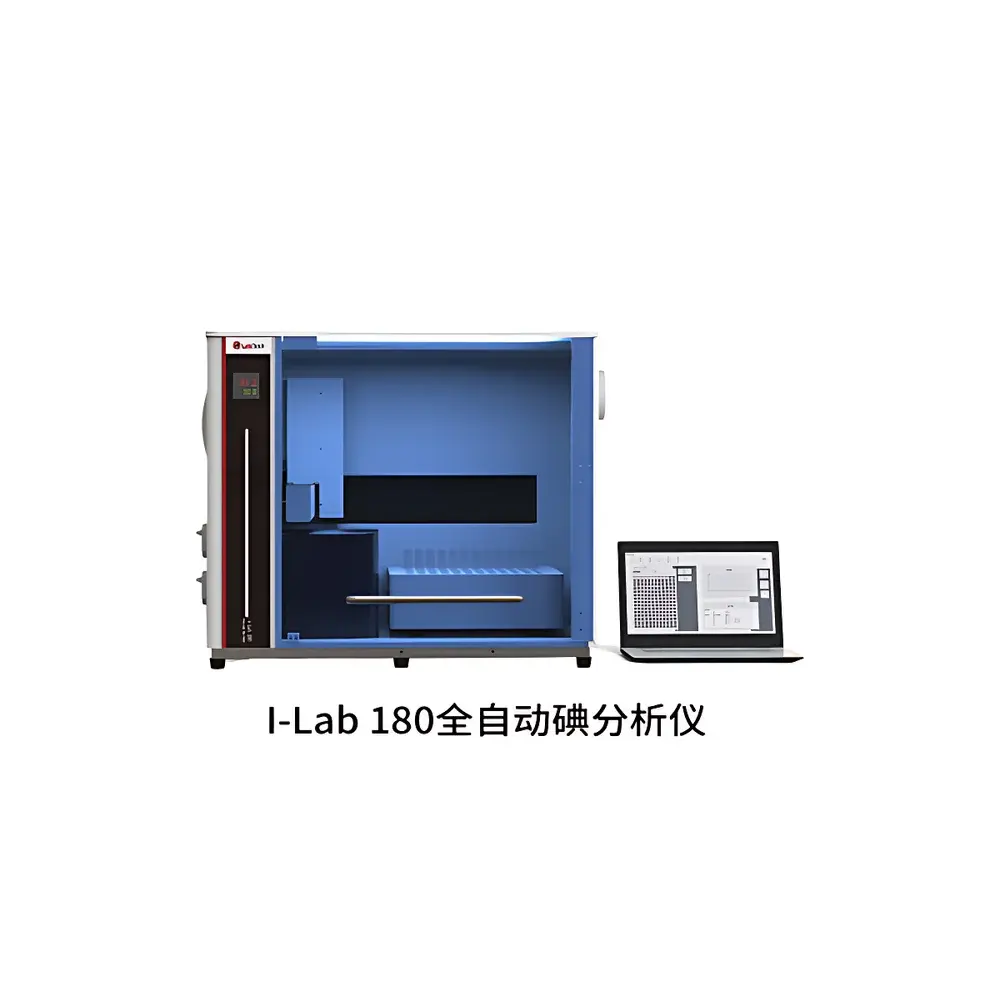
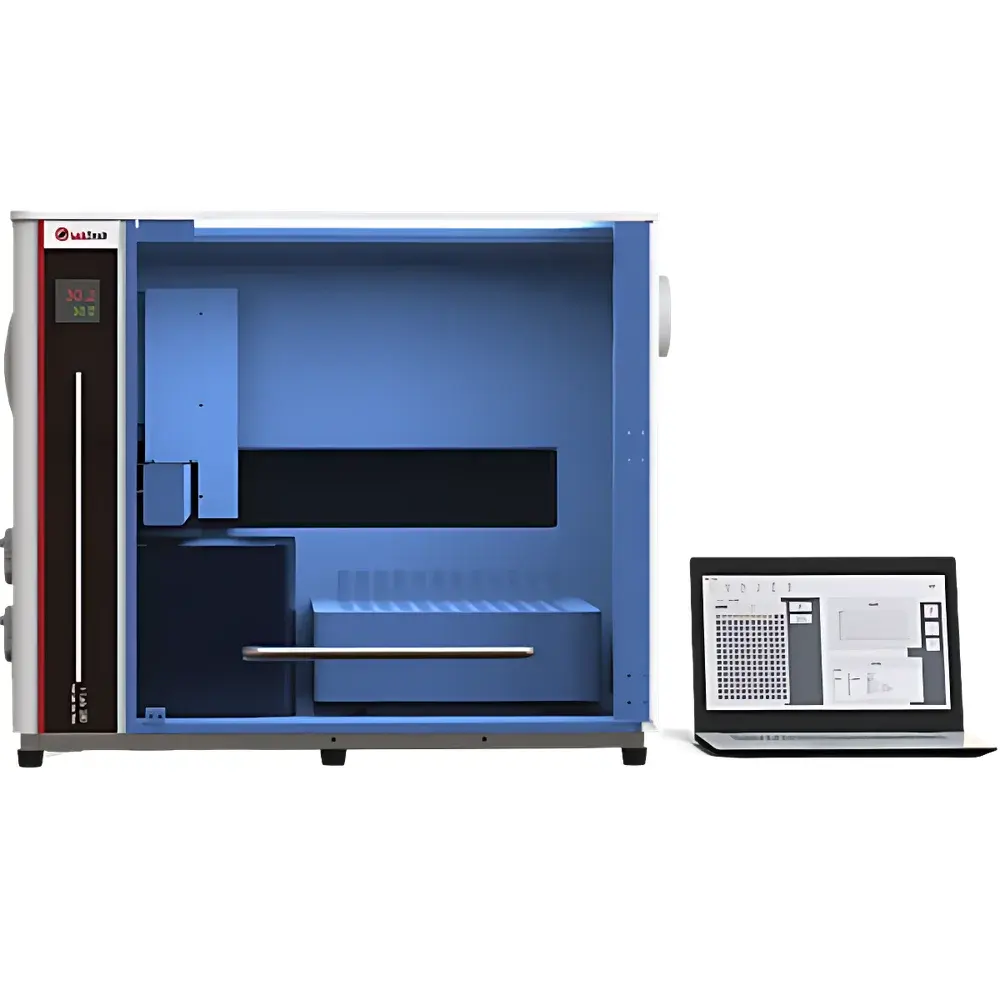
LabTech I-Lab 180 Fully Automated Iodine Analyzer
| Brand | LabTech |
|---|---|
| Origin | Tianjin, China |
| Manufacturer Type | Manufacturer |
| Country of Origin | Domestic (China) |
| Model | I-Lab 180 |
| Pricing | Upon Request |
Overview
The LabTech I-Lab 180 Fully Automated Iodine Analyzer is an integrated benchtop analytical system engineered for precise, high-throughput quantification of iodine in biological and environmental matrices—primarily urine and drinking water—according to established national standards (e.g., WS/T 107.1–2016, GB/T 5750.5–2023) and WHO-recommended methodologies. It implements the arsenic-cerium catalytic spectrophotometric principle: iodide ions catalyze the oxidation of cerium(IV) by arsenious acid under controlled acidic conditions, with the rate of color development (measured at 405 nm) directly proportional to iodide concentration. This kinetic assay eliminates interference from common matrix components and delivers robust linearity across clinically relevant ranges (typically 0–300 μg/L for urine, 0–50 μg/L for water). The system operates without manual intervention—from sample aspiration and reagent dispensing to thermal digestion, reaction incubation, photometric measurement, calibration curve fitting, and report generation—ensuring traceable, auditable, and GLP-compliant workflows.
Key Features
- Fully automated liquid handling: Precision syringe pumps and multi-channel peristaltic actuators perform sequential reagent addition, sample dilution, homogenization, and waste evacuation with <±1.5% volumetric repeatability.
- Integrated thermal management: Peltier-controlled heating/cooling modules enable programmable digestion (up to 95°C, ±0.5°C stability) and post-digestion rapid cooling (<2 min to 30°C), minimizing thermal carryover and improving inter-run reproducibility.
- Sealed reaction architecture: A fully enclosed digestion chamber with pressure-relief valves and corrosion-resistant PTFE-lined tubing prevents volatile acid fume leakage, ensuring operator safety and long-term mechanical reliability.
- Dual-safety positioning system: Optical coupler-based end-stop detection guarantees accurate arm positioning during pipetting, mixing, and cuvette loading—critical for photometric precision and cross-contamination prevention.
- Onboard ventilation module: A dedicated, electrically isolated exhaust unit with activated carbon filtration operates independently from lab HVAC systems, eliminating dependence on fume hoods while protecting electronic components from acid vapor and thermal degradation.
- Voice-enabled status feedback: Audible alerts confirm method completion, error conditions (e.g., air bubble detection, insufficient reagent volume), or maintenance requirements—supporting unattended overnight operation.
Sample Compatibility & Compliance
The I-Lab 180 accepts standard 13 × 100 mm glass or disposable plastic test tubes and accommodates sample volumes of 0.1–2.0 mL. It supports direct analysis of untreated urine (after centrifugation), filtered drinking water, and iodized salt extracts. All fluidic pathways are chemically inert (PTFE, PEEK, borosilicate glass), enabling compatibility with HCl, HNO₃, and KIO₃-based reagents. The system adheres to ISO/IEC 17025:2017 requirements for testing laboratories and incorporates audit-trail functionality compliant with FDA 21 CFR Part 11 principles—including user authentication, electronic signatures, and immutable log recording of all method executions, parameter changes, and calibration events.
Software & Data Management
Controlled via LabTech’s I-Analyzer v3.2 software (Windows 10/11 compatible), the instrument supports method library management, customizable QC protocols (e.g., blank checks, duplicate analysis, spike recovery), and automatic calibration curve generation using up to six standard points with weighted linear regression (1/x²). Raw absorbance data, temperature logs, and reagent consumption metrics are stored in encrypted SQLite databases with optional export to CSV, PDF, or LIMS-compatible XML formats. Software updates are delivered via secure HTTPS channels with SHA-256 signature verification. All data files include embedded metadata (operator ID, timestamp, instrument serial number, method version) to satisfy traceability requirements under CLIA, CAP, and CNAS accreditation frameworks.
Applications
- Public health surveillance: High-volume screening of urinary iodine concentration (UIC) in national nutrition surveys and goiter-endemic region monitoring programs.
- Drinking water quality assurance: Routine compliance testing against WHO guideline values (15–300 μg/L) and national regulatory limits (e.g., China’s GB 5749–2022).
- Clinical laboratory diagnostics: Quantitative assessment of iodine status in thyroid disorder evaluation and post-thyroidectomy follow-up.
- Food and supplement QA/QC: Verification of iodine fortification levels in table salt, dairy products, and multivitamin formulations.
- Research applications: Kinetic studies of iodide-catalyzed redox reactions and method validation against reference techniques such as ICP-MS or cathodic stripping voltammetry.
FAQ
What regulatory standards does the I-Lab 180 comply with?
It conforms to Chinese national standards WS/T 107.1–2016 (urine iodine) and GB/T 5750.5–2023 (water iodine), and its operational documentation supports alignment with ISO/IEC 17025 and FDA 21 CFR Part 11.
Can the system handle viscous or particulate-containing samples?
Urine samples must be centrifuged (≥3000 × g, 10 min) prior to loading; the system does not include filtration or homogenization for solid suspensions.
Is remote monitoring supported?
Yes—via LabTech’s optional I-Connect module, which enables real-time status viewing, method queue management, and alarm notification through a secure web interface or mobile app.
What maintenance intervals are recommended?
Daily: Waste container emptying and exterior wipe-down. Weekly: Fluidic path flushing with deionized water. Quarterly: Calibration verification with certified iodine standards and optical path cleaning.
Does the instrument require external fume hood installation?
No—the integrated ventilation system meets OSHA PEL and NIOSH REL thresholds for HCl vapor exposure, allowing standalone placement on standard lab benches.





