
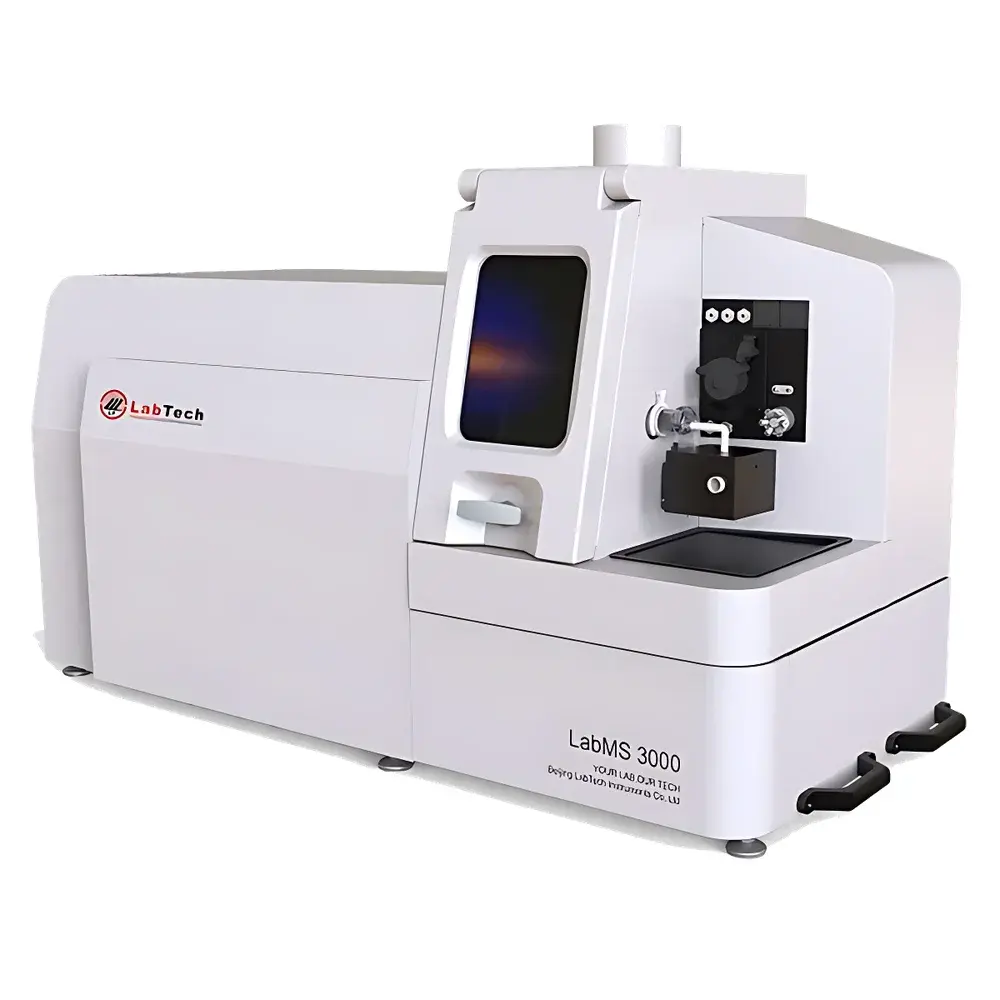
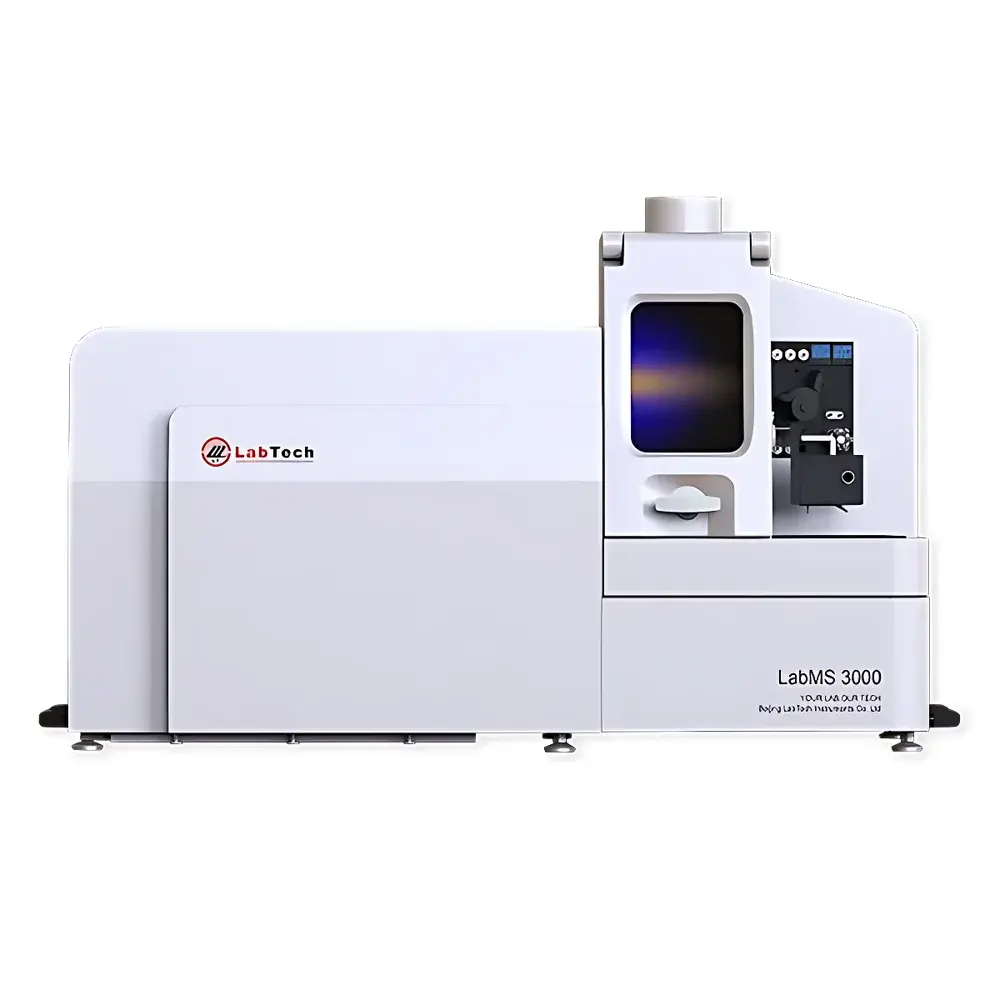
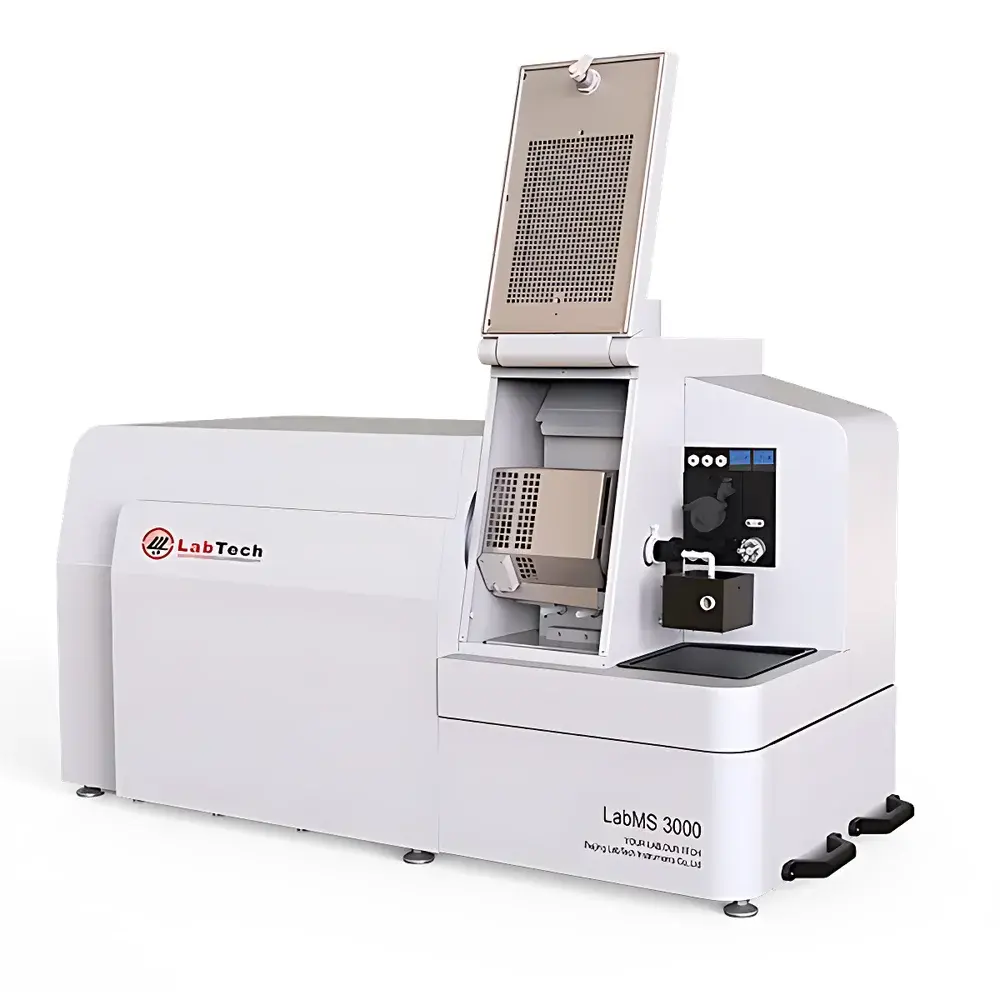
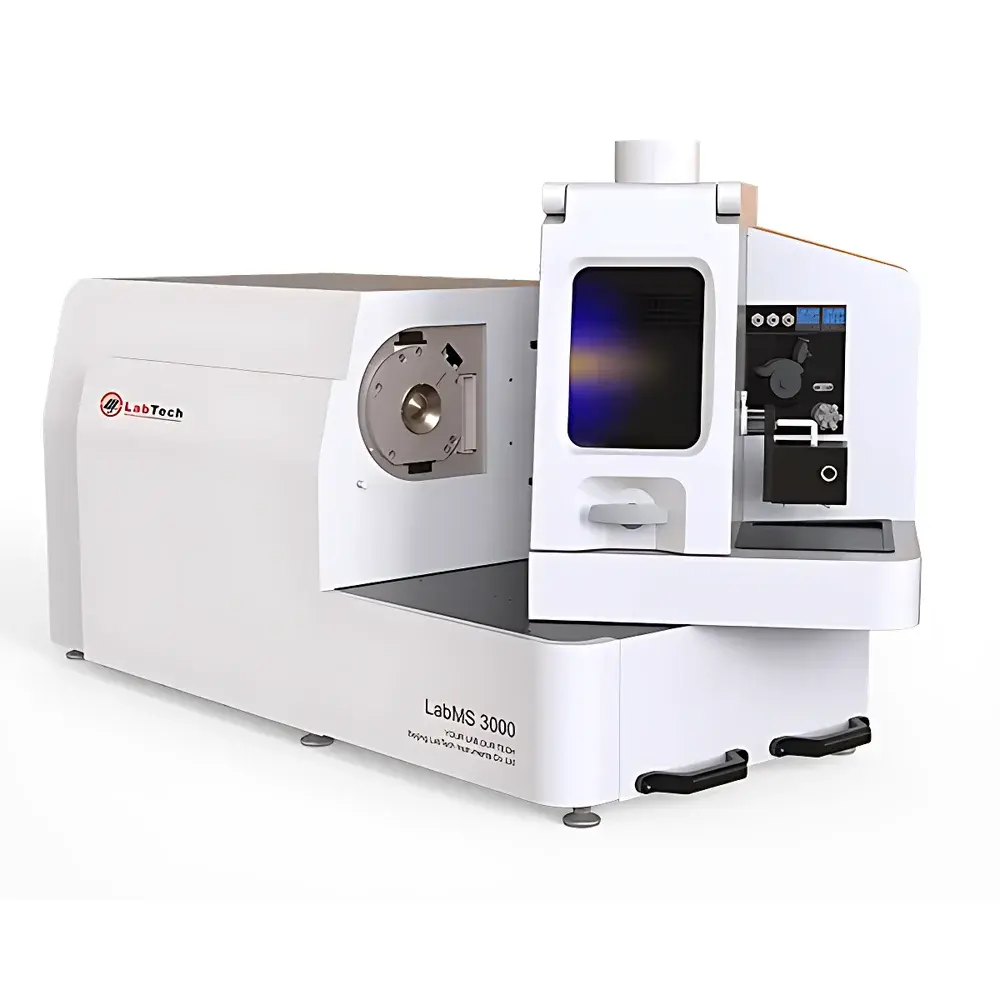
LabTech LabMS 3000 Inductively Coupled Plasma Mass Spectrometer
| Brand | LabTech |
|---|---|
| Origin | Beijing, China |
| Manufacturer Type | Authorized Distributor |
| Regional Classification | Domestic (China) |
| Model | LabMS 3000 |
| Pricing | Upon Request |
Overview
The LabTech LabMS 3000 is a high-performance, fully self-developed inductively coupled plasma mass spectrometer (ICP-MS) engineered for ultra-trace elemental analysis in environmental, geological, clinical, pharmaceutical, and materials science laboratories. Built upon over three decades of ICP-MS design expertise by Dr. Ke Hu—founder of LabTech—the instrument employs a robust RF-driven argon plasma ion source operating at 1.3–1.6 kW, coupled with a double-focusing mass analyzer featuring a high-transmission ion optics system and a secondary electron multiplier (SEM) detector. Its core measurement principle relies on the quantitative detection of element-specific isotopes following atomization, ionization, mass separation, and ion counting—enabling detection limits in the sub-attogram-per-gram (sub-ag/g) range for most elements. The LabMS 3000 is designed to meet the analytical rigor required for compliance-driven workflows, including EPA Method 200.8, ISO/IEC 17025-accredited testing, and GLP-conforming trace metal quantification.
Key Features
- Fourth-generation kinetic energy discrimination (KED) collision cell technology, utilizing helium or hydrogen reaction gases to suppress polyatomic interferences (e.g., 40Ar16O+, 40Ar40Ar+) and doubly charged ion species without compromising sensitivity.
- Integrated high-matrix sample introduction system with real-time argon dilution and oxygen-assisted carbon removal—enabling direct analysis of organic solvents (e.g., kerosene, diesel) and high-TDS aqueous matrices (up to 25% w/v total dissolved solids) without offline dilution or digestion.
- Five-layer hardware and firmware safety architecture, including plasma arc detection, coolant flow monitoring, vacuum interlock, RF generator thermal cutoff, and automatic emergency shutdown—fully documented in time-stamped maintenance logs compliant with internal audit requirements.
- Dual-language HiMass Intelligent Workstation software (English/Chinese), supporting seamless switching during active acquisition; includes method wizards for tuning, calibration, interference correction, and isotope ratio calculation.
- Native support for LIMS integration via ASTM E1384-compliant ASCII export and optional OPC UA interface; customizable report templates adhere to ISO/IEC 17025 documentation standards.
Sample Compatibility & Compliance
The LabMS 3000 accommodates liquid samples introduced via standard concentric nebulizers (e.g., PFA, MicroMist), desolvating systems (e.g., Aridus III), and laser ablation coupling (with optional 193 nm excimer or 213 nm solid-state LA modules). It accepts acid-digested environmental solids (EPA 6020B), biological tissues (USP <232>/<233>), semiconductor-grade reagents (SEMI F57), and geological silicates (ASTM D5673). Instrument performance verification follows IUPAC-recommended protocols for background equivalent concentration (BEC), sensitivity (cps/pg), oxide formation rate (160Gd16O+/160Gd+), and double-charge ratio (138Ba2+/138Ba+). All operational parameters are traceable under 21 CFR Part 11-compliant electronic signature and audit trail functionality within HiMass.
Software & Data Management
HiMass Intelligent Workstation provides full acquisition control, real-time spectral visualization, automated mass calibration, and interference-corrected quantitation using internal standardization (e.g., 115In, 209Bi) or standard addition. Raw data files (.raw) are stored in vendor-neutral mzML format for third-party processing (e.g., Skyline, MassHunter). Audit trails record user login/logout, method edits, calibration events, and result exports—with immutable timestamps and operator ID binding. Batch processing supports multi-isotope ratio reporting (e.g., 206Pb/207Pb, 87Sr/86Sr) with propagated uncertainty estimation per ISO/IEC Guide 98-3.
Applications
- Environmental monitoring: Quantification of As, Cd, Pb, Hg, U, and rare earth elements (REEs) in drinking water (EPA 1638), soil leachates (TCLP), and airborne particulates (PM2.5 filters).
- Clinical toxicology: Multi-element profiling in serum, urine, and whole blood for biomonitoring (e.g., Se, Zn, Cu, Co) and heavy metal exposure assessment (e.g., Pb, Cd, Tl).
- Geochemical research: High-precision isotope ratio measurements in zircon U–Pb dating and mantle-derived basalt Sr–Nd–Hf systematics.
- Pharmaceutical quality control: Residual catalyst screening (Pd, Pt, Rh) in API batches per ICH Q3D guidelines.
- Materials characterization: Impurity mapping in high-purity silicon wafers, battery cathode precursors (Ni, Co, Mn), and nuclear fuel cycle materials (U, Pu isotopics).
FAQ
Does the LabMS 3000 support hyphenated techniques such as HPLC-ICP-MS?
Yes—via standard ESI or PEEK capillary interfaces with adjustable dwell times and transient signal integration optimized for speciation analysis.
Is the collision cell compatible with both helium and hydrogen reaction gases?
Yes—the KED cell supports gas selection, flow optimization (0.1–5.0 mL/min), and dynamic reaction mode (DRM) for targeted interference removal.
Can HiMass generate reports compliant with ISO/IEC 17025 accreditation requirements?
Yes—templates include uncertainty budgets, calibration history, QC acceptance criteria, and analyst sign-off fields with electronic signature validation.
What level of technical support is provided for method development?
LabTech offers application-specific protocol packages—including EPA, USP, and ISO reference methods—and remote expert consultation through certified ICP-MS application scientists.
How does the LabMS 3000 integrate with LabTech’s sample preparation platforms?
It natively communicates with LabTech’s TurboVap® nitrogen evaporators, UltraWave® microwave digesters, and AutoPrep® automated dilution systems via RS-232/Modbus TCP, enabling unattended end-to-end workflow execution.




