
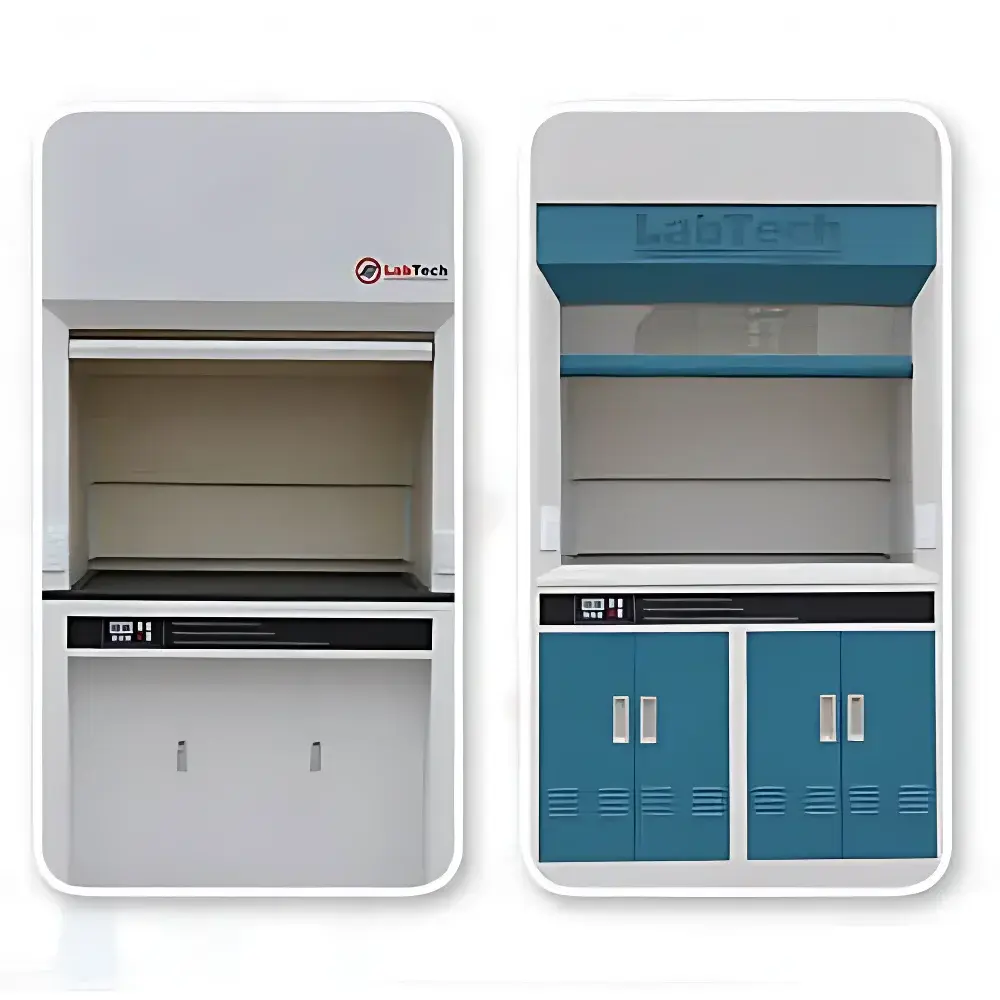
LabTech labtech Full-Steel Fume Hood
| Brand | LabTech |
|---|---|
| Origin | Beijing, China |
| Manufacturer Type | Manufacturer |
| Country of Origin | Domestic (China) |
| Model | labtech |
| Construction | Single-Face Full-Steel Fume Hood |
| Material | Fully Steel Cabinet Body |
| Design Features | Modular Bolt-Free Assembly, Three-Section Baffle System, Integrated Control Panel with Emergency Override, Condensate-Collecting Canopy, Logo-Style Make-Up Air Inlet, VAV-Compatible Architecture |
| Compliance Context | Designed for alignment with ISO 10974, EN 14175-3, and ANSI/ASHRAE 110 testing protocols |
Overview
The LabTech labtech Full-Steel Fume Hood is an engineered safety enclosure designed for containment and removal of hazardous vapors, dusts, and aerosols generated during laboratory sample preparation, chemical synthesis, and analytical pre-treatment procedures. It operates on the principle of directional airflow—drawing ambient air through a defined face velocity zone (typically maintained between 0.4–0.6 m/s per ANSI/ASHRAE 110), across the work surface, and into a ducted exhaust system via a precisely calibrated baffle assembly. Its fully steel construction provides structural integrity, fire resistance, and long-term corrosion resilience under routine exposure to mild-to-moderate acidic or alkaline reagents. Unlike polypropylene (PP) or stainless-steel variants, this model prioritizes mechanical robustness and compatibility with institutional infrastructure where chemical aggressiveness is moderate but physical durability and integration with building-level HVAC control systems are critical.
Key Features
- Three-section adjustable baffle system ensures laminar flow distribution and eliminates internal recirculation zones—even at variable sash positions—thereby maintaining consistent capture efficiency across differing exhaust demands.
- Modular, bolt-free “building-block” cabinet architecture enables rapid field installation, reconfiguration, and service access without compromising structural rigidity or containment integrity.
- Integrated digital control panel features programmable setpoints, real-time face velocity monitoring, audible/visual alarms for low-flow or sash-over-height conditions, and one-touch emergency purge mode that overrides all VAV logic to maximize exhaust volume within 2 seconds.
- Condensate-collecting canopy design intercepts and channels condensed vapors away from the exhaust duct interface, preventing backflow of corrosive condensates into upstream ductwork or fan housings.
- Logo-style make-up air inlet—positioned at the base of the hood frame—provides uniform, low-turbulence replacement air entry that minimizes cross-draft interference and sustains stable face velocity even in high-occupancy or mechanically ventilated labs.
- VAV-ready interface supports seamless integration with building management systems (BMS) compliant with ASHRAE Guideline 36, enabling demand-based airflow modulation and energy optimization without sacrificing safety performance.
Sample Compatibility & Compliance
This fume hood accommodates standard laboratory glassware (up to 500 mm depth), benchtop instrumentation (e.g., hot plates, centrifuges, digestion blocks), and multi-step wet chemistry workflows. It is not intended for perchloric acid digestion or radioactive handling unless retrofitted with wash-down systems and dedicated scrubbers. The unit complies with structural and performance benchmarks referenced in EN 14175-3 (2022) for type-tested full-height enclosures and aligns with ISO 10974 Annex D requirements for operator exposure assessment methodology. All electrical components meet IEC 61000-6-3 EMC standards; control logic architecture supports audit-ready event logging for GLP/GMP environments when paired with optional data acquisition modules.
Software & Data Management
While the base configuration operates via embedded microcontroller firmware, optional Ethernet/IP or Modbus TCP connectivity allows integration into centralized lab monitoring platforms. Logged parameters include sash position (potentiometric sensor), average face velocity (thermal anemometer array), alarm history (timestamped with cause code), and emergency activation events. Data export conforms to CSV and OPC UA protocols, facilitating traceability in FDA 21 CFR Part 11–governed workflows when deployed with validated electronic signature and audit trail add-ons.
Applications
- Chemical reagent dispensing and dilution in QC/QA laboratories
- Acid digestion of environmental and food samples prior to ICP-MS or AAS analysis
- Preparation of calibration standards and reference materials under ISO/IEC 17025–accredited conditions
- Handling of volatile organic compounds (VOCs) during solvent extraction or derivatization steps
- Safe operation of benchtop reactors generating exothermic or gaseous byproducts
- Integration into automated sample prep lines where mechanical stability and repeatable airflow profiles are required
FAQ
What face velocity range is certified for this model?
The hood is validated for sustained operation at 0.45–0.55 m/s face velocity across the full sash travel range, per ANSI/ASHRAE 110–2016 tracer gas testing methodology.
Can it be installed in a non-ducted (recirculating) configuration?
No. This is a ducted-only enclosure requiring connection to a dedicated exhaust system with appropriate static pressure compensation.
Is the control panel compatible with third-party BMS platforms?
Yes—via optional Modbus RTU or BACnet MS/TP gateways supporting RS-485 or Ethernet interfaces.
Does the unit include certification documentation for regulatory audits?
Factory test reports—including airflow mapping, sash leakage, and alarm response validation—are provided upon delivery; full EN 14175-3 type test certificates available upon request.
What maintenance intervals are recommended for optimal performance?
Baffle alignment verification every 6 months; anemometer calibration annually; full functional safety check (including emergency override) prior to each new SOP implementation or facility re-commissioning cycle.



