
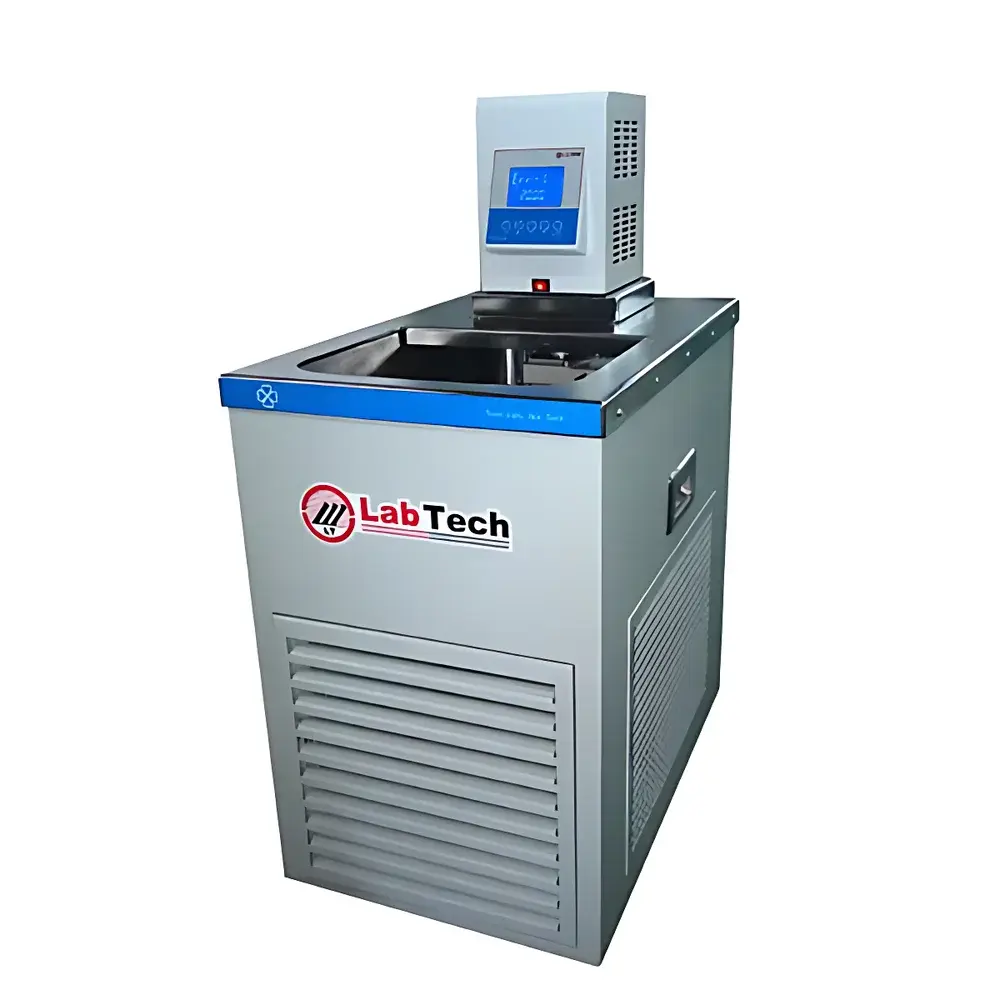
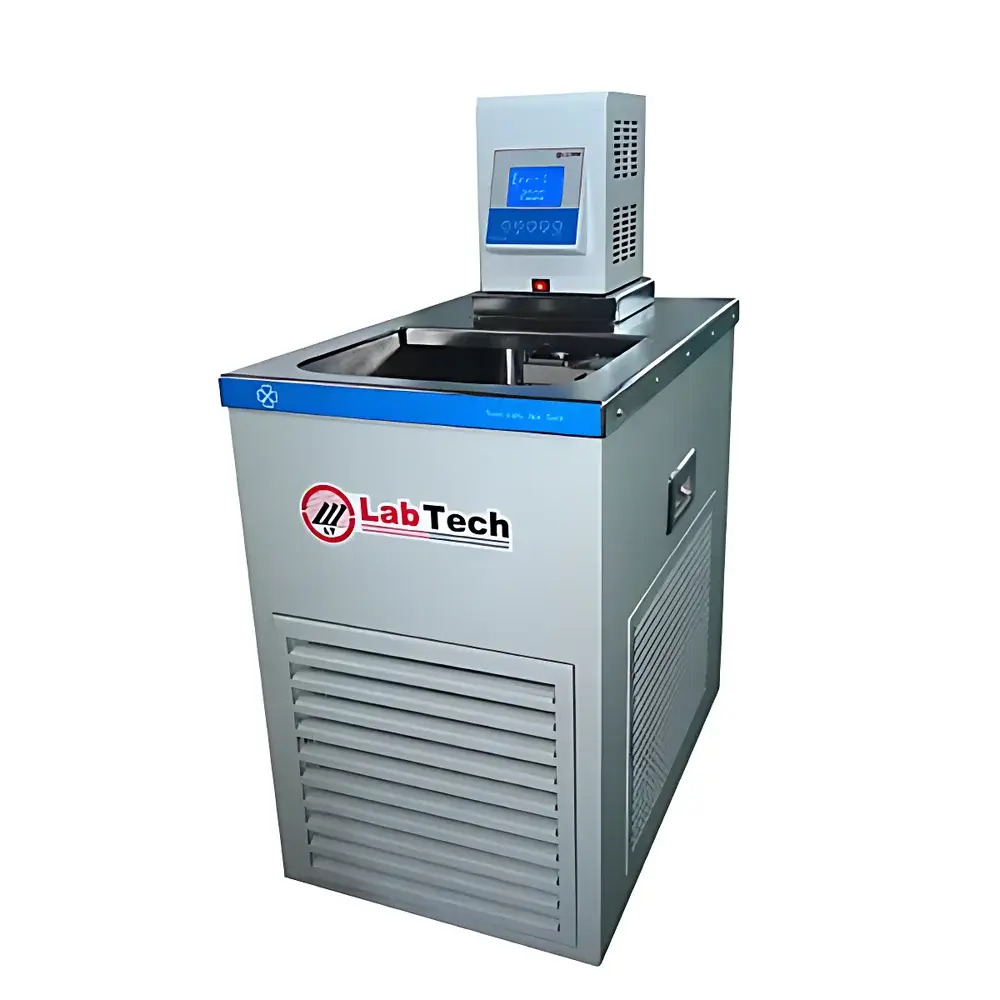
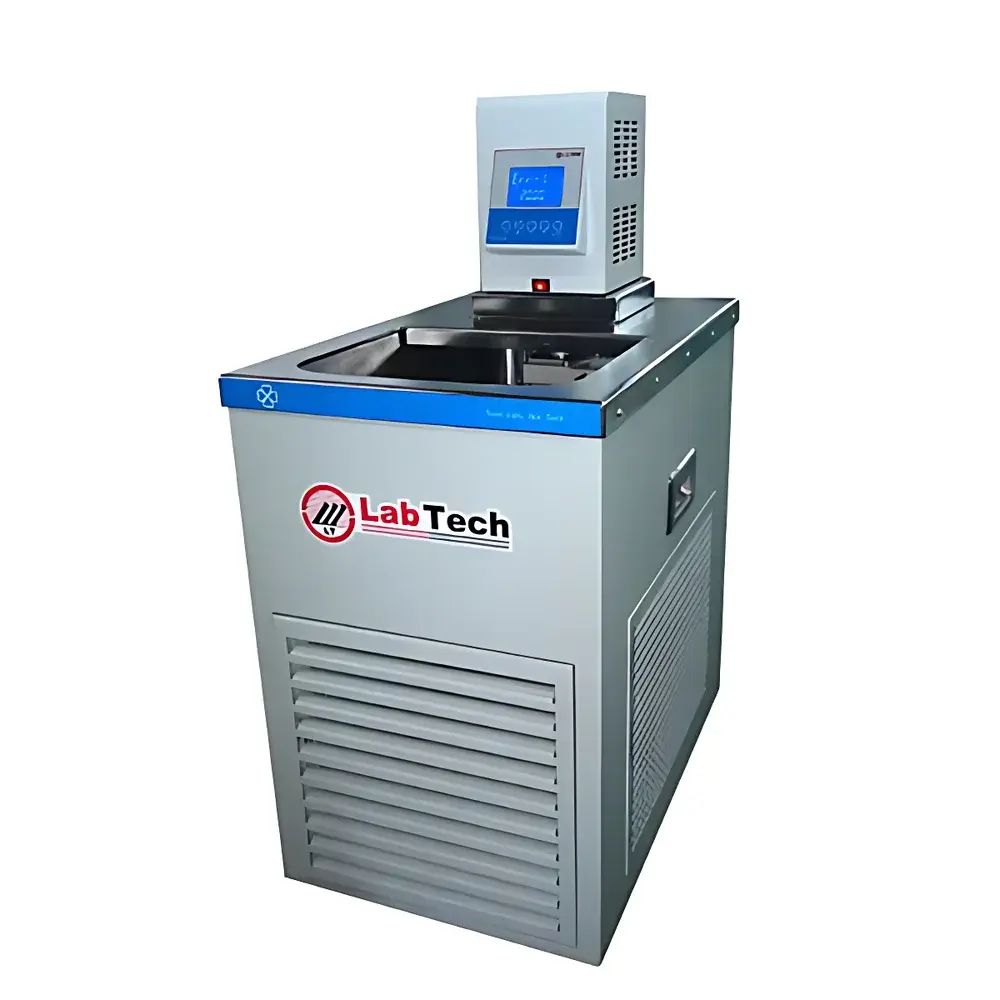
LabTech RH40-25A Refrigerated & Heated Circulating Chiller
| Brand | LabTech |
|---|---|
| Origin | Beijing, China |
| Instrument Type | Integrated Circulating Chiller |
| Cooling Method | Water-Cooled |
| Temperature Control Range | –40 °C to +100 °C |
| Temperature Stability | ±0.05 °C (at setpoint, under stabilized conditions) |
| Bath Material | Seamless 304 Stainless Steel |
| Interface | RS485 for Remote Monitoring and Control |
| Safety Features | Dual High/Low Temperature Alarm, Low-Level Liquid Alarm |
| Circulation Mode | Switchable Internal/External Loop via Manual Knob |
| Power Supply | 220–240 VAC, 50/60 Hz |
Overview
The LabTech RH40-25A Refrigerated & Heated Circulating Chiller is an integrated temperature control system engineered for precision thermal management of laboratory instruments requiring both active cooling and heating within a single platform. It operates on a closed-loop refrigeration cycle augmented by resistive heating elements and a high-resolution PID temperature controller—enabling seamless, automatic transition between cooling and heating modes without manual intervention or hardware reconfiguration. Designed for compatibility with spectrophotometers, rotary evaporators, calorimeters, laser sources, and reaction jackets, the RH40-25A delivers stable thermal environments across a broad operational range of –40 °C to +100 °C. Its thermodynamic architecture incorporates a dual-stage refrigeration circuit with environmentally compliant R-404A or R-507A refrigerant (subject to regional regulatory compliance), coupled with a high-efficiency water-cooled condenser that minimizes ambient heat load and improves energy utilization in climate-controlled labs.
Key Features
- Integrated refrigeration and heating functionality with fully automatic mode switching based on real-time bath temperature feedback
- PID-based digital temperature control delivering ±0.05 °C stability at steady state (measured per ISO 17025-compliant calibration protocol using traceable Pt100 sensor)
- Seamless 304 stainless steel bath fabricated via one-piece deep-drawing process—eliminating weld seams, enhancing corrosion resistance, and simplifying cleaning and validation
- Manual toggle switch for internal recirculation (bath-only) or external loop operation—enabling direct connection to jacketed reactors, condensers, or analytical instrumentation
- Comprehensive safety suite including independent high/low temperature cutoffs, low-bath-level detection, and overcurrent protection on all power circuits
- Backlit LCD interface with intuitive menu navigation, real-time display of setpoint/actual temperature, flow status, and alarm history
- RS485 serial interface compliant with Modbus RTU protocol—supports integration into centralized lab automation systems and SCADA platforms for remote monitoring and scheduled parameter logging
Sample Compatibility & Compliance
The RH40-25A is compatible with aqueous and water-miscible heat transfer fluids (e.g., 50% ethylene glycol/water mixtures) across its full operating range. It meets CE marking requirements for electromagnetic compatibility (EMC Directive 2014/30/EU) and low-voltage safety (LVD Directive 2014/35/EU). While not certified to UL or CSA standards out-of-the-box, its electrical design conforms to IEC 61010-1:2010 for laboratory equipment safety. The unit supports GLP/GMP-aligned workflows through configurable audit-trail-capable controllers (when paired with LabTech’s optional LMS-Link software suite), and its temperature logging function complies with FDA 21 CFR Part 11 requirements when used with validated electronic signatures and access controls.
Software & Data Management
The chiller includes embedded firmware supporting time-stamped event logging (alarms, mode transitions, temperature deviations) stored locally in non-volatile memory for up to 30 days. Optional LMS-Link software enables PC-based configuration, real-time graphing of temperature profiles, export of CSV-formatted datasets, and generation of IQ/OQ documentation templates aligned with ISO/IEC 17025 and ASTM E2500-18. Data integrity safeguards include write-protected archive mode, user-level permissions (admin/operator/guest), and cryptographic hash verification of logged entries.
Applications
- Thermal stabilization of UV-Vis and FTIR spectrometers during extended acquisition sequences
- Cooling of high-power diode lasers and optical parametric oscillators requiring sub-0.1 °C drift tolerance
- Temperature-programmed crystallization studies in pharmaceutical development (e.g., polymorph screening per USP <1058>)
- Controlled exotherm management during catalytic hydrogenation or Grignard reactions in jacketed glass reactors
- Calibration support for differential scanning calorimeters (DSC) and thermogravimetric analyzers (TGA) requiring precise ramp-and-hold profiles
- Food science applications including rheological testing of dairy emulsions and starch gels under defined thermal histories
FAQ
What is the maximum allowable working pressure for the external circulation loop?
The RH40-25A is rated for continuous operation at ≤2.5 bar (36 psi) static pressure in the external loop; use of pressure-relief valves is recommended for closed-loop reactor applications.
Can the chiller operate continuously at –40 °C with a 30% glycol mixture?
Yes—provided ambient room temperature remains ≤25 °C and the water-cooling supply maintains inlet temperature ≤22 °C at ≥2.0 L/min flow rate.
Is the RS485 interface compatible with LabVIEW and Python-based control scripts?
Yes—Modbus RTU register mapping documentation and Python example scripts are provided upon request under NDA.
Does the unit include factory calibration certificates traceable to NIST or CNAS standards?
Standard delivery includes a manufacturer’s calibration report; ISO/IEC 17025-accredited calibration with uncertainty statements is available as an optional service.
What maintenance intervals are recommended for long-term reliability?
Condenser cleaning every 6 months, refrigerant leak check annually, and full system performance verification every 24 months—per LabTech’s Maintenance Protocol MP-RH40-25A Rev. 3.2.



